
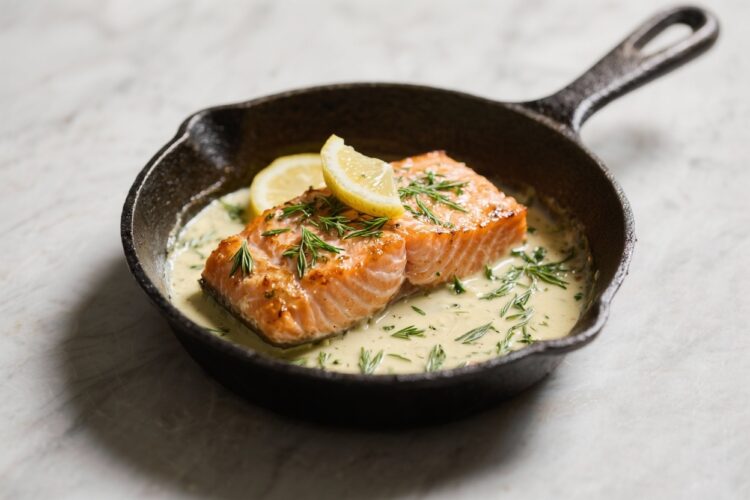
Pan-seared salmon is one of those meals that feels special but takes hardly any time. This version pairs golden, crispy salmon with a creamy lemon dill sauce that’s fresh, tangy, and downright comforting. It’s simple enough for a Tuesday night but polished enough for guests.
You’ll get juicy fish, a balanced sauce, and a clean finish that doesn’t weigh you down. Serve it with rice, potatoes, or a quick salad, and dinner is done.
Why This Recipe Works
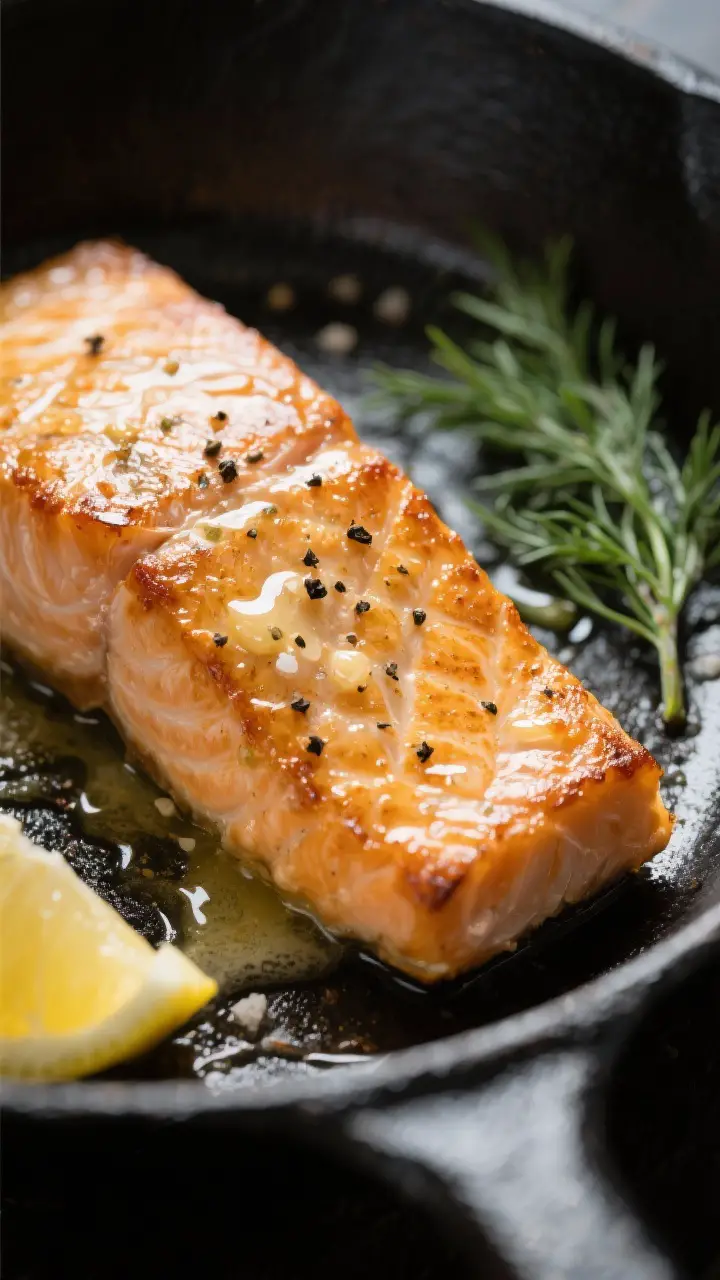
Salmon loves quick, high-heat cooking. A hot skillet gives you a crisp sear while keeping the inside tender.
The lemon dill sauce adds brightness and a hint of richness, so every bite tastes balanced. Using a little butter at the end of searing helps caramelize the surface and deepens flavor. Fresh dill and lemon keep the sauce lively, while Greek yogurt or sour cream makes it velvety without being heavy.
Ingredients
- 4 salmon fillets (about 6 ounces each), skin-on if possible
- 1 tablespoon olive oil
- 1 tablespoon butter
- Salt and black pepper, to taste
- 1 lemon (zest and juice)
- 1/2 cup Greek yogurt or sour cream
- 2 tablespoons mayonnaise (optional, for extra creaminess)
- 2–3 tablespoons fresh dill, finely chopped (plus extra for garnish)
- 1 teaspoon Dijon mustard
- 1 small garlic clove, finely grated or minced
- 1–2 tablespoons water (to thin the sauce, as needed)
- Lemon wedges, for serving
Step-by-Step Instructions
- Pat the salmon dry. Use paper towels to remove surface moisture.
Dry fish sears better and sticks less. Season both sides with salt and pepper.
- Preheat the skillet. Set a large nonstick or well-seasoned cast-iron skillet over medium-high heat. Add the olive oil and let it heat until shimmering.
- Sear the salmon, skin-side down first. Lay the fillets in the pan and press gently for 10 seconds to keep the skin from curling.
Cook without moving them for 4–6 minutes, depending on thickness, until the skin is crisp and the fish is about two-thirds cooked.
- Add butter and flip. Add the butter to the pan. Flip the fillets carefully and cook 1–3 minutes more, spooning some melted butter over the tops. Aim for medium doneness: the salmon should flake easily and still look slightly translucent in the center.
- Rest briefly. Transfer salmon to a plate and let it rest for 2–3 minutes.
This helps the juices redistribute.
- Make the lemon dill sauce. In a small bowl, mix Greek yogurt (or sour cream), mayonnaise (if using), Dijon, garlic, lemon zest, and 1–2 tablespoons lemon juice. Stir in the chopped dill. Thin with water a teaspoon at a time until spoonable.
Taste and adjust salt, pepper, and lemon.
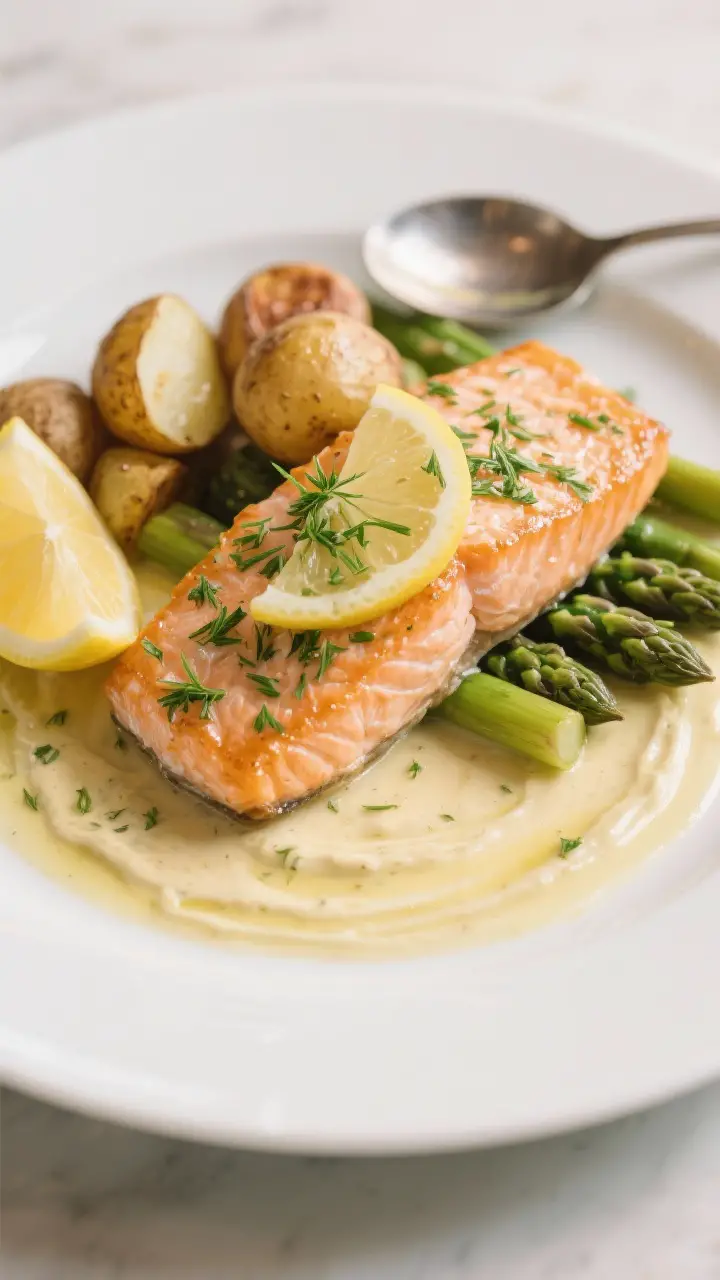
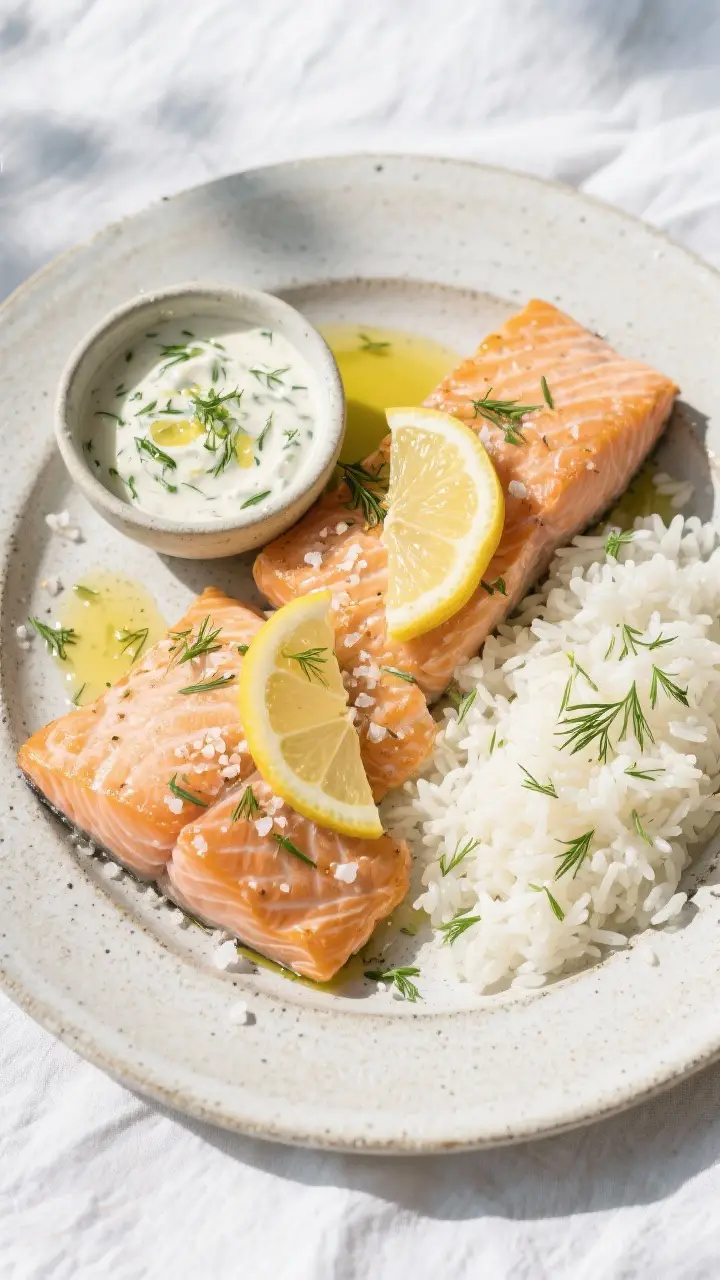
- Plate and serve. Spoon the sauce over or under the salmon. Finish with extra dill and lemon wedges. Serve with roasted potatoes, steamed asparagus, or a grain like quinoa or rice.
Storage Instructions
- Refrigerate: Store leftover salmon and sauce separately in airtight containers for up to 2 days.
Keep the sauce tightly covered to retain freshness.
- Reheat gently: Warm salmon in a 275°F (135°C) oven for 10–12 minutes, just until heated through. Avoid microwaving on high; it can dry the fish.
- Freezing: Salmon can be frozen for up to 2 months, but the sauce is best fresh. Thaw salmon overnight in the fridge before reheating.
- Make-ahead: The sauce can be made 1 day ahead.
Stir before serving and add a splash of water if it thickens.
Health Benefits
- Omega-3 fats: Salmon is rich in EPA and DHA, which support heart and brain health.
- High-quality protein: Each serving delivers satisfying protein that helps with muscle repair and steady energy.
- Vitamin D and B vitamins: Salmon provides vitamin D along with B12 and niacin, which support metabolism and immunity.
- Lighter sauce: Greek yogurt offers creaminess with protein and less saturated fat than heavy cream.
- Fresh herbs and citrus: Dill and lemon bring antioxidants and brightness without extra calories.
Pitfalls to Watch Out For
- Wet fish won’t sear: If you skip drying the fillets, you’ll get steaming instead of crisp edges.
- Pan not hot enough: Start with a hot skillet or the skin will stick and the fish won’t develop color.
- Overcooking: Salmon goes from tender to dry fast. Pull it when it flakes easily and the center is slightly translucent.
- Too much lemon in the sauce: Add juice gradually. You want bright, not sour.
- Old herbs: Dill fades quickly.
Use fresh, vibrant fronds for the best flavor.
Variations You Can Try
- Light and tangy: Skip the mayo and use all Greek yogurt for a sharper, lighter sauce.
- Creamier finish: Add an extra tablespoon of mayo or a splash of cream to the sauce.
- Herb swap: Use parsley, chives, or tarragon in place of dill, or mix them together for a garden twist.
- Garlic-lemon butter: Skip the yogurt sauce and finish the salmon with melted butter, lemon juice, and minced garlic.
- Spice it up: Add red pepper flakes or a pinch of cayenne to the sauce for gentle heat.
- Dairy-free: Use a dairy-free yogurt and olive oil only; the sauce still turns out creamy and bright.
- Sheet pan option: Roast at 425°F (220°C) for 10–12 minutes, then top with the sauce. Great for cooking multiple fillets at once.
FAQ
Should I cook salmon with the skin on?
Yes, if you can. The skin protects the flesh from overcooking and helps create a crisp surface.
You can remove it after cooking if you prefer, but many enjoy the texture when it’s well-seared.
How do I know when salmon is done?
Look for easy flaking with a fork and a slightly translucent center. Internal temperature should read about 125–130°F (52–54°C) for medium, taken off heat to rest. It will continue to cook slightly as it sits.
Can I use dried dill?
Fresh dill is best for flavor and aroma, but you can use dried in a pinch.
Start with 1 teaspoon dried dill, taste, and add more if needed.
What if my salmon sticks to the pan?
Make sure the pan is hot and the fish is dry before adding it. Don’t flip too early; salmon naturally releases from the pan once a crust forms. A nonstick or well-seasoned cast-iron skillet helps a lot.
Is farmed or wild salmon better?
Both can be excellent.
Wild salmon tends to be leaner with a stronger flavor, while high-quality farmed salmon is richer and more forgiving to cook. Choose what fits your budget and availability, and look for sustainably sourced options.
Can I make the sauce ahead?
Yes. Prepare it up to a day in advance and refrigerate.
Stir before serving and thin with a splash of water if it thickens.
What sides go well with this?
Roasted baby potatoes, steamed asparagus, sautéed green beans, lemony couscous, or a simple arugula salad pair beautifully. Keep sides fresh and light to match the sauce.
Wrapping Up
Skillet Salmon with Lemon Dill Sauce is fast, bright, and satisfying. With a good sear, a balanced sauce, and a few simple tricks, you’ll get restaurant-quality results at home.
Keep fresh dill and a lemon on hand, and you’re always a few minutes away from a standout dinner.
Printable Recipe Card
Want just the essential recipe details without scrolling through the article? Get our printable recipe card with just the ingredients and instructions.