
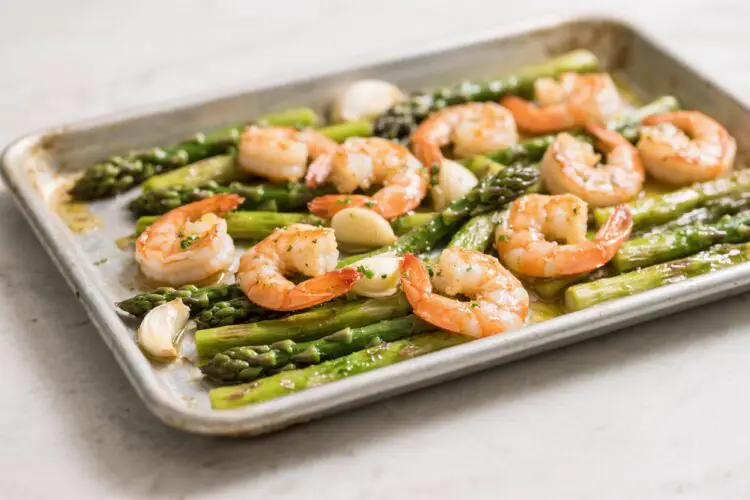
This is the kind of dinner you make when you want big flavor with almost no effort. Shrimp cook quickly, asparagus roasts beautifully, and garlic butter ties it all together. Everything happens on one pan, so cleanup is easy.
It looks impressive but uses simple ingredients you probably already have. If you’re craving something light, fresh, and satisfying, this is your new go-to.
Why This Recipe Works
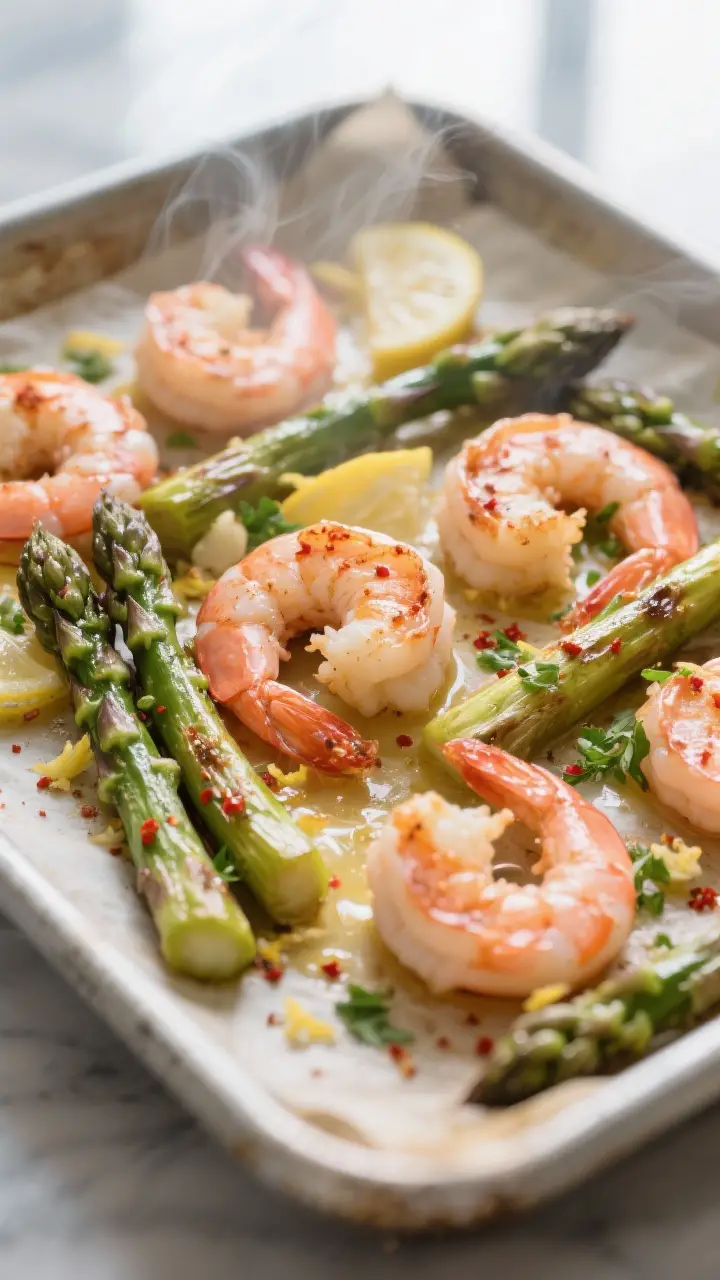
Simple techniques and smart timing make this recipe reliable and delicious. Shrimp cook in minutes, so they’re a perfect match for quick-roasting asparagus.
A hot oven gives you tender asparagus with crisp tips and shrimp that stay juicy. The garlic butter melts over everything, adding richness and a hint of lemon to keep it bright. With minimal prep and one pan, it’s weeknight perfection.
Shopping List
- Shrimp: 1 to 1.5 pounds large shrimp, peeled and deveined (tail on or off)
- Asparagus: 1 to 1.5 pounds, trimmed
- Butter: 4 tablespoons, melted
- Olive oil: 1 to 2 tablespoons
- Garlic: 4 to 5 cloves, minced
- Lemon: 1 zest and 1/2 to 1 lemon for juice
- Fresh parsley: Small handful, chopped
- Salt and black pepper: To taste
- Red pepper flakes: Optional, for a little heat
- Paprika or smoked paprika: Optional, 1/2 teaspoon
- Parmesan cheese: Optional, for finishing
- Crusty bread, rice, or pasta: Optional, for serving
Step-by-Step Instructions
- Preheat the oven. Set to 425°F (220°C).
A hot oven helps the asparagus roast quickly and keeps shrimp juicy.
- Prep the pan. Line a rimmed sheet pan with parchment or lightly oil it. This prevents sticking and makes cleanup faster.
- Trim the asparagus. Snap off woody ends. If spears are thick, slice them in half lengthwise so they cook evenly.
- Toss the asparagus. On the pan, drizzle asparagus with 1 tablespoon olive oil, season with salt and pepper, and toss to coat.
Spread in a single layer on one side of the pan.
- Start the roast. Roast asparagus for 5 to 7 minutes first. This gives it a head start so it finishes at the same time as the shrimp.
- Make the garlic butter. In a small bowl, combine melted butter, minced garlic, lemon zest, a squeeze of lemon juice, paprika (if using), and a pinch of red pepper flakes. Taste and adjust salt and pepper.
- Prep the shrimp. Pat shrimp dry with paper towels.
Dry shrimp sear better and won’t steam.
- Add the shrimp to the pan. Remove the pan from the oven. Place shrimp on the empty side in a single layer. Spoon or brush half to two-thirds of the garlic butter over the shrimp and a little over the asparagus.
- Roast until just cooked. Return pan to the oven for 6 to 8 minutes, depending on shrimp size.
Shrimp are done when pink, opaque, and slightly curled into a C-shape.
- Finish with freshness. Drizzle the remaining garlic butter over the shrimp and asparagus. Add a final squeeze of lemon and sprinkle with chopped parsley. If you like, add grated Parmesan for a salty finish.
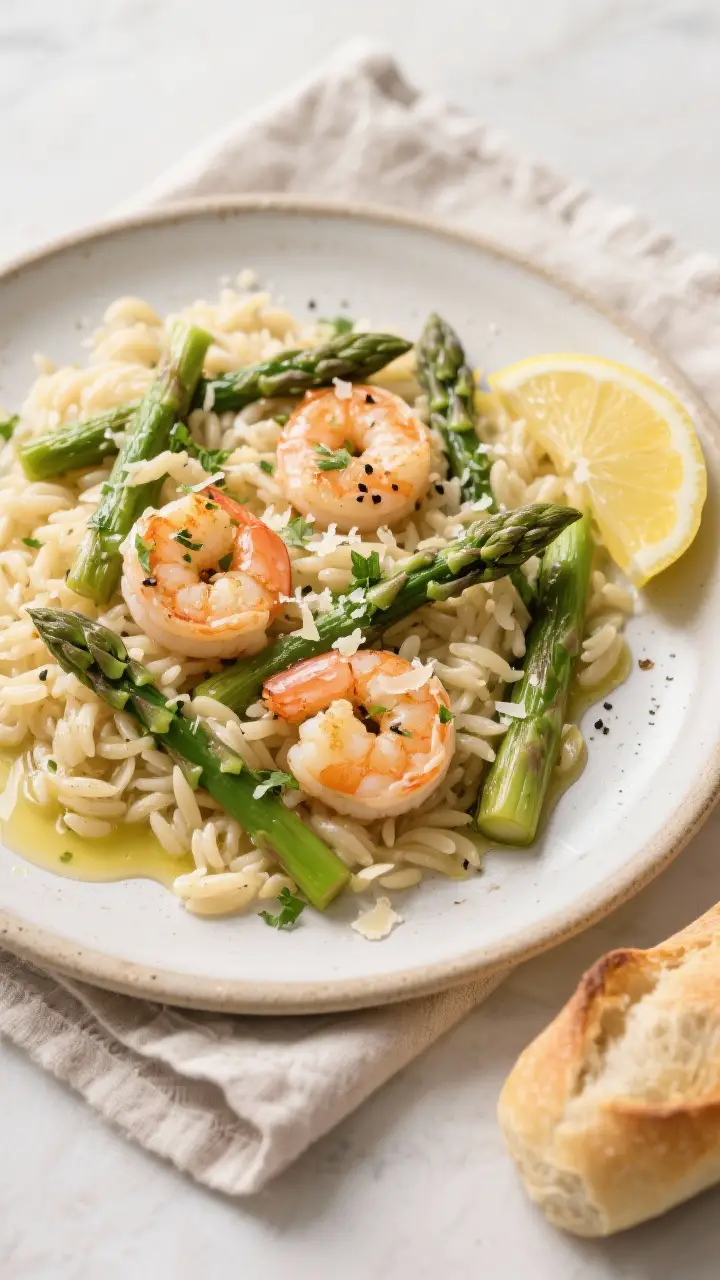
- Serve immediately. Plate with crusty bread to soak up the juices, or spoon over rice or pasta.
Enjoy while hot.
Keeping It Fresh
Leftover shrimp are best within a day. Store in an airtight container in the fridge for up to 2 days, but for top quality aim to eat them sooner. Reheat gently on the stovetop over low heat or in a low oven (300°F/150°C) just until warmed; avoid the microwave if possible to prevent rubbery shrimp.
If you plan for leftovers, cook the asparagus slightly under so it doesn’t turn mushy when reheated.
Health Benefits
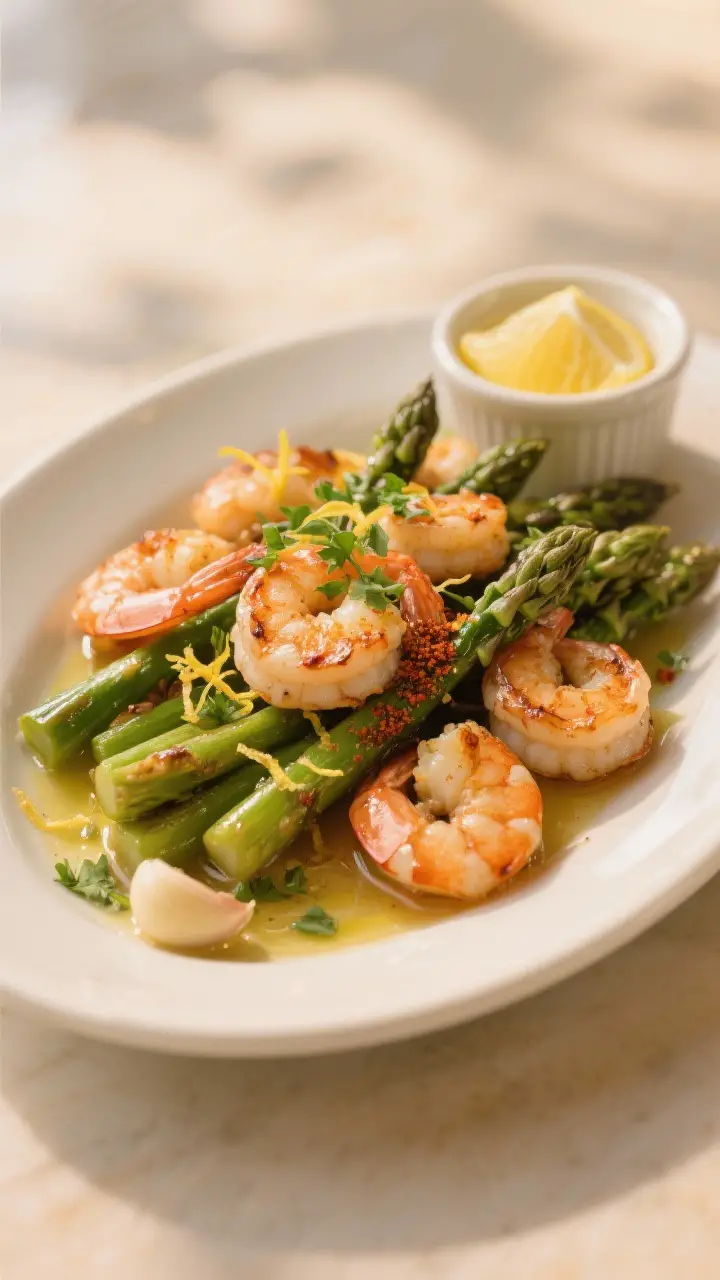
Shrimp are a lean source of protein and provide selenium, B12, iodine, and omega-3s. Asparagus delivers fiber, folate, and vitamins A, C, and K. Cooking in the oven uses modest added fat, and the butter can be adjusted to your preference.
The lemon, garlic, and herbs add flavor without heavy sauces, making this a balanced, satisfying meal. Pair with a whole grain like brown rice for extra fiber.
Common Mistakes to Avoid
- Overcooking the shrimp: They go from tender to rubbery quickly. Pull them when they’re just opaque and pink.
- Crowding the pan: Give everything space.
Overcrowding leads to steaming instead of roasting.
- Skipping the asparagus head start: Without it, you risk underdone asparagus or overcooked shrimp.
- Not drying the shrimp: Moisture prevents browning and dilutes flavor.
- Using too little seasoning: Salt brings out the sweetness of shrimp and the earthiness of asparagus. Taste and adjust.
- Forgetting acid: Lemon balances the richness of butter. A final squeeze makes a big difference.
Alternatives
- Veggie swaps: Try broccolini, green beans, or zucchini.
Adjust timing—denser veggies may need a longer head start.
- Flavor twists: Swap parsley for dill, basil, or chives. Add a splash of white wine to the pan before roasting, or finish with a dusting of Old Bay.
- Dairy-free: Use all olive oil or a dairy-free butter. Add extra lemon and herbs for richness.
- Spicy version: Increase red pepper flakes, add a pinch of cayenne, or swirl in a bit of harissa to the butter.
- Citrus swap: Use lime and cilantro for a brighter, zesty profile.
- Protein swap: Use scallops (roast time similar) or thin salmon fillets (start salmon first, add asparagus mid-way).
- Carb pairings: Serve over orzo, lemony couscous, or garlic butter noodles to soak up the pan juices.
FAQ
Can I use frozen shrimp?
Yes.
Thaw them in the fridge overnight or under cold running water for 10 to 15 minutes, then pat very dry before cooking. Season as directed.
Do I need to peel the shrimp?
You can go either way. Peeled shrimp are easier to eat on a weeknight, while leaving the tails on looks nice and can add flavor.
Just make sure they’re deveined.
What size shrimp is best?
Large shrimp (16–20 or 21–25 per pound) work best. They stay juicy and are easy to time with the asparagus.
How do I know the shrimp are done?
Look for pink, opaque flesh and a gentle C-shape curl. If they curl tightly into an O, they’re likely overcooked.
Can I make this ahead?
You can prep the garlic butter and trim the asparagus ahead of time.
Cook the shrimp just before serving for the best texture.
What if my asparagus spears are very thin?
Reduce the head start to 2 to 3 minutes, or add shrimp right away and check early. Thin spears cook fast.
How can I make it more saucy?
Double the garlic butter and add a splash of white wine or chicken broth to the pan before the final roast. Serve over pasta or rice to catch the sauce.
Is this recipe gluten-free?
Yes, as written.
Just watch your sides and any seasonings you add.
Can I use garlic powder instead of fresh garlic?
Fresh garlic gives better flavor, but you can use 1/2 to 1 teaspoon garlic powder if needed. Mix it into the melted butter.
What temperature should I use for convection?
Reduce to 400°F (205°C) if using convection and check 1 to 2 minutes earlier, as convection cooks faster.
In Conclusion
Sheet Pan Garlic Butter Shrimp and Asparagus delivers big flavor with minimal effort. It’s quick, balanced, and flexible enough to fit your weeknight routine.
With smart timing, a hot oven, and a punchy garlic-lemon finish, you’ll have a reliable dinner that tastes restaurant-worthy without the fuss. Keep this one in your rotation and make it your own with simple swaps and seasonings.
Printable Recipe Card
Want just the essential recipe details without scrolling through the article? Get our printable recipe card with just the ingredients and instructions.