
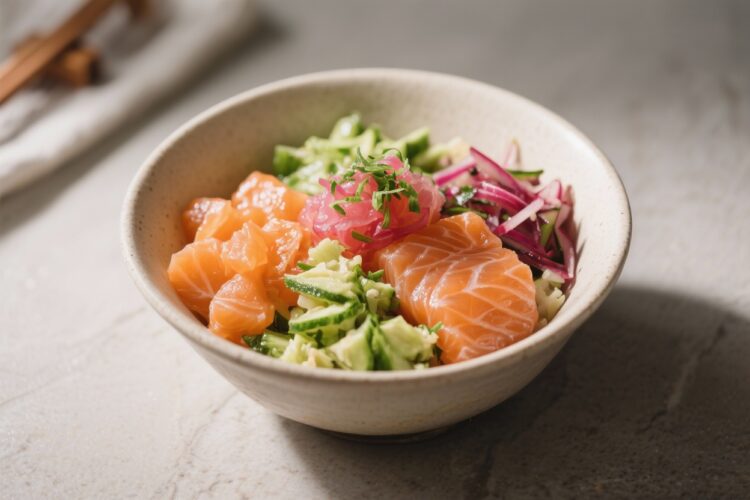
Poke bowls bring the clean, bold flavors of Hawaii to your table with minimal fuss. This Salmon Poke Bowl is fresh, colorful, and perfect for a quick lunch or a light dinner. You get tender marinated salmon, crunchy veggies, creamy avocado, and a tangy-sweet dressing over warm rice.
It’s simple to prep, easy to customize, and satisfying without feeling heavy. If you love sushi but want something more casual and customizable, this bowl hits the spot.
What Makes This Special
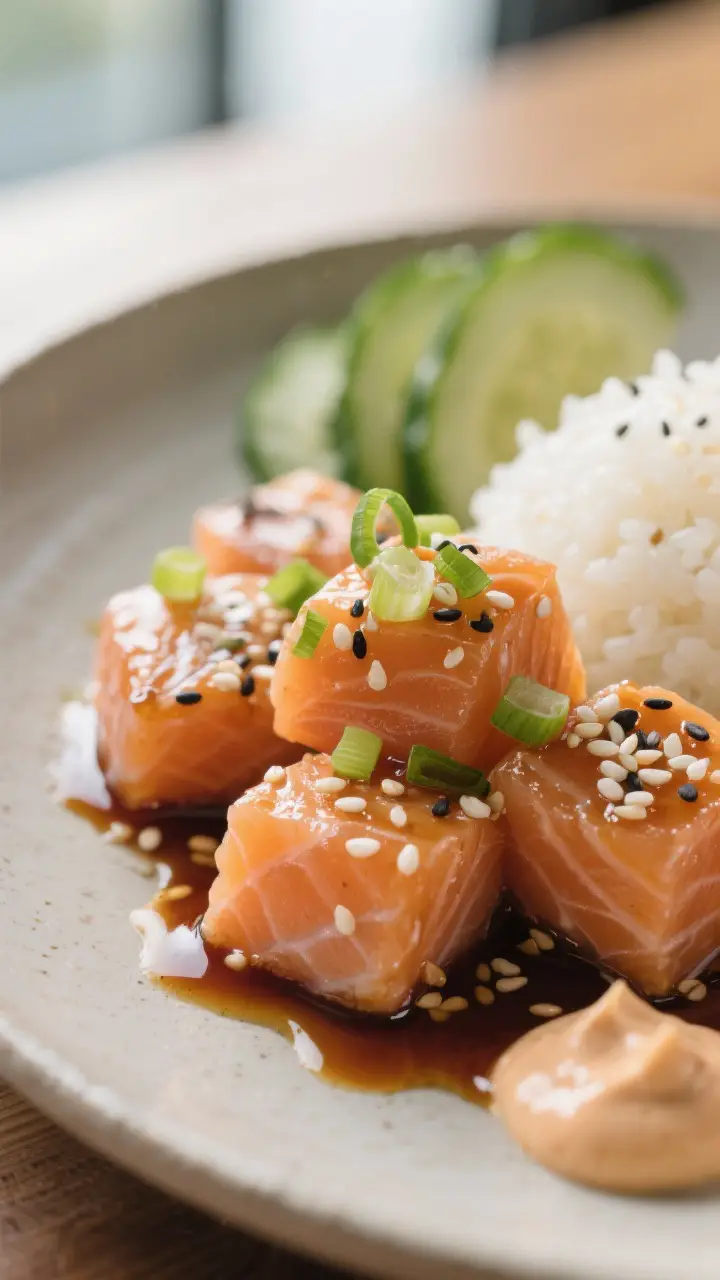
This poke bowl balances texture and flavor in a way that keeps every bite interesting. You’ve got silky salmon, sweet pops of mango, and the crunch of cucumber and radish.
The marinade is bright and umami-rich, with soy, sesame, and a touch of citrus to lift everything. It’s quick to assemble and easy to scale for meal prep or a weeknight dinner. Best of all, it feels restaurant-level without the effort or cost.
Shopping List
- Salmon: 12–14 oz sashimi-grade salmon (skinless, boneless)
- Rice: 2 cups cooked sushi rice or short-grain white rice (or brown rice/cauliflower rice)
- Soy sauce or tamari: 3 tablespoons
- Toasted sesame oil: 1 tablespoon
- Rice vinegar: 1 tablespoon (plus more for seasoning rice)
- Lime juice: 1 tablespoon (or lemon juice)
- Honey or maple syrup: 1–2 teaspoons
- Fresh ginger: 1 teaspoon finely grated
- Garlic: 1 small clove, minced
- Sriracha or gochujang (optional): 1–2 teaspoons for heat
- Cucumber: 1 small, thinly sliced or diced
- Avocado: 1, sliced
- Mango or pineapple (optional): 1/2 cup, diced
- Edamame: 1 cup, shelled and thawed
- Radishes (optional): 3–4, thinly sliced
- Scallions: 2, thinly sliced
- Seaweed salad or nori strips (optional): for topping
- Sesame seeds: 1 tablespoon (black or white)
- Furikake (optional): for extra flavor
- Mayonnaise (optional): 2 tablespoons for spicy mayo
- Sriracha (for spicy mayo): 1–2 teaspoons
- Salt and sugar: to season rice
Step-by-Step Instructions
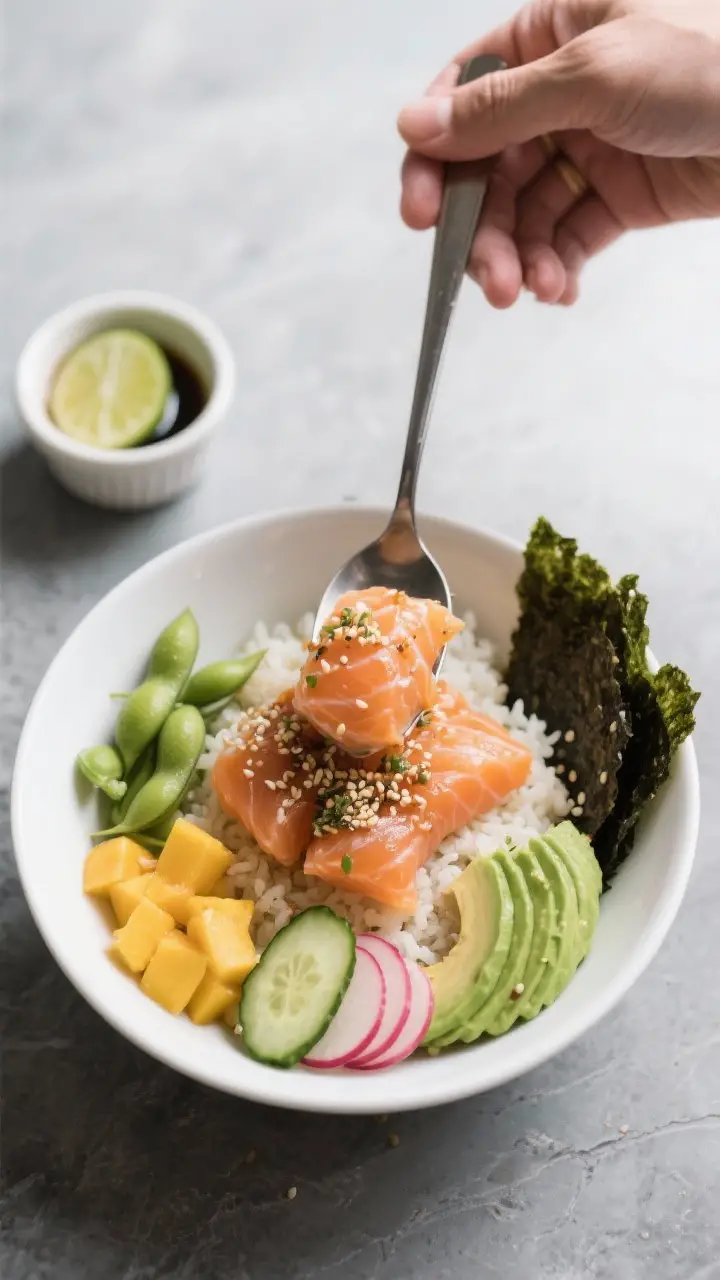
- Cook the rice. Rinse 1 cup uncooked sushi rice until the water runs clear, then cook according to package instructions.
While warm, season with 1 tablespoon rice vinegar, 1/2 teaspoon sugar, and a pinch of salt. Fluff and let it cool slightly.
- Prep the marinade. In a bowl, whisk soy sauce or tamari, sesame oil, rice vinegar, lime juice, honey, grated ginger, minced garlic, and sriracha or gochujang if using. Taste and adjust with more citrus or sweetness as needed.
- Slice the salmon. Using a sharp knife, cut the sashimi-grade salmon into 1/2-inch cubes.
Keep it cold until you’re ready to marinate.
- Marinate the salmon. Toss the salmon gently with the marinade. Chill for 10–20 minutes in the fridge. You want the flavors to soak in without the fish breaking down.
- Prep the toppings. Slice the cucumber and radishes, dice the mango, cut the avocado, and thinly slice the scallions.
Thaw the edamame and pat it dry.
- Make spicy mayo (optional). Mix mayonnaise with sriracha to your preferred heat level. Thin with a splash of water or lime juice if you want a drizzle.
- Assemble the base. Add a scoop of warm rice to each bowl. You can also use mixed greens or cauliflower rice for a lighter option.
- Add the salmon. Spoon the marinated salmon over the rice, letting a little of the sauce drip on for extra flavor.
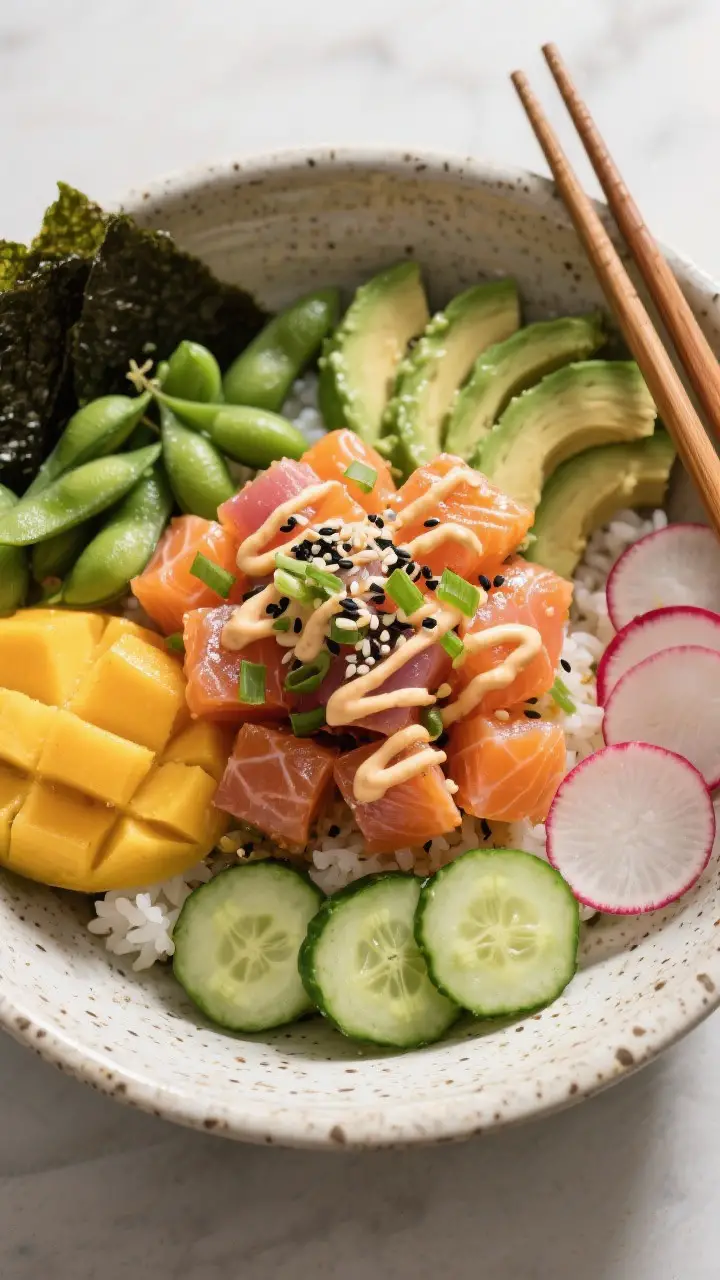
- Top it off. Arrange cucumber, edamame, avocado, mango, and radish around the salmon.
Sprinkle sesame seeds, scallions, and furikake. Add seaweed salad or nori strips if you like.
- Finish and serve. Drizzle spicy mayo or an extra splash of soy-lime dressing. Serve immediately while the rice is warm and the salmon is cool.
Keeping It Fresh
Use the freshest salmon you can find and keep it chilled until you’re ready to serve.
If you’re prepping ahead, store the salmon and marinade separately and combine them up to 20 minutes before eating. Keep chopped veggies in airtight containers and slice the avocado right before serving to avoid browning. Rice can be cooked in advance and gently rewarmed; a damp paper towel in the microwave keeps it soft.
Why This is Good for You
Salmon is rich in omega-3 fatty acids, which support heart and brain health.
The bowl brings in a range of fiber from edamame, cucumber, and avocado, helping with fullness and digestion. You also get protein to keep energy steady and support muscle repair. With smart portioning of rice and sauces, it’s a balanced meal that feels indulgent and nourishing at the same time.
What Not to Do
- Don’t use low-quality fish. If it’s not sashimi-grade or extremely fresh, skip raw and use cooked salmon.
- Don’t overmarinate. Acid can “cook” the fish and change the texture.
Keep it to 20 minutes max.
- Don’t drown the rice. Too much sauce makes the bowl soggy. Drizzle lightly and add more at the table if needed.
- Don’t skip cooling the rice slightly. Piping-hot rice can warm the salmon too much and wilt your toppings.
- Don’t forget texture. Include at least one crunchy element—cucumber, radish, or toasted nori—for balance.
Variations You Can Try
- Cooked Salmon Bowl: Use roasted or pan-seared salmon flaked over the rice, then drizzle with the same sauce.
- Spicy Salmon: Toss salmon with a mix of sriracha, mayo, and a little soy for a creamy, spicy version.
- Tropical Twist: Add pineapple, coconut flakes, and a bit of chili crisp.
- Low-Carb: Swap rice for cauliflower rice or shredded cabbage.
- Grain Swap: Use quinoa, farro, or brown rice for extra chew and fiber.
- Extra Crunch: Top with roasted seaweed snacks, crispy onions, or toasted panko.
- Vegan Option: Replace salmon with marinated tofu or watermelon “tuna.”
FAQ
Do I have to use sashimi-grade salmon?
For raw preparations, yes. Sashimi-grade (or fish labeled safe for raw consumption) is handled and frozen in a way that reduces risk.
If you can’t find it, use cooked salmon for a delicious, safer alternative.
Can I make this ahead?
You can prep the rice, chop the veggies, and mix the sauce ahead of time. Keep the salmon separate and marinate it shortly before serving. Assemble just before eating for the best texture.
What if I don’t like raw fish?
Use cooked salmon, shrimp, or even rotisserie chicken.
The bowl format is flexible, and the sauce works well with many proteins.
How long can leftovers last?
Leftover raw salmon isn’t ideal for next-day eating once it’s marinated. If you must store it, keep it cold and eat within 24 hours. Vegetables and rice will hold well for 2–3 days separately.
What rice is best?
Sushi rice is classic because it’s sticky and slightly chewy.
Short-grain white rice works too, and brown rice or quinoa are great if you want more fiber.
Can I skip the soy sauce?
Use tamari or coconut aminos for a gluten-free or soy-light version. Adjust the sweetness and acid since coconut aminos are sweeter.
How do I cut the salmon neatly?
Use a very sharp knife and keep the fish cold. Slice into even strips, then cubes, wiping the blade as needed for clean cuts.
Is the bowl spicy?
Only if you want it to be.
The base marinade is mild, and you can add sriracha, chili oil, or gochujang to taste.
Can I add more vegetables?
Absolutely. Try shredded carrots, pickled onions, thinly sliced red cabbage, or blanched asparagus for color and crunch.
Final Thoughts
A Salmon Poke Bowl is the kind of meal that looks impressive but takes little effort. With a handful of fresh ingredients and a balanced sauce, you’ll have a bowl that’s clean, flavorful, and satisfying.
Keep the components simple, lean into texture, and let the salmon shine. Once you make it at home, you’ll want to build your own versions all week long.
Printable Recipe Card
Want just the essential recipe details without scrolling through the article? Get our printable recipe card with just the ingredients and instructions.