
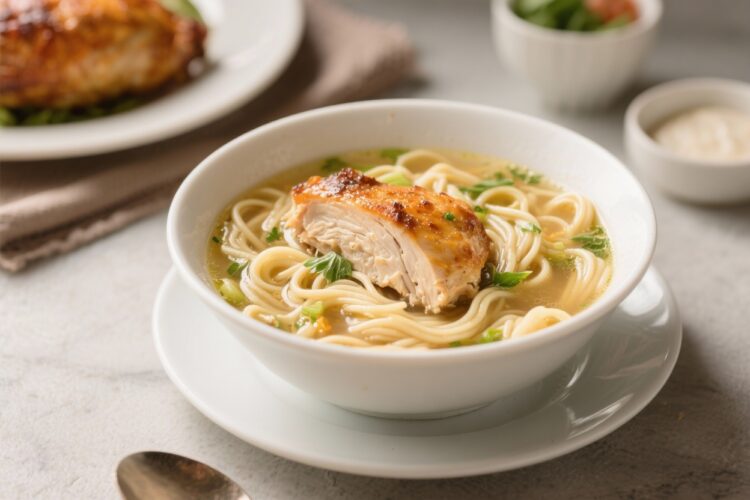
There’s something comforting about a pot of chicken noodle soup simmering on the stove, especially when it comes together in under an hour. Using a store-bought rotisserie chicken makes it easy, hearty, and surprisingly rich. No need to fuss with raw chicken or long simmering times.
You’ll get tender meat, savory broth, and springy noodles every time. This is the kind of weeknight recipe that tastes like you spent all day on it, without actually doing that.
Why This Recipe Works
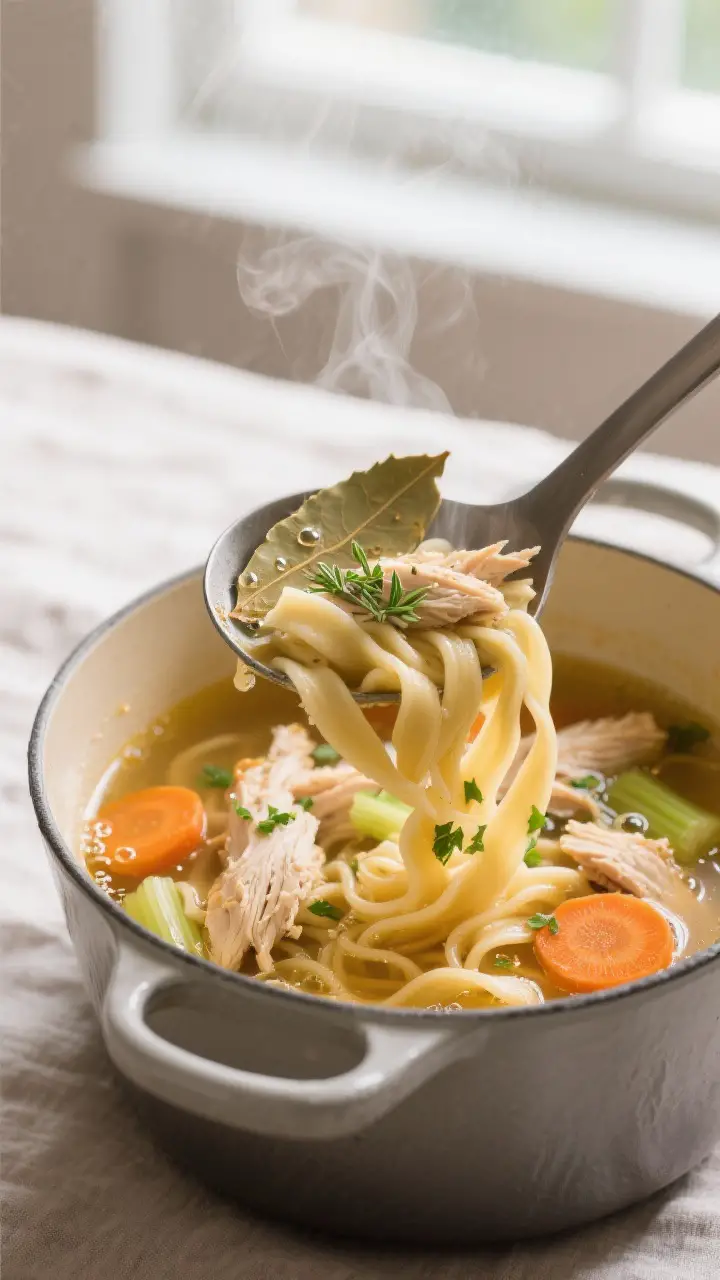
Rotisserie chicken brings built-in flavor. The roasted skin and seasoned meat add depth you don’t get from plain chicken breasts.
A quick homemade stock from the bones boosts that flavor even more.
The aromatics—onion, celery, carrot, and garlic—do heavy lifting with minimal effort. They create a base that tastes slow-cooked, even if you’re not. Using wide egg noodles gives the soup that classic texture and comfort factor.
Finally, finishing with fresh herbs and a squeeze of lemon brightens everything up.
You get a clean, cozy bowl that feels both homestyle and fresh.
Shopping List
- 1 rotisserie chicken (about 2 1/2 to 3 pounds)
- 2 tablespoons olive oil or unsalted butter
- 1 large yellow onion, diced
- 3 medium carrots, sliced
- 3 celery stalks, sliced
- 3–4 garlic cloves, minced
- 8 cups low-sodium chicken broth (plus water as needed)
- 2 bay leaves
- 1 teaspoon dried thyme or 1 tablespoon fresh thyme leaves
- 8 ounces wide egg noodles (about 4–5 cups cooked)
- 1 tablespoon lemon juice (plus extra to taste)
- 2–3 tablespoons chopped fresh parsley or dill
- Salt and freshly ground black pepper
- Optional: 1 teaspoon poultry seasoning, or 1 sprig fresh rosemary
How to Make It
- Shred the chicken: Remove skin and pull meat from the rotisserie chicken. Shred into bite-size pieces and set aside. Save the bones and any skin you don’t want to eat for a quick stock boost.
- Build quick stock (optional but worth it): Place the bones and reserved skin in a pot with 4 cups of broth and 2 cups of water.
Simmer uncovered for 15–20 minutes while you prep the vegetables. Strain and return the fortified broth to the pot.
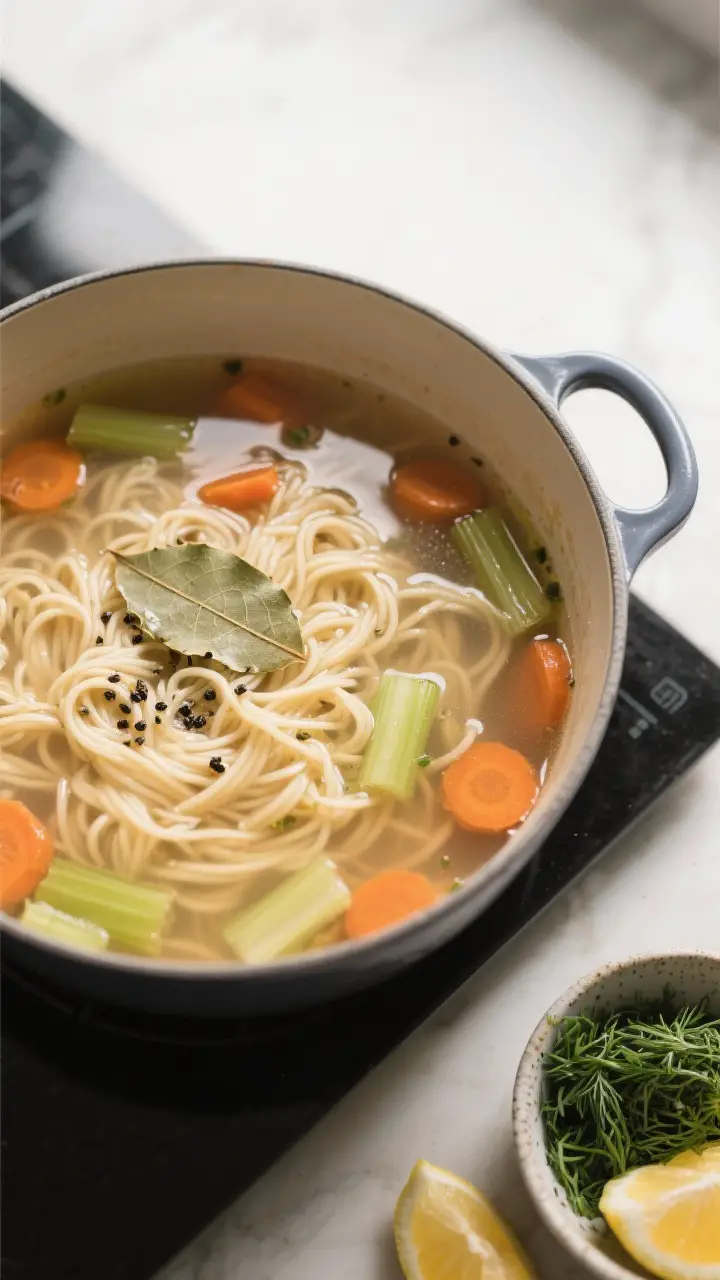
- Sauté aromatics: In a large pot or Dutch oven, heat the oil or butter over medium heat. Add onion, carrots, and celery with a pinch of salt.
Cook 6–8 minutes, stirring occasionally, until softened. Add garlic and cook 30 seconds more.
- Season and simmer: Add the broth (quick stock plus remaining broth), bay leaves, thyme, and poultry seasoning if using. Bring to a boil, then reduce to a gentle simmer.
Cook 10 minutes, until the carrots are tender.
- Add noodles: Stir in the egg noodles and cook according to package time, usually 6–8 minutes, until just tender. Keep the simmer gentle to avoid breaking the noodles.
- Finish with chicken and brightness: Stir in the shredded chicken and heat through for 2–3 minutes. Turn off the heat.
Add lemon juice, parsley or dill, and taste. Season with salt and plenty of black pepper.
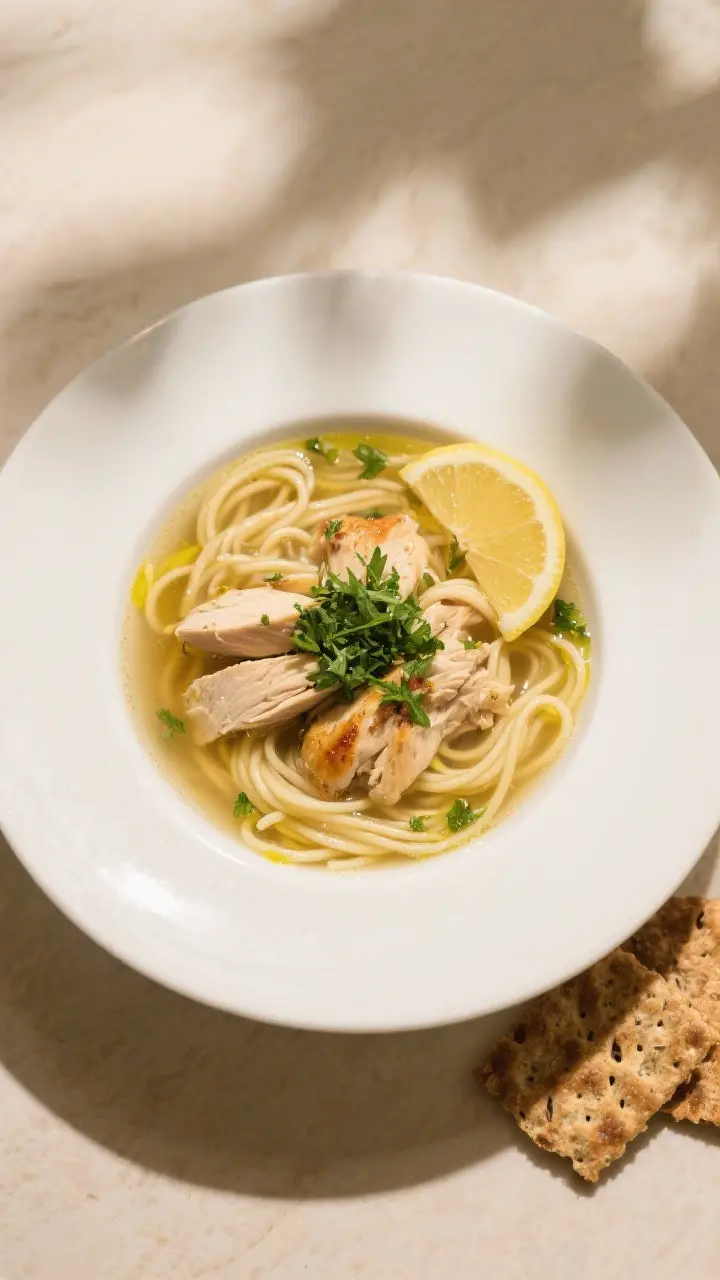
- Serve: Ladle into warm bowls. Add an extra squeeze of lemon or a drizzle of olive oil if you like.
Crackers or warm bread are excellent alongside.
Keeping It Fresh
For the best texture, cook the noodles separately if you plan to store leftovers. Add them to individual bowls and ladle hot soup over the top. This keeps them from soaking up all the broth.
Store soup (without noodles) in airtight containers in the fridge for up to 4 days.
Freeze in portions for up to 3 months. Thaw overnight in the fridge, then reheat gently on the stove. Add fresh noodles and herbs just before serving.
If the soup thickens in the fridge, loosen with a splash of broth or water while reheating.
Adjust salt and lemon to wake it back up.
Benefits of This Recipe
- Fast and convenient: Rotisserie chicken shortens cook time without sacrificing flavor.
- Budget-friendly: One chicken stretches into a full, generous pot of soup.
- Nutritious and comforting: Lean protein, vegetables, and broth make a balanced, soothing meal.
- Flexible: Easy to customize with extra veggies, spices, or different noodles.
- Great for meal prep: Makes excellent leftovers and freezes well.
Pitfalls to Watch Out For
- Overcooking noodles: They can go mushy fast. Pull them as soon as they’re tender, or cook separately and add as needed.
- Under-seasoning: Rotisserie chickens vary in salt. Taste at the end and adjust with salt, pepper, and lemon.
- Greasy broth: If your chicken is especially fatty, skim the surface with a spoon or add a few ice cubes to attract fat and scoop it out.
- Watery flavor: If the broth tastes weak, simmer it a few extra minutes or add a splash of concentrated stock, a bit more thyme, or a dash of soy sauce for depth.
- Overcrowding with veggies: More isn’t always better.
Too many add-ins can dilute the flavor and crowd the pot.
Variations You Can Try
- Creamy chicken noodle: Stir in 1/2 cup heavy cream or evaporated milk at the end. Add a pinch of nutmeg for warmth.
- Lemon-dill upgrade: Increase lemon juice to 2 tablespoons and use fresh dill as the primary herb.
- Ginger-garlic twist: Add 1 tablespoon grated fresh ginger and a splash of soy sauce. Finish with scallions and a drizzle of sesame oil.
- Veggie boost: Toss in peas, baby spinach, or diced zucchini in the last few minutes of cooking.
- Grain swap: Use orzo, ditalini, rice, or even cooked barley instead of egg noodles.
Adjust cook time accordingly.
- Herb-forward: Use rosemary and thyme, then finish with parsley and a hint of tarragon.
- Spicy version: Add red pepper flakes or a spoonful of chili crisp for heat.
FAQ
Can I use leftover cooked chicken instead of rotisserie?
Yes. Use about 4 cups of shredded cooked chicken. You’ll miss a bit of the roasted flavor, so consider adding a touch of poultry seasoning or simmering the broth with a bay leaf for extra depth.
How do I keep noodles from getting soggy?
Cook them separately and add to each bowl just before serving.
If cooking in the soup, undercook slightly and expect them to soften more as they sit.
What if my soup is too salty?
Add more unsalted broth or water, then rebalance with extra thyme and lemon. A small peeled potato simmered for 10 minutes can also absorb some salt—discard it before serving.
Which noodles work best?
Wide egg noodles are classic and hold up well. Or try orzo, rotini, or extra-wide ribbons.
Just watch the timing, as different shapes cook at different rates.
Can I make this in a slow cooker?
Yes, but it’s already quick on the stove. If using a slow cooker, sauté the aromatics first for better flavor, then combine broth, aromatics, and seasonings on Low for 3–4 hours. Add noodles and chicken in the last 20–30 minutes.
How do I add more protein?
Stir in an extra cup of shredded chicken or add a can of drained white beans.
Both blend nicely with the soup’s flavors.
Can I make it gluten-free?
Use gluten-free noodles or cooked rice, and confirm your broth is labeled gluten-free. Adjust cook time for the pasta you choose.
What herbs are best at the end?
Fresh parsley, dill, or a little tarragon add brightness. Add them off the heat so they stay vibrant and fresh-tasting.
How can I make the broth richer?
Simmer the rotisserie bones with broth for 20–30 minutes, then strain.
You can also add a small splash of soy sauce or fish sauce for umami, tasting as you go.
Is lemon necessary?
It’s optional, but a little acid makes the flavors pop. If you don’t have lemon, a splash of apple cider vinegar works.
In Conclusion
Rotisserie Chicken Noodle Soup is the shortcut comfort food you’ll make on repeat. It’s fast, flexible, and deeply satisfying.
With a few smart steps—quick stock, fresh herbs, and bright lemon—you get a pot that tastes like home. Keep it classic or try a variation, and you’ll have a reliable bowl of warmth ready whenever you need it.
Pingback: Why Smart Cooks Buy Two Rotisserie Chickens: The 5-Day Global Prep Secret for 2026 - Whaley Cooks
Pingback: Why Everyone is Obsessed with Acid Bombs and Extreme Sour Flavors in 2026 - Whaley Cooks