
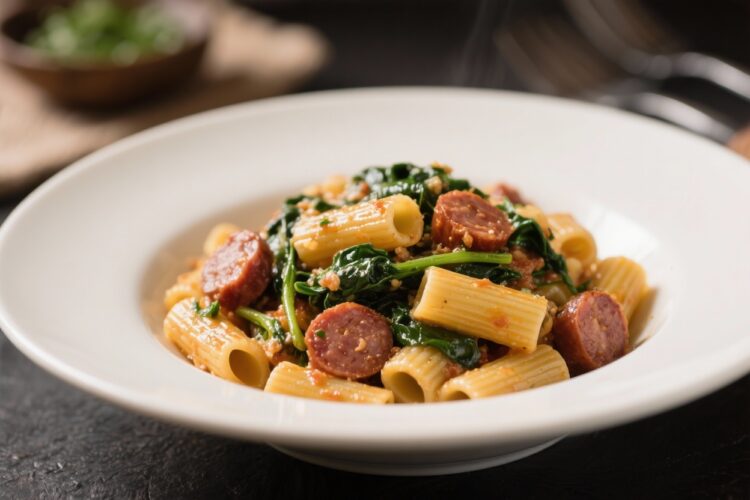
Pasta and sausage is one of those classic pairings that never lets you down. This rigatoni with Italian sausage and spinach is rich, savory, and full of comforting flavors, yet surprisingly simple to pull off on a weeknight. The sauce comes together in the time it takes to boil the pasta, and the wilted spinach adds a fresh, earthy balance.
It’s the kind of meal that feels restaurant-worthy but uses pantry staples and a single skillet. Make it once, and it might just become your new go-to.
What Makes This Recipe So Good
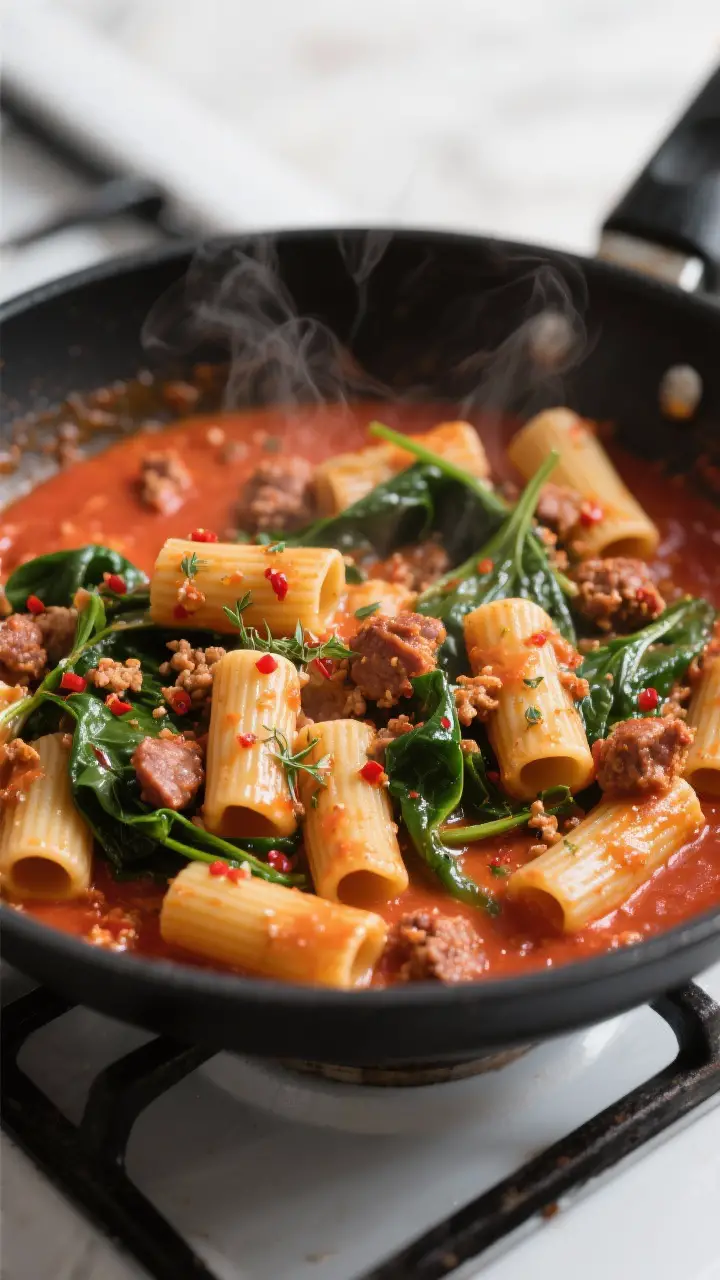
- Big flavor, minimal fuss: Italian sausage brings seasoning built right in—fennel, garlic, and a touch of heat—so you don’t need a long list of spices.
- Balanced and satisfying: Creamy tomato sauce, hearty pasta, and fresh spinach make a dish that’s both comforting and bright.
- Great texture: Rigatoni’s ridges grab onto the sauce, while the sausage adds a meaty bite and the spinach softens just enough to blend in.
- Weeknight-friendly: From start to finish, you’re looking at about 30 minutes.
- Easy to customize: Swap in different greens, change the spice level, or make it dairy-free with simple tweaks.
What You’ll Need
- Rigatoni: About 12 ounces. Penne or ziti also work.
- Italian sausage: 1 pound, casings removed.
Use mild or hot based on your preference.
- Olive oil: 1–2 tablespoons, if your sausage is lean.
- Yellow onion: 1 small, finely chopped.
- Garlic: 3–4 cloves, minced.
- Crushed tomatoes or tomato passata: 1 can (14–15 ounces).
- Tomato paste: 1 tablespoon, for depth and sweetness.
- Heavy cream: 1/2 cup. Half-and-half works in a pinch.
- Chicken broth or pasta water: 1/2 cup, to loosen the sauce.
- Baby spinach: 4–5 cups, loosely packed.
- Red pepper flakes: A pinch to 1/2 teaspoon, optional.
- Dried oregano or Italian seasoning: 1 teaspoon.
- Fresh basil or parsley: A handful, chopped, for finishing.
- Parmesan cheese: Freshly grated, for serving (about 1/2 cup, plus more at the table).
- Salt and black pepper: To taste.
Step-by-Step Instructions
- Bring a big pot of salted water to a boil. Salt it generously—about 1 tablespoon per 4 quarts. Add the rigatoni and cook until just shy of al dente, 1–2 minutes less than package directions.
Scoop out 1 cup of pasta water, then drain.
- Brown the sausage. In a large skillet over medium-high heat, add a drizzle of olive oil if needed. Crumble in the sausage and cook, breaking it up with a spoon, until browned and cooked through, 6–8 minutes. Spoon off excess fat if there’s a lot left in the pan.
- Sauté the aromatics. Add the chopped onion to the sausage and cook until softened, 3–4 minutes.
Stir in the garlic and red pepper flakes and cook 30–60 seconds, just until fragrant.
- Build the sauce. Stir in the tomato paste and cook 1 minute to caramelize it slightly. Pour in the crushed tomatoes and the chicken broth (or some reserved pasta water). Add the oregano, a pinch of salt, and a few grinds of pepper.
Simmer 5 minutes to thicken and meld the flavors.
- Finish with cream. Reduce the heat to medium-low and stir in the heavy cream. Simmer 2–3 more minutes. Taste and adjust seasoning.
The sauce should be rich but pourable; add a splash of pasta water if it feels too thick.
- Wilt the spinach. Add the spinach by handfuls, stirring until it just wilts into the sauce, 1–2 minutes. It will shrink a lot—keep stirring.
- Combine with pasta. Add the drained rigatoni to the skillet and toss to coat. If the sauce tightens up, loosen with a bit more pasta water.
You want the pasta glossy and well-sauced.
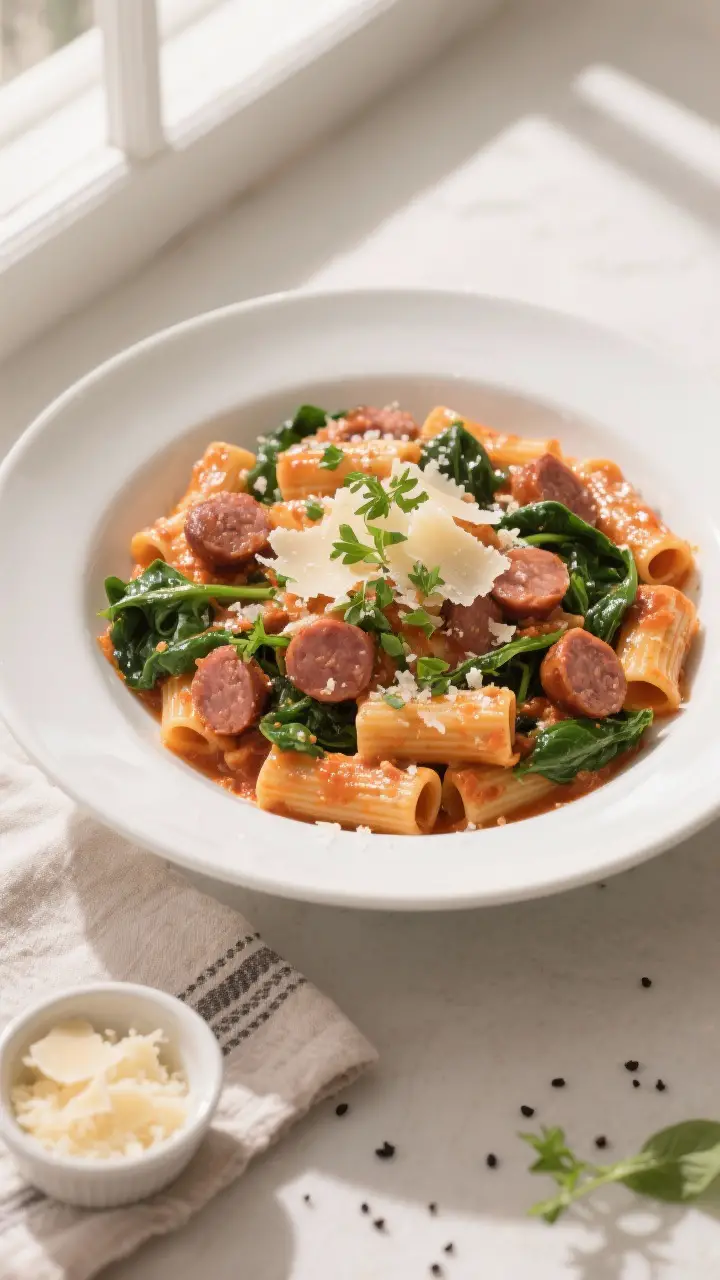
- Finish and serve. Stir in half the Parmesan and the chopped herbs. Serve hot with extra Parmesan on top and a final grind of black pepper.
How to Store
- Refrigerate: Cool completely, then store in an airtight container for up to 3–4 days.
- Reheat: Warm gently on the stove over low heat with a splash of water or broth to loosen the sauce. Microwave in short intervals, stirring between bursts.
- Freeze: This pasta can be frozen for up to 2 months, but cream sauces may separate slightly when thawed.
If freezing, undercook the pasta by 2 minutes and add a splash of cream when reheating to restore texture.
Health Benefits
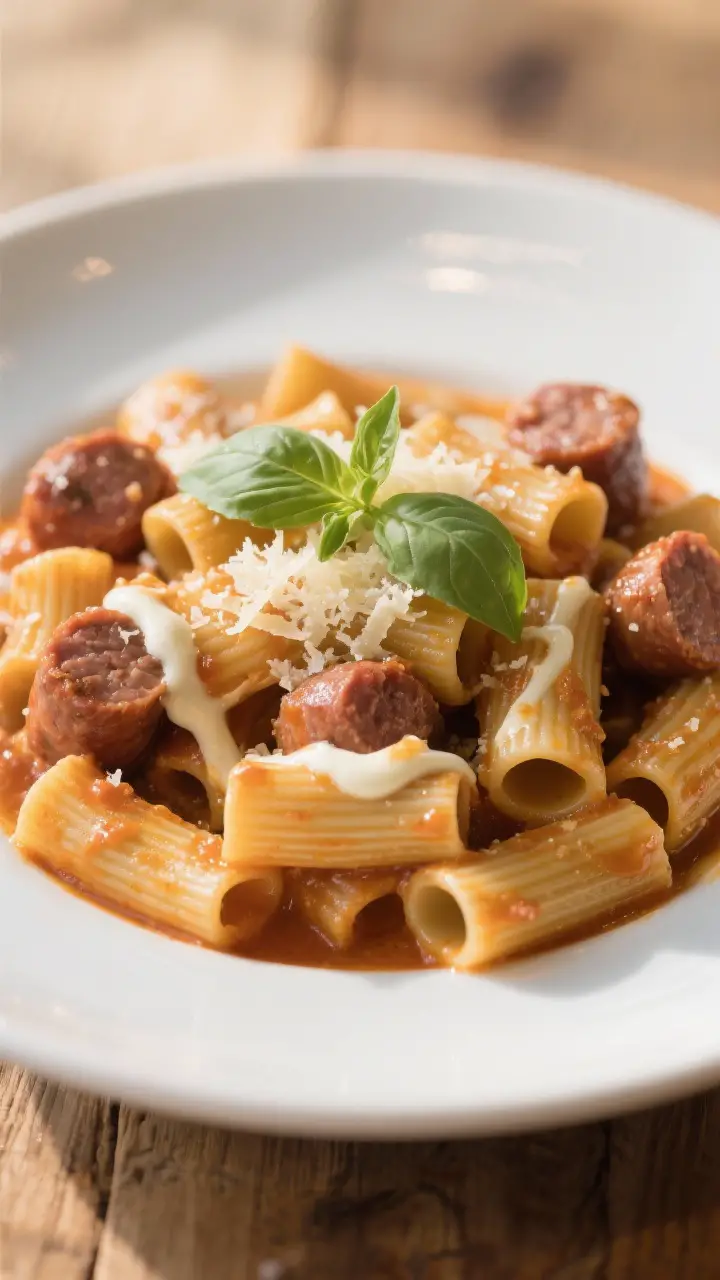
- Protein and iron: Italian sausage provides protein and iron, which support muscle repair and energy levels.
- Leafy greens: Spinach adds vitamins A, C, and K, along with folate and fiber. It’s an easy way to boost nutrients without changing the dish’s flavor much.
- Tomatoes: Crushed tomatoes bring lycopene, an antioxidant tied to heart health.
- Customizable balance: You can lighten the dish by using turkey or chicken sausage and swapping heavy cream for half-and-half or a splash of milk.
Pitfalls to Watch Out For
- Overcooking the pasta: Rigatoni should be al dente. It will continue to cook when tossed in the sauce, so err on the firm side.
- Greasy sauce: If your sausage renders a lot of fat, drain some before adding the onions.
A little fat adds flavor; too much makes the sauce heavy.
- Curdled cream: Add the cream after reducing the heat and avoid a hard boil once it’s in the pan.
- Under-seasoning: Taste the sauce after adding tomatoes, and again after adding cream. You’ll likely need salt at both stages.
- Dry pasta: Keep some pasta water handy. A splash can bring the sauce back to a silky, clingy consistency.
Recipe Variations
- Lean and light: Use chicken or turkey Italian sausage and half-and-half instead of cream.
- Extra veg: Add sliced mushrooms, diced zucchini, or roasted red peppers when sautéing the onions.
- Tomato-forward (no cream): Skip the cream for a lighter, bright red sauce.
Finish with extra olive oil and basil.
- Spicy arrabbiata style: Use hot Italian sausage and bump up the red pepper flakes. A splash of Calabrian chili paste adds a nice kick.
- Cheesy bake: Transfer the sauced pasta to a baking dish, top with mozzarella and Parmesan, and broil until bubbly and golden.
- Gluten-free: Use a gluten-free rigatoni and check that your sausage is certified gluten-free.
- Dairy-free: Skip the cream and cheese. Add a knob of dairy-free butter or a splash of unsweetened oat milk for body.
FAQ
Can I use another pasta shape?
Yes.
Penne, ziti, mezze rigatoni, or even shells work well. Choose a short shape with ridges so the sauce clings nicely.
Is fresh spinach better than frozen?
Fresh baby spinach wilts quickly and blends seamlessly. Frozen spinach works in a pinch—thaw and squeeze out excess water before adding to prevent a watery sauce.
How can I make it less spicy?
Use mild sausage and skip the red pepper flakes.
If the sauce still feels spicy, a splash more cream can smooth it out.
What can I substitute for heavy cream?
Half-and-half is the closest swap. For a lighter option, use whole milk plus a teaspoon of butter, added off heat. For dairy-free, try unsweetened oat milk and finish with olive oil.
Can I make this ahead of time?
You can cook the sauce up to 2 days ahead and refrigerate it.
Reheat gently and toss with freshly cooked pasta and spinach right before serving.
How do I avoid clumpy or stuck-together pasta?
Salt the water well, cook in plenty of water, and drain right before tossing with the sauce. If it sits, toss with a small splash of olive oil to prevent sticking.
What wine pairs well with this dish?
A medium-bodied red like Sangiovese, Montepulciano, or Barbera is great. If you prefer white, try a Pinot Grigio or Verdicchio to cut through the richness.
Can I add more protein?
Sure.
Stir in white beans, or top each serving with a dollop of ricotta for extra protein and creaminess.
Final Thoughts
Rigatoni with Italian sausage and spinach is the kind of meal that solves dinner without feeling like a compromise. It’s fast, full of flavor, and easy to adapt to your taste or what you have on hand. Keep some rigatoni, sausage, and canned tomatoes in your pantry, and you’re halfway to a great dinner any night of the week.
Serve it with a simple green salad and crusty bread, and you’re set.