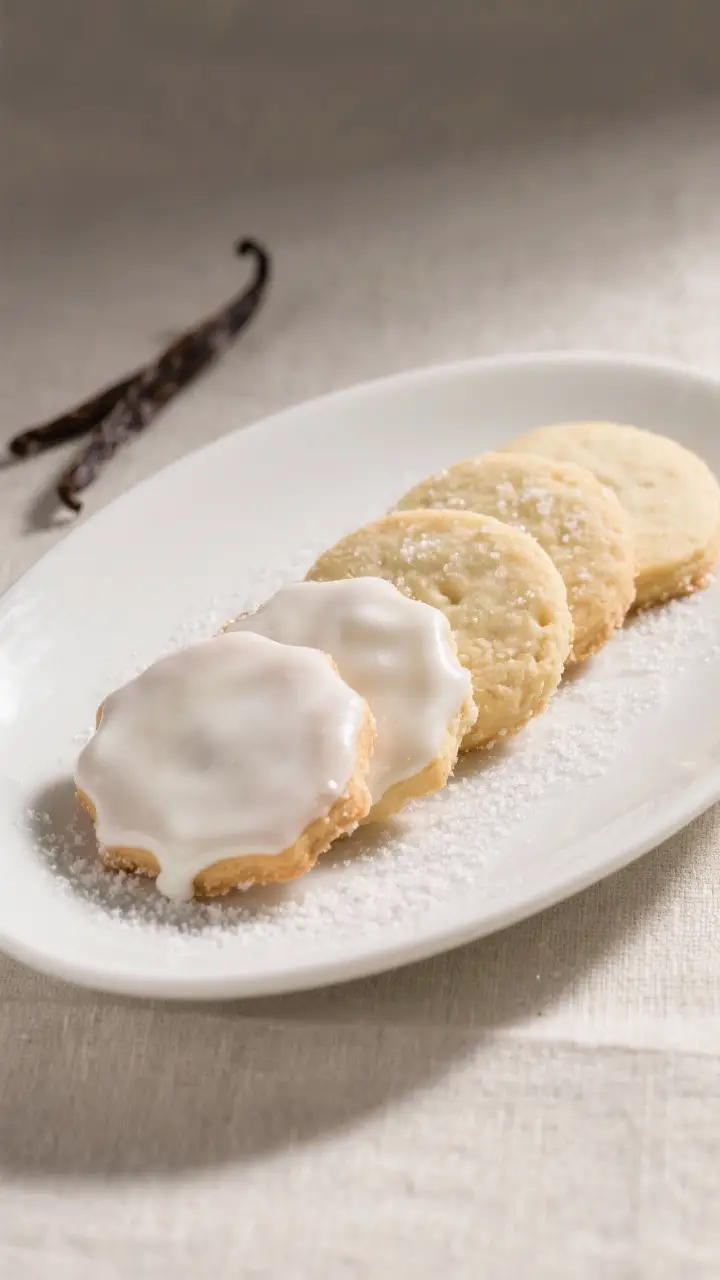
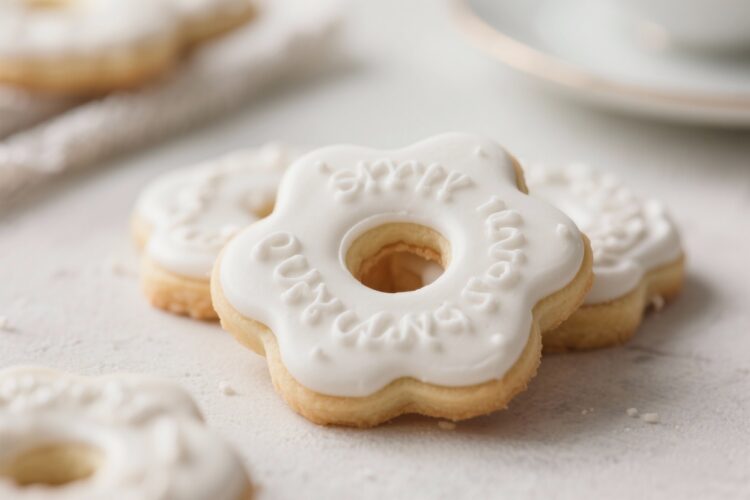
The name says it all—these cookies look smooth and pale like porcelain, with a fine, crisp bite that melts into a tender crumb. They’re lightly sweet, subtly vanilla, and perfect for decorating or serving just as they are. The dough comes together quickly, rolls out easily, and bakes into clean-edged shapes that don’t puff or spread much.
If you love a cookie that’s elegant and simple, this is the one to keep in your back pocket. Put on a playlist, warm up the oven, and you’ll have beautiful cookies in under an hour.
Why This Recipe Works

- High butter-to-sugar balance: Softened butter creamed with fine granulated sugar creates a smooth, pale dough that bakes up crisp at the edges and tender inside.
- Chilled dough for clean shapes: Cooling the dough lets the fats firm up, so your cookies hold their shape and get that “porcelain” smooth finish.
- Cornstarch for finesse: A touch of cornstarch keeps the crumb delicate, giving you a fine, tight texture without crumbling.
- Just-right sweetness: These are sweet but not cloying, making them perfect for icing or enjoying plain.
- Low-moisture approach: Minimal liquid prevents excessive spread and helps create a smooth surface ideal for decorating.
What You’ll Need
- 2 1/4 cups (270 g) all-purpose flour
- 2 tablespoons (16 g) cornstarch
- 1/2 teaspoon fine sea salt
- 1/2 teaspoon baking powder (just enough lift to prevent toughness)
- 3/4 cup (170 g) unsalted butter, softened
- 3/4 cup (150 g) granulated sugar (use superfine if you have it)
- 1 large egg, room temperature
- 1 1/2 teaspoons pure vanilla extract
- 1/4 teaspoon almond extract (optional, for a bakery-style aroma)
- 1–2 tablespoons milk or cream (only if needed to bring the dough together)
- For finishing: Fine sanding sugar or a simple glaze (powdered sugar + milk) if desired
Step-by-Step Instructions

- Prep your tools and oven: Line two baking sheets with parchment paper. Preheat the oven to 350°F (175°C).
Have your butter softened but not greasy.
- Mix the dry ingredients: In a medium bowl, whisk together the flour, cornstarch, salt, and baking powder. Set aside.
- Cream the butter and sugar: In a large bowl, beat the butter and sugar on medium speed for 2–3 minutes, until pale and fluffy. Don’t rush this step—proper creaming creates that fine “porcelain” texture.
- Add egg and extracts: Beat in the egg, vanilla, and almond extract (if using) until smooth and fully combined, scraping down the bowl.
- Combine wet and dry: Add the dry ingredients in two additions, mixing on low just until the dough starts to clump.
If it looks dry and sandy, add milk or cream 1 teaspoon at a time until the dough holds together when pressed.
- Chill the dough: Divide dough in half, flatten into discs, and wrap. Chill 30–45 minutes, or until firm enough to roll without sticking.
- Roll it out: Lightly flour your work surface. Roll one disc to about 1/4 inch (6 mm) thickness.
Keep the surface and rolling pin lightly floured to avoid tearing.
- Cut shapes: Use cookie cutters for neat edges, or cut simple rounds with a glass. Transfer shapes to the prepared sheets, spacing about 1 inch apart. If the dough softens, chill the cut shapes for 10 minutes before baking.
- Optional sparkle: For a porcelain sheen with a gentle crunch, sprinkle with a touch of fine sanding sugar now.