
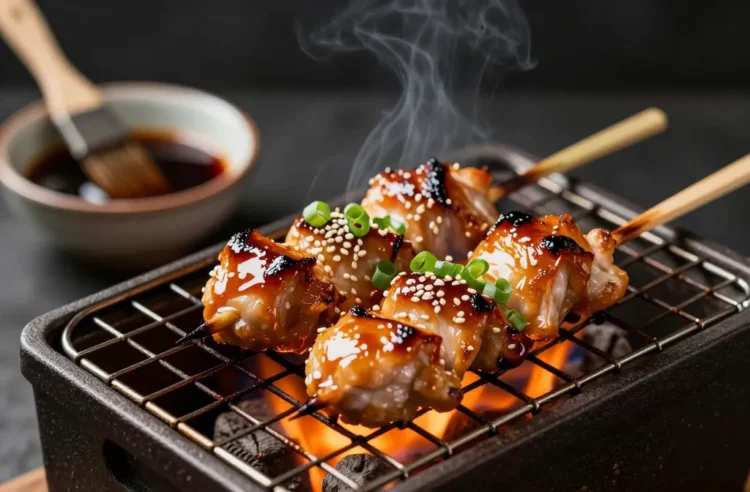
Feeding a crowd and craving something that smacks of street-stall greatness? Yakitori checks every box: juicy bites, glossy glaze, big flavor, minimal fuss. We’re talking authentic tare, smart low-carb swaps, and a grill-ahead flow that keeps you calm when guests roll in. Ready to turn skewers into your party power move?
1. Master The Tare: A Glossy, Authentic Glaze That Loves The Grill
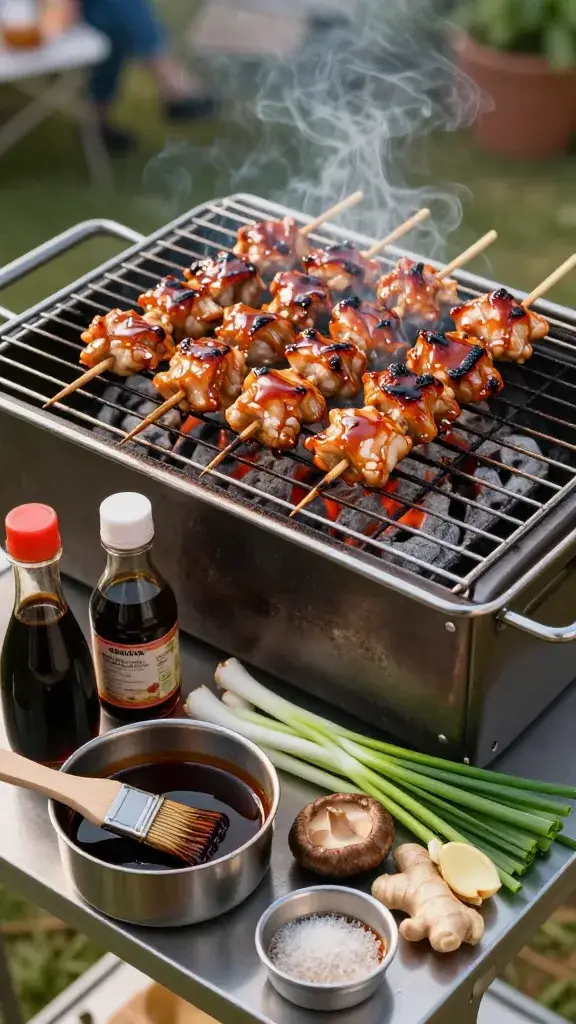
The tare makes or breaks yakitori. You want glossy, salty-sweet depth that clings to chicken and caramelizes into a lacquered dream. The best part? You can make a big batch days ahead and keep it on standby.
What Goes In (Authentic, But Crowd-Friendly):
- Soy sauce: 2 cups (use tamari for gluten-free)
- Sake: 1 cup
- Mirin: 1 cup
- Aromatics: 6 scallions (green + white parts), 6 garlic cloves smashed, 1 thumb ginger sliced
- Optional umami boosters: 1 dried shiitake, 1 tsp fish sauce
- Low-carb touch: 1–2 tbsp allulose or monk fruit erythritol blend (start small, taste as it reduces)
Simmer everything together over medium-low until it reduces by roughly one-third and looks glossy, about 25–35 minutes. Strain and cool. You should get a pourable glaze that coats a spoon and tastes balanced, not cloying. If it’s too salty, add a splash of water and a little more mirin; too sweet, bump in a teaspoon of soy at a time.
Pro Tips:
- Brush, don’t drown. You want layers, not syrup. Think three to four light passes on the grill.
- Reserve a clean portion. Split your tare into “raw-baste” and “final-finish” containers to avoid cross-contamination.
- Make it ahead. Tare tastes even better the next day. Refrigerate up to 2 weeks or freeze in ice cube trays for emergencies.
Use this tare on chicken, sure, but also on grilled mushrooms, scallions, or shrimp. It’s your flavor MVP for the whole menu.
2. Skewer Strategy For 20: Cuts, Counts, And Crowd Math That Works
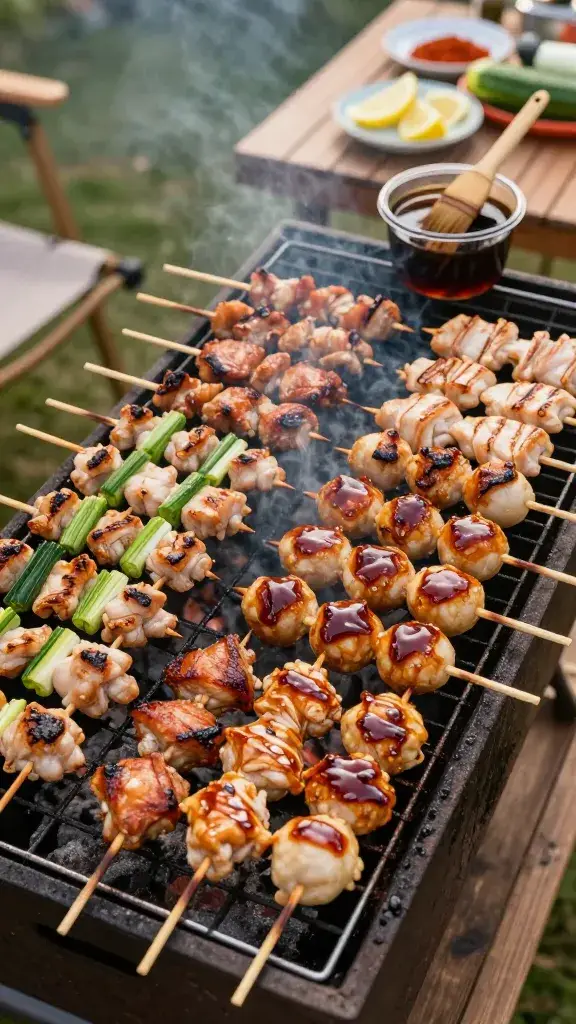
Cooking for a group can spiral fast, but not if you plan your skewers like a pro. Aim for bite-sized pieces that cook evenly and stay juicy. Build in variety so every guest finds a favorite.
The Meat Plan (Low-Carb Friendly):
- Chicken thighs (classic, juicy): 6–7 pounds, boneless skin-on if you can find it
- Chicken breast (lean option): 3–4 pounds
- Chicken meatballs (tsukune): Optional but popular—about 40–50 small meatballs for 20 people
- Negima (chicken + scallion): Make at least half your skewers this way for that signature yakitori vibe
Veggie Boosters (Still Low-Carb):
- Shishito peppers: Whole, skewered sideways
- Scallions: Cut into 1.5-inch lengths
- King oyster mushrooms: Slice into coins; meaty and perfect with tare
- Zucchini: Thick half-moons (keep them firm so they don’t slip)
How Many Skewers?
- For 20 guests: 60–80 skewers total if yakitori is the main event
- Per person: 3–4 skewers average, more if you have athletes or teens
- Mix: 50% chicken thigh, 25% negima, 15% breast, 10% veggie or tsukune
Cut chicken into 1–1.25 inch cubes for even cooking. Thread snugly—no loose floppy bits. You want each skewer to feel like one compact unit that grills evenly and turns easily. Your guests will thank you when every bite tastes perfect.
Gear And Setup:
- Skewers: 10–12 inch bamboo soaked 30 minutes, or metal if you’ve got them
- Two-zone grill: Hot side for sear, cooler side for finishing and basting
- Brushes: One for raw basting, one clean brush for final pass
Well-built skewers cook predictably, plate beautifully, and keep your sanity intact when orders start flying. Efficiency looks delicious.
3. Grill-Ahead Without Drying Out: The Batch-Cook Game Plan
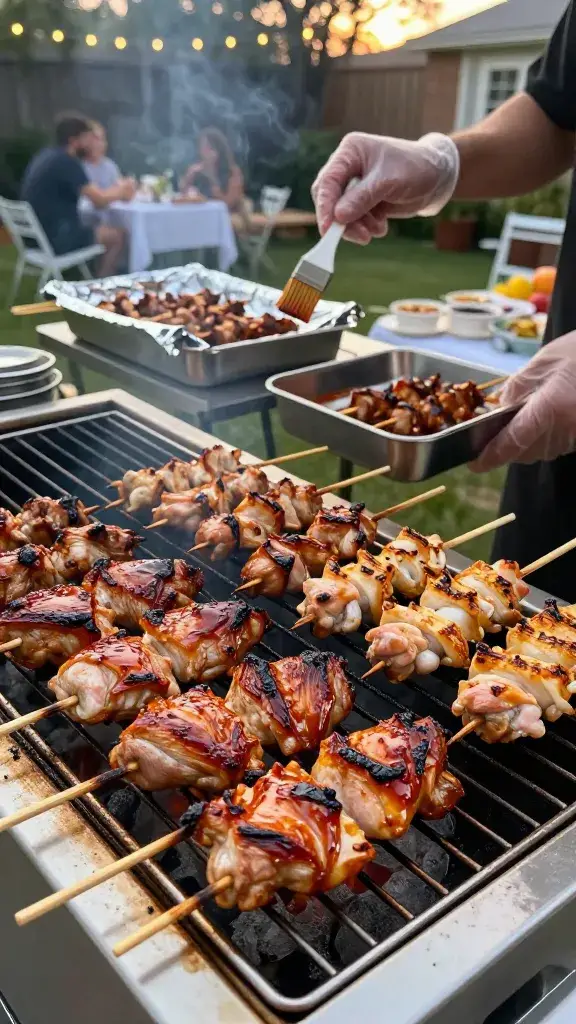
Yes, you can grill ahead for a crowd and keep everything juicy. The secret lives in smart parcooking, staged basting, and a quick reheat-and-gloss move right before serving. Think restaurant line, but in your backyard.
Step-By-Step Flow (Bookmark This):
- Parcook: Season chicken lightly with salt. Grill over medium-high until you’ve got solid color but the centers still look just underdone (about 135–140°F for thigh/breast). Don’t glaze yet.
- Hold: Transfer to trays, tent loosely with foil, and rest. You can hold at room temp for 20–30 minutes or refrigerate up to 24 hours.
- Reheat + Glaze: Right before serving, return to a hot grill. Now apply thin layers of tare, flip, repeat 2–3 times until you hit 165°F internal and the glaze shines.
- Finish: Brush once with your clean tare off the heat, then a quick sprinkle of togarashi or sesame if you like.
For Tsukune (If You’re Fancy):
- Mix ground chicken with minced scallion, grated ginger, egg, pinch of salt, white pepper, and a touch of soy.
- Form small ovals on skewers. Par-steam or bake at 350°F until just set, then chill.
- Grill with layers of tare until sticky and caramelized. Insanely good.
Make Service Smooth:
- Tray Rotation: One tray “waiting,” one tray “on grill,” one tray “finished.” Label them. Seriously.
- Warm Zone: Keep finished skewers on the cool side of the grill or in a 200°F oven to hold for 15–20 minutes.
- Glaze Control: Thin tare with a splash of hot water if it gets syrupy; thick sauces burn fast.
With this flow, you grill ahead stress-free and serve in waves, so every guest gets hot, glossy, perfectly cooked skewers. Hospitality level: chef-y.
Low-Carb Extras That Play Nice:
- Cabbage ribbons: Lightly salted, tossed with rice vinegar and sesame oil—crunchy and clean
- Quick cucumber pickles: Thin slices, salt, rinse, dress with vinegar and a pinch of sweetener
- Sesame broccoli: Char on the grill, finish with a whisper of tare
These sides keep things fresh, balance the glaze, and stay in the low-carb lane without feeling like “diet food.” IMO, that’s a win.
4. Flavor Moves: Salty-Sweet Balance, Char Control, And Crowd-Pleasing Variations
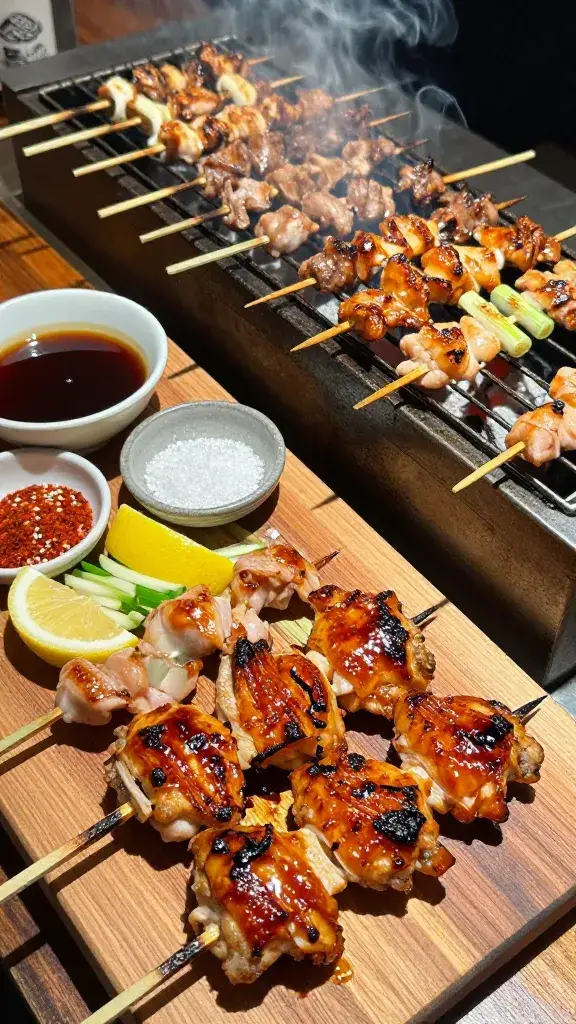
Yakitori shines when you let smoke, fat, and tare do the heavy lifting. But a few clever tweaks can dial everything up to unforgettable. Think crunchy salt, strategic char, and garnish moments that wow without extra work.
Seasoning And Texture:
- Shio first, tare later: Lightly salt the chicken before the initial grill. Salt wakes up the meat’s flavor so the glaze doesn’t have to do all the work.
- Controlled char: Char edges for bitterness and complexity, but don’t torch the whole thing. Move skewers between hot and cool zones to manage flare-ups.
- Final kiss of acidity: A squeeze of lemon or yuzu on a few skewers brightens the sweet-salty glaze. Optional but clutch.
Garnish Bar (Low-Carb, Big Fun):
- Furikake or togarashi: Sprinkle lightly for heat and crunch
- Scallion curls: Ice-water shock for extra snap
- Sesame seeds: Toasted white and black for aroma
- Fresh shiso or cilantro: Adds a clean herbal lift
Variations For Your Lineup:
- Negima Classic: Alternate chicken thigh and scallion pieces; finish glossy with tare
- Yotsumi: All thigh meat, tight-packed for maximal juiciness
- Mune (Breast) Shio-Lemon: Keep it simple—salt, pepper, lemon finish for the lean lovers
- Vegetable Yakitori: King oyster mushrooms with tare; shishitos with flaky salt
Offer both shio (salt-only) and tare options to please every palate. Guests love the choice, and you look like a genius, FYI.
Sauce Safety And Smarts:
- Always keep a separate bowl of tare for finishing after the meat cooks.
- If you accidentally cross-contaminate, bring the sauce to a rolling boil for 2 minutes before using again.
- Label bowls or use different-colored brushes to keep it foolproof.
Great flavor comes with great systems. A little prep keeps everyone safe and very well fed.
5. The Exact Playbook: Shopping, Prep Timeline, And Serving Like A Pro
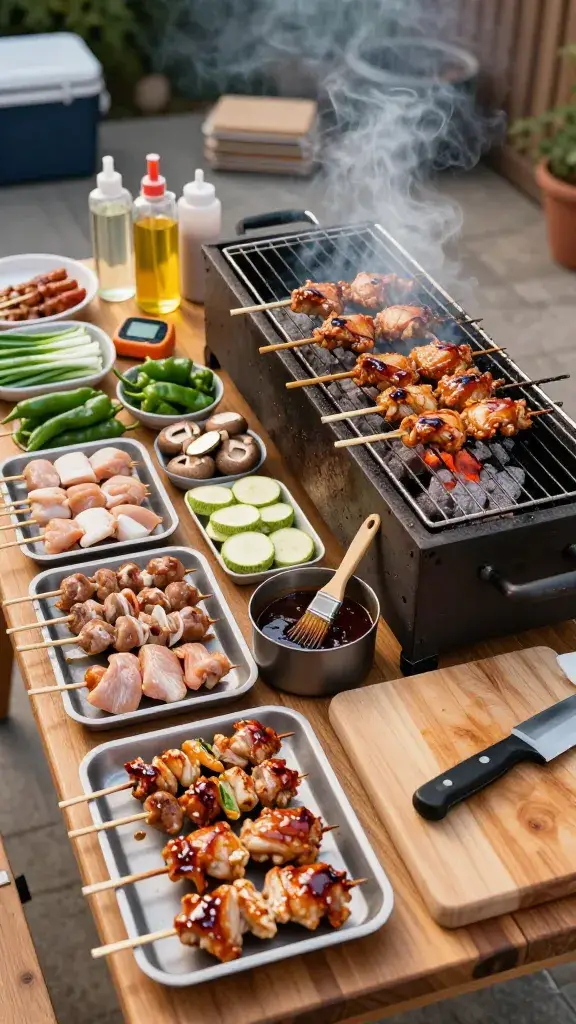
Want zero chaos when twenty hungry friends show up? Follow this timeline and watch everything click into place. It’s the difference between frantic and effortlessly cool.
Shopping List For 20 (Approximate):
- Protein: 6–7 lb chicken thighs, 3–4 lb chicken breast, optional 3 lb ground chicken for tsukune
- Veg: 4 bunches scallions, 1 lb shishitos, 2 large king oyster mushroom packs, 2 medium zucchinis
- Tare ingredients: Soy or tamari (2 cups), sake (1 cup), mirin (1 cup), scallions, garlic, ginger, optional fish sauce and dried shiitake, low-carb sweetener
- Garnishes: Lemon, sesame seeds, togarashi, furikake, fresh herbs
- Misc: 80–100 bamboo skewers, charcoal or propane, foil, disposable trays
Prep Timeline:
- 2–3 days out: Make tare. Chill. Pre-test sweetness/salt balance with a spoonful over a grilled scrap if you can.
- 1 day out: Cut chicken into cubes, slice veg, soak skewers if pre-threading. Thread 60–80 skewers. Store on sheet trays, lightly covered.
- Party morning: Set up garnishes and sides. Bring skewers close to room temp for 20 minutes before grilling.
- 90 minutes before guests: Parcook batches on the grill to 135–140°F. No glaze yet. Tray and tent.
- When guests arrive: Re-grill in waves, layering thin tare coats. Finish to temp, move to warm zone, brush with clean tare, garnish, serve.
Serving Style That Wows:
- Big platters: Arrange by type—negima, thigh, breast shio, veggie—so guests can point and grab.
- Mini labels: Index cards with “Tare Thigh,” “Shio Breast + Lemon,” “Negima” keep confusion low.
- Refill rhythm: Every 10 minutes, drop a fresh hot platter. People feel spoiled, and you stay in the zone.
Time your waves with drinks and sides, and suddenly you’re running a pop-up yakitori bar out of your backyard. Trust me, it’s a vibe.
Troubleshooting (Because Stuff Happens):
- Flare-ups: Keep a cool zone. Move skewers fast, don’t douse with water—it kicks up ash.
- Glaze burning: Too thick or too hot. Thin with a splash of water and glaze off direct heat.
- Dry breast meat: Pull at 160°F, rest a minute, finish with a light brush of clean tare and lemon.
- Undersalted meat: Finish with a pinch of flaky salt right before serving to wake up the flavor.
With a few contingencies ready, you’ll coast through any hiccup like you planned them.
Ready to turn your grill into everyone’s favorite yakitori stand? With a make-ahead tare, smart skewering, and a chill service flow, you’ll feed 20 like it’s no big deal. Fire it up, glaze lightly, and serve hot—your guests will swear you hired a chef.