
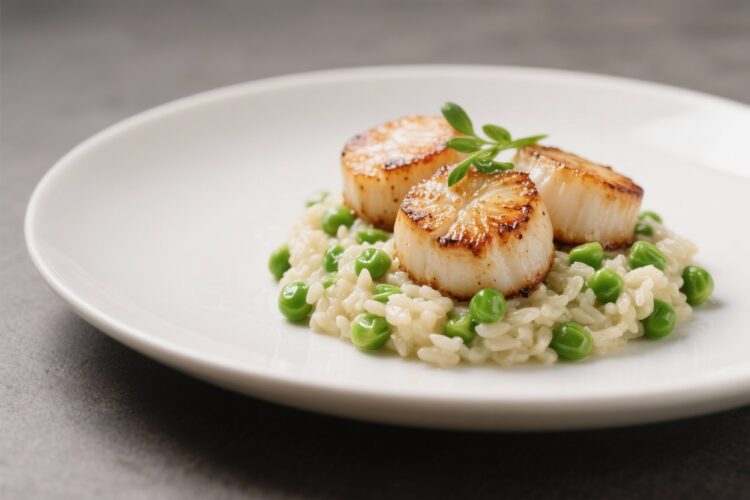
Pan seared scallops with spring pea risotto is one of those meals that feels restaurant-worthy but is totally doable at home. The scallops cook in minutes, and the risotto is creamy, fresh, and full of gentle green flavor. It’s a great dish for a date night, a small dinner party, or when you want something special without a complicated prep.
The contrast of caramelized scallops and velvety risotto is pure comfort. You’ll get a lovely balance of sweet, briny seafood and light, lemony peas that tastes like spring in a bowl.
What Makes This Special

The magic here is in the textures and timing. Scallops develop a golden crust in just a few minutes, giving you a buttery, almost sweet bite.
The risotto stays creamy without being heavy, thanks to peas, lemon, and fresh herbs.
- Balanced flavors: Sweet scallops, bright peas, and a hint of citrus keep it lively.
- Simple technique, big payoff: Two main components, both quick to cook with the right steps.
- Flexible ingredients: Fresh or frozen peas work. You can swap stock, herbs, or cheese without losing the spirit of the dish.
- Restaurant feel at home: Elegant plating and a glossy finish with minimal fuss.
Shopping List
- Sea scallops (dry-packed), about 1 to 1.25 pounds
- Arborio rice, 1.5 cups
- Chicken or vegetable stock, 5 to 6 cups
- Dry white wine, 1/2 cup (optional but recommended)
- Peas, 1.5 cups (fresh or frozen)
- Shallot, 2 small (or 1 medium), finely diced
- Garlic, 2 cloves, minced
- Parmesan cheese, 3/4 cup, finely grated
- Unsalted butter, 4 tablespoons, divided
- Olive oil, for cooking
- Lemon, 1 (zest and juice)
- Fresh herbs (mint, chives, or parsley), a small handful, chopped
- Salt and black pepper
- Optional garnish: pea shoots, extra Parmesan, or a drizzle of good olive oil
Step-by-Step Instructions
- Prep the scallops: Pat the scallops very dry with paper towels. Remove the small side muscle if attached.
Season both sides lightly with salt and pepper. Keep them chilled while you start the risotto.
- Warm the stock: In a saucepan, bring the stock to a bare simmer and keep it warm over low heat. Warm stock helps the rice cook evenly.
- Start the risotto base: In a wide, heavy pan, heat 1 tablespoon olive oil and 1 tablespoon butter over medium heat.
Add the shallot with a pinch of salt and cook until translucent, 2 to 3 minutes. Stir in the garlic for 30 seconds.
- Toast the rice: Add the Arborio rice and stir to coat. Cook 1 to 2 minutes until the grains look slightly translucent around the edges.
This step builds nutty flavor and helps the rice keep a nice bite.
- Deglaze: Pour in the white wine and stir until mostly absorbed. If you’re skipping wine, add a ladle of stock instead and proceed the same way.
- Add stock gradually: Add a ladle of warm stock and stir gently. When it’s mostly absorbed, add another ladle.
Keep the heat at a gentle simmer and repeat, stirring often, for about 16 to 20 minutes total. The rice should be creamy but still slightly al dente.
- Cook the peas: If using fresh peas, blanch them in the warm stock for 1 to 2 minutes, then scoop out. If using frozen peas, thaw under cool water and drain.
Add peas to the risotto during the last 3 to 4 minutes of cooking.
- Finish the risotto: When the rice is just right, stir in 2 tablespoons butter, the Parmesan, lemon zest, and a squeeze of lemon juice. Fold in chopped herbs. Taste and adjust salt, pepper, and lemon.
The risotto should gently flow when you tilt the pan—add a splash of stock if too thick.
- Sear the scallops: Heat a large stainless steel or cast-iron skillet over medium-high until hot. Add 1 tablespoon olive oil and 1 tablespoon butter. When the butter foams and just begins to brown, place scallops in the pan without crowding.
Don’t move them for 1.5 to 2 minutes until a deep golden crust forms.
- Flip and finish: Turn the scallops and cook 1 to 2 minutes more, depending on size. They should be just opaque in the center and springy to the touch. Remove to a plate and lightly season with a pinch of salt and a squeeze of lemon.
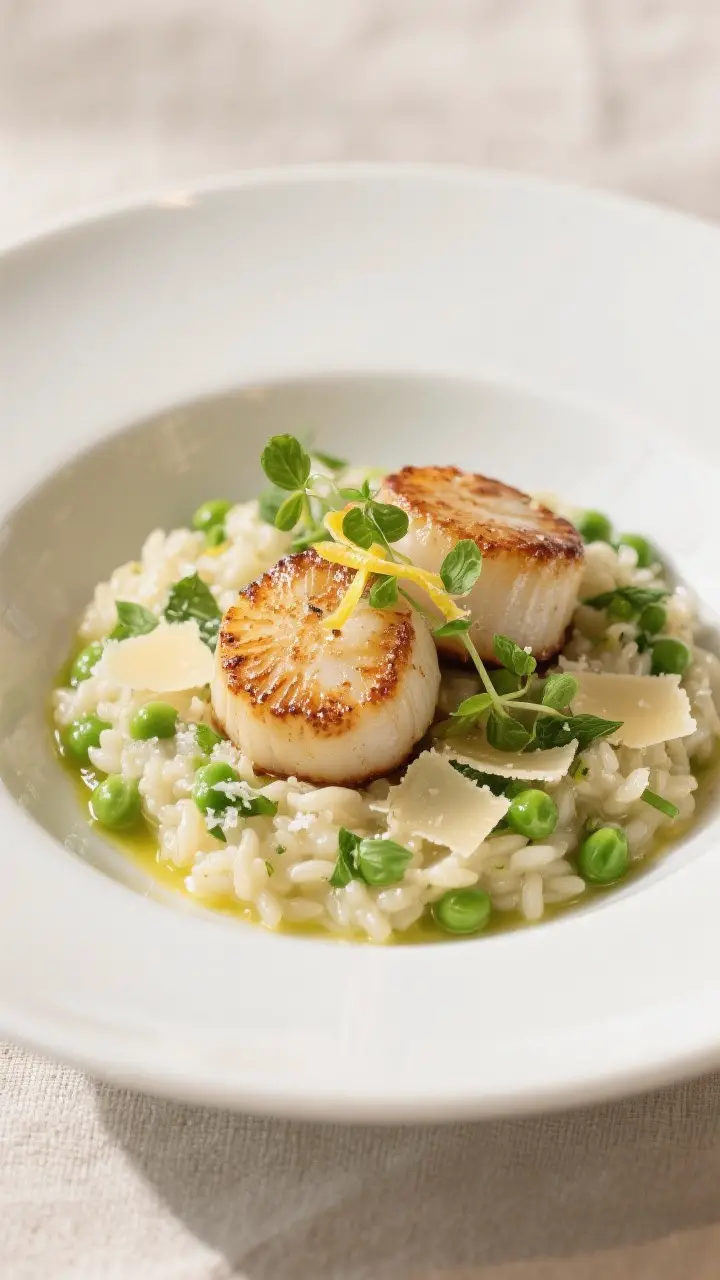
- Plate: Spoon risotto into warm bowls.
Top with 3 to 5 scallops per serving. Garnish with extra herbs, pea shoots, or a drizzle of olive oil. Serve immediately.
Storage Instructions
Risotto is best fresh, but you can store leftovers in an airtight container for up to 3 days.
Reheat gently on the stove with a splash of stock or water to restore creaminess. Scallops do not reheat well; if you have leftovers, consider slicing and folding them into the risotto as it warms, just until heated through. Avoid microwaving scallops on high heat—they’ll turn rubbery.
Why This is Good for You
- Lean protein: Scallops are high in protein and low in fat, with minerals like selenium and zinc.
- Fiber and vitamins: Peas bring fiber, vitamin C, vitamin K, and a gentle sweetness without added sugar.
- Portion-friendly richness: Parmesan and butter add flavor, so you can use less and still feel satisfied.
- Balanced meal: Protein, complex carbs, and greens keep energy steady and hunger at bay.
Pitfalls to Watch Out For
- Wet scallops: If your scallops aren’t dry, they’ll steam instead of sear.
Pat them thoroughly and use high heat.
- Overcrowded pan: Too many scallops at once drop the pan temperature. Sear in batches if needed.
- Overcooked rice: Risotto should be creamy with a slight bite. Taste as you go and stop when it’s just tender.
- Cold stock: Adding cold stock stalls cooking and leads to gluey texture.
Keep it warm.
- Heavy hand with lemon: Use zest for brightness and add juice gradually. Too much can overpower the dish.
Variations You Can Try
- Herb swap: Try tarragon for a subtle anise note, or basil for a sweet, summery lift.
- Veg boost: Stir in sautéed asparagus tips or ribbons of baby spinach at the end.
- No wine version: Use a splash of extra stock plus a teaspoon of white wine vinegar for brightness.
- Dairy adjustments: Use a knob of olive oil in place of some butter and a smaller amount of Parmesan, or try a lactose-free hard cheese.
- Citrus twist: Swap lemon for a mix of lemon and a hint of orange zest for a rounder citrus aroma.
- Make it crispy: Top with crisped prosciutto crumbs or toasted breadcrumbs for texture.
FAQ
How do I know my scallops are dry-packed?
Dry-packed scallops aren’t treated with preservatives and won’t sit in a milky liquid. They look slightly off-white or beige and smell clean and briny.
If the label doesn’t say “dry” or “dry-packed,” ask the fishmonger.
Can I use a different rice for risotto?
Arborio is classic, but Carnaroli or Vialone Nano also work and can be even creamier. Long-grain rice won’t give the proper texture, so stick to a short-grain risotto rice if possible.
What if I don’t have shallots?
Use half a small yellow onion, finely diced. Cook it gently to avoid sweetness turning too strong.
The goal is a mellow base that supports the peas and scallops.
How do I prevent sticking when searing scallops?
Use a very hot, well-preheated pan and enough oil to coat the surface. Don’t move the scallops until a crust forms. If they resist when you try to flip, give them another 20 to 30 seconds.
Can I make the risotto ahead?
You can par-cook it: stop cooking when the rice is just shy of al dente, spread on a tray to cool, and refrigerate up to a day.
To finish, return to the pan with warm stock and cook a few more minutes, then add peas, butter, and cheese. It’s a handy trick for entertaining.
What wine pairs well with this dish?
A crisp, mineral white like Sauvignon Blanc, Pinot Grigio, or a dry Vermentino pairs nicely. If you prefer Chardonnay, pick an unoaked or lightly oaked bottle to keep the pairing bright.
Can I use bay scallops instead of sea scallops?
Yes, but adjust the cook time.
Bay scallops are smaller and will sear in about 60 to 90 seconds per side. They’re sweeter and more delicate, so watch closely to avoid overcooking.
Wrapping Up
This pan seared scallops with spring pea risotto brings together simple steps and bright flavors for a dinner that feels special. With a hot pan, warm stock, and a light hand with lemon, you’ll get silky risotto and beautifully caramelized scallops every time.
Keep it flexible with the variations, and don’t stress the details. Serve it right away, enjoy the aroma, and let the clean, fresh flavors do the talking.
Printable Recipe Card
Want just the essential recipe details without scrolling through the article? Get our printable recipe card with just the ingredients and instructions.