
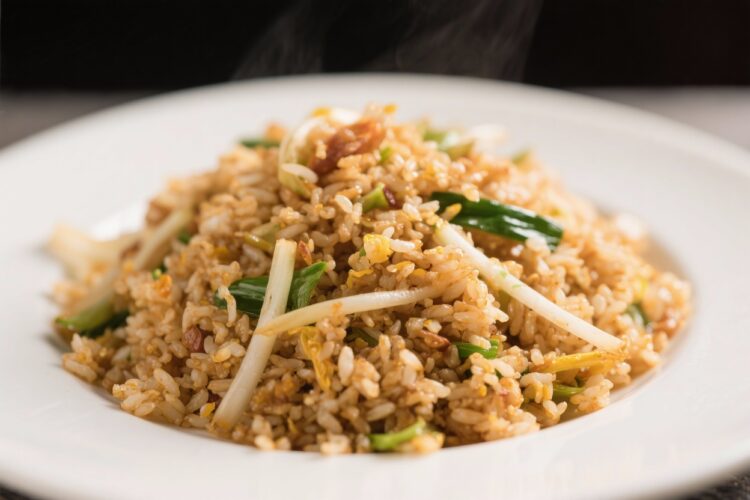
Pad Thai fried rice brings the best of two beloved dishes together in one skillet. It’s familiar, comforting, and full of bold, tangy-sweet flavors. If you love pad thai but want something heartier and easier to cook at home, this is it.
It’s a great way to use leftover rice and any veggies in your fridge. With a few pantry staples and a hot pan, you’ll have a complete, satisfying meal in minutes.
What Makes This Special
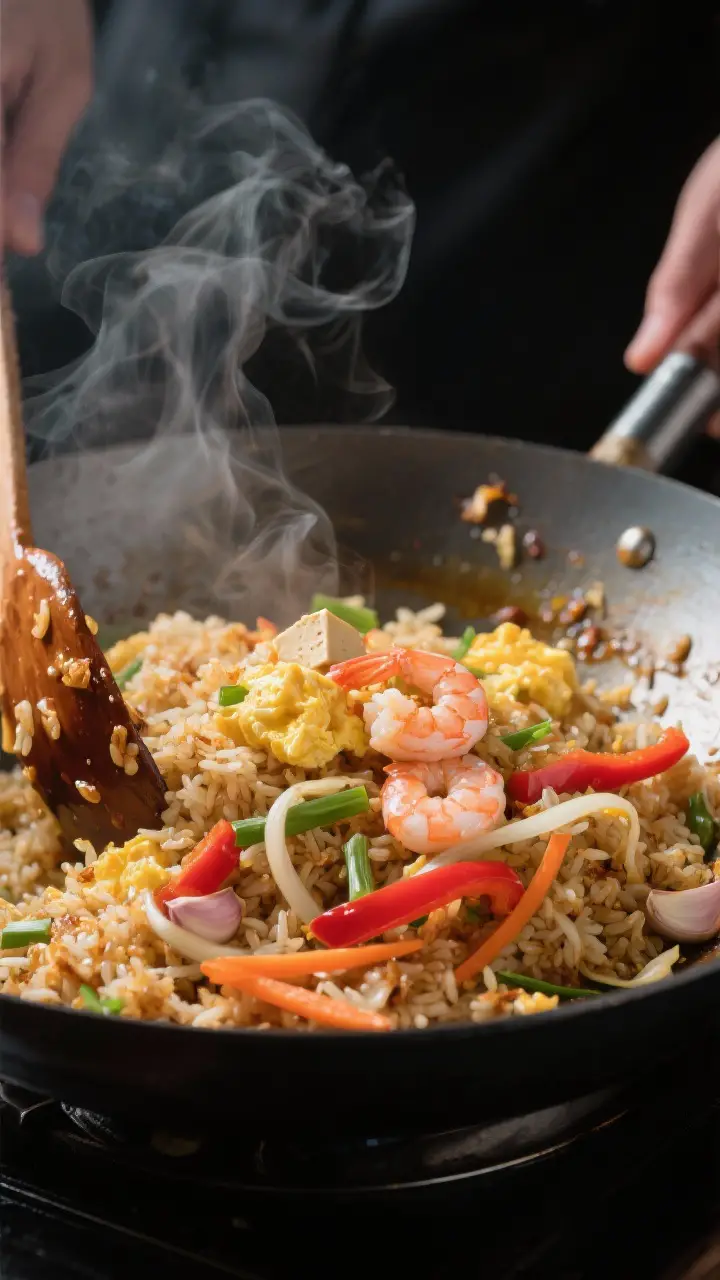
This dish keeps the signature flavors of pad thai—tamarind, fish sauce, lime, and a touch of sweetness—then wraps them around fluffy fried rice. It’s fast, forgiving, and weeknight-friendly.
You get chewy rice, crisp-tender vegetables, soft scrambled egg, and crunchy peanuts in every bite. The sauce is balanced, bright, and deeply savory. Best of all, it’s easy to customize to your taste, whether you prefer tofu, shrimp, or chicken.
Ingredients
- 3 cups day-old cooked jasmine rice (cold and separated)
- 2 large eggs, lightly beaten
- 8–10 ounces protein (shrimp, diced chicken thigh, or firm tofu), patted dry
- 1 cup bean sprouts (or shredded cabbage as a substitute)
- 1 small red bell pepper, thinly sliced
- 1 small carrot, julienned or grated
- 3 green onions, sliced (whites and greens separated)
- 2 cloves garlic, minced
- 1 tablespoon neutral oil (plus more as needed)
- 1/4 cup roasted peanuts, roughly chopped
- 1 lime, cut into wedges
Pad Thai-Style Sauce:
- 2 tablespoons fish sauce (or soy sauce for a vegetarian option)
- 1 tablespoon tamarind concentrate (or 2 tablespoons lime juice if unavailable)
- 1–1.5 tablespoons palm sugar or brown sugar (adjust to taste)
- 1 tablespoon soy sauce
- 1–2 teaspoons chili paste or sriracha (optional, to taste)
Optional add-ins:
- Fresh cilantro leaves
- Thai basil or regular basil
- Frozen peas or edamame
- Extra lime for serving
Step-by-Step Instructions
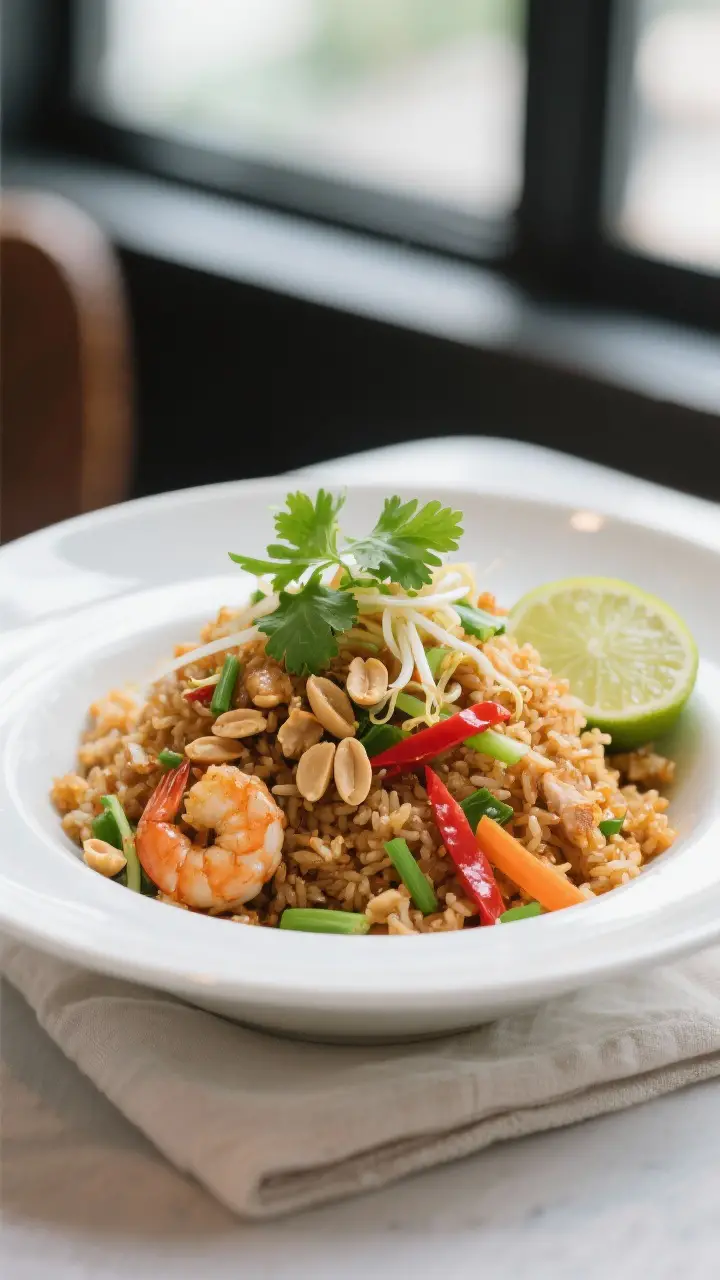
- Make the sauce. In a small bowl, whisk fish sauce, tamarind, sugar, soy sauce, and chili paste until the sugar dissolves.
Taste and adjust—aim for tangy-sweet with a savory backbone.
- Prep the rice. Break up clumps of cold, day-old rice with clean hands or a fork. You want loose grains for the best texture.
- Heat the pan. Set a large wok or skillet over medium-high heat. Add 1–2 teaspoons of oil and swirl to coat.
- Cook the protein. Add shrimp, chicken, or tofu in a single layer.
Season lightly with a pinch of salt. Stir-fry until just cooked through, then transfer to a bowl.
- Scramble the eggs. Add a little more oil if the pan looks dry. Pour in the beaten eggs and scramble softly until just set.
Push to one side or remove to the same bowl as the protein.
- Aromatics and vegetables. Add another teaspoon of oil if needed. Toss in garlic and the white parts of the green onions; stir-fry for 20–30 seconds until fragrant. Add bell pepper and carrot; cook 1–2 minutes until crisp-tender.
- Fry the rice. Add the rice and spread it out.
Let it sit for 20–30 seconds so it lightly sears, then stir and repeat. This helps build a slightly toasty texture.
- Sauce it up. Pour the sauce around the edges of the pan so it sizzles. Fold the rice to coat every grain.
Return the protein and eggs, then add bean sprouts and most of the green onion tops. Stir-fry 1–2 minutes until hot and well combined.
- Finish and serve. Turn off the heat. Squeeze in a wedge of lime, toss, and taste.
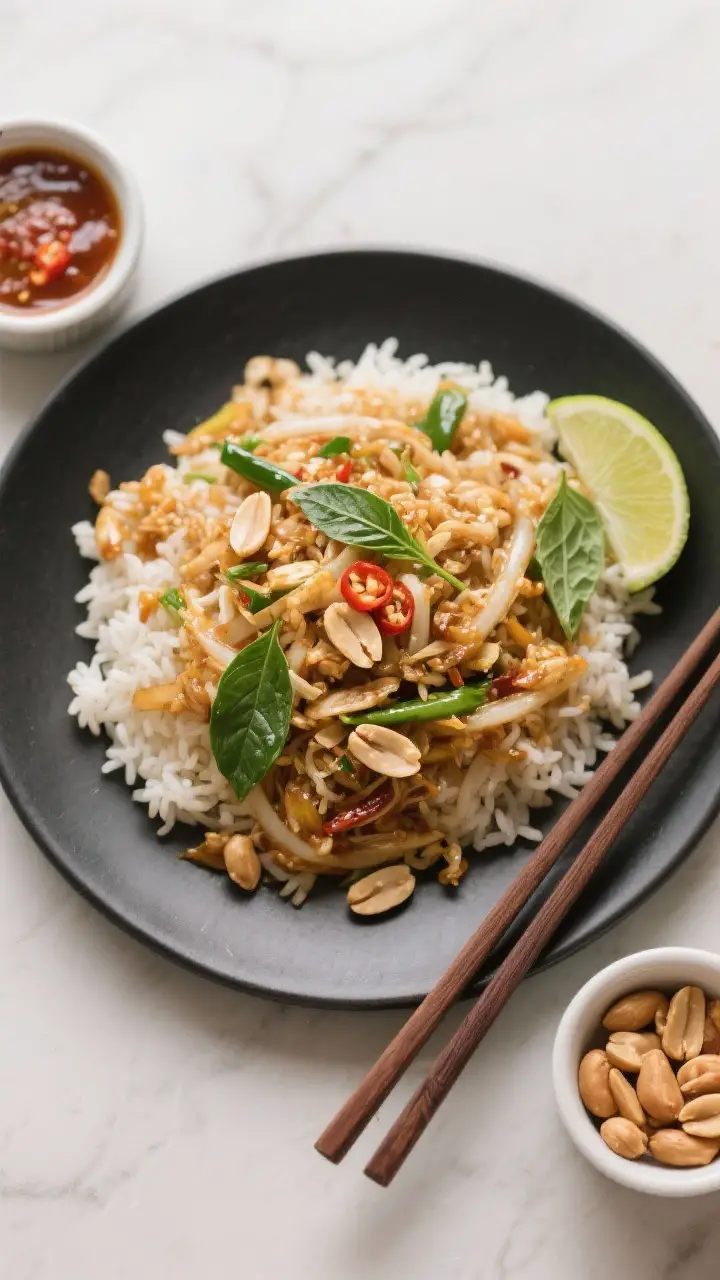
Adjust with more lime, a splash of fish sauce, or a pinch of sugar as needed. Top with chopped peanuts and any herbs. Serve immediately with extra lime wedges.
Storage Instructions
- Refrigerate: Cool leftovers quickly and store in an airtight container for up to 3 days.
- Reheat: Warm in a hot skillet with a splash of water or a touch of oil.
Stir often to avoid drying out. Microwave works in a pinch; cover to keep moisture in.
- Freeze: Not ideal due to texture changes, but possible. Freeze up to 1 month in a freezer-safe bag.
Thaw overnight in the fridge before reheating.
- Food safety tip: If you used shrimp or chicken, reheat to steaming hot throughout.
Why This is Good for You
- Balanced macros: You get protein from eggs and your chosen protein, carbs from rice, and healthy fats from peanuts and a small amount of oil.
- Fiber and vitamins: Bell pepper, carrot, and bean sprouts add crunch, fiber, and vitamins A and C.
- Smart sodium control: Making the sauce at home lets you dial back sodium while keeping the flavor bold.
- Satisfying, not heavy: The lime and tamarind keep it bright so the dish feels lively and balanced.
What Not to Do
- Don’t use freshly cooked hot rice. It will clump and turn mushy. Cold, day-old rice gives you separate grains and better browning.
- Don’t overcrowd the pan. Too much at once steams the rice. Cook in batches if your pan is small.
- Don’t skip tasting the sauce. Your tamarind and fish sauce may be stronger or milder than mine.
Adjust before it hits the pan.
- Don’t overcook the vegetables. You want a crisp bite for contrast.
- Don’t forget the lime. That squeeze at the end brightens everything and ties the flavors together.
Variations You Can Try
- Vegetarian: Use firm tofu, soy sauce instead of fish sauce, and add extra veggies like mushrooms or snap peas.
- Shrimp and pineapple: Add small pineapple chunks for bursts of sweetness that play well with the tangy sauce.
- Chicken and cashew: Swap peanuts for cashews and use chicken thigh for juicy bites.
- Spicy basil: Add a handful of Thai basil at the end and increase chili paste for heat.
- Brown rice or cauliflower rice: Brown rice adds a nutty flavor; cauliflower rice lowers carbs. Adjust cook time to avoid sogginess.
- Peanut-butter twist: Whisk 1–2 teaspoons natural peanut butter into the sauce for a richer, lightly creamy finish.
FAQ
Can I make this without tamarind?
Yes. Use extra lime juice for tang and a touch more sugar to balance.
It won’t be exactly the same, but it will still taste bright and satisfying.
What’s the best rice to use?
Day-old jasmine rice is ideal because it’s fragrant and slightly chewy. If you only have fresh rice, spread it on a tray to cool and dry for 30 minutes in the fridge before cooking.
How do I keep the rice from getting soggy?
Start with dry, cold rice, use a hot pan, and avoid overcrowding. Add the sauce around the edges so it reduces quickly instead of soaking the rice.
Is there a gluten-free option?
Use gluten-free tamari instead of soy sauce and check your fish sauce label.
Everything else is naturally gluten-free.
Can I meal prep this?
Absolutely. Portion into containers, keep the peanuts and lime separate, and add them right before eating to keep the texture fresh.
How spicy should it be?
That’s up to you. Start mild, then add more chili paste or sliced fresh chilies at the end if you want extra heat.
In Conclusion
Pad Thai fried rice gives you punchy, balanced flavors with the comfort of fried rice and the personality of pad thai.
It’s fast to make, easy to adapt, and perfect for using up leftovers. With a solid sauce and a quick stir-fry technique, you’ll have a bright, satisfying meal any night of the week. Keep lime and peanuts on the table, and enjoy every crunchy, tangy, savory bite.
Printable Recipe Card
Want just the essential recipe details without scrolling through the article? Get our printable recipe card with just the ingredients and instructions.