
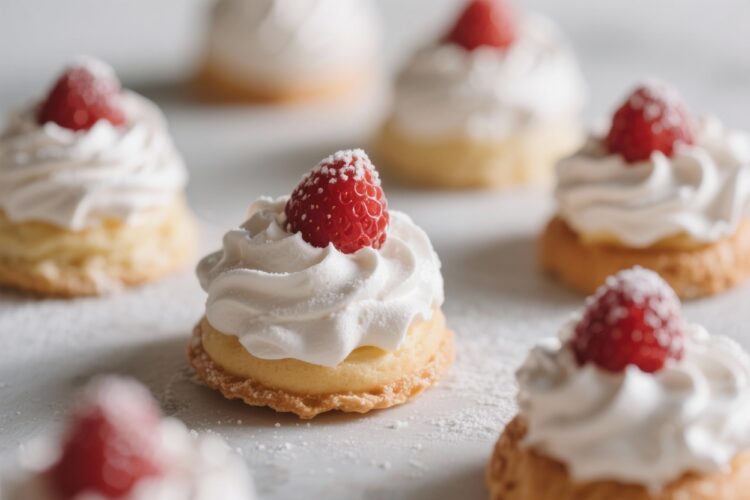
Mini Pavlova is one of those desserts that looks fancy but comes together with simple ingredients and a little patience. Each one has a crisp shell, a marshmallowy center, and a crown of soft whipped cream and fresh fruit. They’re perfect for parties, but easy enough for a weeknight treat when you want something special.
Kids love decorating them, and adults always go back for seconds. If you’ve never made meringue before, don’t worry—this recipe walks you through each step with tips that actually work.
What Makes This Recipe So Good
- Perfect texture contrast: crisp on the outside, soft and fluffy inside, plus cool cream and juicy fruit on top.
- Make-ahead friendly: bake the shells a day ahead and assemble right before serving.
- Customizable: use whatever fruit you like—berries, kiwi, mango, or passion fruit all shine.
- Gluten-free: naturally flourless with no special substitutions needed.
- Elegant but simple: the ingredient list is short, and most steps are hands-off.
Shopping List
- Egg whites (from 4 large eggs), room temperature
- Granulated sugar (superfine/caster if you have it)
- Cornstarch
- White vinegar or lemon juice
- Vanilla extract
- Heavy cream (heavy whipping cream)
- Powdered sugar (for sweetening cream)
- Fresh fruit: strawberries, raspberries, blueberries, kiwi, passion fruit, or mango
- Optional: a pinch of fine salt, citrus zest, mint leaves for garnish
Step-by-Step Instructions
- Prep the oven and pans: Preheat to 250°F (120°C). Line two baking sheets with parchment.
Draw 8–10 circles (about 3 inches/7.5 cm wide) on the underside of the parchment if you want guides.
- Clean the bowl and tools: Wipe your mixing bowl and whisk with a little vinegar or lemon juice to remove any grease. Grease ruins meringue, so this step matters.
- Separate the eggs: Separate whites from yolks while the eggs are cold, then let the whites come to room temp for 20–30 minutes. You need 4 egg whites (about 120 g).
- Start the meringue: Add egg whites and a pinch of salt to the bowl.
Beat on medium speed until soft, foamy peaks form.
- Add sugar slowly: With the mixer running, add 1 cup (200 g) of sugar in a slow, steady stream. Then increase to medium-high and beat 5–7 minutes until stiff, glossy peaks form. Rub a bit between your fingers—if it feels gritty, keep beating until smooth.
- Stabilize and flavor: Sprinkle in 1 teaspoon cornstarch, 1 teaspoon white vinegar (or lemon juice), and 1 teaspoon vanilla.
Gently fold with a spatula until just combined.
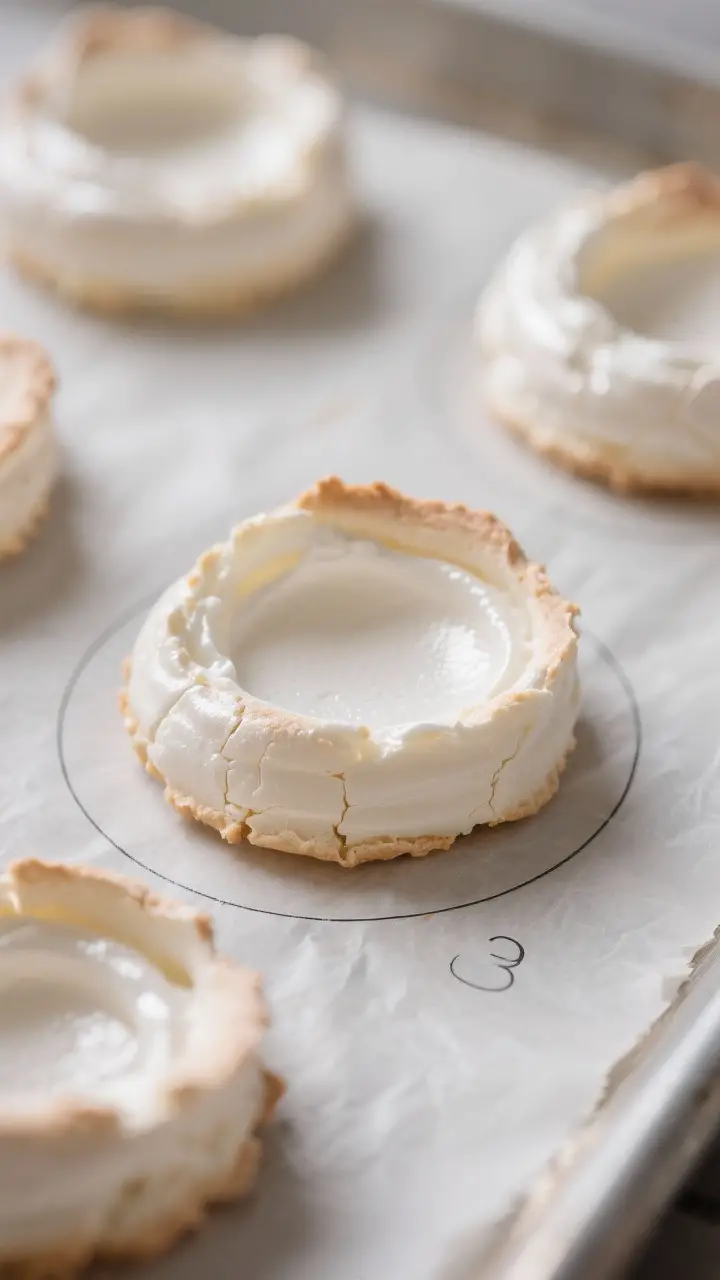
- Pipe or spoon: Spoon meringue into mounds on the parchment circles. Use the back of a spoon to create shallow wells in the center. For neater edges, use a piping bag with a large round tip and then hollow the center.
- Bake low and slow: Place trays in the oven and bake 60–70 minutes.
The meringues should be dry to the touch and lift easily from the parchment.
- Cool in the oven: Turn off the oven, crack the door slightly, and let them cool inside for at least 45 minutes to 1 hour. This helps prevent cracks.
- Whip the cream: Beat 1 cup (240 ml) heavy cream with 2–3 tablespoons powdered sugar and 1 teaspoon vanilla until soft peaks form. Don’t overwhip; it should be smooth and billowy.
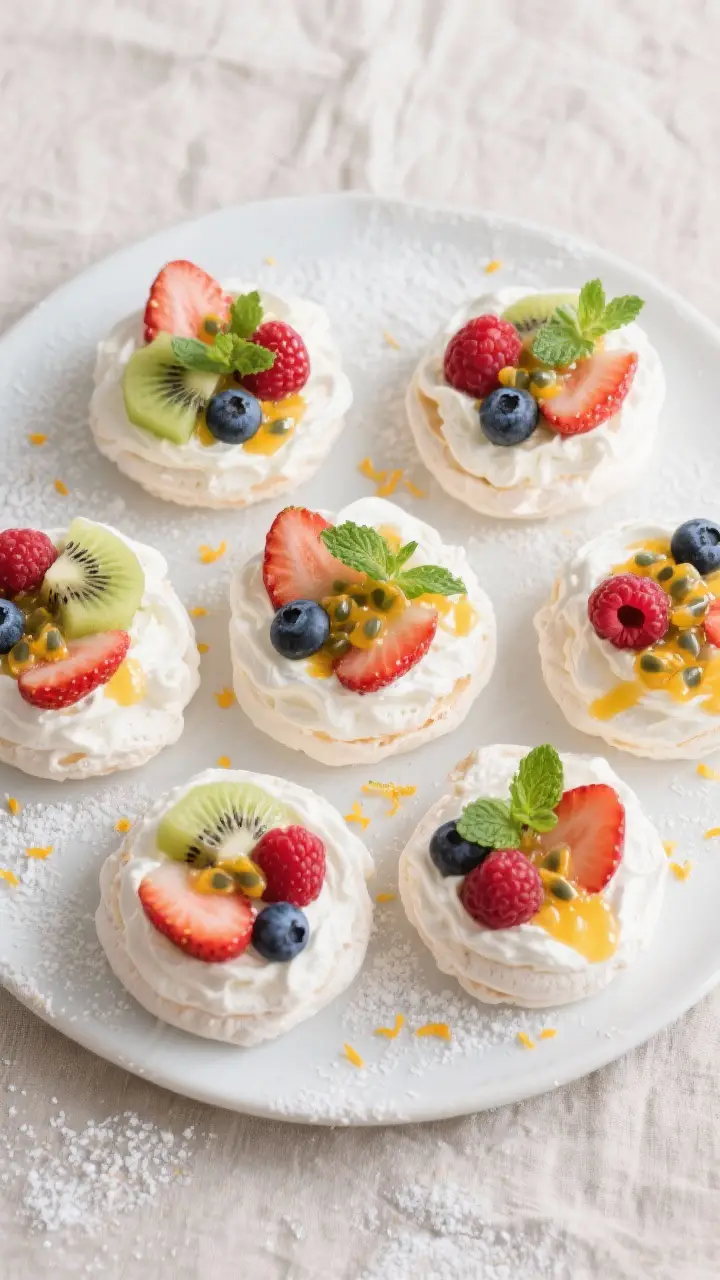
- Prep the fruit: Slice berries and kiwi.
If using passion fruit, scoop out the pulp. Pat juicy fruits dry with a paper towel so the pavlovas don’t get soggy.
- Assemble right before serving: Add a generous spoonful of whipped cream to each pavlova and top with fruit. Finish with citrus zest or mint if you like.
How to Store
- Unfilled shells: Store at room temperature in an airtight container with parchment between layers for up to 2 days.
Add a small packet of silica gel or a spoonful of rice in a separate cup to absorb moisture if your climate is humid.
- Filled pavlovas: Best eaten within 1–2 hours. The cream and fruit soften the shell over time.
- Whipped cream: Keep in the fridge up to 24 hours. If it loosens, rewhip briefly.
- Freezing: Not ideal for assembled pavlovas.
Unfilled shells can be frozen for up to 1 month, well-wrapped, but texture may be slightly less crisp after thawing.
Why This is Good for You
- Light and portion-controlled: Mini size keeps servings reasonable without feeling skimpy.
- Protein from egg whites: Not a protein powerhouse, but better than many desserts.
- Fresh fruit: Adds fiber, vitamins, and natural sweetness, so you can use less sugar in the topping.
- Gluten-free: Great for guests with gluten sensitivities without sacrificing taste.
What Not to Do
- Don’t rush the sugar: Dumping it in at once leads to grainy meringue that weeps.
- Don’t use a greasy bowl: Any fat (even a bit of yolk) prevents the whites from whipping properly.
- Don’t bake hot and fast: High heat browns and cracks the pavlovas. Low and slow keeps them pale and crisp.
- Don’t assemble early: Cream and fruit should go on right before serving, or the shells will soften.
- Don’t open the oven often: Sudden temperature changes can cause collapsing and cracks.
Alternatives
- Flavor twists: Fold in finely grated lemon or orange zest; swap vanilla for almond or rose water (use sparingly).
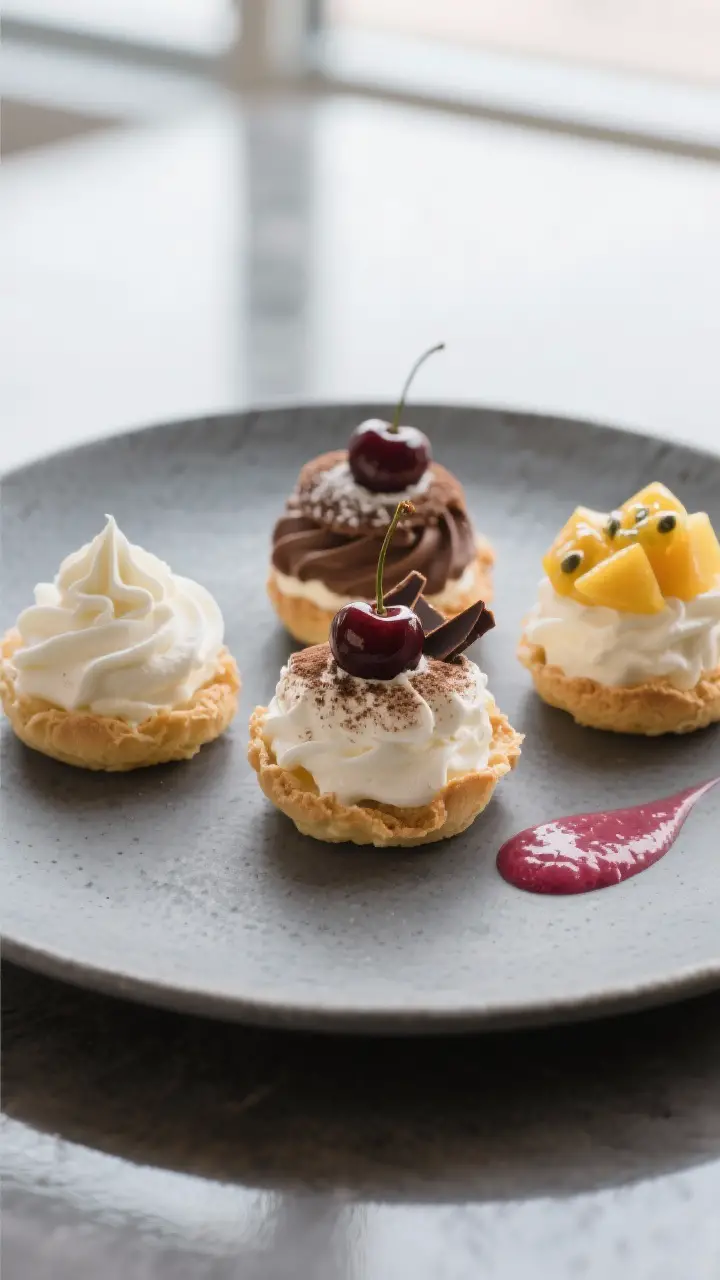
- Chocolate version: Sift 1 tablespoon cocoa with the cornstarch for a light chocolate note. Top with cherries and shaved chocolate.
- Dairy-free topping: Use coconut whipped cream.
Chill a can of full-fat coconut milk overnight, scoop the solid cream, and whip with powdered sugar.
- Low-sugar topping: Sweeten whipped cream lightly and rely on naturally sweet fruit like ripe mango or berries.
- Sauce ideas: Drizzle with passion fruit pulp, raspberry coulis, or a quick balsamic-strawberry reduction.
FAQ
Can I use carton egg whites?
Carton egg whites often don’t whip as well because they can contain stabilizers. For best results, use fresh egg whites from whole eggs. If you must use carton whites, look for ones labeled suitable for meringue and expect a slightly longer whipping time.
Why did my pavlovas crack?
Cracks happen when the oven is too hot or when they cool too quickly.
Bake at a low temperature and let them cool in the turned-off oven with the door slightly ajar. A few hairline cracks are normal and easy to hide with cream and fruit.
My meringue is weeping. What went wrong?
Weeping usually means the sugar wasn’t fully dissolved or there was excess moisture.
Add sugar slowly, beat until the mixture feels smooth, and avoid humid conditions if possible. A bit of cornstarch and acid (vinegar or lemon juice) also helps stabilize the meringue.
Can I make them larger or smaller?
Yes. For larger pavlovas, extend the bake time by 10–15 minutes and monitor doneness.
For bite-size versions, reduce baking time slightly. The goal is dry to the touch with a soft interior.
Do I need cream of tartar?
No. Vinegar or lemon juice does the same job of stabilizing the egg whites.
If you prefer cream of tartar, use about 1/4 teaspoon and skip the vinegar.
How do I get glossy, stiff peaks?
Beat on medium to medium-high speed, add sugar slowly, and keep going until the meringue is thick and forms sharp peaks that stand up straight. The mixture should look shiny, not dull or foamy.
What fruits work best?
Tart, juicy fruits shine against the sweet meringue—think strawberries, raspberries, blueberries, kiwi, and passion fruit. Mango and peaches are great too.
Avoid very wet toppings that can make the shells soggy unless you pat them dry.
Final Thoughts
Mini Pavlova delivers impressive results with just a few pantry staples and some gentle technique. Once you’ve made them once or twice, you’ll see how forgiving and fun they are to customize. Keep the bake low and slow, assemble at the last minute, and let bright fruit do the heavy lifting.
They’re the kind of dessert that makes any meal feel like a celebration—no stress required.
Printable Recipe Card
Want just the essential recipe details without scrolling through the article? Get our printable recipe card with just the ingredients and instructions.