
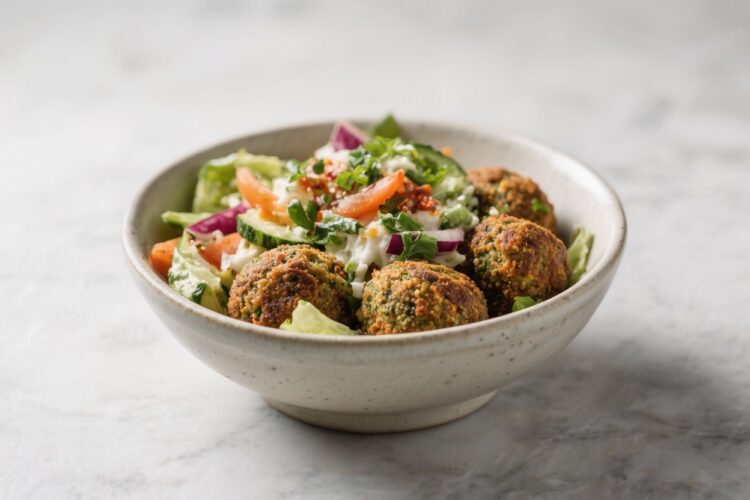
This Mediterranean Falafel Bowl brings together everything you crave in a single, colorful dish: crispy falafel, fresh veggies, creamy hummus, and a zesty dressing. It’s the kind of meal that feels special but doesn’t demand a culinary degree or hours in the kitchen. You get bold flavors, lots of texture, and wholesome ingredients in every bite.
It’s perfect for weeknights, meal prep, or casual hosting. If you love bright, clean flavors with real staying power, this bowl delivers.
What Makes This Special
This bowl checks all the boxes: quick prep, big flavor, and a satisfying balance of protein, fiber, and healthy fats. The falafel brings a savory, herby crunch, while the veggies keep things fresh and light.
Add hummus and tahini sauce for creaminess, and a lemony dressing to tie it all together. The best part? It’s endlessly customizable—swap grains, add pickles, or toss in olives to match your mood.
Shopping List
- Falafel: 1 can chickpeas (or 1.5 cups cooked), 1/2 small onion, 2–3 garlic cloves, 1/2 cup fresh parsley, 1/4 cup fresh cilantro (optional), 1 tsp ground cumin, 1/2 tsp ground coriander, 1/2 tsp baking powder, 3–4 tbsp flour (chickpea or all-purpose), 1/2 tsp salt, black pepper, pinch of chili flakes (optional), oil for pan-frying or baking spray
- Base: 2 cups cooked quinoa, couscous, or brown rice
- Veggies: 1 cucumber, 1–2 tomatoes, 1 small red onion, mixed greens or romaine, 1 red bell pepper (optional)
- Add-ons: Hummus, Kalamata olives, crumbled feta (optional), pickled red onions or turnips (optional)
- Tahini Sauce: 1/3 cup tahini, 1 lemon (juice), 1 small garlic clove (grated), 2–4 tbsp cold water, pinch of salt
- Lemon-Herb Dressing (optional but great): 3 tbsp olive oil, juice of 1/2 lemon, 1 tsp dried oregano, salt and pepper
- Garnish: Fresh parsley or dill, lemon wedges
Instructions
- Prep the base: Cook quinoa, couscous, or rice according to package directions.
Fluff and let cool slightly so it doesn’t wilt the greens.
- Make the falafel mix: Pat the chickpeas dry with a towel. In a food processor, pulse chickpeas, onion, garlic, parsley, cilantro, cumin, coriander, salt, pepper, and chili flakes until it looks like coarse sand. Avoid turning it into a paste.
- Bind and rest: Add baking powder and 3 tablespoons of flour.
Pulse a few times until the mixture holds together when pressed. If it’s too sticky, add another tablespoon of flour. Chill for 20–30 minutes to firm up.
- Shape the falafel: Scoop into small balls or patties (about 1.5 inches wide).
Lightly oil your hands if it sticks.
- Cook the falafel: For pan-frying, warm a thin layer of oil over medium heat and cook falafel 3–4 minutes per side until golden and crisp. For baking, place on a lined sheet, spray with oil, and bake at 400°F (200°C) for 20–25 minutes, flipping halfway.
- Whisk the tahini sauce: In a bowl, mix tahini, lemon juice, grated garlic, and salt. It will thicken—whisk in cold water, a tablespoon at a time, until creamy and pourable.
- Optional lemon-herb dressing: Stir together olive oil, lemon juice, oregano, salt, and pepper.
This is great for the greens and grains.
- Chop the veggies: Dice cucumber and tomato, slice red onion thinly, and chop any additional veggies. Keep them bite-sized for easier eating.
- Assemble the bowls: Start with greens and a scoop of grains. Add falafel, a spoonful of hummus, and the chopped veggies.
Top with olives and feta if using.
- Finish with sauces: Drizzle tahini sauce over the falafel. Add the lemon-herb dressing to the greens and grains. Garnish with fresh herbs and a squeeze of lemon.
How to Store
Store components separately for best texture.
Keep cooked falafel in an airtight container in the fridge for up to 4 days. Reheat in a skillet or air fryer to bring back the crispiness. Grains can be refrigerated for 4–5 days.
Chopped veggies are best within 2–3 days. Tahini sauce and hummus keep well for up to a week. For meal prep, assemble bowls without dressing and add sauces right before eating.
Health Benefits
- Plant-powered protein: Chickpeas offer protein and fiber, keeping you satisfied without weighing you down.
- Heart-healthy fats: Tahini and olive oil provide unsaturated fats that support heart health.
- Fiber-rich veggies and grains: Cucumbers, tomatoes, greens, and whole grains support digestion and steady energy.
- Minerals and antioxidants: Parsley, lemon, and colorful vegetables bring vitamin C, iron, and protective plant compounds.
- Balanced plate: This bowl pairs protein, complex carbs, and healthy fats—great for stable blood sugar and sustained fullness.
Pitfalls to Watch Out For
- Wet falafel mix: If your chickpeas are too moist, the mixture won’t hold.
Dry them well and don’t overblend.
- Crumbly texture: Not enough binder? Add a bit more flour or chill longer to firm up before cooking.
- Bland flavor: Salt and spices matter. Taste the tahini sauce and dressing, and adjust lemon and salt as needed.
- Soggy bowls: Let grains cool slightly and keep sauces separate until serving to avoid wilted greens.
- Overcooking falafel: Medium heat is your friend.
Too hot and they burn outside while staying raw inside.
Alternatives
- Grain swap: Try farro, bulgur, cauliflower rice, or a bed of all greens for a lighter bowl.
- Legume swap: Use cooked broad beans or split peas for a different falafel twist.
- Dairy-free: Skip the feta or swap for a dairy-free feta. Everything else is naturally dairy-free.
- Gluten-free: Use chickpea flour in the falafel and choose gluten-free grains like quinoa or rice.
- Sauce switch: Add tzatziki or a yogurt-lemon sauce if you prefer a tangy, creamy finish.
- Oven-only version: Bake falafel with a light spray of oil and crank on the broiler for the last 1–2 minutes for extra color.
FAQ
Can I use canned chickpeas for falafel?
Yes, canned chickpeas work well if you dry them thoroughly. If you have time, use cooked-from-dry chickpeas for a slightly firmer texture.
How do I make the falafel extra crispy?
Chill the mixture, shape small patties, and cook over medium heat with enough oil to crisp the surface.
For baked falafel, don’t skip the light oil spray and flip halfway.
What if I don’t have a food processor?
Mash the chickpeas with a fork or potato masher and finely mince the onion, garlic, and herbs. The texture will be a bit chunkier but still delicious.
Can I freeze the falafel?
Yes. Freeze uncooked patties on a baking sheet, then transfer to a bag.
Cook from frozen, adding a few extra minutes. You can also freeze cooked falafel and reheat in the oven or air fryer.
Is there a quick store-bought shortcut?
Absolutely. Use store-bought falafel, hummus, and even pre-cooked grains.
Make the tahini sauce fresh to keep the bowl vibrant.
How do I keep red onion from overpowering the bowl?
Slice it thin and soak in cold water for 10 minutes, or toss with a splash of lemon to mellow the bite.
What proteins can I add besides falafel?
Grilled chicken, shrimp, or roasted tofu fit right in. Keep the Mediterranean flavors by seasoning with lemon, garlic, and oregano.
Final Thoughts
A Mediterranean Falafel Bowl is a simple way to eat well without sacrificing flavor. With a few pantry staples and fresh produce, you’ll have a bowl that’s bright, filling, and flexible enough to match your routine.
Make it your own with the add-ins you love, and keep the sauces on hand to upgrade lunches all week. This is everyday cooking at its best—fresh, balanced, and genuinely satisfying.
Printable Recipe Card
Want just the essential recipe details without scrolling through the article? Get our printable recipe card with just the ingredients and instructions.