
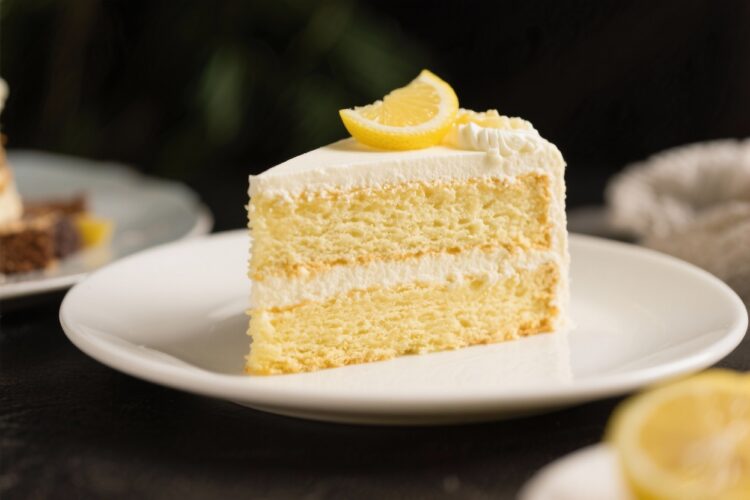
A slice of lemon velvet cake feels like sunshine on a plate—soft, tangy, and just sweet enough. This version has a plush, tender crumb with a creamy lemon frosting that melts right in. It’s the kind of cake that works for birthdays, brunches, or any time you want something cheerful and fresh.
No complicated steps. Just simple ingredients, a few smart tricks, and a bright lemon flavor that really shines.
What Makes This Recipe So Good
- Ultra-tender crumb: Buttermilk and oil keep the cake soft and moist without feeling heavy.
- True lemon flavor: Fresh lemon zest and juice layer the citrus notes, while a touch of vanilla rounds it out.
- Velvety texture: Cake flour gives a fine, even crumb that slices cleanly and feels silky.
- Balanced sweetness: The frosting is creamy and lemony, not cloying, so each bite stays bright.
- Make-ahead friendly: The layers and frosting both hold well, making assembly easy.
What You’ll Need
- Cake Flour: For that light, velvety texture. You can use all-purpose in a pinch (see Alternatives), but cake flour is best.
- Granulated Sugar: Sweetens and helps with moisture and browning.
- Baking Powder + Baking Soda: A combo for lift and even rise.
- Fine Salt: Just enough to sharpen the lemon and balance sweetness.
- Eggs (room temperature): Add structure and richness.
- Buttermilk (room temperature): Tenderizes and adds a gentle tang.
- Neutral Oil: Keeps the cake moist; canola, vegetable, or light olive oil works.
- Unsalted Butter (melted and cooled): For flavor without losing moisture.
- Fresh Lemons: You’ll need zest and juice for both the batter and frosting.
- Pure Vanilla Extract: Warms up the citrus and adds depth.
- Lemon Extract (optional): For extra lemon pop without added acidity.
- Confectioners’ Sugar: For the frosting—smooth and fluffy.
- Cream Cheese (room temperature): Makes the frosting velvety and tangy.
- Unsalted Butter (room temperature): Helps the frosting whip up light and creamy.
- Pinch of Turmeric or Lemon Gel Color (optional): A tiny bit adds a soft lemon hue without changing flavor.
How to Make It
- Prep the pans: Heat oven to 350°F (175°C).
Grease and line two 8-inch round cake pans with parchment. Lightly flour the sides. This helps the layers release cleanly.
- Mix dry ingredients: In a large bowl, whisk 2¾ cups cake flour, 1½ cups sugar, 2 teaspoons baking powder, ½ teaspoon baking soda, and ¾ teaspoon fine salt.
Whisk for 30 seconds to evenly distribute the leaveners.
- Combine the wet: In a second bowl, whisk 3 large eggs, 1 cup buttermilk, ½ cup neutral oil, 4 tablespoons melted-cooled butter, 1 tablespoon lemon zest, 3 tablespoons fresh lemon juice, and 2 teaspoons vanilla. Add ¼ teaspoon lemon extract if using.
- Make the batter: Pour the wet ingredients into the dry. Whisk just until smooth and no dry pockets remain.
Avoid overmixing—stop as soon as it looks uniform.
- Pan and bake: Divide batter evenly between pans. Tap each pan lightly on the counter to pop large air bubbles. Bake 24–28 minutes, until the centers spring back and a toothpick comes out clean or with a few moist crumbs.
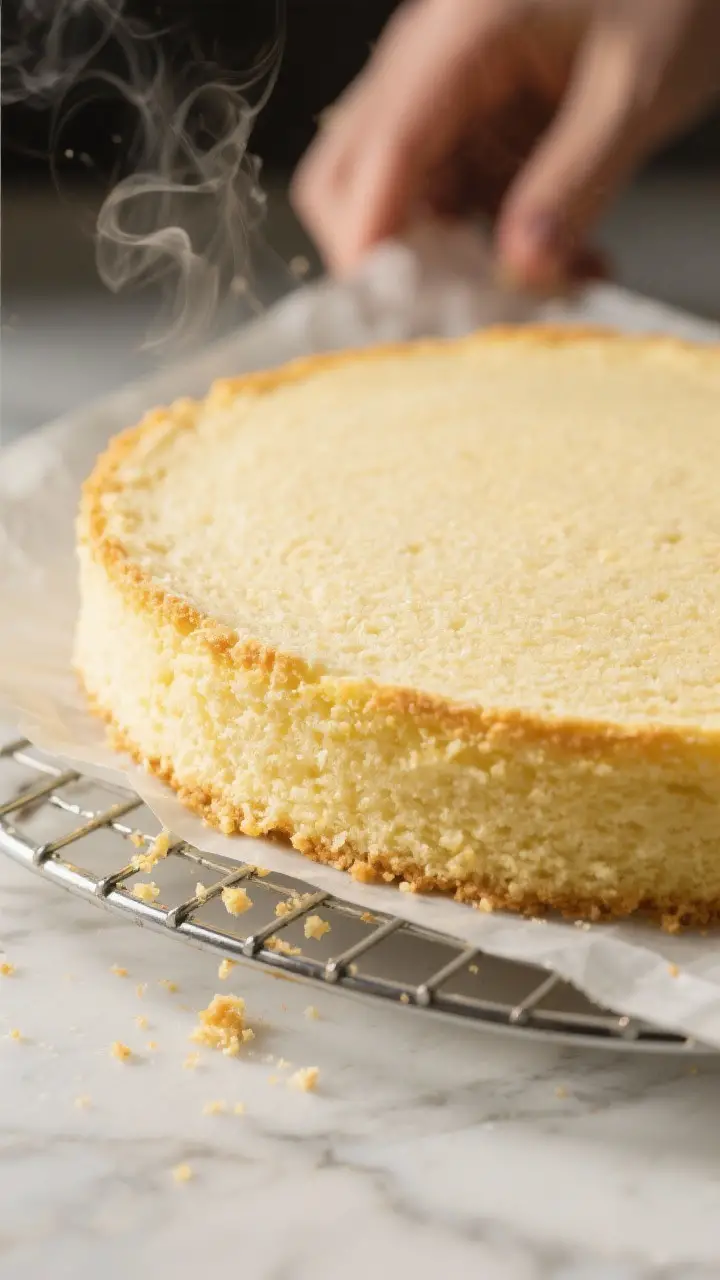
- Cool completely: Let cakes cool in pans 10 minutes, then turn out onto a rack.
Peel off parchment and cool fully before frosting. Warm cakes will melt frosting.
- Make the frosting: Beat 8 ounces cream cheese and ¾ cup unsalted butter on medium until smooth and fluffy, 2–3 minutes. Add 4–5 cups confectioners’ sugar gradually, beating on low until combined, then on medium until light.
Add 1 tablespoon lemon zest, 2 tablespoons lemon juice, and 1 teaspoon vanilla. Beat until creamy. Add a pinch of salt and a drop of color if desired.
Adjust consistency with more sugar (thicker) or a teaspoon of lemon juice (looser).
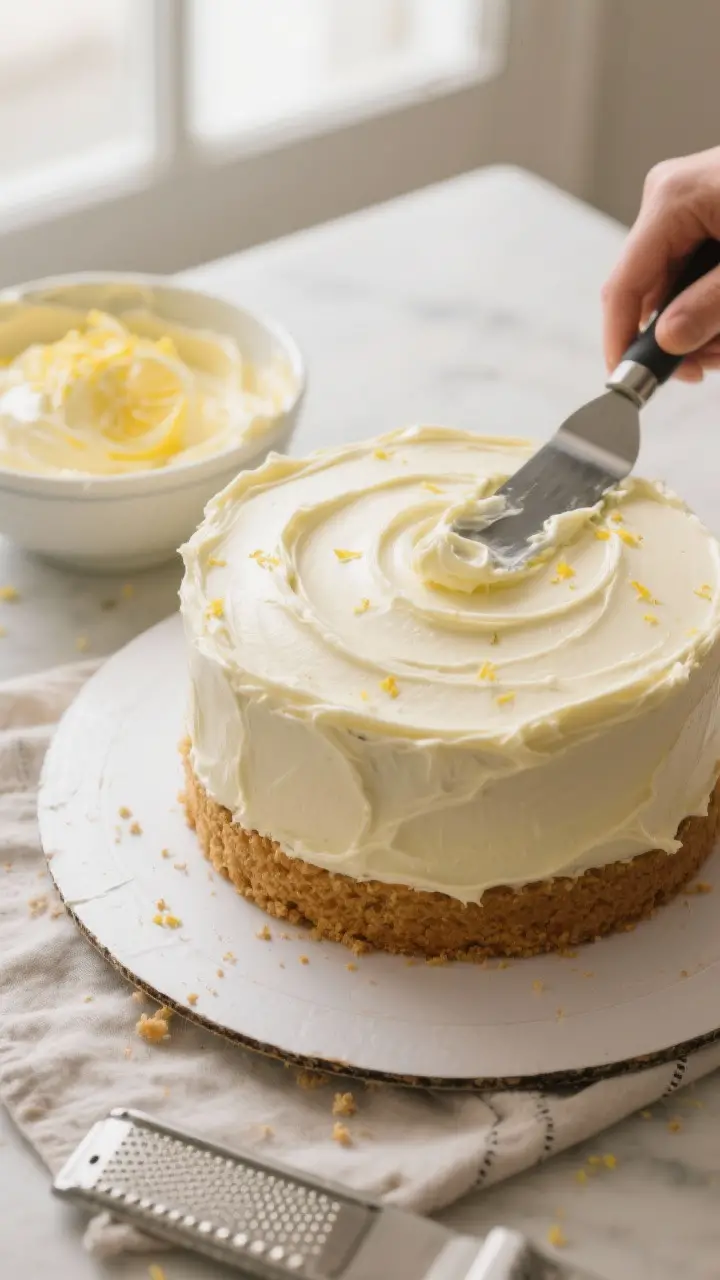
- Assemble: Level the cake layers if domed. Place one layer on a plate, spread about 1 cup frosting on top. Add the second layer and coat the cake with a thin crumb coat.
Chill 20 minutes, then finish with a smooth or swirled final layer of frosting.
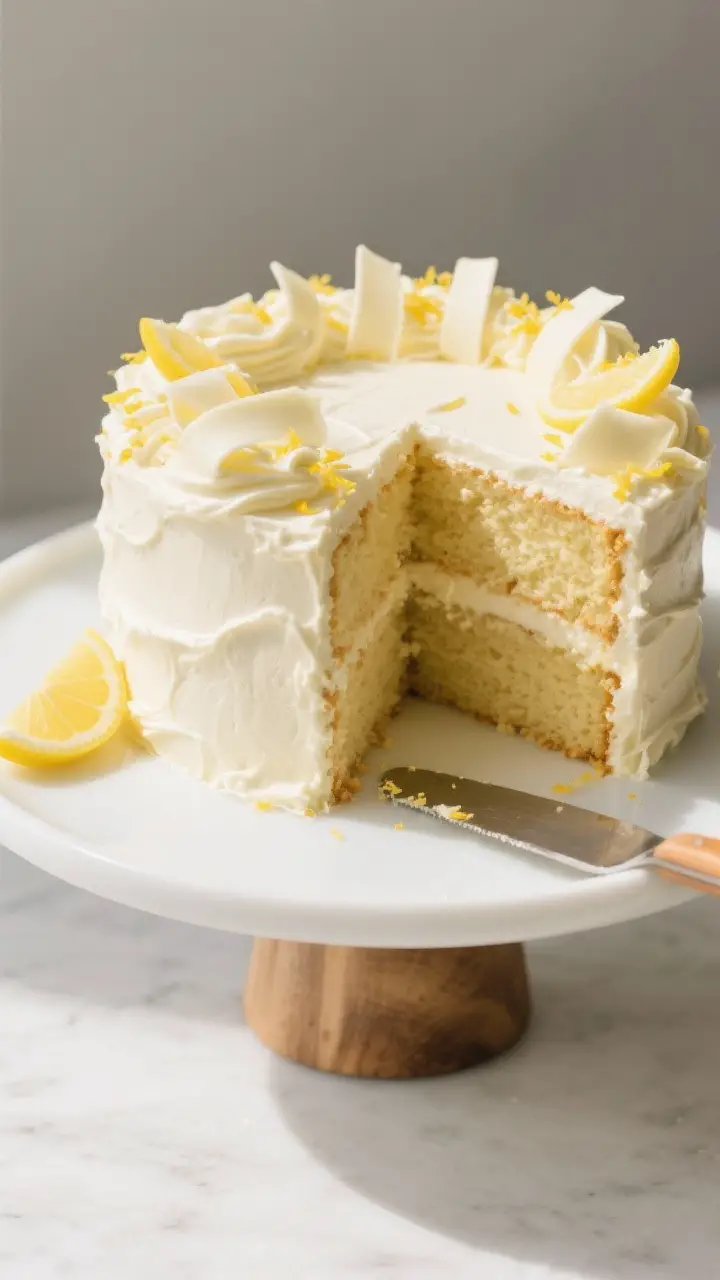
- Garnish: Add extra zest, thin lemon slices, or white chocolate curls. Keep it simple so the lemon stands out.
- Rest before slicing: Chill 20–30 minutes to set the frosting. Slice with a warm, dry knife for clean edges.
Keeping It Fresh
- Room temperature: The frosted cake keeps up to 1 day at cool room temp if your kitchen isn’t warm.
Because of the cream cheese, refrigerate after that.
- Refrigerator: Store covered for 4–5 days. Let slices sit out 20–30 minutes before serving so the crumb softens.
- Freezer: Wrap unfrosted layers tightly and freeze up to 2 months. Thaw wrapped at room temp, then frost.
You can also freeze individual frosted slices; thaw in the fridge overnight.
Health Benefits
- Lemon zest and juice: Provide vitamin C and lively flavor without adding a lot of calories.
- Buttermilk: Adds tang and tenderness with less fat than heavy cream.
- Portion control: The cake is rich but balanced. Enjoying a modest slice can satisfy a sweet tooth with less overindulgence.
- Homemade advantage: You control the ingredients—no artificial flavors or preservatives needed to get big lemon flavor.
Pitfalls to Watch Out For
- Overmixing: This can toughen the crumb. Once the batter is smooth, stop.
- Cold ingredients: Cold eggs or buttermilk can cause a dense cake.
Use room temperature for better rise.
- Too much lemon juice: Extra acid can upset the leavening balance and make the batter curdle. Stick to the amounts listed.
- Overbaking: The cake should be just set. Dry edges mean it stayed in too long.
Start checking 2–3 minutes early.
- Warm frosting: If the butter or cream cheese is too soft, the frosting can turn soupy. Aim for cool room temperature and chill briefly if needed.
Alternatives
- No cake flour? Use 2¾ cups all-purpose flour minus 5 tablespoons, then add 5 tablespoons cornstarch. Whisk well.
- Dairy-free: Substitute plant milk plus 1 tablespoon lemon juice to make a quick “buttermilk.” Use dairy-free butter and vegan cream cheese for the frosting.
- Gluten-free: Use a quality 1:1 gluten-free baking blend that includes xanthan gum.
Let the batter rest 10 minutes before baking to hydrate.
- Lighter frosting: Swap half the cream cheese for Greek yogurt and reduce confectioners’ sugar slightly. Chill frosting longer for stability.
- Sheet cake format: Bake in a 9×13-inch pan for 28–34 minutes. Cool and frost directly in the pan for easy serving.
- Extra lemony: Add ½ teaspoon additional lemon extract to the batter and a touch more zest in the frosting.
FAQ
Can I make the cake layers ahead?
Yes.
Bake, cool completely, then wrap each layer tightly in plastic and refrigerate up to 2 days or freeze up to 2 months. Thaw wrapped before frosting.
How do I get stronger lemon flavor without making the batter too sour?
Use more zest and a small amount of lemon extract rather than extra juice. Zest gives pure aroma without extra acidity, and extract boosts the flavor cleanly.
Why did my cake sink in the middle?
Common causes include underbaking, opening the oven door too early, or too much leavening.
Measure baking powder and soda carefully and bake until the center is set.
Can I use bottled lemon juice?
Fresh juice tastes brighter and cleaner. Bottled can work in a pinch, but check that it’s 100% lemon juice with no additives and expect a slightly duller flavor.
What if I don’t have buttermilk?
Make a quick substitute: add 1 tablespoon lemon juice or white vinegar to a 1-cup measure, fill with milk, stir, and let sit 5 minutes. It won’t be identical, but it works well.
How do I prevent a gummy texture?
Measure flour accurately, don’t overmix, and bake until just done.
Let the cakes cool fully before covering or frosting to avoid trapping steam.
Can I tint the frosting yellow?
Yes. Use a tiny drop of gel color or a pinch of turmeric. Add a little at a time to keep the shade soft and natural.
Final Thoughts
This Lemon Velvet Cake is all about balance: tangy but sweet, plush yet light, simple yet special.
The ingredients are straightforward, and the steps are easy to follow, but the result feels bakery-worthy. Keep the mixing gentle, use fresh lemon, and don’t rush the cooling time. You’ll end up with a sunny, elegant cake that’s perfect for celebrations—or just a bright moment in the middle of an ordinary day.