
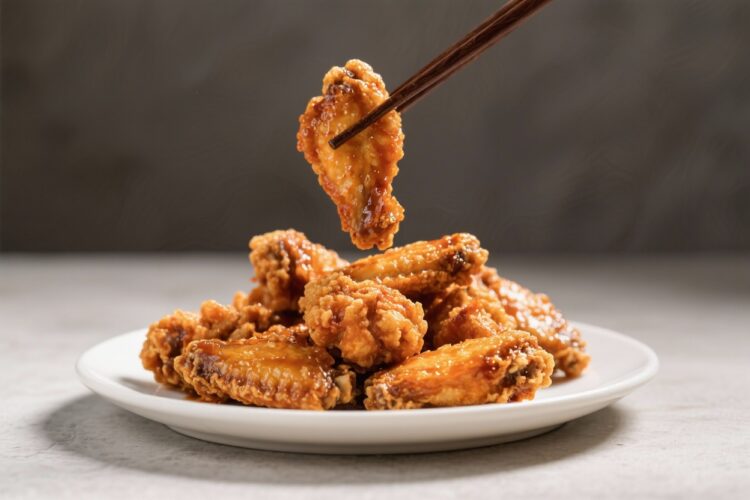
Korean fried chicken wings are a perfect mix of shatteringly crisp skin and a sticky, sweet-heat glaze. They’re double fried, which keeps them crunchy even after saucing. You get juicy meat, a bold flavor punch, and impressive texture in every bite.
These wings are perfect for game night, parties, or a fun dinner that doesn’t feel fussy. If you’ve only had wings baked or once-fried, this version will spoil you forever.
Why This Recipe Works
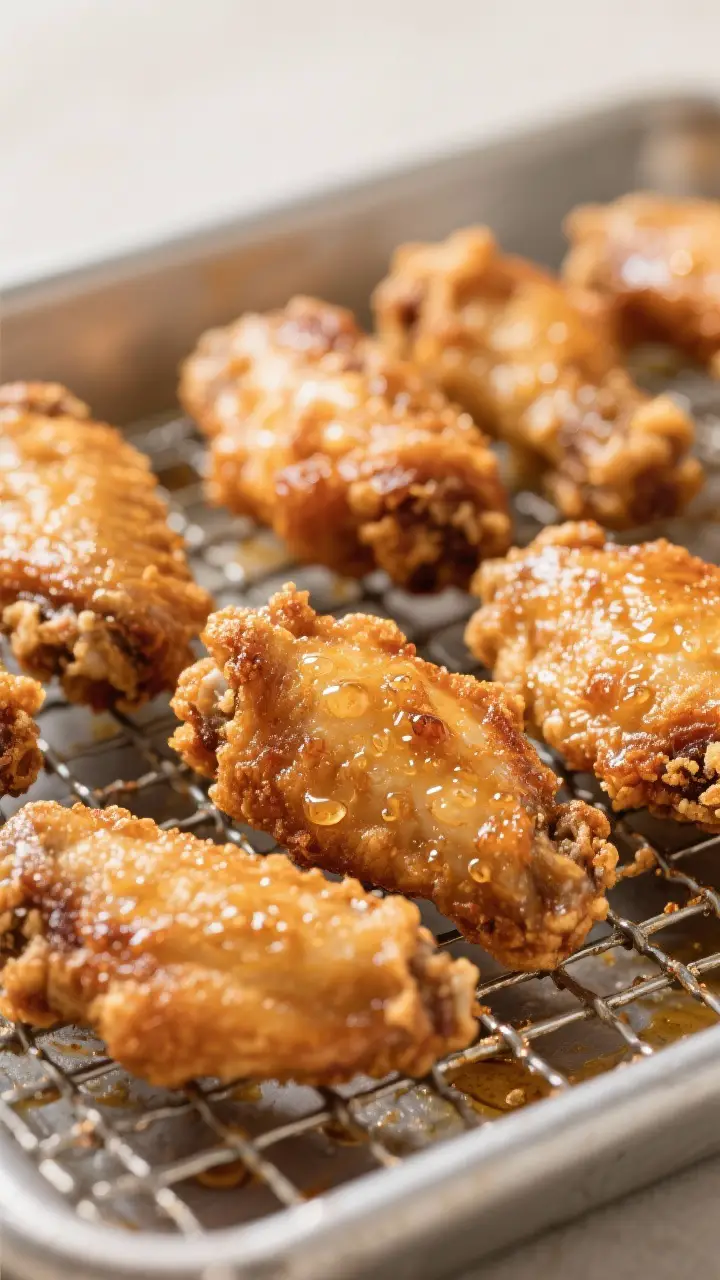
The double-fry method is the secret. The first fry cooks the chicken through and renders the fat under the skin.
The second fry, at a higher temperature, makes the exterior extra crispy and long-lasting. Cornstarch in the coating boosts crunch and lightness. The sauce is cooked just enough to thicken and cling, so it coats without turning soggy.
A touch of vinegar and mustard balances the sweetness and heat, making each bite bright, not heavy.
Shopping List
- Chicken wings: 2–2.5 pounds, flats and drums separated
- Salt and pepper: For seasoning
- Garlic powder and onion powder: Optional, for extra savory depth
- Cornstarch: About 1 cup for coating
- All-purpose flour: 1/2 cup to mix with cornstarch (optional for extra structure)
- Baking powder: 1 teaspoon (helps crispiness)
- Neutral oil for frying: Peanut, canola, or vegetable oil
- Sesame seeds: For garnish
- Green onions: Thinly sliced for garnish
For the sauce:
- Gochujang (Korean chili paste): 3 tablespoons
- Gochugaru (Korean chili flakes): 1–2 teaspoons, to taste
- Soy sauce: 2 tablespoons
- Honey or brown sugar: 3 tablespoons
- Rice vinegar: 1–2 tablespoons
- Garlic: 3–4 cloves, finely minced
- Ginger: 1 teaspoon, grated
- Ketchup: 2 tablespoons (adds tang and body)
- Toasted sesame oil: 1 teaspoon
- Water: 2–3 tablespoons, as needed to loosen
Instructions
- Prep the wings. Pat the wings dry with paper towels. Dry skin helps crisping. Season generously with salt, pepper, and, if using, a light dusting of garlic and onion powder.
- Make the coating. In a large bowl, mix cornstarch, flour (if using), baking powder, a pinch of salt, and pepper.
Toss wings in the mixture until every nook is coated. Shake off excess.
- Heat the oil. Fill a deep pot or Dutch oven with 2–3 inches of oil. Heat to 325°F (165°C) for the first fry.
Use a thermometer for accuracy.
- First fry: cook and render. Fry wings in batches without crowding, 6–8 minutes, until lightly golden and just cooked through. Transfer to a wire rack set over a sheet pan. Let rest 10 minutes while you raise the heat.
- Make the sauce. In a small saucepan, combine gochujang, gochugaru, soy sauce, honey or brown sugar, rice vinegar, minced garlic, ginger, ketchup, sesame oil, and a splash of water.
Simmer over low heat for 2–3 minutes until glossy and slightly thick. Adjust sweetness or heat to taste.
- Second fry: crisp it up. Increase oil to 375°F (190°C). Fry wings again, 2–3 minutes, until deep golden and super crisp.
Return to the rack to drain.
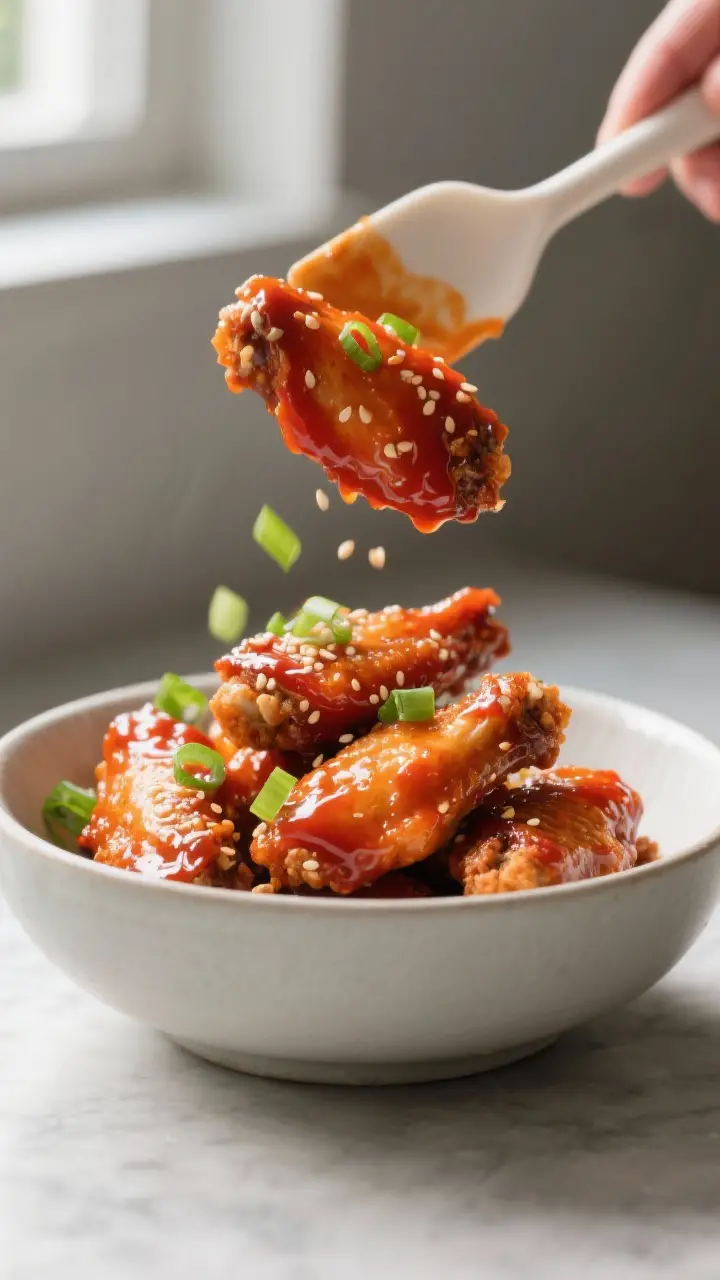
- Sauce and toss. Place wings in a large bowl. Spoon sauce over and toss until evenly coated. The sauce should cling and shine without puddling.
- Garnish and serve. Sprinkle with sesame seeds and sliced green onions.
Serve immediately while the exterior is still glassy and crisp.
Keeping It Fresh
These wings are best right after saucing. If you need to make them ahead, fry once, cool completely, and refrigerate the wings uncovered on a rack for a few hours. Then do the second fry just before serving and toss with warm sauce.
For leftovers, store sauced wings in an airtight container for up to 2 days.
Recrisp in a 400°F (205°C) oven or air fryer for 8–10 minutes. The texture won’t be exactly the same, but it’ll still be satisfying. You can also freeze once-fried wings for up to a month and finish with the second fry from frozen.
Why This is Good for You
- Protein-rich: Chicken wings deliver satisfying protein, which helps keep you full and supports muscle repair.
- Portion flexibility: Small pieces make it easy to control portions and share.
- Bold flavors, fewer extras: The sauce packs so much flavor that you don’t need heavy sides—pair with crunchy vegetables or a light salad.
- Customizable heat: You can dial the spice up or down without losing character.
What Not to Do
- Don’t skip drying the wings. Moisture kills crispiness.
- Don’t overcrowd the pot. It drops the oil temperature and leads to soggy wings.
- Don’t guess the oil temp. Use a thermometer for consistent results.
- Don’t sauce too early. Toss just before serving, or the crust will soften.
- Don’t over-thicken the sauce. If it’s too sticky, it won’t coat evenly—thin with a bit of water.
Recipe Variations
- Soy-Garlic Wings: Skip gochujang and gochugaru.
Use soy sauce, honey, lots of garlic, a bit of ginger, and a splash of mirin. Finish with black pepper.
- Extra Spicy: Add more gochugaru or a teaspoon of Korean chili oil. A dash of cayenne works too.
- Citrus Kick: Stir in a tablespoon of orange juice and a little zest to brighten the sauce.
- Gluten-Free: Use tamari instead of soy sauce and cornstarch only for the coating.
Check labels on gochujang, as some brands contain wheat.
- Air Fryer Route: Toss seasoned wings with 1 tablespoon oil, air fry at 380°F (193°C) for 22–25 minutes, flipping halfway, then at 400°F (205°C) for 4–6 minutes. Sauce and serve. Not identical to deep-fried, but still crisp and great.
- Honey-Butter Finish: Whisk 1 tablespoon butter into the warm sauce for a glossy, rich sheen.
FAQ
Can I use drumsticks or boneless pieces?
Yes.
Drumsticks will need a few extra minutes per fry because they’re thicker. Boneless bites cook faster—watch closely to avoid drying out. Keep the same double-fry approach.
What oil is best for frying?
Use a neutral, high-heat oil like peanut, canola, or vegetable oil.
Avoid olive oil for this—it smokes too quickly and affects flavor.
Do I need both cornstarch and flour?
No. Cornstarch alone works well and gives a lighter crunch. Adding some flour creates a slightly sturdier crust.
Either option delivers great results.
How do I keep the wings hot between batches?
Place fried wings on a wire rack over a sheet pan in a 225°F (110°C) oven. The rack preserves crispness by letting air circulate.
Why double fry instead of frying once at a higher temperature?
The first fry cooks and renders fat gently. The second fry crisps without overcooking the meat.
A single hot fry can burn the outside while leaving the interior underdone.
Can I make the sauce ahead?
Absolutely. Make it up to 3 days in advance and store in the fridge. Warm gently on the stove and loosen with a splash of water before tossing.
How spicy are these wings?
Moderately spicy.
You can reduce gochugaru and use extra honey to soften the heat, or turn it up with more gochujang or a pinch of cayenne.
What sides go well with these wings?
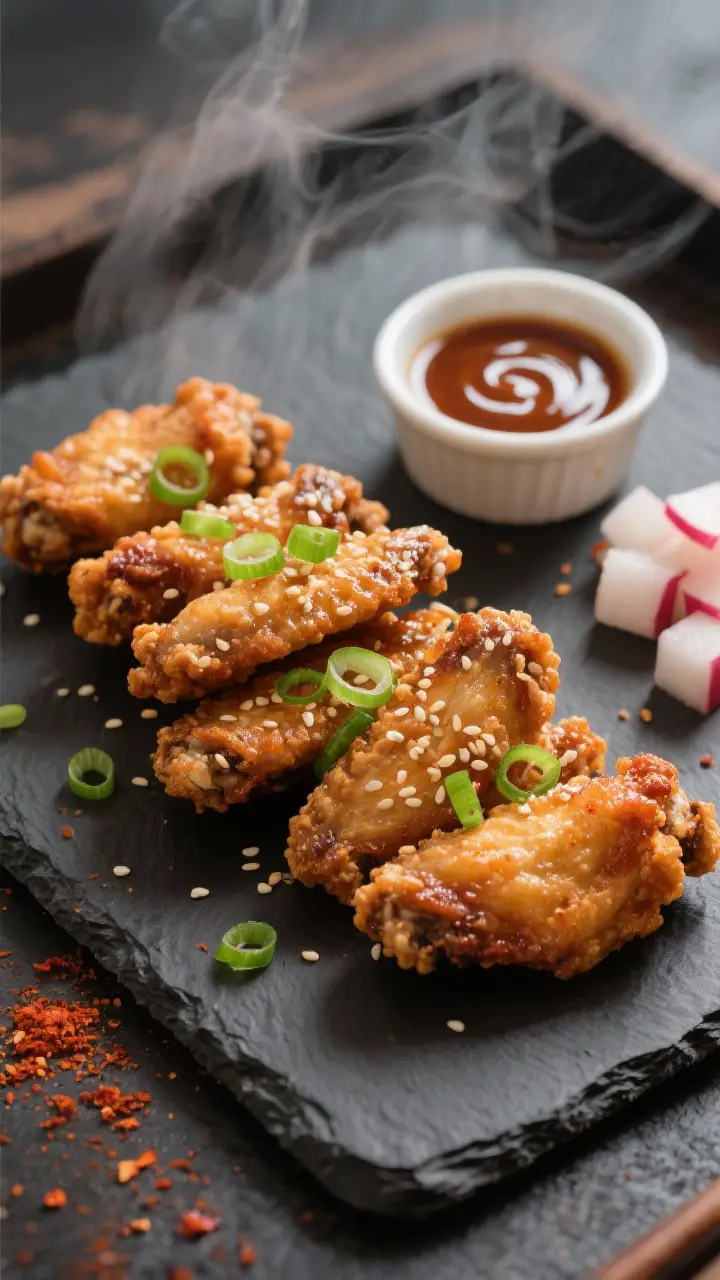
Classic pairings include pickled radish (chicken-mu), crisp cucumber salad, steamed rice, or a simple slaw. The fresh crunch balances the sticky glaze.
Final Thoughts
Double-fried Korean wings are all about contrast: juicy inside, ultra-crisp outside, and a sticky-sweet-spicy glaze that hits every craving. With a few smart steps—drying, double frying, and a fast-simmered sauce—you’ll get takeout-level wings at home.
Keep the oil hot, don’t rush the toss, and garnish for a fresh finish. Once you master this method, you’ll make them on repeat for parties, dinners, and every craving in between.