
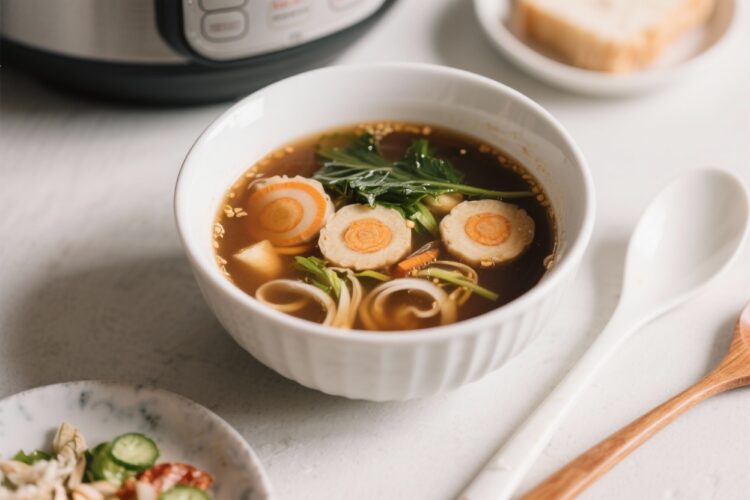
Miso soup doesn’t have to be complicated or require specialty ingredients. If you don’t have dashi on hand, you can still make a comforting, savory bowl with everyday items and your Instant Pot. This version leans on umami-rich mushrooms, aromatics, and miso for depth, and it comes together fast.
It’s cozy enough for weeknights, but light and balanced enough to sip any time. The results are soothing, flavorful, and surprisingly close to the classic—without the dashi packet.
Why This Recipe Works
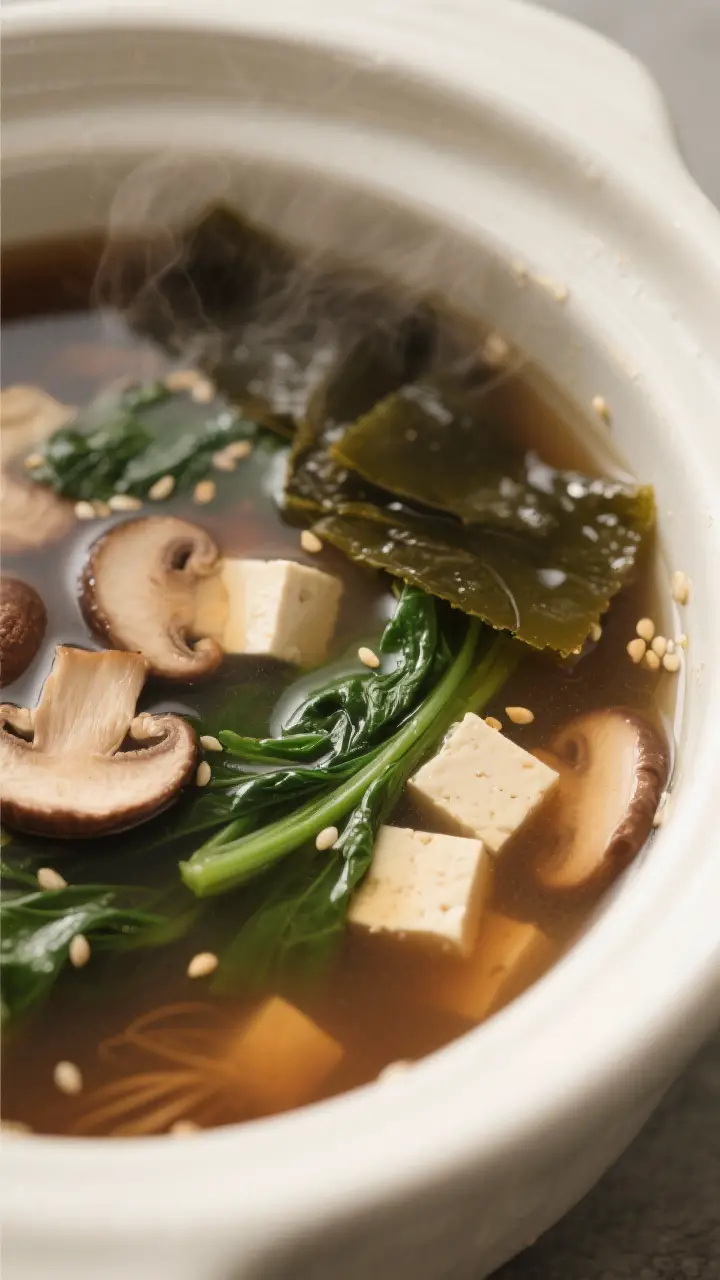
This Instant Pot method gently extracts flavor from mushrooms, onions, and kombu (optional) to mimic the savory base of traditional dashi. Pressure cooking speeds up the process, so you get a rich broth in minutes without hovering over the stove.
Adding miso at the end keeps it bright and smooth, avoiding bitterness. The result is a clean, satisfying soup that’s simple but layered, and totally doable with supermarket ingredients.
Shopping List
- Miso paste (white or yellow miso for a milder flavor; red miso for a deeper, saltier taste)
- Low-sodium vegetable broth or water
- Cremini or shiitake mushrooms, sliced
- Onion or scallions (use both if you like)
- Garlic, minced
- Fresh ginger, sliced or minced
- Kombu (optional) for extra umami without fish
- Tofu (firm or silken), cut into small cubes
- Spinach or wakame seaweed (dried wakame is great if you have it)
- Sesame oil (just a tiny splash)
- Soy sauce or tamari (to taste)
- Neutral oil (like avocado or canola) for sautéing
- Optional add-ins: carrots (thinly sliced), daikon, enoki mushrooms, chili crisp, or sliced green onions for garnish
How to Make It
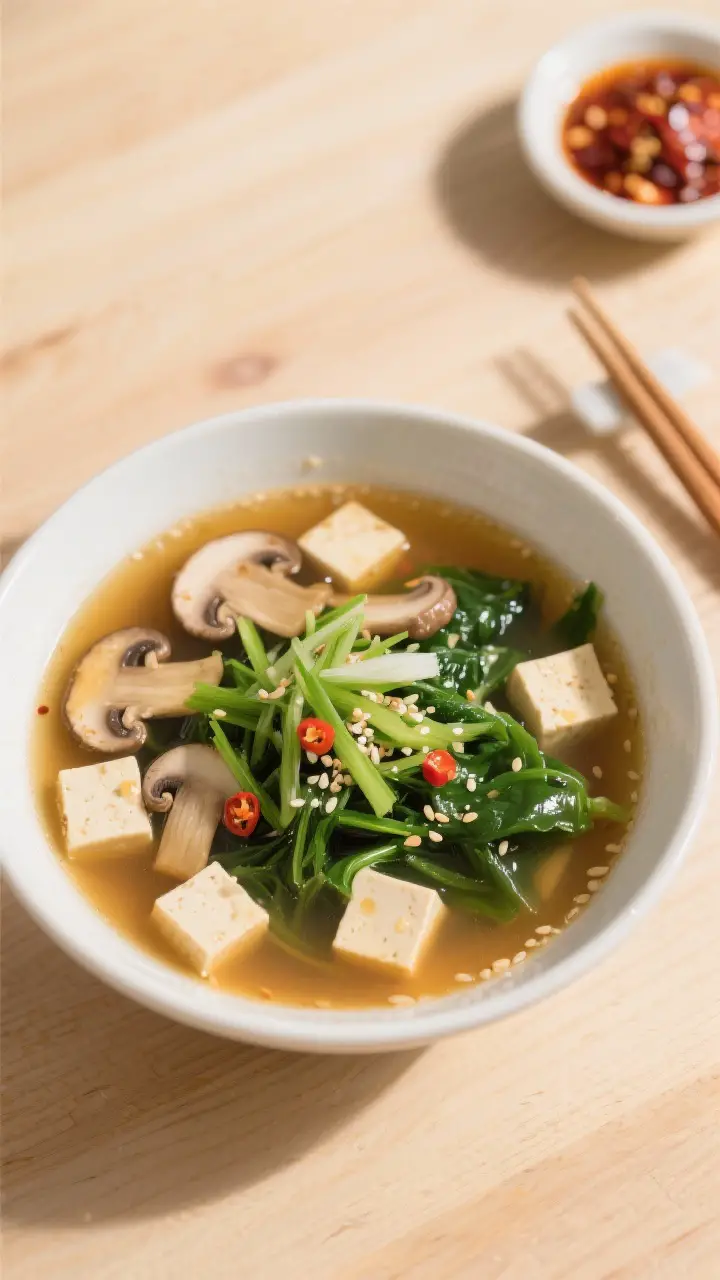
- Prep your ingredients. Slice mushrooms thinly, mince the garlic, and grate or slice the ginger. Cube the tofu into small bite-size pieces.
If using spinach, rinse and roughly chop. If using dried wakame, measure a small handful; it expands a lot.
- Sauté the aromatics. Set the Instant Pot to Sauté (Normal). Add a splash of neutral oil.
Cook the onion (or white parts of scallions), garlic, and ginger for 2–3 minutes until fragrant. Avoid browning too much; you want gentle sweetness.
- Add mushrooms for umami. Toss in the mushrooms and a pinch of salt. Cook for 3–4 minutes until they start to release moisture and reduce in size.
- Build the broth. Pour in 4 cups of low-sodium vegetable broth (or water).
If using kombu, add a small strip now. Add a teaspoon of soy sauce or tamari and a small drizzle of sesame oil (about 1/4 teaspoon) for depth.
- Pressure cook briefly. Lock the lid, set the valve to Sealing, and pressure cook on High for 2 minutes. The short cook time is key—just enough to meld flavors without turning veggies mushy.
- Quick release and remove kombu. Carefully quick-release the pressure.
If you used kombu, fish it out and discard it. Kombu adds savoriness, but leaving it in can turn the broth slimy or overly strong.
- Add tofu and greens. Switch back to Sauté (Low). Stir in the tofu and spinach or wakame.
Let it heat through for 1–2 minutes. You just want the tofu warmed and greens wilted.
- Whisk in miso off the heat. Turn the Instant Pot off. In a bowl, whisk 2–3 tablespoons miso with a ladle of hot broth to dissolve.
Stir the slurry back into the pot. This prevents clumps and keeps the miso’s delicate flavor intact.
- Taste and adjust. Add more miso, a splash of soy sauce, or a bit more sesame oil if you want a richer profile. Remember miso is salty; adjust a little at a time.
- Serve and garnish. Ladle into bowls and top with sliced green onions.
A sprinkle of toasted sesame seeds or a few drops of chili oil is a nice finishing touch.
Storage Instructions
- Refrigerator: Store leftovers in an airtight container for up to 3 days. For best texture, keep tofu separate and add it when reheating.
- Freezer: Miso soup doesn’t freeze well because miso can separate and tofu gets spongy. If you must freeze, do so without miso and tofu, then add them after reheating.
- Reheating: Warm on the stovetop or in the microwave until hot but not boiling. Don’t boil after adding miso—high heat dulls its flavor.
Health Benefits
- Miso is a fermented soybean paste packed with umami and beneficial compounds.
It adds probiotics when not boiled, which may support gut health.
- Mushrooms bring antioxidants, fiber, and rich savory notes with very few calories.
- Tofu offers plant-based protein, iron, and calcium (if calcium-set), making the soup more satisfying.
- Ginger and garlic contribute anti-inflammatory and immune-supportive properties.
- Greens like spinach or seaweed add minerals such as iodine (especially from seaweed), plus vitamins A and C.
Pitfalls to Watch Out For
- Boiling miso: High heat can make it taste harsh and reduce potential probiotic benefits. Always add miso at the end off heat.
- Over-salting: Miso and soy sauce are salty. Taste as you go and use low-sodium broth to avoid overshooting.
- Mushy tofu: Add tofu after pressure cooking and handle gently.
Firm tofu holds up best, but silken is lovely if added carefully.
- Skipping umami boosters: If you omit mushrooms and kombu, the soup may taste flat. At least use mushrooms and a touch of soy sauce.
- Overcooking greens: Spinach wilts fast. Add it at the end for a bright color and tender bite.
Recipe Variations
- Ginger-Forward: Double the ginger and finish with a squeeze of lime for a zesty, warming twist.
- Spicy Miso: Stir in chili crisp, gochujang, or a pinch of red pepper flakes when you add soy sauce.
- Hearty Veggie: Add thinly sliced carrots, daikon, or baby bok choy before pressure cooking.
Keep pieces small for quick tenderness.
- Protein Boost: Add edamame or sauteed tempeh at the end. Both pair well with miso’s savory notes.
- Noodle Miso Soup: Add cooked soba or udon right before serving for a wholesome, filling bowl.
- Gluten-Free: Use tamari instead of soy sauce and confirm your miso is gluten-free.
FAQ
Can I make this without an Instant Pot?
Yes. Sauté aromatics and mushrooms in a pot, add broth and kombu, simmer 10 minutes, remove kombu, add tofu and greens to warm through, then whisk in miso off heat.
The flavor will be very similar.
What type of miso should I use?
White (shiro) or yellow miso is mild and slightly sweet, great for everyday miso soup. Red miso is stronger and saltier, so use a bit less to start and adjust to taste.
Is kombu necessary if I’m avoiding dashi?
Kombu is optional and plant-based. It’s not the same as fish-based dashi, but it adds clean umami.
If you don’t have it, rely on mushrooms, soy sauce, and miso for depth.
How do I keep miso from clumping?
Whisk miso with a small bowl of hot broth to make a smooth paste, then stir it back in. Turning off the heat before adding miso also helps it dissolve evenly.
Can I use chicken broth instead of vegetable broth?
Yes, if you’re not vegetarian. Choose low-sodium and taste as you go to avoid oversalting, since miso is already salty.
What’s the best tofu for miso soup?
Firm tofu holds its shape and is easy to cube.
Silken tofu has a lovely custard-like texture, but add it gently at the end to prevent breaking.
How can I make it richer without adding a lot of salt?
Add a few dried mushrooms to the broth, a tiny dab of white miso plus a teaspoon of tahini, or a splash of unsweetened soy milk for creaminess. A few drops of sesame oil also boost perceived richness.
Why does my miso soup taste bitter?
It may have boiled after the miso was added, or the miso was scorched on the bottom of the pot. Always turn off the heat before stirring in miso and keep it just below a simmer.
Final Thoughts
This Instant Pot miso soup without dashi is proof that simple ingredients and smart technique can deliver big flavor.
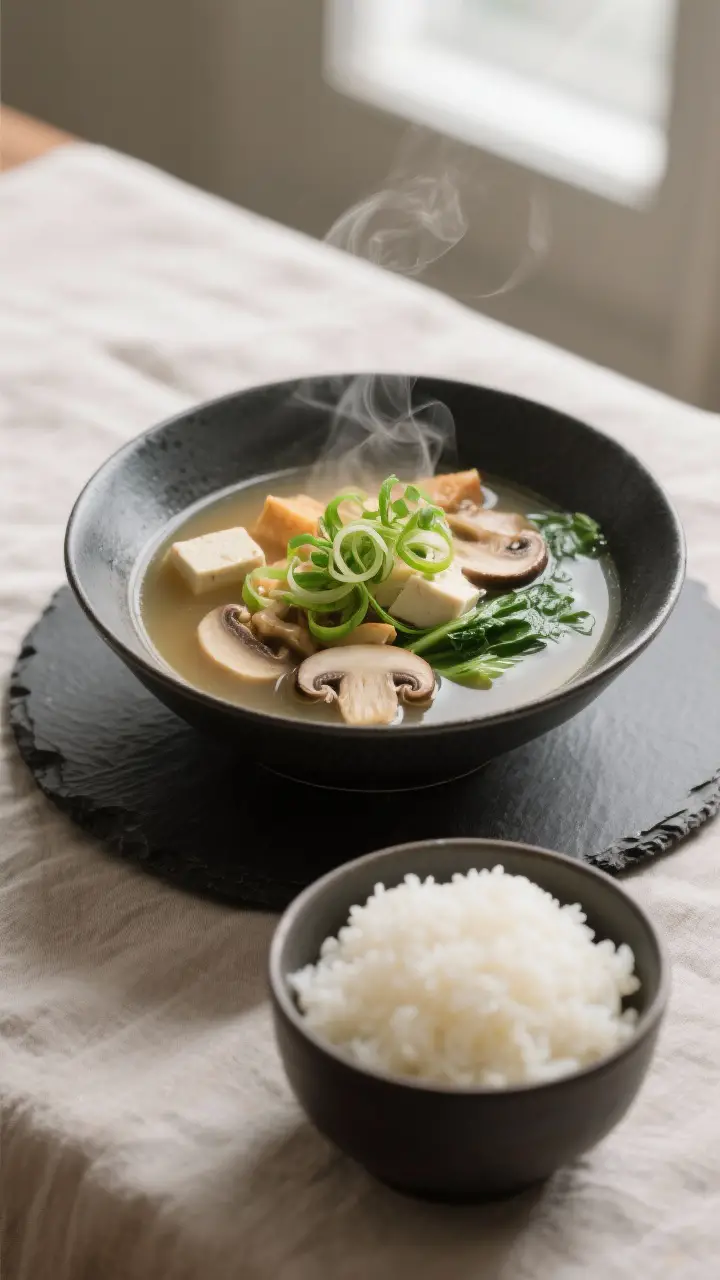
It’s fast, flexible, and deeply comforting, whether you sip it solo or pair it with rice and veggies. Keep miso on hand, lean on mushrooms and aromatics, and you’ll have a nourishing bowl ready any time. Once you try this method, it might become your go-to for quick, wholesome comfort.
Printable Recipe Card
Want just the essential recipe details without scrolling through the article? Get our printable recipe card with just the ingredients and instructions.