
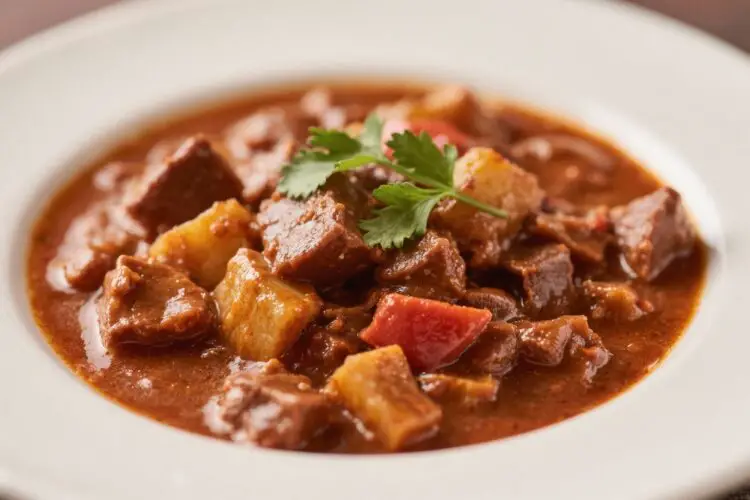
Hungarian Goulash is the kind of meal that makes the whole house smell welcoming. It’s rich, warm, and full of paprika-scented broth, tender beef, and simple vegetables. This is a dish with roots—peasant food made with care and patience, built to nourish.
You don’t need fancy tools or complicated steps. Just good ingredients, a little time, and a pot sturdy enough to hold a stew that feels like a hug.
What Makes This Special
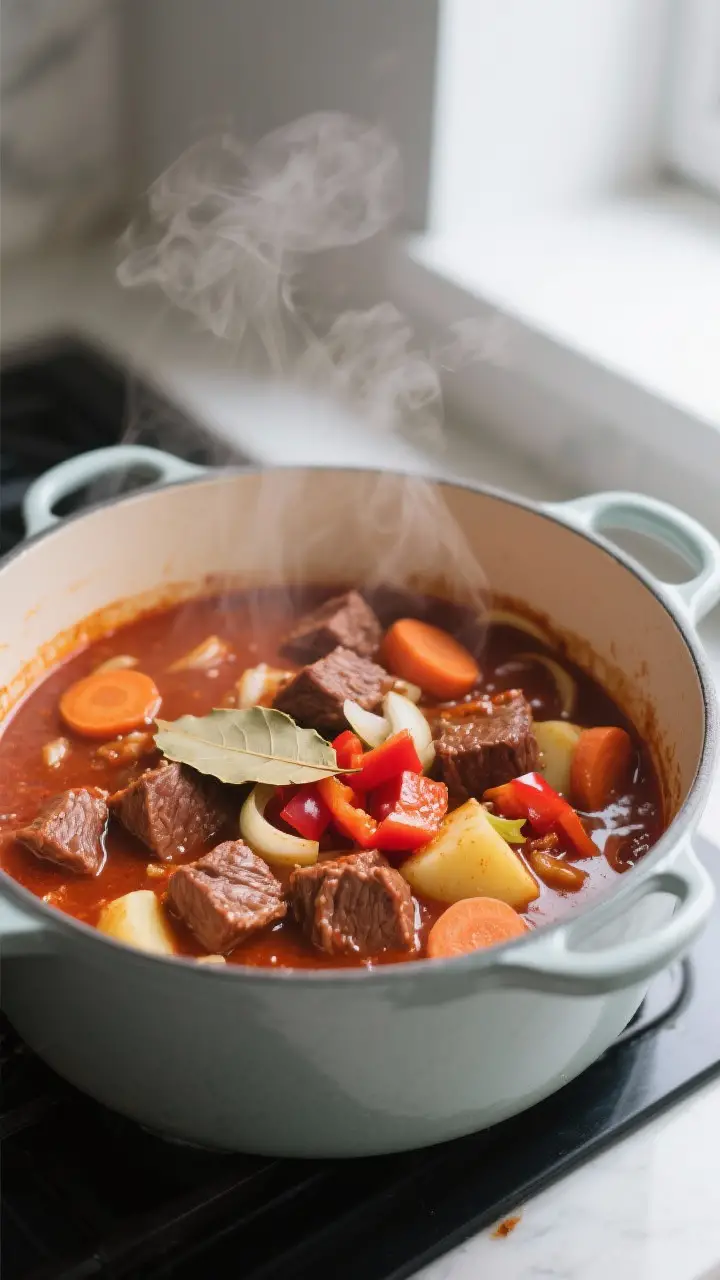
Hungarian Goulash balances hearty flavors with a light, paprika-forward broth. It’s not a creamy stew, and it’s not a thick gravy-heavy dish.
Instead, you get a brothy, brick-red soup-stew with depth and brightness. The sweetness of onions and peppers meets the warm spice of paprika and caraway. It’s simple, rustic cooking that delivers big comfort without being heavy. Key tip: The secret is using real Hungarian sweet paprika—and enough of it.
It’s the backbone of the flavor and gives the dish its signature color and aroma.
Ingredients
- 2 pounds (900 g) beef chuck, cut into 1.5-inch chunks
- 2 tablespoons lard, beef tallow, or neutral oil
- 2 large yellow onions, finely chopped
- 3 cloves garlic, minced
- 2 tablespoons Hungarian sweet paprika (plus 1 teaspoon more if desired)
- 1 teaspoon hot Hungarian paprika or red pepper flakes (optional, for heat)
- 1 teaspoon caraway seeds, lightly crushed
- 1 tablespoon tomato paste
- 1 red bell pepper, diced
- 2 medium carrots, sliced into rounds
- 1 pound (450 g) waxy potatoes, peeled and cut into chunks
- 6 cups beef broth (or water with 1 bouillon cube)
- 1 bay leaf
- 1 teaspoon kosher salt, more to taste
- Freshly ground black pepper, to taste
- 1 teaspoon white wine vinegar or apple cider vinegar (optional, for brightness)
- Chopped fresh parsley, for garnish
- Crusty bread or csipetke (Hungarian pinched noodles), for serving
Step-by-Step Instructions
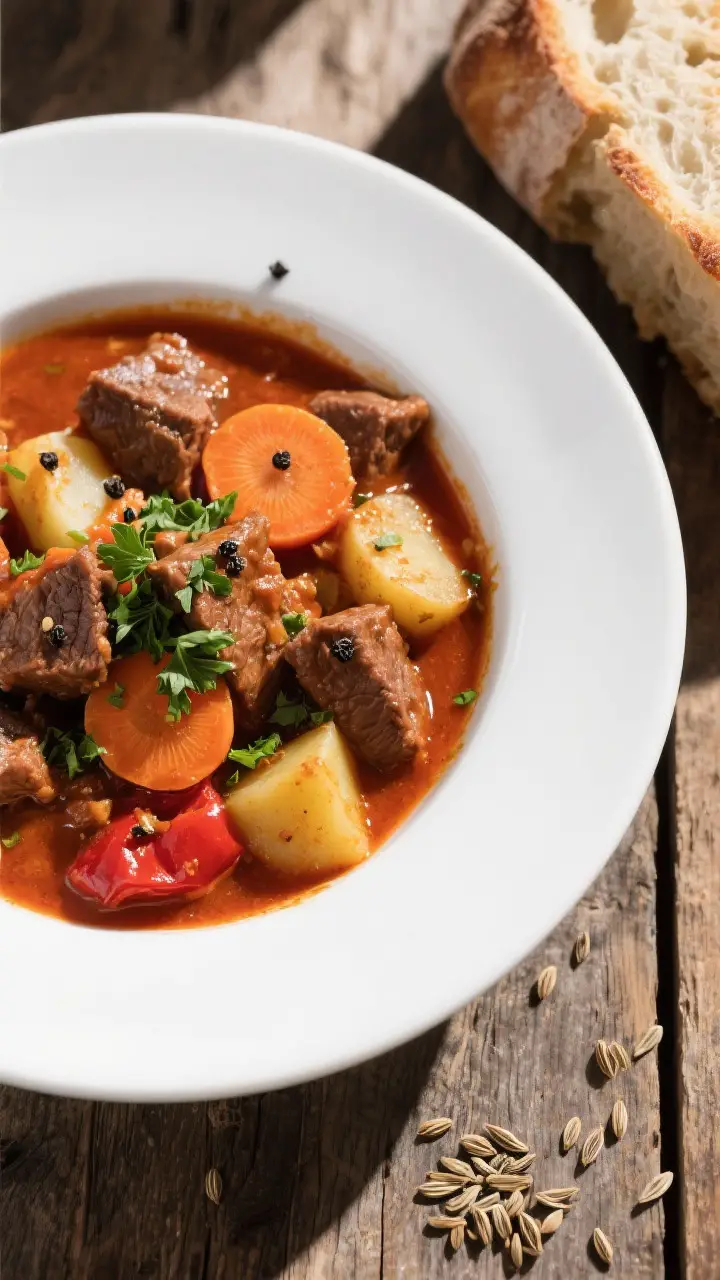
- Prep the beef: Pat the beef dry with paper towels and season lightly with salt and pepper. Dry meat browns better and gives you deeper flavor.
- Brown in batches: Heat the lard or oil in a heavy pot over medium-high. Sear the beef in batches until browned on two sides.
Don’t crowd the pan. Remove to a plate.
- Soften the onions: Reduce heat to medium. Add the onions with a pinch of salt.
Cook 8–10 minutes, stirring often, until soft and golden, not burnt. This is where the sweetness builds.
- Add garlic and spices: Stir in the garlic, caraway, and tomato paste. Cook 1 minute.
Pull the pot off the heat and add the sweet paprika (and hot paprika if using). Stir quickly to bloom the paprika without scorching.
- Deglaze and return the beef: Splash in a bit of broth to loosen browned bits. Return the beef and accumulated juices to the pot.
Stir to coat.
- Add vegetables and liquid: Add bell pepper, carrots, bay leaf, and enough broth to cover by about an inch. Bring to a gentle simmer.
- Simmer low and slow: Cover partially and cook on low for about 1.5 hours, stirring occasionally, until the beef is tender. Keep it at a lazy simmer, not a hard boil.
- Add potatoes: Stir in the potatoes and continue simmering 25–30 minutes, until they’re tender and the broth tastes rich and balanced.
- Finish and adjust: Taste and season with more salt and pepper.
Add a teaspoon of vinegar if you want a little lift. If you like it thicker, simmer uncovered for a few minutes.
- Serve: Ladle into bowls, garnish with parsley, and serve with crusty bread or csipetke. It’s even better the next day.
How to Store
- Refrigerator: Cool completely, then store in an airtight container for up to 4 days.
The flavors deepen overnight.
- Freezer: Freeze for up to 3 months. Thaw in the fridge overnight and reheat gently on the stove. Add a splash of water or broth if it’s too thick.
- Reheating: Warm over low heat until hot.
Avoid aggressive boiling to keep the beef tender.
Why This is Good for You
- Protein-rich: The beef offers iron, zinc, and B vitamins, which support energy and immunity.
- Antioxidants: Paprika is rich in vitamin C and carotenoids. Onions and peppers add more antioxidants and fiber.
- Balanced comfort: Despite its heartiness, the broth-based style keeps it lighter than creamy stews, while potatoes provide satisfying carbs.
What Not to Do
- Don’t scorch the paprika: Burnt paprika turns bitter fast. Always add it off heat or over low heat and stir promptly.
- Don’t rush the onions: Undercooked onions mean shallow flavor.
Give them time to soften and sweeten.
- Don’t boil hard: A rolling boil toughens beef. Gentle simmering makes it tender.
- Don’t skip the salt checks: Taste at the end. Potatoes can absorb salt, so you may need more than you think.
- Don’t overload with herbs and spices: Goulash is about paprika, onions, and beef.
Keep it focused.
Recipe Variations
- Pork or venison: Swap the beef for pork shoulder or venison. Adjust cooking time as needed until tender.
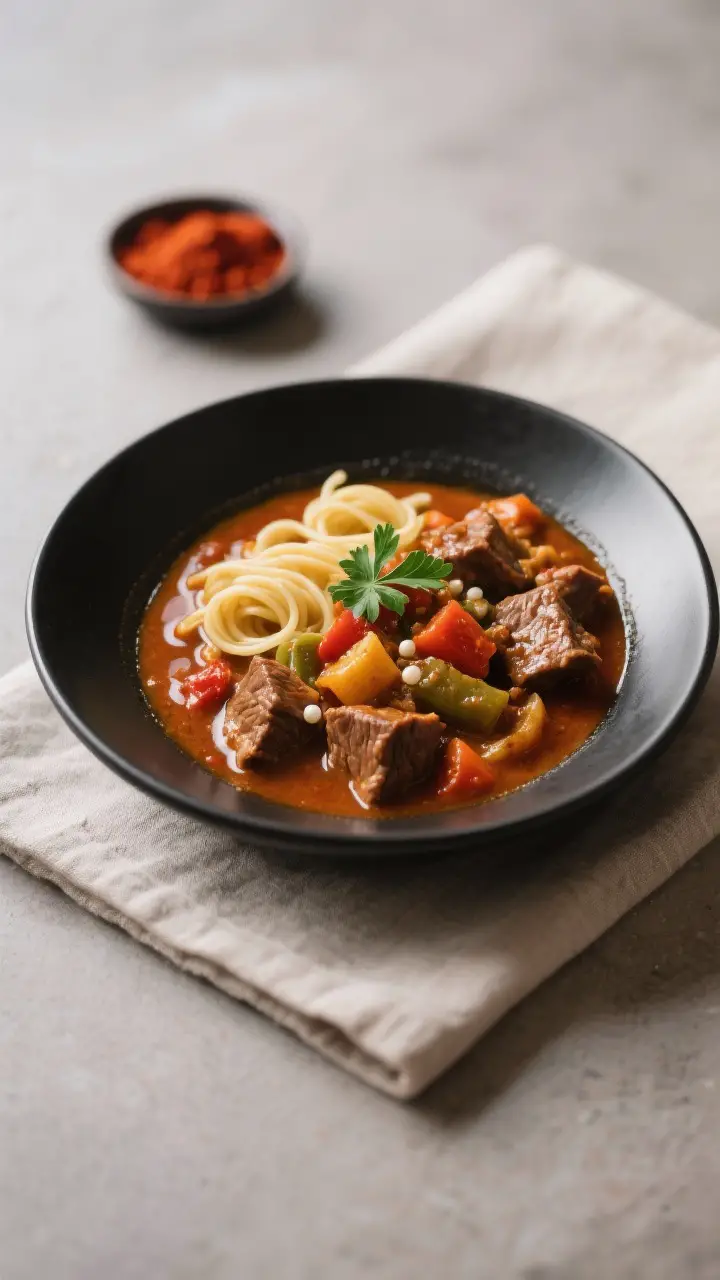
- Csipetke add-in: Make quick pinched noodles (flour, egg, pinch of salt). Pinch pea-sized bits and simmer in the goulash for the last 8–10 minutes.
- Smoked paprika accent: Add 1/2 teaspoon smoked paprika for a hint of smokiness, but don’t replace the Hungarian sweet paprika entirely.
- Paprikás-leaning: Stir in a couple of tablespoons of sour cream at the end for a creamier, paprikás-style finish.
Not traditional for goulash, but delicious.
- More veg: Add celery root or parsnip with the carrots for extra earthiness. Keep the broth-to-veg balance so it stays soupy, not crowded.
- Gluten-free: This recipe is naturally gluten-free. Just serve with potatoes or rice instead of bread.
FAQ
Is Hungarian Goulash supposed to be thick?
Traditional Hungarian goulash is more like a hearty soup than a thick stew.
The broth is richly flavored and slightly silky from the onions and potatoes, but it’s not gravy-thick.
What kind of paprika should I use?
Use Hungarian sweet paprika as your base. If you like heat, add a little hot Hungarian paprika. Spanish paprika tastes different and can work in a pinch, but it won’t deliver the same classic profile.
Can I make this in a slow cooker?
Yes.
Brown the beef and onions on the stovetop first, then transfer to a slow cooker with the spices, vegetables, and broth. Cook on low for 7–8 hours, adding potatoes for the last 2–3 hours.
Do I need tomato paste?
It’s not mandatory, but a small amount adds depth and color without making it tomato-heavy. Traditional recipes vary; some include it, some don’t.
What’s the best cut of beef?
Beef chuck is ideal.
It has enough connective tissue and marbling to turn tender and flavorful with slow cooking.
Can I make it ahead?
Absolutely. Goulash tastes even better the next day as the flavors meld. Store it in the fridge and reheat gently.
How can I make it spicier?
Add hot Hungarian paprika or a pinch of red pepper flakes.
Adjust gradually so the heat doesn’t overpower the paprika’s sweetness.
Final Thoughts
Hungarian Goulash rewards patience with deep, honest flavor. It’s a dish that turns simple staples into something memorable, perfect for slow evenings and cold weather. With good paprika, properly cooked onions, and a gentle simmer, you’ll get a bowl that feels both rustic and refined.
Make extra—you’ll want leftovers.
Printable Recipe Card
Want just the essential recipe details without scrolling through the article? Get our printable recipe card with just the ingredients and instructions.