
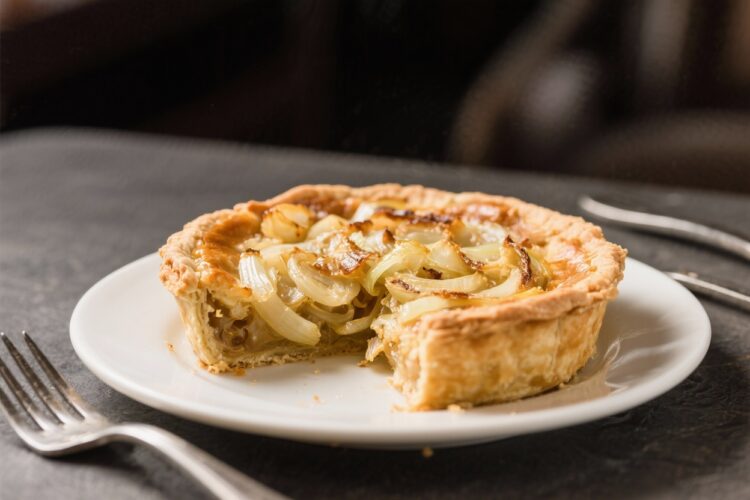
This onion pie is comfort food with a little charm. It’s rich, buttery, and full of sweet, slow-cooked onions tucked into a tender crust. The name “Fork ’n Finger” says it all—you can eat it neatly with a fork or pick up a cooled slice with your fingers.
Serve it as a simple main with a salad, or as a hearty side for roasted meats. If you love French onion soup or quiche, this sits happily in the middle of both.
What Makes This Special
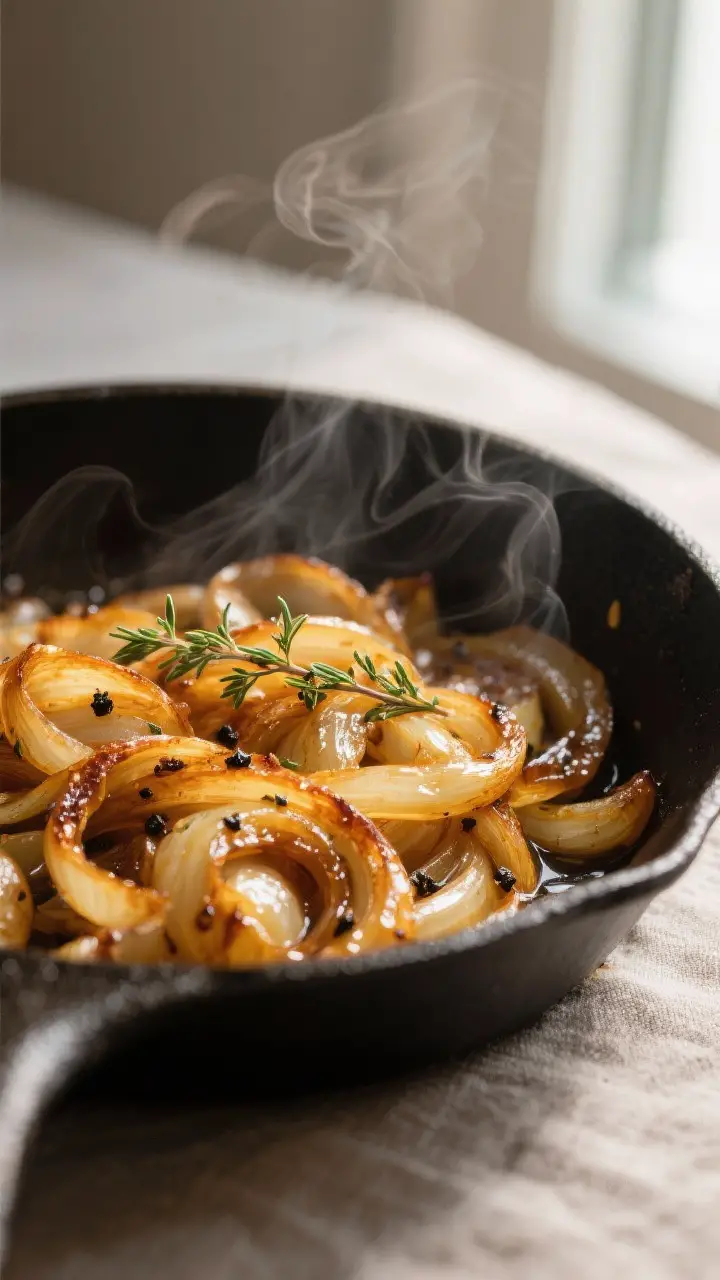
This pie lets onions be the star. When you cook them low and slow, they turn sweet and silky, bringing big flavor without a lot of ingredients.
The filling is creamy but not heavy, and the crust stays crisp on the bottom thanks to a quick blind bake.
It’s budget-friendly, make-ahead friendly, and great warm or at room temperature. You can dress it up with herbs and cheese or keep it rustic and simple. It’s the kind of dish that feels homemade in the best way.
Ingredients
- Pie crust: 1 single 9-inch pie crust (homemade or store-bought), chilled
- Onions: 4 large yellow onions (about 2 lbs), thinly sliced
- Butter: 4 tablespoons (1/2 stick)
- Olive oil: 1 tablespoon
- Salt: 1 teaspoon, plus more to taste
- Black pepper: 1/2 teaspoon
- Fresh thyme: 1 teaspoon leaves (or 1/2 teaspoon dried)
- Garlic: 2 cloves, minced (optional but lovely)
- Eggs: 3 large
- Heavy cream: 3/4 cup
- Milk: 1/2 cup (whole or 2%)
- Dijon mustard: 1 teaspoon
- Grated cheese: 1 cup total (Gruyère for classic flavor; or try cheddar, Swiss, or a mix)
- Nutmeg: A pinch (optional, but adds warmth)
How to Make It
- Heat the oven: Set to 375°F (190°C).
Place a rack in the lower third of the oven to help the crust crisp.
- Prepare the crust: Fit the crust into a 9-inch pie dish. Crimp the edges. Prick the base with a fork.
Line with parchment and fill with pie weights or dried beans. Bake for 12–15 minutes until the edges set. Remove weights and parchment, then bake 5 more minutes.
Let cool slightly.
- Slice the onions: Halve the onions through the root, peel, and slice thinly into half-moons. Aim for even slices so they cook uniformly.
- Cook the onions: In a large skillet, heat butter and olive oil over medium heat. Add onions and salt.
Cook, stirring often, for 25–35 minutes until soft and deeply golden. Reduce heat if they brown too fast. Add garlic in the last 2 minutes.
Stir in thyme and pepper. Taste and adjust seasoning.
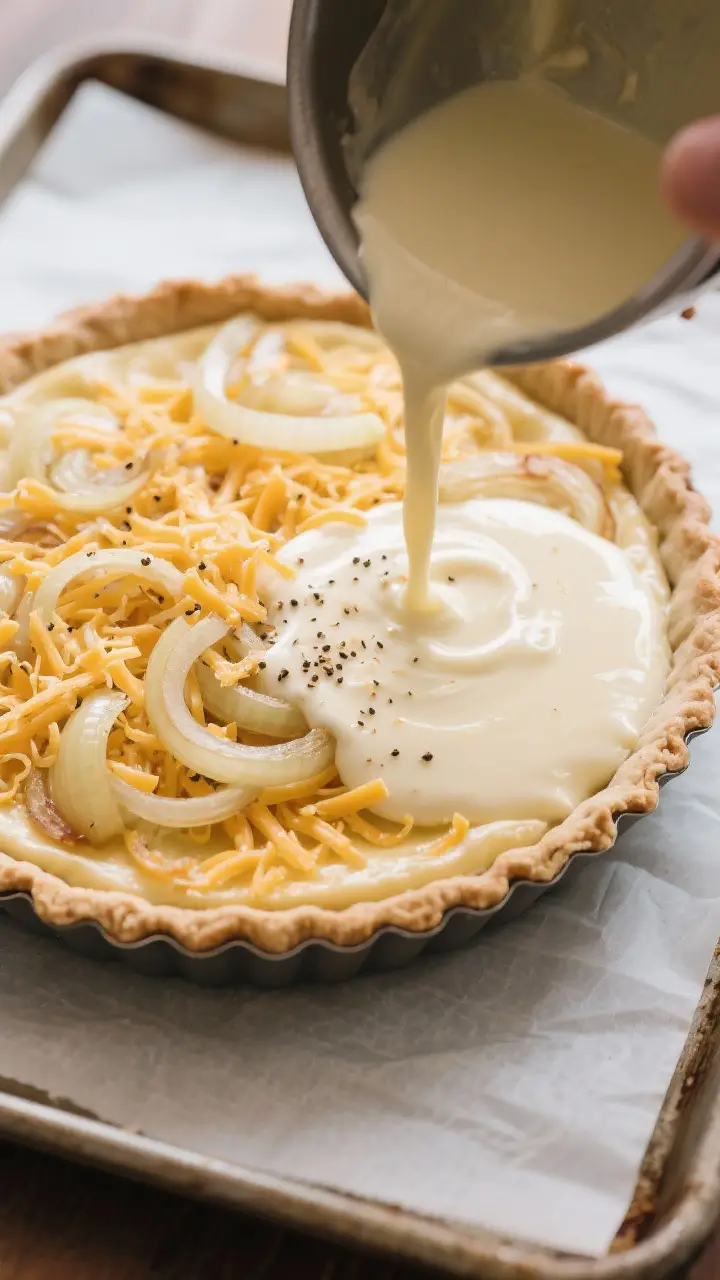
- Make the custard: In a bowl, whisk eggs, cream, milk, Dijon, and nutmeg. Season with a pinch of salt and more pepper.
Whisk until smooth.
- Assemble: Spread half the cheese over the bottom of the crust. Spoon the onions evenly over the cheese. Pour the custard over the onions.
Top with remaining cheese.
- Bake: Place the pie on a baking sheet to catch drips. Bake 30–40 minutes until the center is just set and the top is golden. A slight jiggle in the center is fine; it will finish setting as it cools.
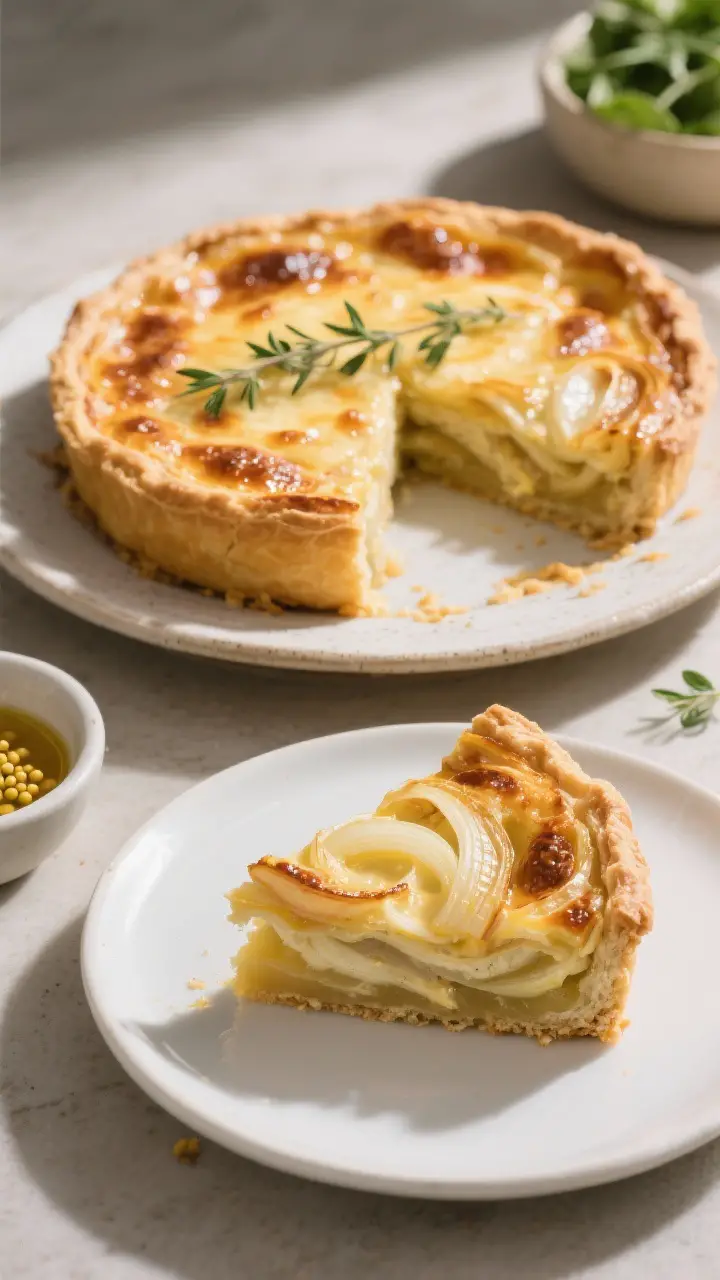
- Rest and serve: Let the pie rest 15–20 minutes before slicing.
This helps clean slices and a sturdy texture—perfect for that fork-or-fingers bite.
How to Store
- Refrigerate: Cool completely, then cover and refrigerate for up to 4 days.
- Reheat: Warm slices in a 325°F (165°C) oven for 10–15 minutes, or until heated through. Avoid the microwave if possible; the crust stays crisper in the oven.
- Freeze: Wrap tightly and freeze for up to 2 months. Thaw in the fridge overnight, then reheat in the oven until hot and crisp.
Benefits of This Recipe
- Budget-friendly: Onions and eggs do the heavy lifting, so it’s easy on the wallet.
- Flexible: Use the cheese you have, add herbs, or toss in a handful of cooked bacon or mushrooms.
- Great make-ahead: The onions can be cooked a day ahead, and the baked pie reheats well.
- Comforting yet light: Rich flavor without feeling over-the-top heavy, thanks to the onion-forward filling.
- Crowd-pleasing: Works for brunch, lunch, or dinner, and packs nicely for potlucks.
Common Mistakes to Avoid
- Rushing the onions: Under-cooked onions stay sharp and watery.
Let them turn golden and sweet before assembling.
- Skipping the blind bake: This often leads to a soggy bottom. A quick pre-bake keeps the crust crisp.
- Overfilling the crust: Leave a little headspace. Too much custard can overflow and make the pie messy.
- Baking at too high heat: The custard may curdle and the top can burn before the center sets.
Stick to moderate heat.
- Slicing too soon: Let the pie rest so it firms up. Hot slices will collapse.
Alternatives
- Cheese swaps: Try sharp cheddar for a bolder bite, Fontina for creaminess, or a sprinkle of Parmesan on top for extra savoriness.
- Crust options: Use a whole-wheat crust for a nutty flavor, a gluten-free crust if needed, or puff pastry for a flaky twist (skip blind bake; dock and pre-bake lightly).
- Dairy tweaks: Replace some cream with half-and-half or full-fat yogurt for a lighter custard. For a dairy-free version, use a non-dairy milk and omit cheese; add a tablespoon of cornstarch to help the custard set.
- Add-ins: Stir in cooked bacon, sautéed mushrooms, or roasted red peppers.
Keep total mix-ins to 1 cup so the custard still sets.
- Herb variations: Swap thyme for rosemary, chives, or parsley. A pinch of smoked paprika is great too.
FAQ
Can I use red or sweet onions instead of yellow?
Yes. Red onions bring a deeper color and a slightly sharper taste, while sweet onions cook down extra mellow.
You can also mix varieties for a more layered flavor.
Do I have to caramelize the onions fully?
No, but cook them until at least golden and soft. Full caramelization adds complexity, but even a deep blond color will taste great and won’t make the pie watery.
What if I don’t have heavy cream?
Use half-and-half or whole milk plus 2 tablespoons melted butter. The texture will be a bit lighter but still rich and custardy.
How can I prevent a soggy bottom?
Blind bake the crust, bake on a lower oven rack, and let the onions cool slightly so they don’t steam the crust.
A thin layer of cheese on the base also creates a moisture barrier.
Can I make this without eggs?
Try a custard made with 1 1/4 cups unsweetened non-dairy milk whisked with 3 tablespoons cornstarch and 2 tablespoons olive oil. It won’t be identical, but it will set nicely and hold together.
Is this good at room temperature?
Absolutely. It holds its shape well and tastes lovely warm or at room temp, making it great for picnics and buffets.
What should I serve with it?
A crisp green salad with a mustardy vinaigrette, roasted asparagus, or a simple tomato salad pairs well.
For something heartier, serve alongside roast chicken or grilled sausages.
Can I use store-bought caramelized onions?
You can, but check the label for added sugars and seasonings. Rinse and drain if they’re packed in oil, then pat dry. Freshly cooked onions usually deliver the best texture.
Why add Dijon mustard?
Dijon sharpens the flavors and balances the sweetness of the onions.
It doesn’t make the pie taste like mustard; it just adds a gentle backbone.
How do I know when it’s done?
The edges should be puffed and set, and the center should have a slight jiggle. A knife inserted near the center should come out mostly clean. If the top browns too quickly, tent loosely with foil.
In Conclusion
Fork ’n Finger Onion Pie is simple food that feels special.
It turns humble onions into a cozy, savory centerpiece with just a few pantry staples. Make it for brunch, a light dinner, or whenever you want something warm and welcoming. Once you’ve tried it, you’ll come back to it again and again—fork or fingers, your call.