
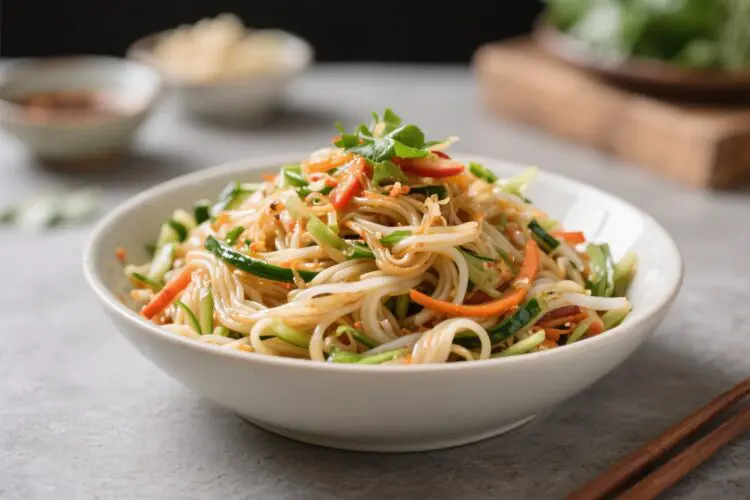
This is the kind of dish you make once and then crave all week. Cold Asian noodle salad brings together springy noodles, crisp veggies, and a punchy sesame-soy dressing that wakes everything up. It’s light but satisfying, fresh but full of flavor, and incredibly easy to throw together.
Whether you’re prepping lunches, feeding a crowd, or looking for a no-cook summer dinner, this salad covers you. Plus, it’s endlessly flexible—use what you have, and it’ll still taste great.
Why This Recipe Works
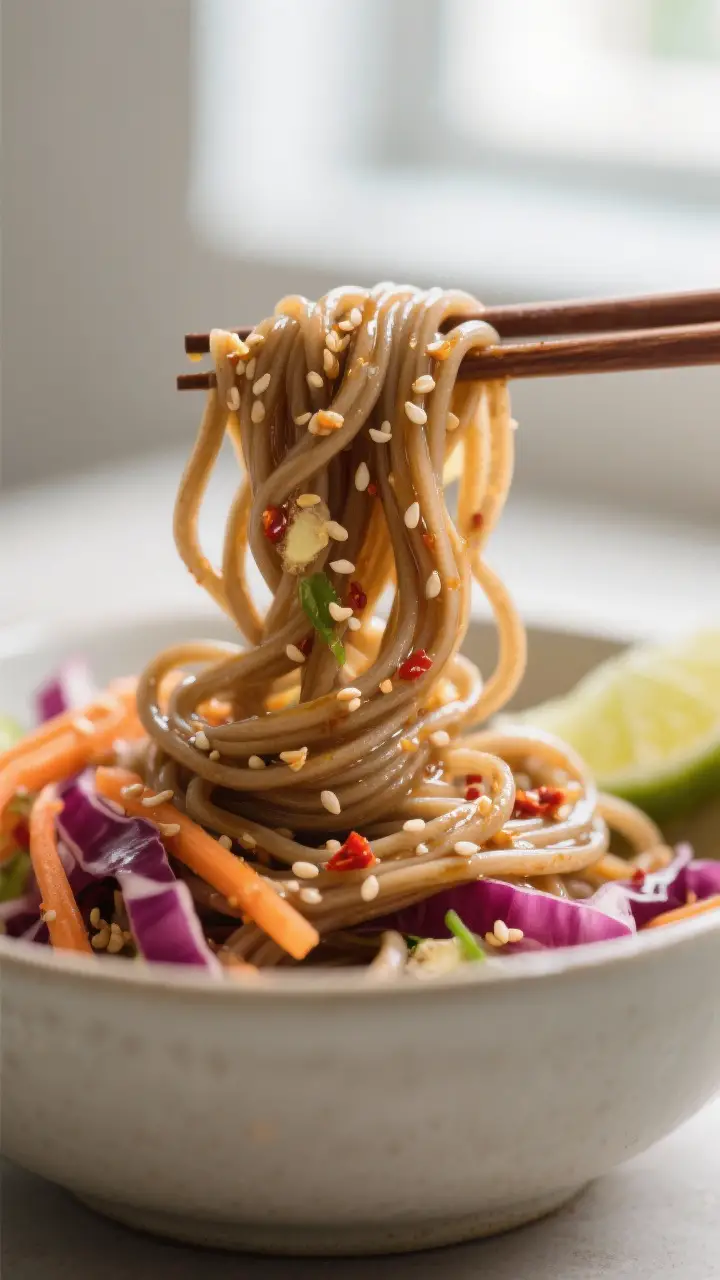
There’s a balance here that makes every bite sing. Sesame oil, soy sauce, and rice vinegar deliver savory, tangy, and nutty notes that cling to the noodles without making them heavy. The veggies stay crisp and colorful, adding crunch to contrast the noodles’ chew.
A touch of sugar or honey softens the edges, while lime brightens everything at the end. The best part? It tastes even better after a short rest in the fridge as the flavors meld.
Shopping List
- Noodles: Soba, ramen, rice noodles, or thin spaghetti
- Vegetables: Shredded carrots, red bell pepper, cucumber, red cabbage, scallions
- Fresh herbs: Cilantro and/or mint
- Crunch factor: Toasted sesame seeds and/or chopped roasted peanuts or cashews
- Protein (optional): Shredded rotisserie chicken, baked tofu, edamame, or shrimp
- Dressing: Soy sauce (or tamari), rice vinegar, sesame oil, neutral oil (like avocado or canola), lime juice, honey or sugar, grated garlic, grated ginger, chili flakes or sriracha
- Extras: Lime wedges for serving, extra herbs, extra chili oil if you like heat
Instructions
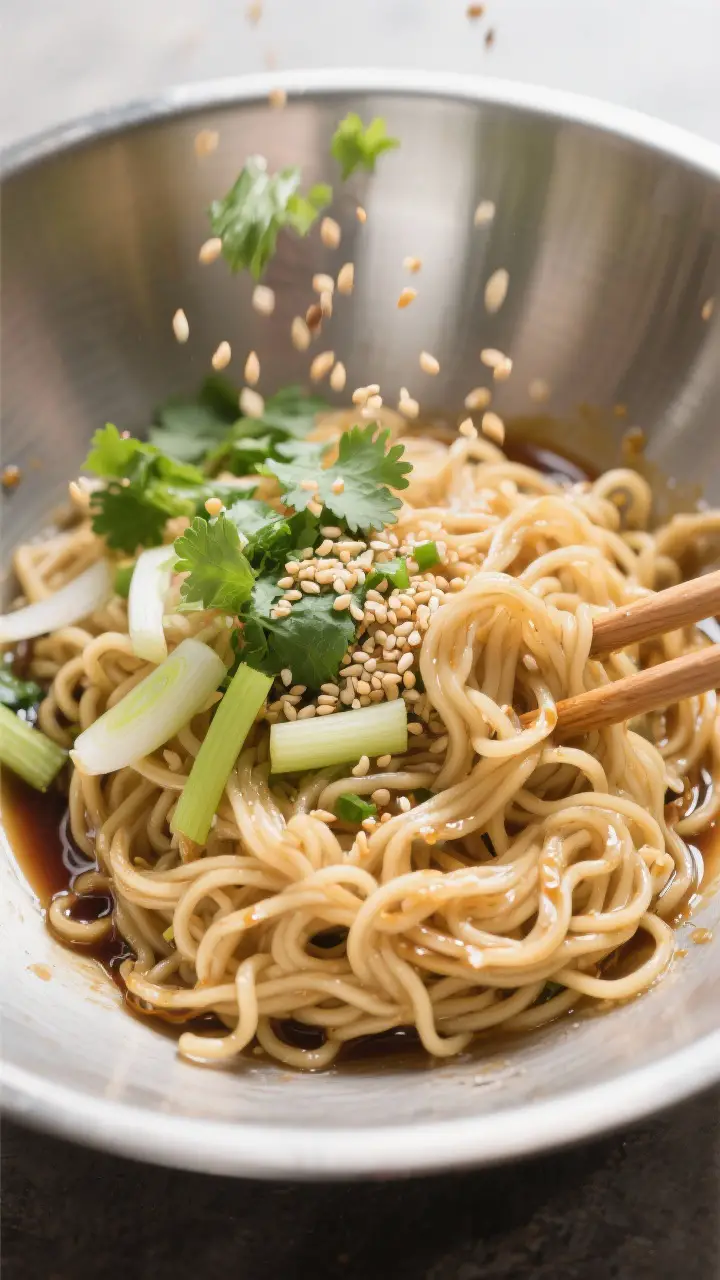
- Cook the noodles. Boil according to package directions until just tender.
You want them al dente, not mushy. Drain and rinse under cold water to stop the cooking and remove extra starch.
- Dry the noodles. Toss them in a colander for a minute, then blot with a clean towel or paper towels. Slightly drier noodles grab the dressing better.
- Prep the veggies. Thinly slice the red pepper, shred the carrots and cabbage, and cut the cucumber into matchsticks.
Slice scallions on a bias. Roughly chop cilantro and/or mint.
- Make the dressing. In a bowl or jar, whisk together 3 tablespoons soy sauce, 3 tablespoons rice vinegar, 1 tablespoon sesame oil, 2 tablespoons neutral oil, 1 tablespoon lime juice, 1 to 2 teaspoons honey, 1 grated garlic clove, 1 teaspoon grated ginger, and a pinch of chili flakes. Taste and adjust—add more vinegar for tang, soy for salt, or honey for balance.
- Toss the salad. In a large bowl, combine noodles, veggies, and herbs.
Pour over most of the dressing and toss until everything is glossy. Add more dressing as needed; you want everything lightly coated, not soupy.
- Add protein and crunch. Fold in cooked chicken, tofu, edamame, or shrimp if using. Sprinkle with sesame seeds and chopped peanuts or cashews.
- Chill briefly (optional). Let it rest in the fridge for 15–20 minutes.
This helps the flavors come together. Before serving, taste and hit it with a squeeze of lime and a pinch more salt if needed.
- Serve. Pile into bowls and top with extra herbs and a drizzle of chili oil if you like heat.
Keeping It Fresh
This salad holds up well for a couple of days if you store it right. Keep the dressing separate if you plan to serve later, and toss right before eating. If it’s already dressed, it will still be good for about 2–3 days in the fridge, though the veggies may soften.
For best texture, store noodles and veggies in an airtight container and add nuts and herbs just before serving.
If the salad dries out after refrigeration, revive it with a splash of soy, a little vinegar, and a touch of sesame oil.
Why This is Good for You
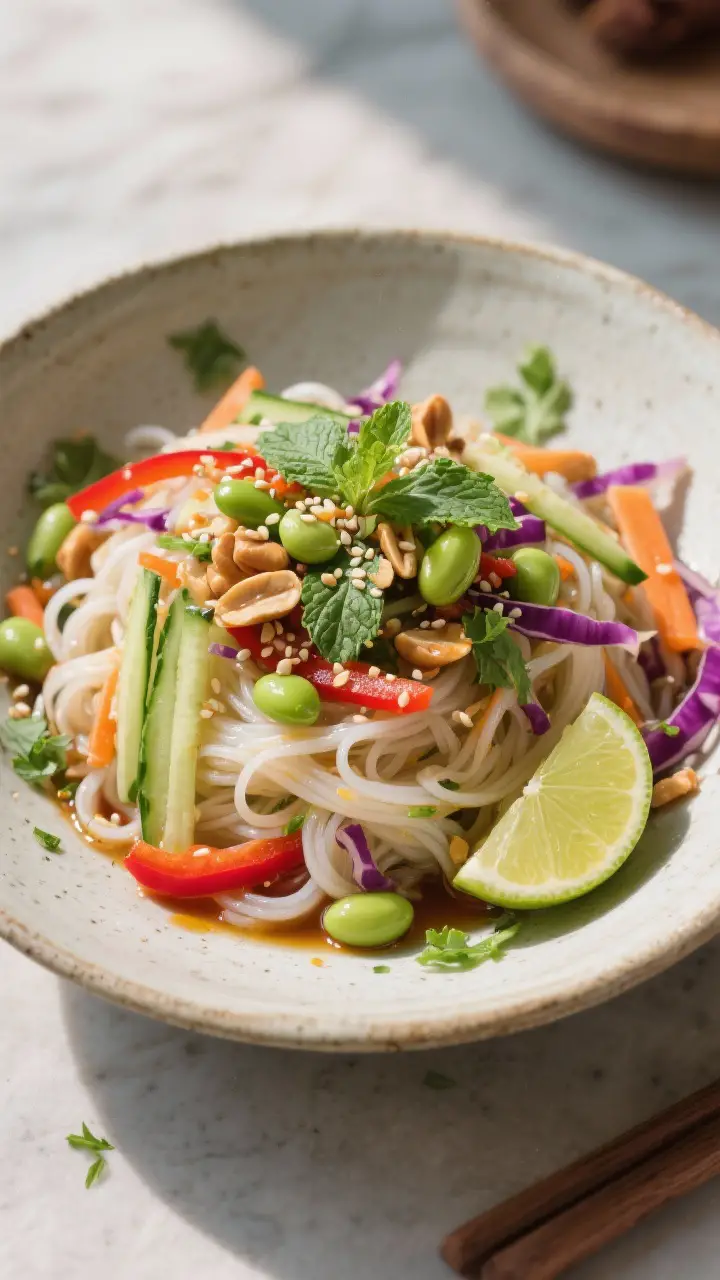
This bowl is a gentle win for both flavor and nutrition. The mix of raw veggies brings fiber, vitamins, and antioxidants, while sesame seeds and nuts add healthy fats. If you add tofu, edamame, chicken, or shrimp, you’re getting a solid dose of protein to keep you satisfied.
Choosing soba or whole wheat noodles adds more fiber, which helps with steady energy and fullness. And because the dressing is light, you get big flavor without heaviness.
Pitfalls to Watch Out For
- Mushy noodles: Overcooking is the fastest way to ruin this salad. Cook to just tender and rinse with cold water.
- Watery dressing: If veggies like cucumber are extra juicy, pat them dry.
Too much water will dilute the dressing.
- Unbalanced flavor: Taste the dressing. If it feels flat, add a squeeze of lime. If it’s too sharp, add a touch more honey.
If it’s bland, add soy or a pinch of salt.
- Greasy feel: A little sesame oil goes a long way. Too much can overpower everything. Keep it measured.
- Clumpy noodles: Toss noodles with a teaspoon of neutral oil after rinsing to prevent sticking, especially if you’re prepping ahead.
Variations You Can Try
- Thai-style twist: Add fish sauce to the dressing, swap honey for palm sugar, and finish with extra lime, peanuts, and lots of cilantro and mint.
- Spicy peanut version: Whisk in 2 tablespoons peanut butter and a splash of warm water to the dressing, plus extra chili sauce.
Great with chicken or tofu.
- Miso-ginger spin: Add 1 tablespoon white miso, extra ginger, and a touch more rice vinegar. Top with roasted sesame seeds.
- Korean-inspired: Use a gochujang-based dressing with a little soy, rice vinegar, sesame oil, and a pinch of sugar. Add sliced cucumbers and scallions.
- Veg-forward crunch: Load up on snap peas, radishes, and shredded purple cabbage.
Keep noodles light and let the veggies shine.
- Low-gluten option: Use rice noodles or 100% buckwheat soba and tamari instead of soy sauce.
FAQ
What kind of noodles work best?
Soba, rice noodles, and thin wheat noodles all work well. Soba brings a nutty flavor, rice noodles are light and bouncy, and thin spaghetti stands in well if that’s what you have. Just avoid very thick noodles, which can feel heavy.
Can I make this ahead?
Yes.
You can prep everything and keep the components separate for up to 3 days. If you must dress it ahead, undercook the noodles slightly and add nuts and herbs just before serving for the best texture.
How do I keep the noodles from sticking?
Rinse with cold water after boiling, shake off excess water, and toss with a teaspoon of neutral oil. If they clump later, loosen them with a splash of dressing or water.
Is there a good substitute for sesame oil?
Sesame oil adds a signature flavor, but if you don’t have it, use neutral oil and a sprinkling of toasted sesame seeds for aroma.
It won’t be exactly the same, but it’ll still taste great.
How spicy should this be?
That’s up to you. Add chili flakes, sriracha, or chili crisp to taste. Keep the base dressing mild if serving a crowd, and set out chili oil on the side.
Can I make it vegetarian or vegan?
Absolutely.
Use tofu or edamame for protein and swap honey for sugar or maple syrup to make it vegan. Choose tamari if you need it gluten-free as well.
What if my salad tastes bland?
It usually needs one of four things: more salt (soy), more acid (vinegar or lime), a touch of sweetness (honey), or more heat (chili). Adjust a little at a time and taste as you go.
In Conclusion
Cold Asian noodle salad is the kind of recipe that invites creativity without stress.
With a smart, balanced dressing and a mix of crunchy veggies, it’s bright, refreshing, and satisfying any time of year. Keep the method simple, trust your taste buds, and make it your own. Once you’ve tried it, you’ll keep a batch in the fridge on repeat—easy lunches, fast dinners, zero fuss.