
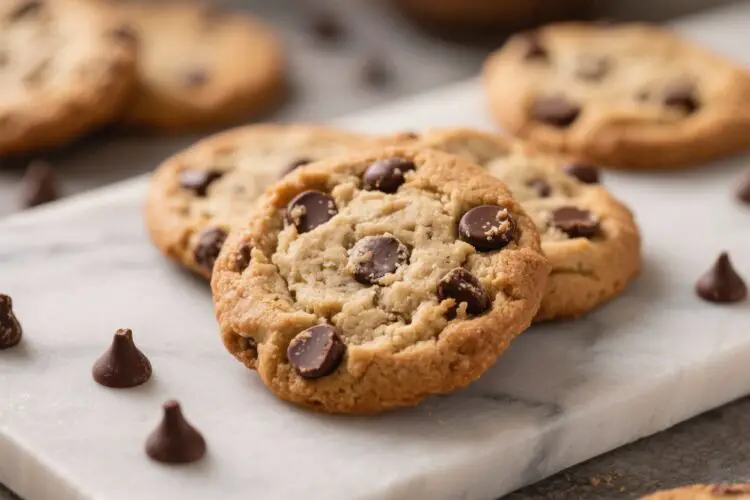
If you’re craving a cookie with crisp edges and a soft, gooey center, you’re in the right place. These chewy chocolate chip cookies are the kind you want with a glass of milk and a quiet moment. The dough comes together easily with simple pantry ingredients, and the texture is all about balance: buttery, tender, and studded with melty chocolate.
You’ll learn a few tricks that make a big difference, like chilling the dough and using the right sugars. Bake a batch today, share a few, and keep the rest for a late-night treat.
What Makes This Recipe So Good
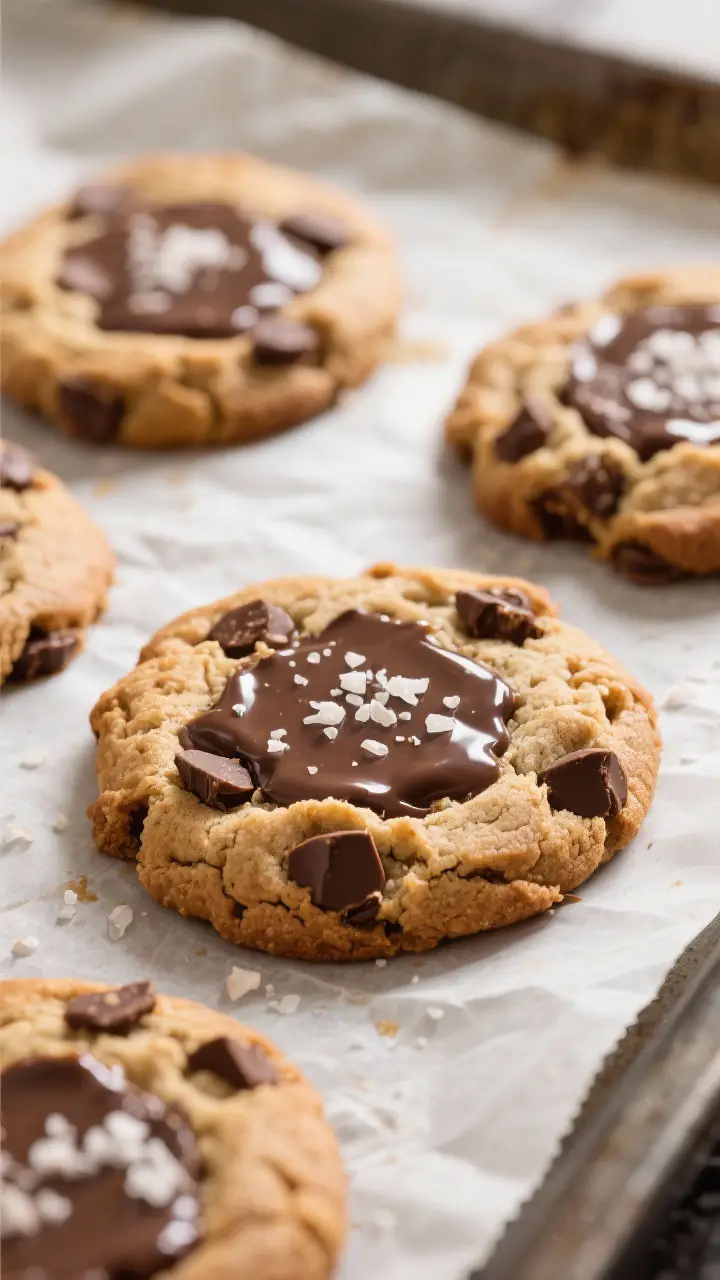
- Perfectly Chewy Texture: A mix of brown and white sugar, plus a brief chill, keeps the centers soft and the edges lightly crisp.
- Rich, Balanced Flavor: Butter, vanilla, and a hint of salt bring out that classic cookie taste, while chocolate chips add sweet bursts in every bite.
- Reliable and Simple: No fancy tools required. A bowl, a whisk, and a cookie sheet get the job done.
- Easy to Customize: Swap chips, add nuts, or sprinkle flaky salt on top.
The base recipe is flexible and forgiving.
- Freezer-Friendly: Make the dough, freeze the scoops, and bake a few whenever you want fresh cookies.
Ingredients
- 2 1/4 cups (280 g) all-purpose flour
- 1 teaspoon baking soda
- 1/2 teaspoon fine sea salt
- 3/4 cup (170 g) unsalted butter, melted and slightly cooled
- 3/4 cup (150 g) packed light brown sugar
- 1/2 cup (100 g) granulated sugar
- 1 large egg + 1 large egg yolk, at room temperature
- 2 teaspoons pure vanilla extract
- 1 1/2 cups (270 g) semisweet chocolate chips or chunks
- Optional: 1/2 cup chopped walnuts or pecans
- Optional: flaky sea salt for sprinkling
Step-by-Step Instructions
- Prep your pan and oven: Line two baking sheets with parchment paper. Preheat the oven to 350°F (175°C). This ensures even baking and prevents sticking.
- Whisk dry ingredients: In a medium bowl, whisk flour, baking soda, and salt.
Set aside. Keeping these combined helps the cookies rise evenly.
- Mix the sugars and butter: In a large bowl, whisk the melted, slightly cooled butter with the brown and granulated sugars until smooth and glossy, about 1 minute. This step adds chewiness.
- Add egg, yolk, and vanilla: Whisk in the egg, egg yolk, and vanilla until fully combined.
The extra yolk gives the cookies a rich, soft center.
- Combine wet and dry: Add the dry ingredients to the wet mixture. Stir with a spatula just until no dry streaks remain. Do not overmix.
- Fold in chocolate (and nuts if using): Gently fold in chocolate chips or chunks and nuts.
Mixing lightly avoids tough cookies.
- Chill briefly: Cover the dough and chill for 20–30 minutes. This step helps prevent spreading and deepens flavor.
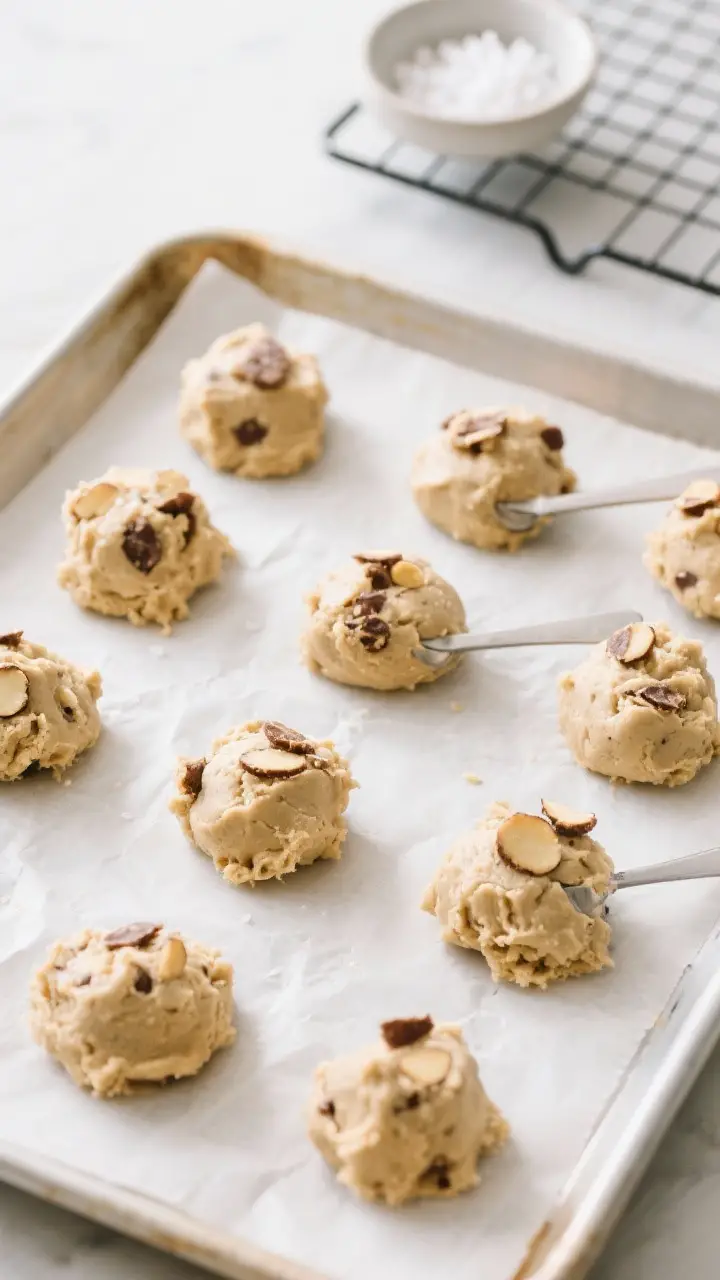
- Portion the dough: Scoop 2-tablespoon portions (about 40–45 g each) onto the prepared sheets, spacing 2 inches apart. For bakery-style puddles, press a few extra chips on top.
- Bake: Bake one sheet at a time for 9–12 minutes, until edges are set and lightly golden but centers still look soft. Do not overbake; they’ll continue to set as they cool.
- Pan-bang if needed: For crinkly edges, gently tap the pan on the counter once right after baking. It flattens the cookies slightly and enhances chew.
- Finish and cool: Sprinkle with flaky salt if you like.
Let cookies cool on the sheet for 5 minutes, then transfer to a rack to cool completely.
Storage Instructions
- Room temperature: Store cooled cookies in an airtight container for up to 4 days. A slice of bread in the container helps keep them soft.
- Freezer (baked): Freeze baked cookies in a single layer, then transfer to a freezer bag for up to 2 months. Thaw at room temperature or warm for 5 minutes at 300°F (150°C).
- Freezer (dough): Scoop dough balls onto a tray, freeze until firm, then bag and freeze up to 2 months.
Bake from frozen at 350°F (175°C) for 11–13 minutes.
Why This is Good for You
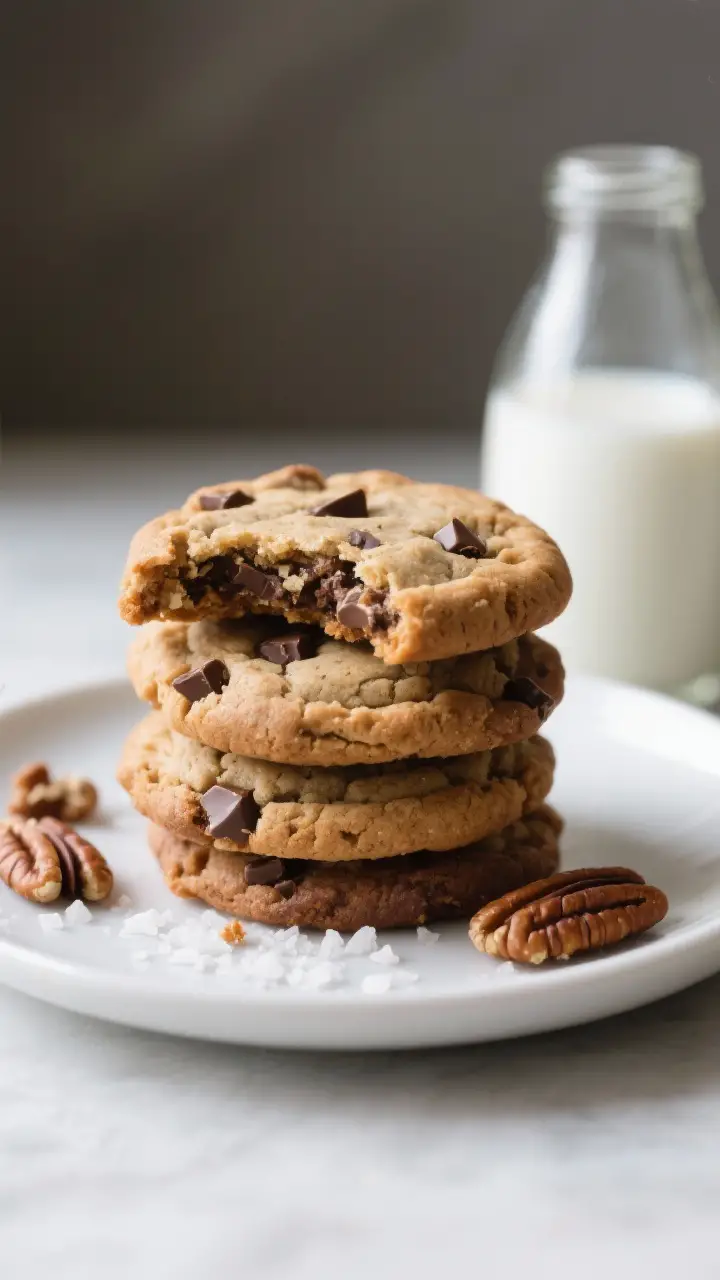
These cookies bring comfort, which matters. A homemade treat can turn a hectic day into something more grounded and joyful. Sharing a fresh batch builds connection, too—cookies have a way of starting conversations and brightening moods.
From a nutritional standpoint, they’re a treat, not a staple.
But making them at home means you control the ingredients. You can use quality chocolate, adjust the sweetness, and skip preservatives. Enjoy mindfully, and let them be part of a balanced approach to food.
Common Mistakes to Avoid
- Skipping the chill: Warm dough spreads too much and bakes up thin.
A short chill keeps cookies tall and chewy.
- Overbaking: If the centers look fully set in the oven, they’ll be dry when cool. Pull them when the centers still look slightly soft.
- Overmixing the dough: Too much mixing develops gluten and leads to tough cookies. Stop as soon as the flour disappears.
- Using cold eggs with melted butter: Cold ingredients can cause the butter to seize.
Room-temperature eggs mix more smoothly.
- Measuring flour incorrectly: Scooping packed flour adds too much. Spoon flour into the cup and level it, or use a scale for accuracy.
Variations You Can Try
- Browned butter: Brown the butter, cool it to room temp, and proceed. You’ll get nutty, toffee-like depth.
- Chocolate medley: Use a mix of semisweet, milk, and dark chocolate.
Chunks melt into pools for extra gooey bites.
- Nutty crunch: Stir in toasted walnuts, pecans, or almonds. The texture contrast is great with soft centers.
- Espresso twist: Add 1 teaspoon instant espresso powder to the dry ingredients. It amplifies the chocolate flavor.
- Coconut flake: Fold in 1/2 cup unsweetened shredded coconut for a subtle chew and tropical note.
- Oat add-in: Replace 1/2 cup of flour with quick oats for a heartier texture while keeping the chew.
- Gluten-free swap: Use a 1:1 gluten-free flour blend with xanthan gum.
Chill the dough a bit longer and watch the bake time.
FAQ
Can I use salted butter?
Yes. If using salted butter, reduce the added salt to 1/4 teaspoon. Taste the dough if you’re unsure; it should be pleasantly balanced, not salty.
Why add an extra egg yolk?
The extra yolk adds fat and protein, which improves tenderness and chew.
It also helps the cookies stay moist after cooling.
Do I have to chill the dough?
Chilling is strongly recommended. Even 20 minutes firms the dough, limits spreading, and gives you that soft, thick center you want.
How do I get thicker cookies?
Chill longer (up to 1–2 hours), use slightly cooler dough, and stack the scoops higher rather than wide. Make sure your baking soda is fresh.
Can I make them smaller?
Absolutely.
Use 1-tablespoon scoops and bake 7–9 minutes. Keep an eye on them—smaller cookies set fast.
What if I don’t have parchment paper?
Lightly grease the baking sheet or use a silicone baking mat. Parchment gives the most consistent results, but these options work too.
Why are my cookies cakey?
Likely too much flour or overmixing.
Measure carefully and stir just until combined. Also, avoid overbaking, which dries them out.
Can I reduce the sugar?
You can cut 2–3 tablespoons without major changes. Keep in mind sugar affects moisture and texture, so larger reductions can make cookies drier and less chewy.
What kind of chocolate works best?
Semisweet chips are classic, but chopped chocolate bars create melty pockets.
Use what you like, or mix a few types for a more complex flavor.
How do I keep them soft the next day?
Store in an airtight container with a slice of bread or a marshmallow. The cookies absorb a bit of that moisture and stay tender.
Wrapping Up
Chewy chocolate chip cookies don’t need to be complicated. With a few smart steps—melted butter, a quick chill, and careful bake time—you get soft centers, crisp edges, and big chocolate flavor.
Keep this recipe handy for weeknights, bake sales, or any day that calls for something warm and sweet. Once you’ve got the base down, play with variations and make it your own. Enjoy every bite while it’s still a little gooey in the middle.
Printable Recipe Card
Want just the essential recipe details without scrolling through the article? Get our printable recipe card with just the ingredients and instructions.