
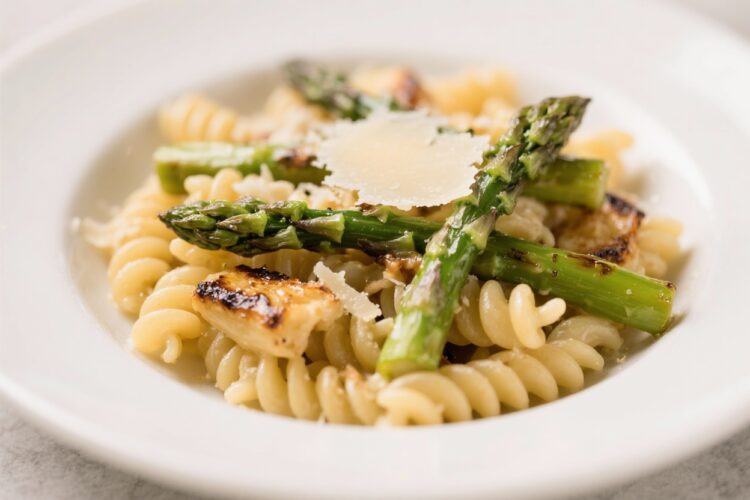
Cavatappi with roasted asparagus and Parmesan is the kind of weeknight pasta that feels special without making a fuss. It leans on simple ingredients, quick roasting, and a generous shower of cheese to deliver big flavor. The corkscrew shape of cavatappi grabs onto the buttery sauce and tender asparagus tips in every bite.
It’s satisfying, springy, and ready in the time it takes to boil water and heat the oven. Whether you’re cooking for one or feeding a crowd, this dish hits the sweet spot between fresh and cozy.
Why This Recipe Works
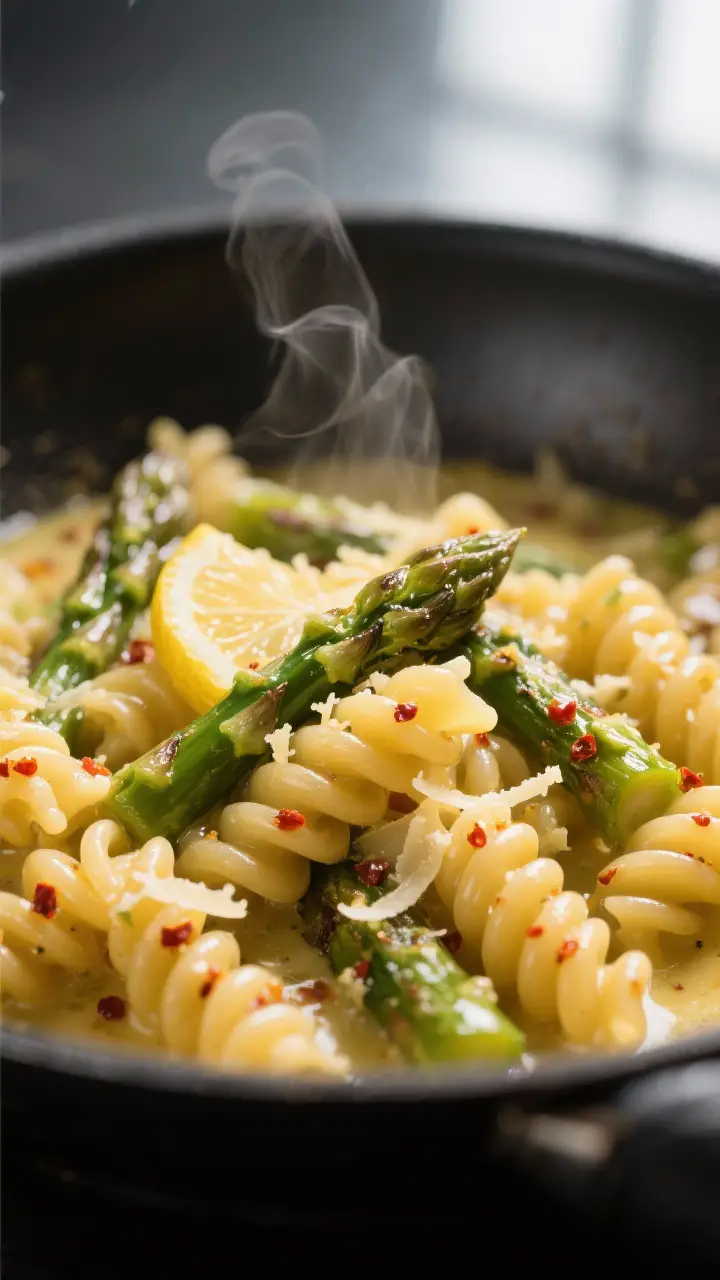
- Roasting intensifies flavor: Asparagus becomes sweet, nutty, and slightly crisp in the oven, which adds depth to a simple pasta.
- Cavatappi holds sauce well: Its ridges and spirals catch the buttery, garlicky pan sauce and ensure every forkful is flavorful.
- Balanced richness: Parmesan and butter bring creaminess, while lemon brightens and cuts through the fat, keeping the dish light.
- Minimal ingredients, maximum payoff: You don’t need a long list to get a restaurant-quality result, just good technique and fresh produce.
- Flexible and forgiving: Swap in different herbs, add protein, or adjust the heat with red pepper flakes to match your taste.
Ingredients
- 12 ounces cavatappi pasta
- 1 bunch asparagus (about 1 pound), trimmed and cut into 1.5-inch pieces
- 3 tablespoons extra-virgin olive oil, divided
- 2 tablespoons unsalted butter
- 3 cloves garlic, thinly sliced
- 1/2 teaspoon red pepper flakes (optional, to taste)
- Zest of 1 lemon, plus 1–2 tablespoons fresh lemon juice
- 3/4 cup freshly grated Parmesan cheese, plus more for serving
- 1/3 cup reserved pasta cooking water (as needed)
- Salt and freshly ground black pepper
- Fresh parsley or basil, chopped (optional, for garnish)
- Toasted pine nuts or sliced almonds (optional, for crunch)
How to Make It
- Heat the oven: Preheat to 425°F (220°C). Line a sheet pan with parchment for easy cleanup.
- Prep the asparagus: Toss the asparagus pieces with 2 tablespoons olive oil, a big pinch of salt, and several grinds of pepper.
Spread in a single layer on the pan.
- Roast until tender-crisp: Cook 10–14 minutes, stirring once, until the tips are lightly browned and the stalks are tender but not mushy. Set aside.
- Boil the pasta: Bring a large pot of salted water (it should taste like the sea) to a boil. Add cavatappi and cook until just shy of al dente.
Reserve at least 1 cup of pasta water, then drain.
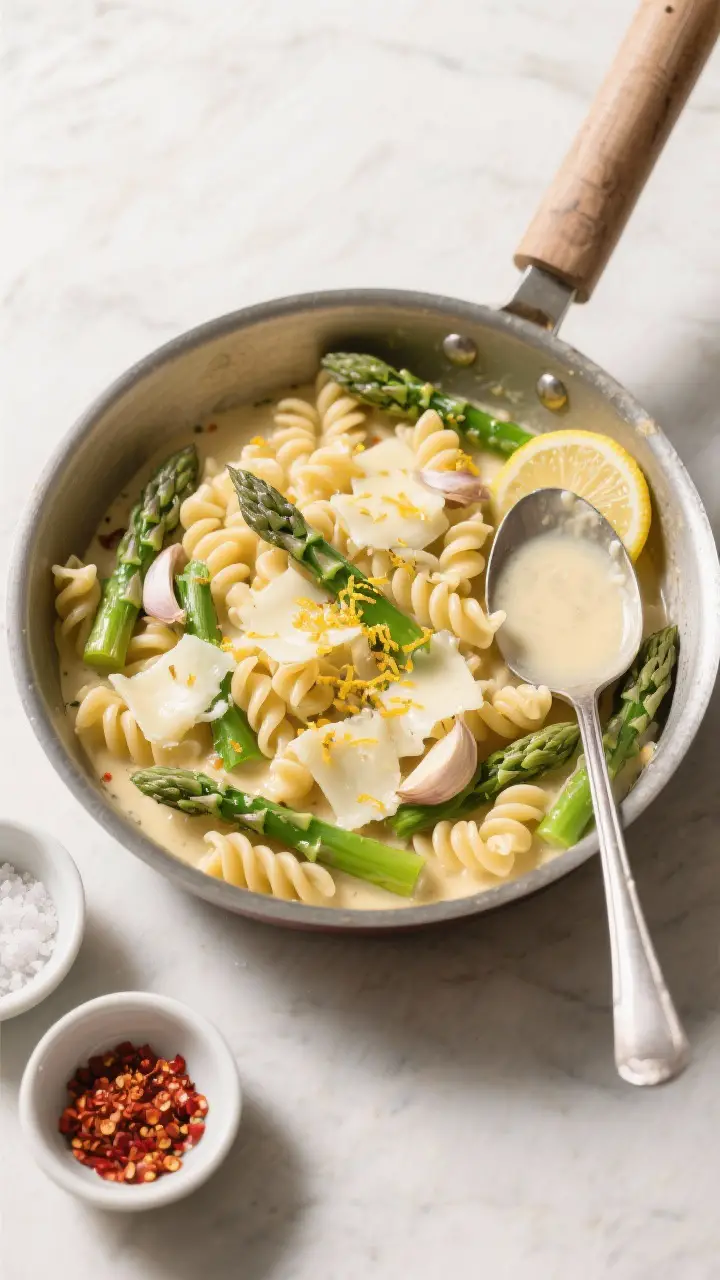
- Build the sauce: In a large skillet, warm the remaining 1 tablespoon olive oil and the butter over medium heat. Add garlic and red pepper flakes. Cook 30–60 seconds, just until fragrant; don’t let the garlic brown.
- Combine: Add the drained cavatappi to the skillet along with the roasted asparagus and lemon zest.
Toss to coat.
- Adjust the texture: Sprinkle in 1/4 cup of reserved pasta water and 1/2 cup Parmesan. Toss vigorously until the cheese melts and a light, glossy sauce clings to the pasta. Add more pasta water as needed to keep it silky.
- Finish: Stir in lemon juice to taste, plus more Parmesan if you like.
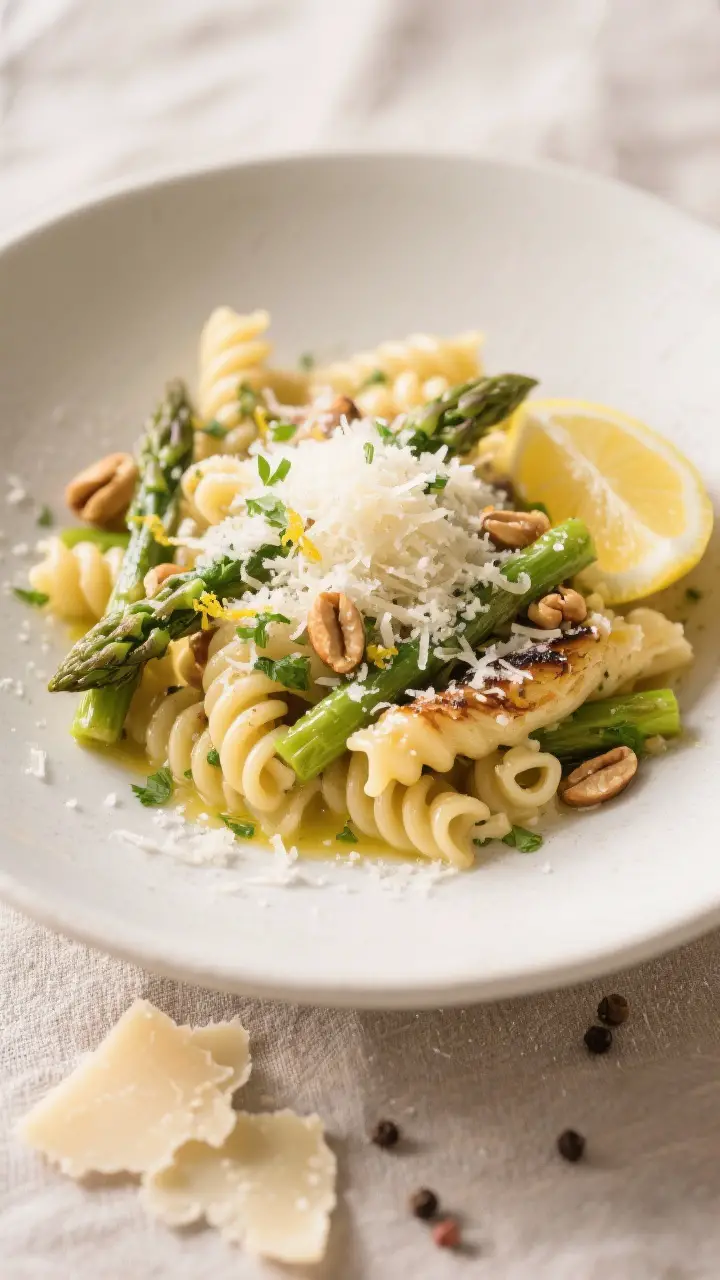
Season with salt and pepper. Remove from heat and garnish with herbs and nuts, if using.
- Serve: Plate immediately with extra Parmesan on the table.
How to Store
- Refrigerate: Store leftovers in an airtight container for up to 3 days. Add a splash of water or broth when reheating to loosen the sauce.
- Reheat gently: Warm on the stovetop over low heat with a bit of water, or microwave in short bursts, stirring between intervals to prevent drying.
- Avoid freezing: Asparagus and pasta can turn mushy after thawing, and the cheese sauce can separate.
Health Benefits
- Asparagus is nutrient-dense: It’s rich in fiber, folate, vitamin K, and antioxidants like vitamins A and C.
These support digestion, bone health, and immune function.
- Balanced energy: Pasta provides steady carbohydrates, while olive oil and a modest amount of butter offer satiety and flavor.
- Protein from Parmesan: Cheese contributes protein and calcium, supporting muscle and bone health.
- Heart-smart fats: Extra-virgin olive oil contains monounsaturated fats and polyphenols linked to cardiovascular benefits.
- Customizable: You can add grilled chicken, shrimp, or chickpeas to increase protein and keep portions satisfying.
Common Mistakes to Avoid
- Overcooking asparagus: It should be tender with a little snap. Check early and pull it from the oven once the tips brown lightly.
- Under-salting the pasta water: The pasta itself must be seasoned or the final dish will taste flat.
- Letting garlic brown: Burnt garlic turns bitter. Keep heat moderate and move quickly once it’s fragrant.
- Skipping pasta water: The starchy liquid helps form a smooth, cohesive sauce.
Don’t drain it all away.
- Adding lemon too early: Add juice at the end to keep the flavor bright and prevent curdling the cheese.
Variations You Can Try
- Creamier version: Stir in a splash of heavy cream or mascarpone with the Parmesan for a richer sauce.
- Protein boost: Add sautéed shrimp, flaked canned tuna, grilled chicken, or pan-crisped pancetta.
- Herb-forward: Swap lemon zest for fresh tarragon or chives, or add a handful of arugula to wilt at the end.
- Citrus twist: Use Meyer lemon for a sweeter note, or add a small squeeze of orange juice with the lemon.
- Nutty crunch: Top with toasted pine nuts, almonds, or walnuts for texture.
- Spicy kick: Increase red pepper flakes or finish with a drizzle of Calabrian chili oil.
- Different pasta shapes: Fusilli, gemelli, or rotini also work well thanks to their ridges and twists.
- Gluten-free and dairy-free: Use gluten-free pasta and a dairy-free Parmesan-style cheese or nutritional yeast, plus olive oil instead of butter.
FAQ
How do I know when the asparagus is done?
Roasted asparagus is ready when the stalks are tender when pierced with a fork, the tips are lightly browned, and the color is bright green. Start checking at 10 minutes to avoid overcooking.
Can I use frozen asparagus?
Yes, but roast from frozen on a preheated pan and expect a softer texture. Pat the asparagus dry after roasting to prevent excess moisture in the sauce.
What if I don’t have cavatappi?
Use any short, ridged pasta like fusilli, rotini, or penne.
The key is a shape that catches the sauce and asparagus pieces.
How can I make it lighter?
Use only olive oil, skip the butter, and reduce the Parmesan slightly. Add extra lemon juice, fresh herbs, and a handful of arugula for brightness.
Why is my sauce clumpy?
Cheese can seize if the pan is too hot or too dry. Lower the heat, add a splash of pasta water, and toss vigorously to smooth it out.
Is this good for meal prep?
It’s best fresh, but it keeps well for 2–3 days.
Reheat gently with water or broth and refresh with a squeeze of lemon and a sprinkle of Parmesan.
Can I make it vegetarian?
It already is. If you’re strictly vegetarian, check that your Parmesan is made without animal rennet or use a vegetarian hard cheese alternative.
What wine pairs well with this?
Try a crisp Pinot Grigio, Sauvignon Blanc, or a light Chardonnay. Their acidity complements the lemon and cuts through the cheese and butter.
Can I add other vegetables?
Absolutely.
Roasted cherry tomatoes, peas, or broccoli florets are great additions. Roast or blanch separately so each vegetable cooks properly.
How much lemon should I use?
Start with the zest and 1 tablespoon of juice, then taste. Add more lemon juice a little at a time until the flavors pop without overpowering the cheese.
Wrapping Up
Cavatappi with roasted asparagus and Parmesan is quick, bright, and deeply satisfying.
With a handful of pantry staples and a bundle of fresh asparagus, you get a pasta that tastes both fresh and comforting. Keep the technique simple, honor the ingredients, and finish with plenty of lemon and cheese. It’s a dish you’ll want on repeat whenever asparagus is in season—or whenever you need a straightforward, feel-good dinner.