
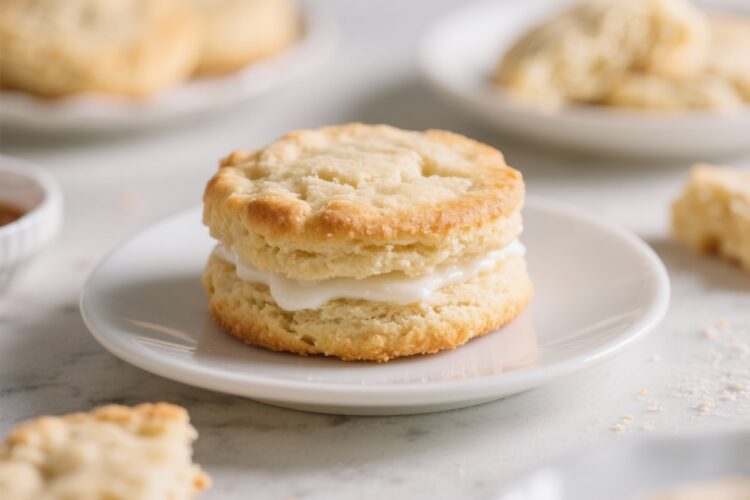
If you love classic strawberry shortcake, this is the biscuit recipe you’ll want on repeat. These shortcake biscuits are tender, lightly sweet, and sturdy enough to hold juicy berries and whipped cream without turning soggy. The dough comes together in minutes with basic pantry ingredients and a couple simple techniques.
No special equipment required—just a bowl, a grater or pastry cutter, and your oven. Make them for a weekend treat, a summer dessert, or a simple dessert that still feels special.
Why This Recipe Works
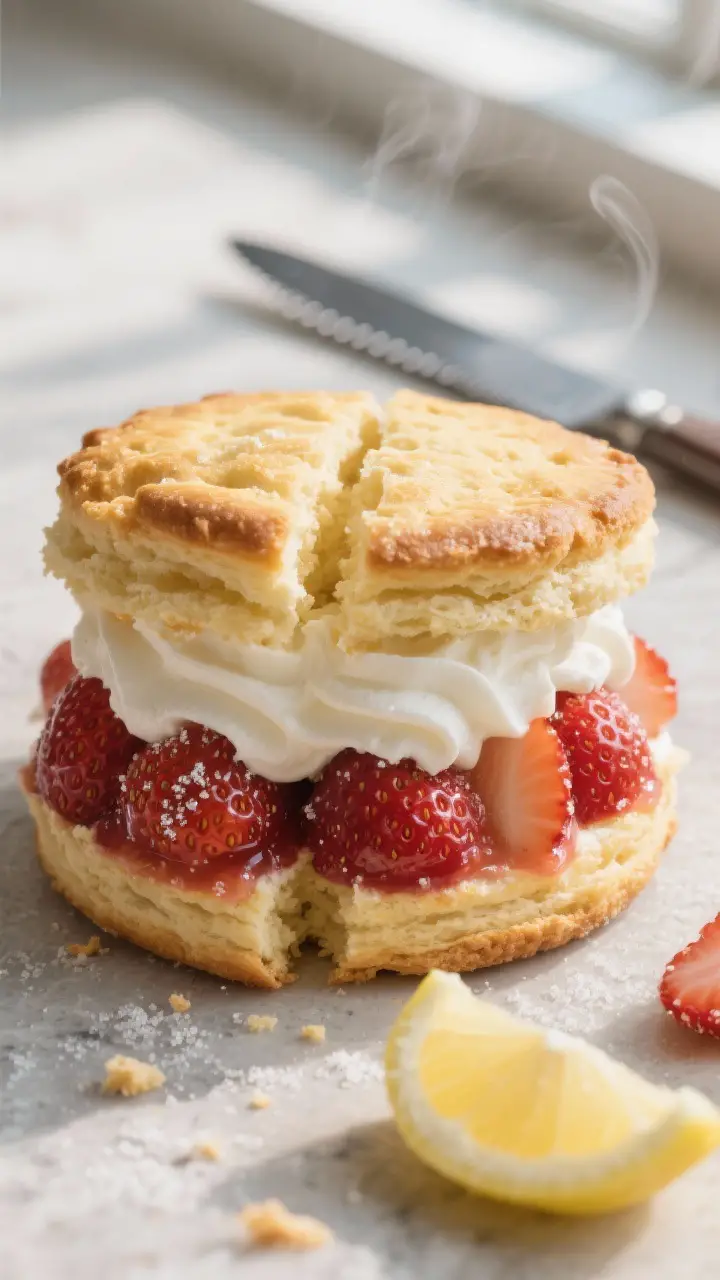
This recipe leans on a few small tricks that make a big difference. Grating cold butter into the flour creates thin layers that puff in the oven for a light, flaky crumb.
A mix of all-purpose flour and a touch of sugar gives the biscuits subtle sweetness without veering into cookie territory. Using both baking powder and a pinch of baking soda ensures a good rise and a golden top. Finally, buttermilk adds tang and tenderness, helping the dough come together without overworking it.
What You’ll Need
- 2 cups (250 g) all-purpose flour
- 3 tablespoons granulated sugar (plus extra for sprinkling)
- 1 tablespoon baking powder
- 1/4 teaspoon baking soda
- 1/2 teaspoon fine salt
- 1/2 cup (1 stick/113 g) unsalted butter, very cold
- 3/4 cup (180 ml) cold buttermilk (plus 1–2 tablespoons as needed)
- 1 teaspoon vanilla extract (optional, for a dessert-leaning biscuit)
- Heavy cream or milk, for brushing tops
- For serving: sliced strawberries, a squeeze of lemon, a little sugar, and softly whipped cream
Instructions
- Prep your tools and oven: Heat the oven to 425°F (220°C).
Line a baking sheet with parchment paper. Pop your stick of butter in the freezer for 10 minutes while you measure the dry ingredients.
- Mix the dry ingredients: In a large bowl, whisk together the flour, sugar, baking powder, baking soda, and salt until evenly combined.
- Cut in the butter: Grate the cold butter on the large holes of a box grater right into the flour. Toss gently with your fingers to coat the shreds.
Alternatively, cube the butter and cut it in with a pastry cutter until pea-sized.
- Add the liquid: Stir the vanilla into the cold buttermilk. Make a well in the dry ingredients and pour in most of the buttermilk. Use a fork to gently toss and hydrate the flour.
Add the remaining buttermilk, 1 tablespoon at a time, just until the dough holds together with a few dry spots. It should look shaggy, not sticky.
- Bring the dough together: Turn the dough onto a lightly floured surface. Pat it into a rough rectangle about 3/4-inch thick.
Fold it in half like a book, rotate, and pat again. Repeat this gentle fold-and-pat 2–3 times to build flaky layers without kneading.
- Shape and cut: Pat the dough to about 1-inch thickness. Use a 2.5–3 inch biscuit cutter to cut straight down without twisting (twisting seals edges and limits rise).
Gather scraps, pat once more, and cut remaining biscuits.
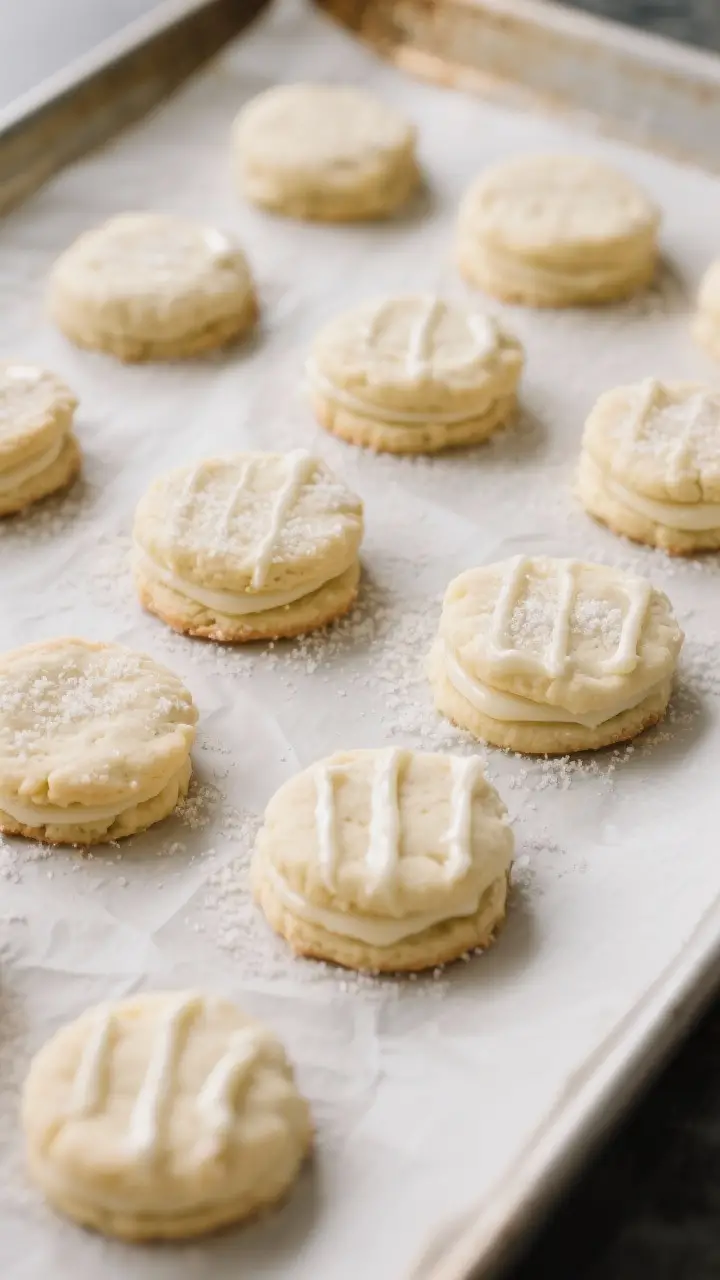
- Top and chill briefly: Arrange biscuits on the prepared sheet, close but not touching for softer sides, or spaced apart for crisp edges. Brush tops with a little cream or milk and sprinkle with a pinch of sugar for sparkle. For extra height, chill the tray 10 minutes before baking.
- Bake: Bake 12–15 minutes, until tall and golden with lightly browned bottoms.
The centers should look set and not doughy.
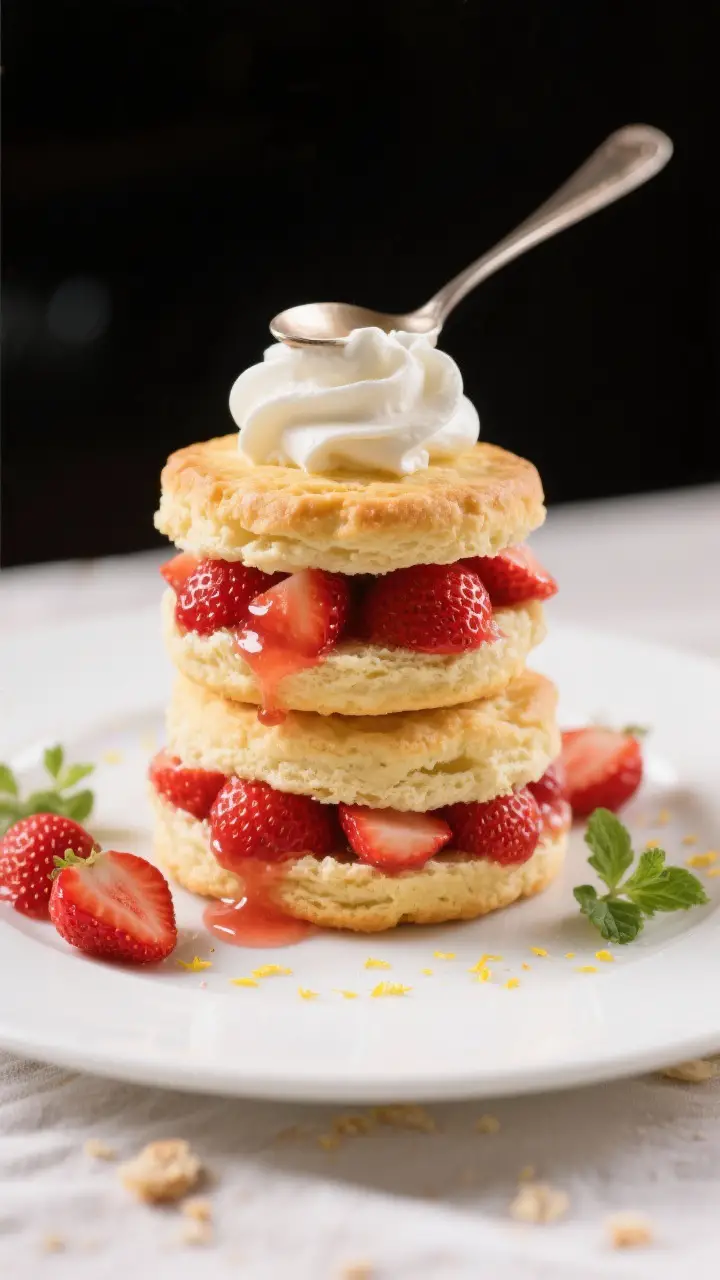
- Rest and serve: Let biscuits cool 5–10 minutes. Split with a serrated knife. Spoon on macerated strawberries (tossed with sugar and a squeeze of lemon) and top with softly whipped cream.
Serve immediately.
How to Store
- Room temperature: Keep plain, cooled biscuits in an airtight container for up to 2 days. Rewarm in a 300°F (150°C) oven for 6–8 minutes to refresh.
- Freezer: Freeze baked biscuits, tightly wrapped, for up to 2 months. Thaw at room temp, then reheat at 300°F until warm.
- Freeze unbaked: Cut biscuits can be frozen on a tray, then transferred to a bag.
Bake from frozen at 425°F, adding 2–4 extra minutes.
- Leftover fruit and cream: Store berries separately in the fridge for up to 2 days. Whipped cream keeps 1 day; re-whip lightly if it softens.
Benefits of This Recipe
- Fast and simple: From bowl to oven in about 15 minutes, with minimal cleanup.
- Foolproof texture: Grated butter and quick folds create consistent lift and flake.
- Balanced sweetness: Just sweet enough to pair with fruit, not cloying.
- Flexible serving: Works with strawberries, peaches, cherries, or even savory toppings if you skip the sugar.
- Make-ahead friendly: Freeze unbaked biscuits for instant shortcake any night.
Pitfalls to Watch Out For
- Warm butter: If the butter softens before baking, biscuits spread and lose height. Keep ingredients cold and work quickly.
- Overmixing: Stir just until combined.
Overworking the dough makes tough biscuits.
- Twisting the cutter: Press straight down. Twisting seals edges and prevents a tall rise.
- Too much flour on the bench: Excess flour dries out the dough. Lightly dust the surface and handle gently.
- Oven not hot enough: A hot oven sets the layers quickly.
Preheat fully before baking.
Recipe Variations
- Almond shortcake: Add 1/2 teaspoon almond extract to the buttermilk and sprinkle sliced almonds on top before baking.
- Lemon sugar tops: Rub 1 teaspoon lemon zest into 2 tablespoons sugar and sprinkle over the brushed tops.
- Brown sugar and cinnamon: Swap 1 tablespoon of the granulated sugar for brown sugar; add 1/2 teaspoon cinnamon to the dry mix.
- Vanilla bean: Scrape half a vanilla bean into the sugar before mixing for a fragrant biscuit.
- Gluten-free: Use a 1:1 gluten-free baking flour with xanthan gum, and keep the dough slightly wetter to avoid crumbly biscuits.
- Strawberry-peach shortcake: Toss equal parts sliced strawberries and peaches with sugar and a pinch of salt to draw out juices.
- Savory twist: Omit the sugar and vanilla. Add 1/2 cup shredded cheddar and 2 tablespoons chopped chives; serve with roasted tomatoes.
FAQ
Can I use regular milk instead of buttermilk?
Yes. Stir 2 teaspoons lemon juice or white vinegar into 3/4 cup milk and let it sit for 5 minutes to sour.
The flavor is slightly less tangy, but the biscuits still rise well.
Do I need a pastry cutter to make these?
No. Grating frozen butter is easy and effective. If you don’t have a grater, rub the butter into the flour with your fingertips quickly to keep it cold.
How do I keep the biscuits from turning soggy with berries?
Macerate the fruit separately and spoon it on just before serving.
Split the biscuit, add berries and whipped cream, and serve right away. If your berries are very juicy, use a slotted spoon.
Why didn’t my biscuits rise?
Common culprits are expired leaveners, overworked dough, or twisting the cutter. Also check that your oven was fully preheated to 425°F and that your butter was cold.
Can I make them smaller or larger?
Absolutely.
For minis, cut 2-inch rounds and bake 9–11 minutes. For larger 3.5-inch biscuits, bake 14–16 minutes, watching the tops for even browning.
What’s the best way to whip cream for shortcake?
Use cold heavy cream with a splash of vanilla and 1–2 tablespoons sugar per cup. Whip to soft peaks so it stays plush and blends nicely with the biscuits and fruit.
Final Thoughts
Shortcake biscuits don’t need to be fussy to be great.
With cold butter, a gentle hand, and a hot oven, you’ll get tall, flaky biscuits every time. Keep a batch of unbaked rounds in the freezer and dessert is always minutes away. Add fresh berries and soft whipped cream, and you’ve got a classic that never disappoints.
Simple, satisfying, and endlessly adaptable—this is a keeper.
Printable Recipe Card
Want just the essential recipe details without scrolling through the article? Get our printable recipe card with just the ingredients and instructions.