
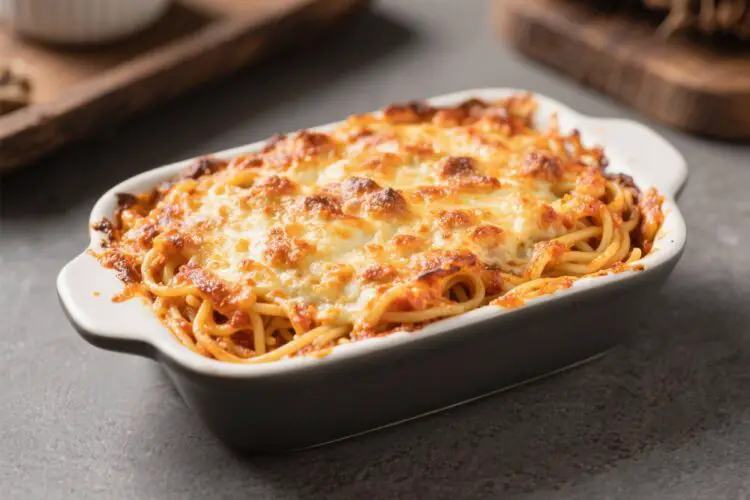
There’s something about a bubbling pan of baked spaghetti that feels like a warm hug. It’s familiar, hearty, and easy to love—especially on busy weeknights or when you’re feeding a crowd. Think tender pasta, rich tomato sauce, and a blanket of melty cheese with golden edges.
This version keeps things simple but still delivers big flavor. You can prep it ahead, bake it when you’re ready, and enjoy leftovers that taste just as good the next day.
What Makes This Recipe So Good
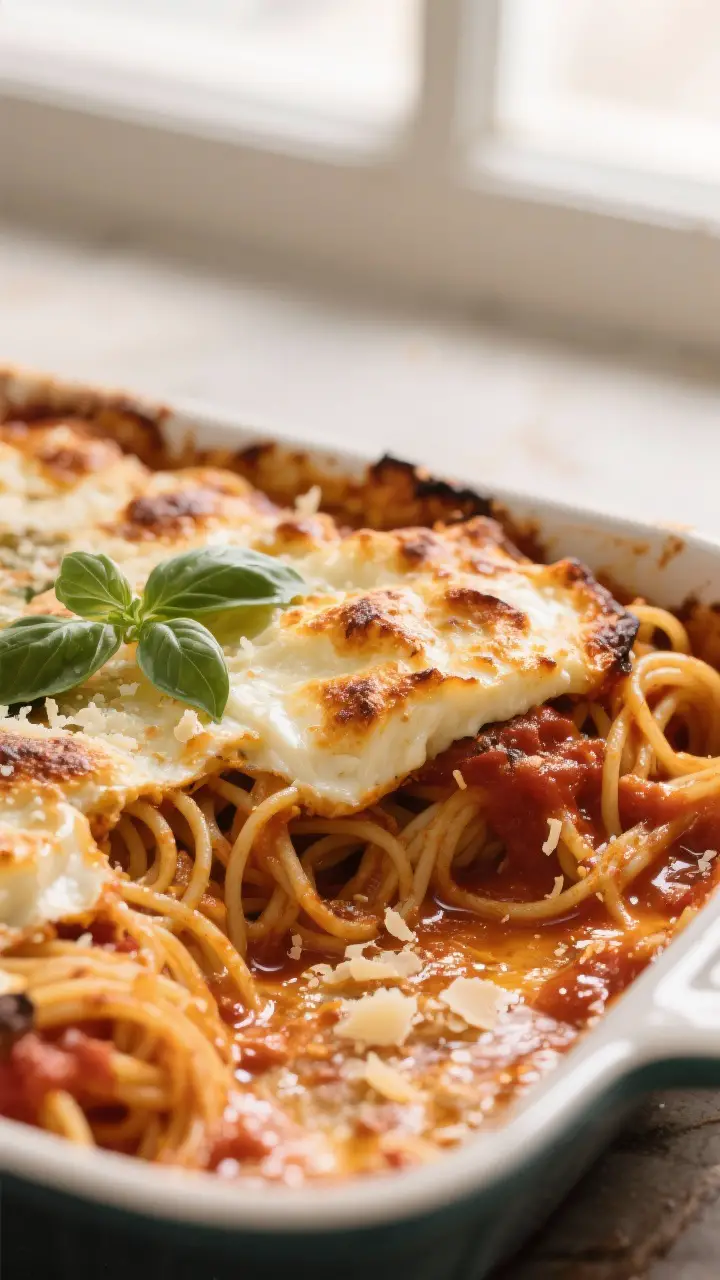
- Comfort in every bite: Creamy, saucy, cheesy layers turn plain spaghetti into something special.
- Family-friendly and crowd-ready: One pan serves many, and picky eaters rarely say no.
- Make-ahead friendly: Assemble earlier in the day or even the night before, then bake when needed.
- Flexible: Swap the meat, add veggies, or use what you have on hand without losing the spirit of the dish.
- Leftovers reheat well: The flavors meld and deepen overnight, making tomorrow’s lunch a win.
What You’ll Need
- 12 ounces spaghetti (regular or thin)
- 1 pound ground beef (or Italian sausage, or a mix)
- 1 small onion, finely chopped
- 3 cloves garlic, minced
- 24 ounces marinara sauce (your favorite jarred or homemade)
- 1 cup crushed tomatoes (for extra body; optional but recommended)
- 1 teaspoon dried Italian seasoning
- 1/2 teaspoon red pepper flakes (optional, for heat)
- Salt and black pepper to taste
- 2 tablespoons olive oil
- 1/2 cup reserved pasta water (as needed)
- 1 cup ricotta cheese
- 1 large egg
- 1/2 cup grated Parmesan (plus more for topping)
- 2 cups shredded mozzarella
- Fresh basil or parsley (optional, for garnish)
Step-by-Step Instructions
- Preheat and prep: Heat the oven to 375°F (190°C). Lightly oil a 9×13-inch baking dish.
- Cook the pasta: Bring a large pot of salted water to a boil.
Cook spaghetti until just shy of al dente. Drain, reserving about 1/2 cup of pasta water. Toss the pasta with a drizzle of olive oil to prevent sticking.
- Brown the meat: In a large skillet, warm 1 tablespoon olive oil over medium heat.
Add ground beef and onion. Season with a pinch of salt and pepper. Cook, breaking up the meat, until browned and the onion is soft, 6–8 minutes.
- Add garlic and spices: Stir in garlic, Italian seasoning, and red pepper flakes.
Cook 1 minute, until fragrant.
- Build the sauce: Pour in marinara and crushed tomatoes. Simmer 5–7 minutes to thicken slightly. Taste and adjust seasoning.
If the sauce seems too thick, splash in some reserved pasta water.
- Make the ricotta mixture: In a bowl, combine ricotta, egg, and Parmesan. Season with a little salt and pepper and stir until smooth.
- Toss the pasta with sauce: Add cooked spaghetti to the skillet and gently toss to coat. If needed, loosen with a bit more pasta water.
You want every strand glossy and saucy, not dry.
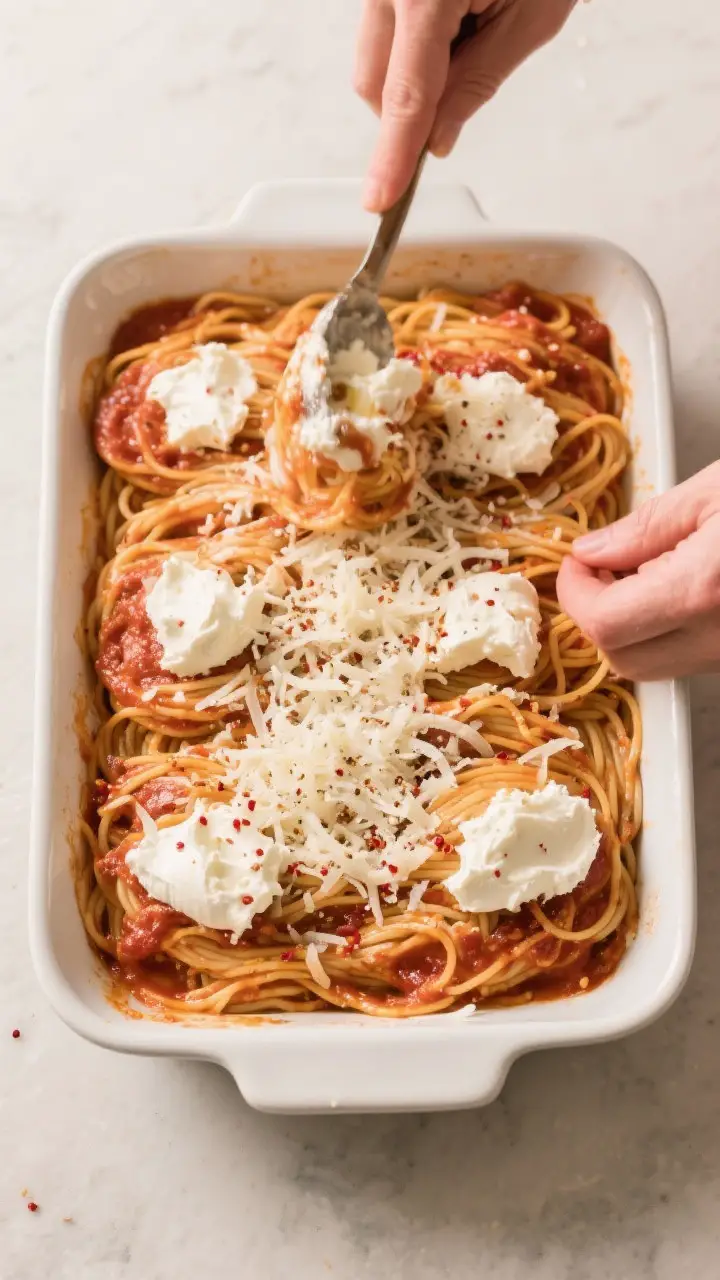
- Layer in the dish: Add half the sauced spaghetti to the baking dish. Spoon dollops of the ricotta mixture over the top and gently spread. Sprinkle with half the mozzarella.
Add the remaining spaghetti and top with the rest of the mozzarella and a little extra Parmesan.
- Bake: Cover loosely with foil and bake 20 minutes. Remove foil and bake another 10–15 minutes, until the top is melted and lightly golden and the edges are bubbling.
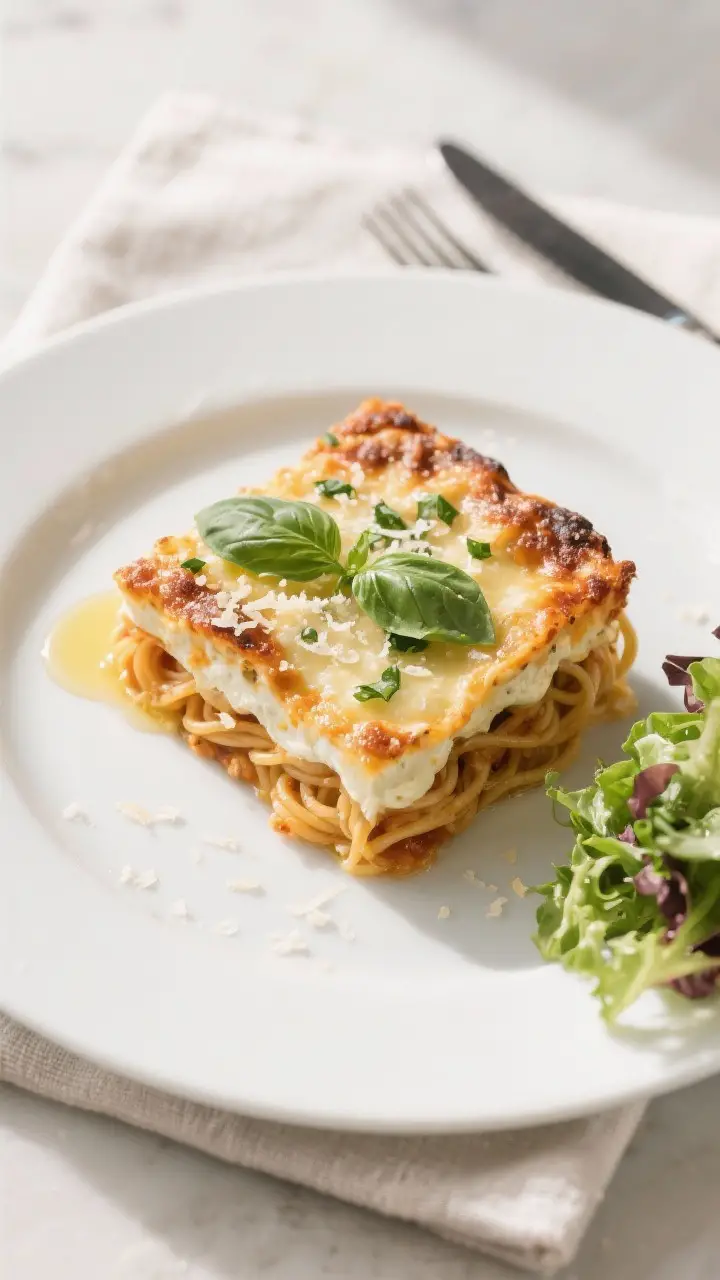
- Rest and serve: Let it rest 10 minutes before slicing. Garnish with chopped basil or parsley.
Serve warm.
How to Store
- Refrigerate: Cool completely, then cover tightly. Store in the fridge for up to 4 days.
- Reheat: Warm slices in a 300°F (150°C) oven for 15–20 minutes, or microwave in short bursts until hot. Add a splash of water and cover to keep it moist.
- Freeze: Wrap well in freezer-safe containers for up to 2 months.
Thaw overnight in the fridge and reheat covered until hot throughout.
- Make ahead: Assemble up to 24 hours in advance. Cover and refrigerate. Bake, adding 5–10 minutes to the covered time.
Why This is Good for You
- Balanced and satisfying: You get protein from the meat and cheeses, carbs from the pasta, and a bit of fiber from tomatoes and onions.
- Calcium and lycopene: Cheese provides calcium, while cooked tomatoes are rich in lycopene, an antioxidant linked to heart health.
- Customizable for your needs: Use whole-wheat pasta for extra fiber, lean meat for less fat, or add vegetables for more nutrients.
- Portion control made easy: It slices cleanly, so you can serve even portions and save the rest for another meal.
What Not to Do
- Don’t overcook the pasta: It will bake further in the oven; start slightly under al dente to avoid mushy noodles.
- Don’t skip seasoning: Taste the sauce.
A pinch of salt, pepper, or a sprinkle of Parmesan can make the flavors pop.
- Don’t drown it in sauce: You want saucy, not soupy. Keep the ratio balanced so the casserole sets nicely.
- Don’t bake uncovered the whole time: Cover first to melt and heat evenly, then uncover to brown the top.
- Don’t cut it too soon: A short rest helps it firm up, making cleaner slices and better texture.
Alternatives
- Meat swaps: Try Italian sausage, ground turkey, or a blend of beef and pork. For vegetarian, use plant-based crumbles or mushrooms.
- Cheese options: Cottage cheese can replace ricotta.
Add provolone or fontina for extra melt. Use part-skim mozzarella for a lighter touch.
- Pasta picks: Swap spaghetti with bucatini, penne, or ziti. Gluten-free pasta works well; just cook it a minute less.
- Veggie boost: Add sautéed mushrooms, bell peppers, spinach, or zucchini.
Fold them into the sauce before layering.
- Sauce variations: Stir in pesto for a herby twist, or add a splash of cream for a rosé-style sauce.
- Spice level: Keep it mild or lean into heat with more red pepper flakes or a pinch of chili powder.
FAQ
Can I make this without ricotta?
Yes. Use cottage cheese blended until smooth, or skip the creamy layer and add extra mozzarella and Parmesan. The texture will be a bit less creamy but still delicious.
How do I prevent watery baked spaghetti?
Cook the sauce until slightly thickened and don’t overcook the pasta.
If you add veggies, sauté them first to remove excess moisture. Avoid adding too much pasta water.
Can I assemble and freeze before baking?
Absolutely. Assemble in a freezer-safe dish, wrap tightly, and freeze.
Thaw in the fridge overnight, then bake covered, adding extra time as needed.
What’s the best way to reheat leftovers?
Cover with foil and reheat at 300°F (150°C) until hot. A splash of water or sauce helps keep it moist. For single portions, use the microwave in short intervals.
Is whole-wheat pasta a good swap?
Yes.
Whole-wheat spaghetti adds fiber and holds up well in baking. Cook it slightly under al dente to keep the texture firm.
Can I make it lighter?
Use lean ground turkey or chicken, part-skim cheeses, and whole-wheat pasta. Add plenty of vegetables and reduce the total cheese by about a third.
Why add an egg to the ricotta?
The egg helps the ricotta set as it bakes, creating a creamy but stable layer that slices nicely.
What size pan should I use?
A standard 9×13-inch baking dish works best.
If your dish is smaller, avoid overfilling; bake any extra in a small ramekin.
Wrapping Up
Baked spaghetti brings together everything you want in a cozy meal—simple prep, big flavor, and a melty, golden finish. It’s easy to customize, easy to store, and always a hit at the table. Keep this recipe handy for weeknights, potlucks, or anytime you want reliable comfort with minimal fuss.
One pan, many smiles, and leftovers you’ll actually look forward to eating.