
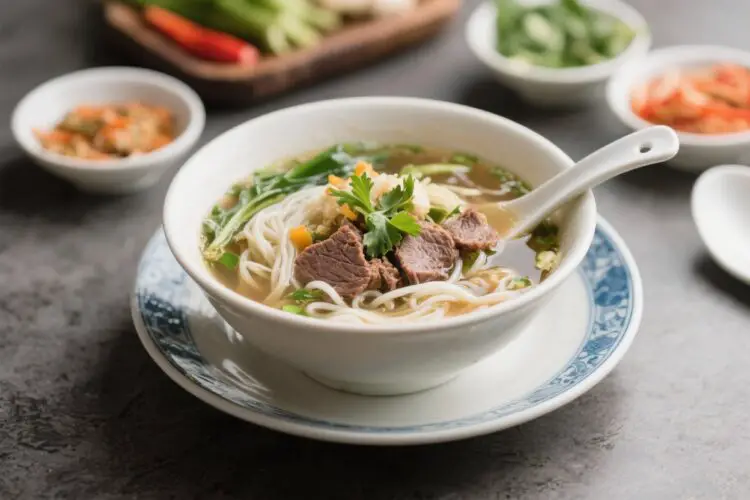
Pho bo is the kind of soup that feels like a warm hug—light yet deeply flavorful, familiar yet exciting. It’s built on a clear, aromatic beef broth, silky rice noodles, and fresh herbs that wake everything up. If you’ve ever wondered why a simple bowl of noodles could be so satisfying, this is it.
Making pho at home takes time, but it’s mostly hands-off, and the results are worth every minute. You’ll end up with a broth that’s clean, fragrant, and layered with spice, perfect for customizing to your taste.
What Makes This Recipe So Good
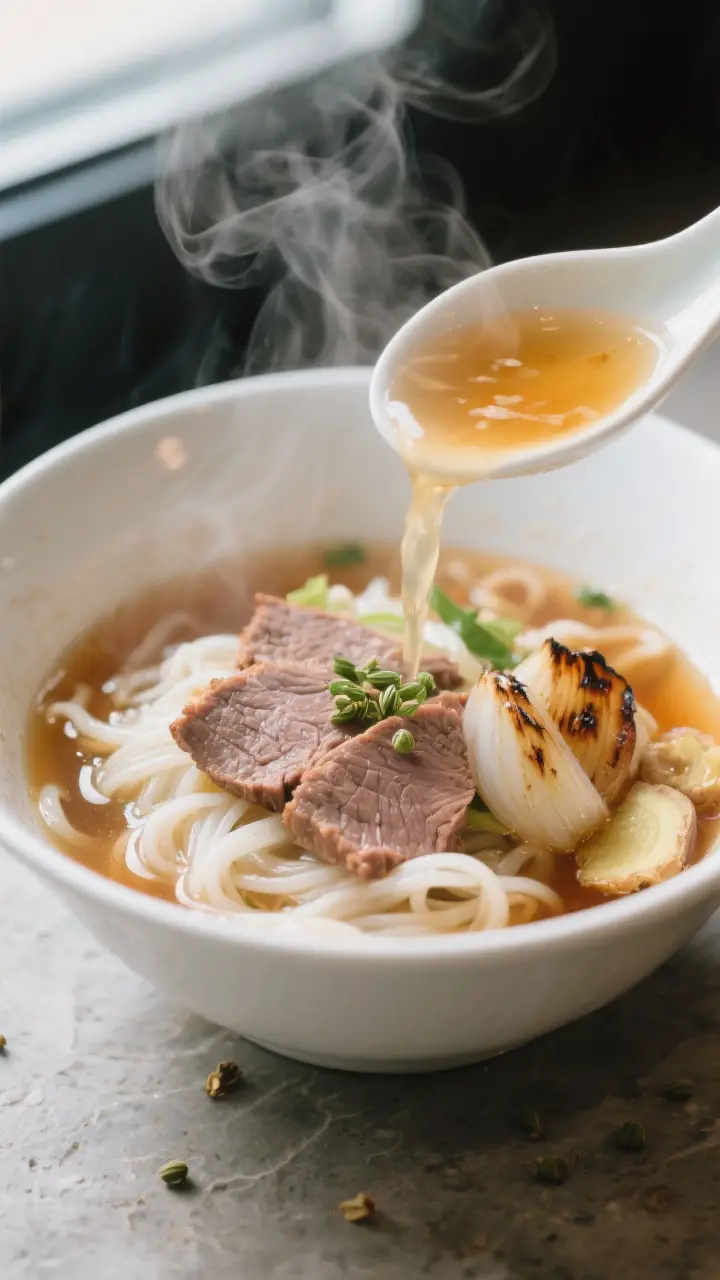
- Clean, clear broth: Charring the onion and ginger, then simmering with spices and beef bones, creates a bright, transparent broth with deep flavor.
- Classic pho aromatics: Star anise, cinnamon, cloves, and coriander seeds give the soup its signature fragrance without overpowering the beef.
- Balanced seasoning: Fish sauce brings savory depth while rock sugar rounds out the edges, so the broth tastes complete, not salty.
- Restaurant-quality texture: Thinly sliced raw beef softens perfectly in the hot broth at the table for that authentic pho experience.
- Customizable bowls: Add herbs, lime, chilies, or hoisin and sriracha to finish your bowl exactly how you like it.
Ingredients
- For the broth:
- 3 lb beef bones (mix of marrow bones and knuckles)
- 1 lb beef shank or oxtail (optional but adds richness)
- 1 large yellow onion, halved
- 1 large piece of ginger (3–4 inches), halved lengthwise
- 3 star anise
- 1 cinnamon stick
- 4 whole cloves
- 1 tbsp coriander seeds
- 1 tbsp fennel seeds (optional)
- 1 tbsp black peppercorns
- 2 tbsp fish sauce (plus more to taste)
- 1–1.5 oz rock sugar (or 1–2 tbsp granulated sugar), to taste
- 2 tsp fine sea salt, to taste
- 4–5 qt water
- For serving:
- 12–16 oz dried flat rice noodles (bánh phở)
- 1 lb beef sirloin, flank, eye of round, or brisket, thinly sliced
- 1 small yellow onion, very thinly sliced
- 2–3 scallions, thinly sliced
- Fresh cilantro and Thai basil
- Fresh bean sprouts
- Lime wedges
- Fresh Thai bird chilies or jalapeño, sliced
- Hoisin sauce and sriracha (optional)
- Black pepper
How to Make It
- Parboil the bones for a clean broth. Add beef bones and shank/oxtail to a large pot. Cover with cold water and bring to a rolling boil for 5–10 minutes.
Drain and rinse the bones under warm water to remove scum. Rinse the pot, too.
- Char the aromatics. Set onion and ginger, cut-side down, on a hot dry skillet or under a broiler. Cook until lightly blackened and fragrant, about 5–8 minutes.
This adds smoky sweetness and color to the broth.
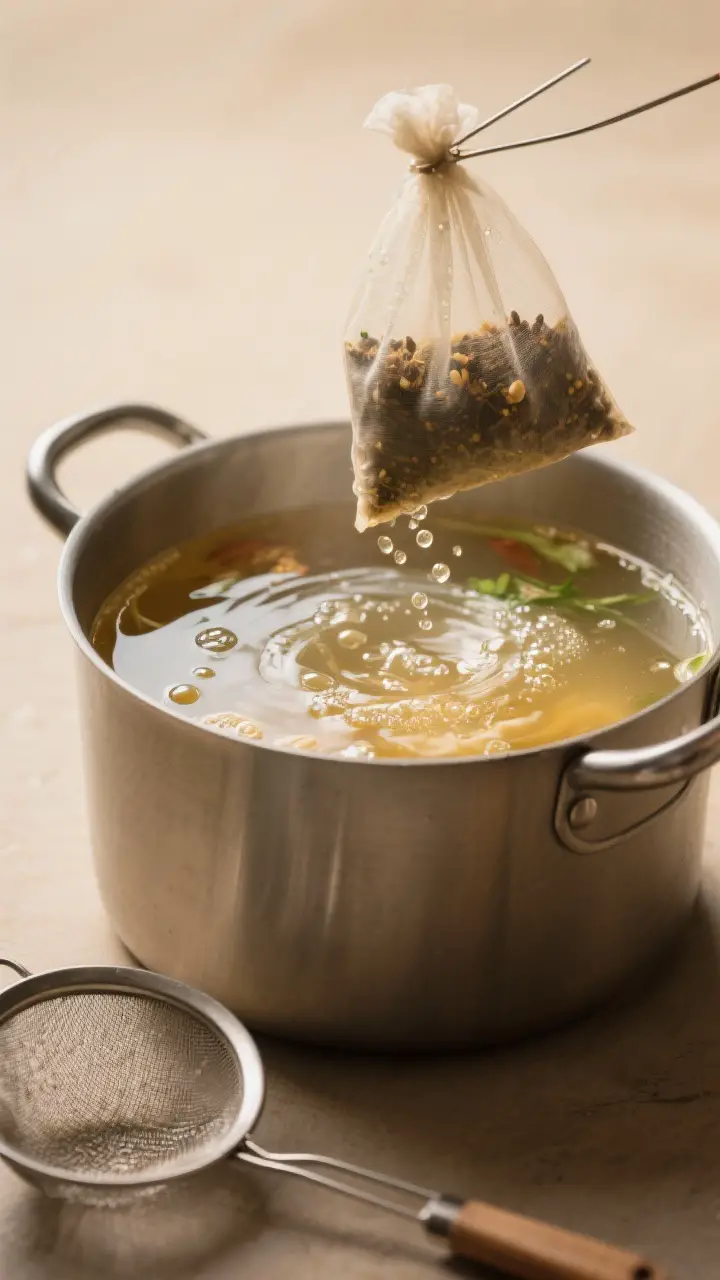
- Toast the spices. In a small dry pan, toast star anise, cinnamon, cloves, coriander, fennel, and peppercorns until aromatic, 1–2 minutes. Keep them moving to avoid burning. Place in a mesh spice bag or cheesecloth for easy removal.
- Simmer the broth gently. Return the cleaned bones to the pot with charred onion and ginger.
Add the spice bundle and 4–5 quarts of water. Bring just to a boil, then reduce to a very gentle simmer. Skim off any foam.
Let it simmer uncovered for 3–4 hours for a lighter broth or 5–6 hours for a richer one.
- Season with care. When the broth tastes full and beefy, add fish sauce, rock sugar, and salt. Start modestly, then taste and adjust. You want a delicate balance: savory, slightly sweet, and aromatic.
- Strain and clarify. Remove bones, aromatics, and spices with tongs.
Strain the broth through a fine-mesh sieve. If you want an extra-clear broth, strain again through cheesecloth. Keep the broth hot for serving.
- Prep the noodles. Soak dried rice noodles in warm water for 20–30 minutes until pliable.
Bring a pot of water to a boil and cook noodles for 30–60 seconds until just tender. Rinse briefly under warm water to stop cooking. Drain well.
- Slice the beef thin. Partially freeze the beef for 30 minutes to make slicing easier.
Cut against the grain into paper-thin slices. Keep chilled until serving.
- Assemble the bowls. Divide noodles among bowls. Add a handful of thinly sliced onion and scallions.
Lay raw beef slices on top in a single layer.
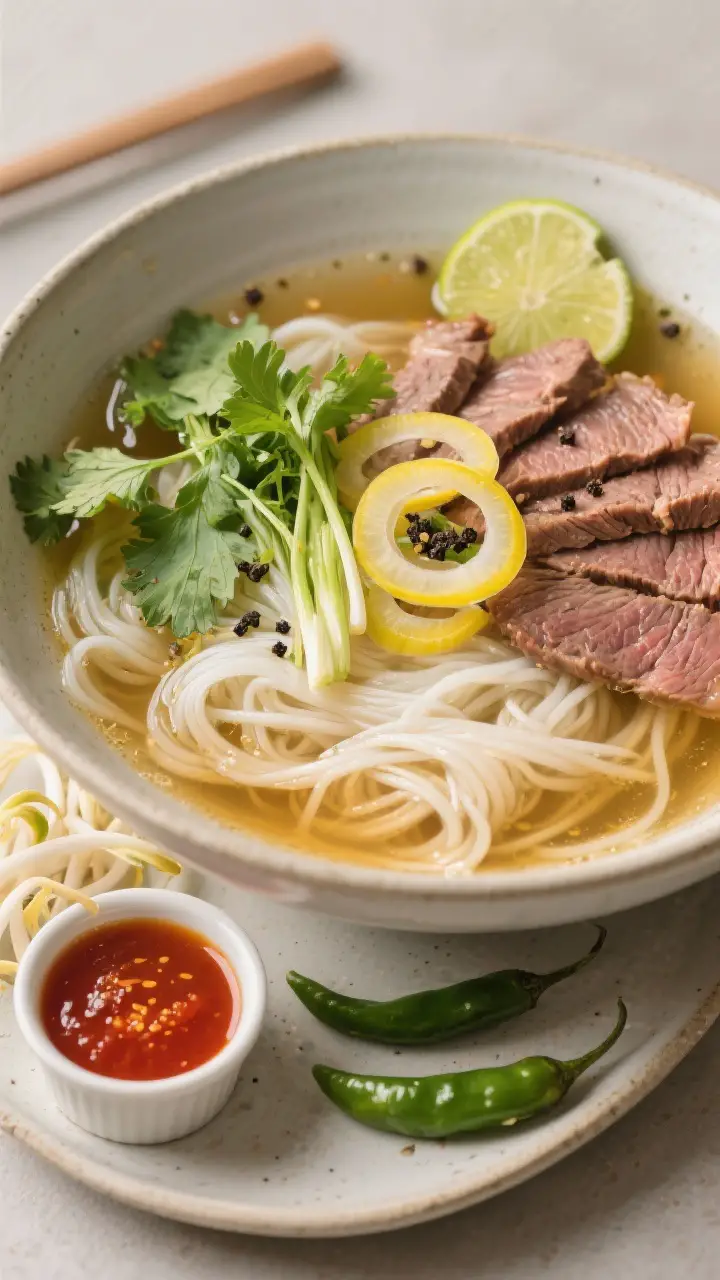
- Ladle and garnish. Pour boiling-hot broth directly over the beef to cook it in the bowl. Top with cilantro and a crack of black pepper. Serve with basil, bean sprouts, lime wedges, and chilies on the side.
Add hoisin or sriracha if you like.
Keeping It Fresh
- Refrigeration: Store strained broth separately from noodles and herbs. It keeps 4–5 days in the fridge. The fat will solidify on top—remove or keep some for richer reheating.
- Freezing: Freeze broth in quart containers for up to 3 months.
Thaw overnight in the fridge or gently on the stove. Don’t freeze noodles; cook fresh for the best texture.
- Reheat properly: Bring broth to a full boil before serving so it can cook the thin beef slices in the bowl.
- Prep ahead: Wash herbs, slice onions, and portion noodles ahead. Keep herbs dry and chilled with a paper towel to stay crisp.
Benefits of This Recipe
- Nutritious and satisfying: A balanced bowl with protein, carbs, and fresh herbs that brighten the dish without heavy fats.
- Great for gatherings: Make the broth ahead, then set out toppings so everyone can customize their own bowl.
- Comfort food with depth: The aroma of warm spices and ginger makes a soothing, restorative meal.
- Budget-friendly: Bones and shank are inexpensive, yet you end up with a restaurant-quality soup that stretches into multiple meals.
Pitfalls to Watch Out For
- Boiling too hard: A vigorous boil clouds the broth and makes it taste murky.
Keep it at a gentle simmer.
- Skipping the parboil: Not blanching bones leads to a broth with off flavors and lots of scum.
- Overdoing the spices: Spices should support, not dominate. Measure carefully and taste often.
- Salting too early: Season near the end. As the broth reduces, salt concentrates, and it’s easy to overshoot.
- Thick noodle overcook: Rice noodles go from perfect to mushy fast.
Cook briefly and rinse lightly.
Recipe Variations
- Pho Tai: Classic version with thinly sliced raw beef cooked by the hot broth.
- Pho Tai Nam: Add slices of cooked brisket or shank alongside the raw beef for extra richness.
- Pho with Meatballs (Bò Viên): Add Vietnamese beef meatballs to the simmering broth to heat through before ladling.
- Pressure cooker method: Use an Instant Pot: parboil bones on the stove, then pressure cook with aromatics and spices for 45–60 minutes; strain and season.
- Lighter broth: Use more knuckle bones and fewer marrow bones, and skip oxtail to make a cleaner, less fatty broth.
- Zero-waste tip: Save softened tendon or marrow bits from the bones if you enjoy them; add to bowls as a treat.
FAQ
Can I make pho bo without fish sauce?
Yes. Use salt to season and add a splash of soy sauce for umami. The flavor will be slightly different, but still delicious.
Taste and adjust the sweetness with a bit of rock sugar.
What’s the best beef cut for the raw slices?
Eye of round, sirloin, or flank works well. The key is slicing very thin across the grain. Partially freezing the meat helps you get those delicate slices that cook quickly in the bowl.
How do I keep the broth clear?
Parboil and rinse the bones, simmer gently, and skim regularly.
Avoid stirring the pot too much while simmering, which can emulsify fat into the broth and make it cloudy.
Is rock sugar necessary?
It’s traditional because it sweetens cleanly and balances the spices. If you don’t have it, regular sugar works. Start small and taste—broth should finish with a soft roundness, not noticeable sweetness.
Can I use store-bought broth?
You can, but the flavor won’t have the same depth.
If you do, simmer it with charred onion, ginger, and the spices for at least an hour, then season with fish sauce and sugar to approximate a pho-style broth.
How spicy should pho be?
The base broth isn’t spicy. Heat is added at the table with fresh chilies or sriracha. This keeps the broth balanced for everyone and lets you customize your bowl.
What if I don’t have a spice bag?
Add whole spices directly and strain the broth through a fine sieve or cheesecloth at the end.
It’s slightly messier but works perfectly.
Can I add vegetables?
Yes. Keep it simple—add blanched bok choy, mushrooms, or baby spinach to the bowl before ladling broth. Pho is about balance, so avoid overpowering veggies.
Wrapping Up
A good bowl of pho bo is all about patience and balance: clear broth, gentle spice, bright herbs, and tender beef.
Once you master the process, it becomes a relaxing weekend ritual that rewards you with several days of comforting meals. Keep the broth hot, the noodles tender, and the toppings fresh. Serve it to friends, tweak it to your taste, and enjoy every fragrant, steamy slurp.