
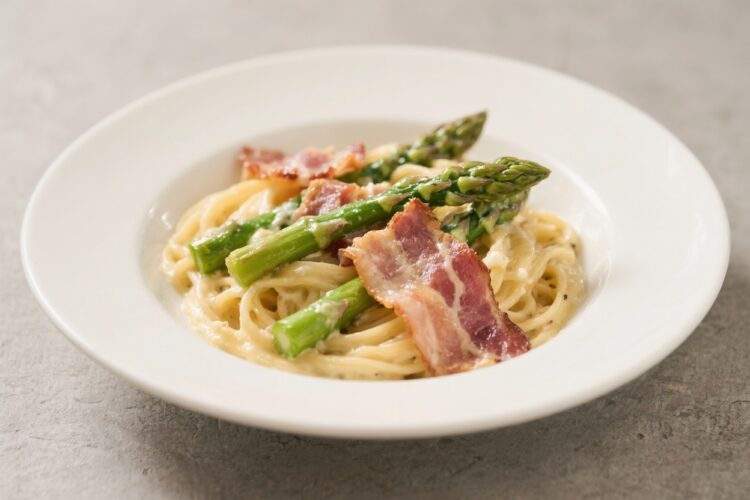
Carbonara is one of those dishes that feels fancy but comes together in minutes. This version adds crisp asparagus and smoky bacon for a fresh twist that still feels classic. The sauce is silky without any cream, just eggs, cheese, and a splash of pasta water.
It’s rich but balanced, and the asparagus keeps it bright. If you’ve never made carbonara at home, this is a great place to start—simple, satisfying, and full of flavor.
What Makes This Special
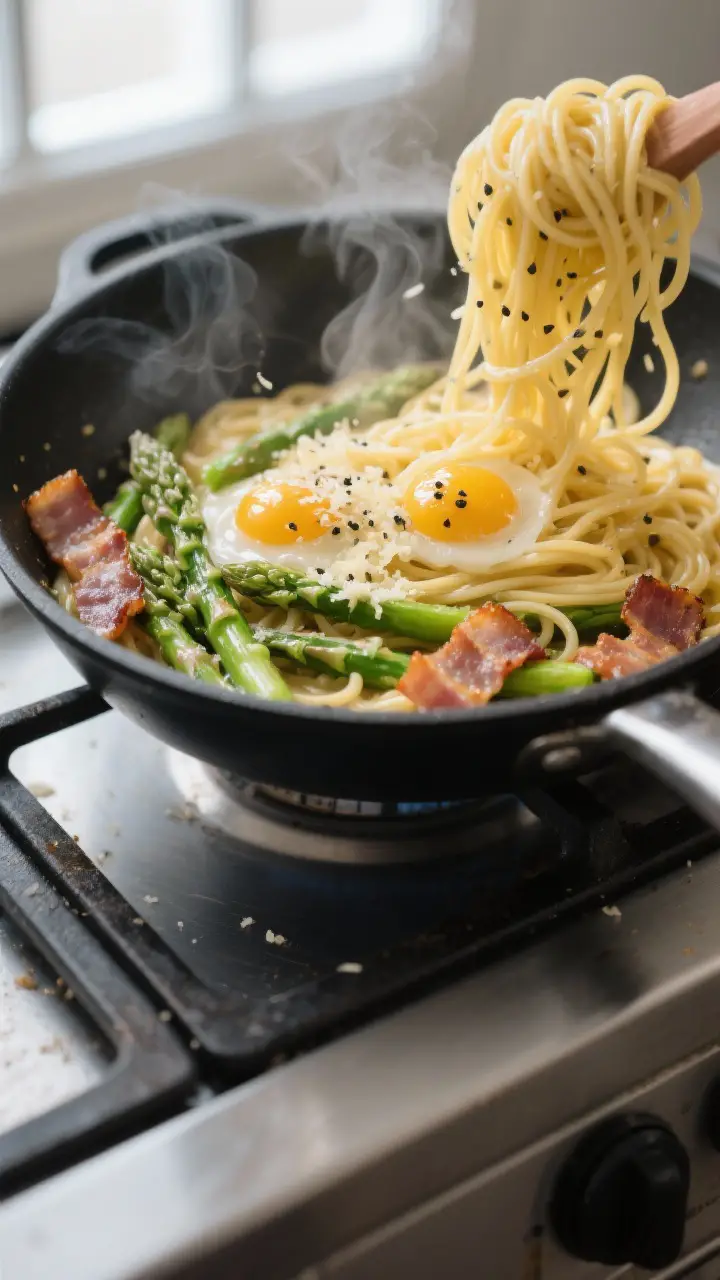
This carbonara leans on a few pantry staples, but the asparagus brings a seasonal snap and a pop of color. The bacon delivers salty, smoky depth that pairs beautifully with the nutty Parmesan and the sweet, tender asparagus tips.
You get a glossy sauce that clings to every strand of pasta without being heavy. Best of all, it cooks in the time it takes to boil the spaghetti. That makes it perfect for busy nights when you want something comforting yet fresh.
Shopping List
- Spaghetti or bucatini (12 ounces)
- Eggs (3 large) and 1 additional egg yolk
- Parmesan or Pecorino Romano, finely grated (1 cup, packed)
- Bacon or pancetta (6–8 ounces), chopped
- Asparagus (1 bunch), woody ends trimmed, cut into 1-inch pieces
- Garlic (2 cloves), minced or grated
- Olive oil (1 tablespoon, optional if bacon is lean)
- Freshly cracked black pepper
- Salt (for pasta water and seasoning)
- Lemon zest (optional, from 1/2 lemon)
- Fresh parsley (optional, chopped, for garnish)
Instructions
- Boil the pasta water. Bring a large pot of well-salted water to a boil.
Aim for water that tastes like the sea. This is your foundation for seasoning the pasta.
- Prep the sauce base. In a mixing bowl, whisk together the 3 eggs, 1 yolk, and grated cheese until smooth. Add a generous amount of freshly cracked black pepper.
Set aside near the stove.
- Crisp the bacon. In a large skillet over medium heat, cook the chopped bacon until it’s golden and crisp, about 6–8 minutes. If the pan looks dry, add a splash of olive oil. Spoon off excess fat if there’s more than a few tablespoons left; keep enough to coat the pasta.
- Add garlic and asparagus. Stir in the garlic and asparagus pieces.
Cook 3–4 minutes until the asparagus is bright green and just tender. Turn the heat to low to keep everything warm without burning.
- Cook the pasta. Add spaghetti to the boiling water and cook until al dente, usually 1–2 minutes less than package directions. Before draining, reserve at least 1 cup of pasta water.
- Combine pasta and bacon mixture. Transfer the drained pasta straight to the skillet with the bacon and asparagus.
Toss to coat. If the pan is very hot, remove it from the heat for a minute so you don’t scramble the eggs in the next step.
- Make it creamy. Pour the egg-cheese mixture over the pasta while tossing or stirring briskly. Add a splash of hot pasta water (start with 1/4 cup) to create a glossy sauce.
Keep tossing, adding more water a little at a time, until the sauce is silky and clings to the noodles.
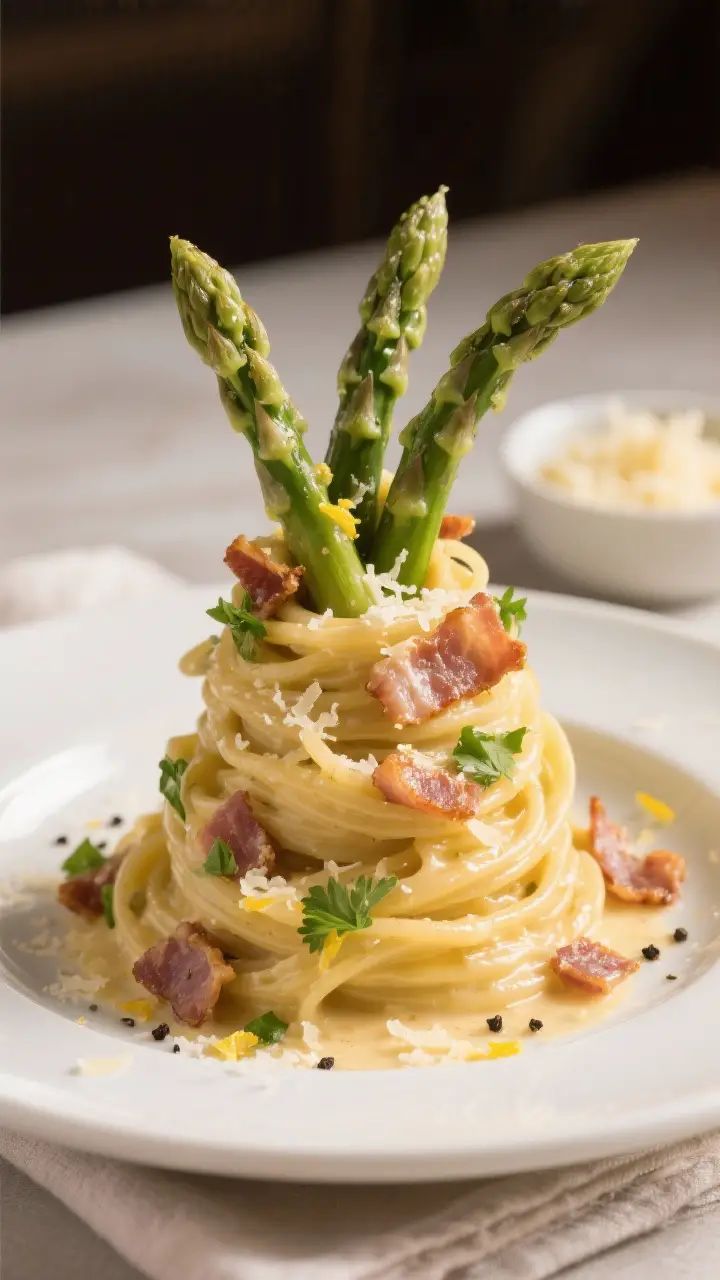
- Finish and season. Taste and adjust with more pepper and a pinch of salt if needed. A touch of lemon zest brightens the dish without making it lemony. Garnish with parsley if you like.
- Serve immediately. Carbonara waits for no one.
Plate it hot and pass extra cheese at the table.
Keeping It Fresh
Leftover carbonara can be stored in an airtight container in the fridge for up to 2 days, but the sauce is best right after cooking. If you do reheat, use a gentle method: warm it in a skillet over low heat with a splash of water to loosen the sauce. Stir constantly to avoid drying it out.
Avoid the microwave if possible—it can make the eggs tough and the pasta gummy. For a fresh feel, add a little grated cheese and pepper before serving again.
Why This is Good for You
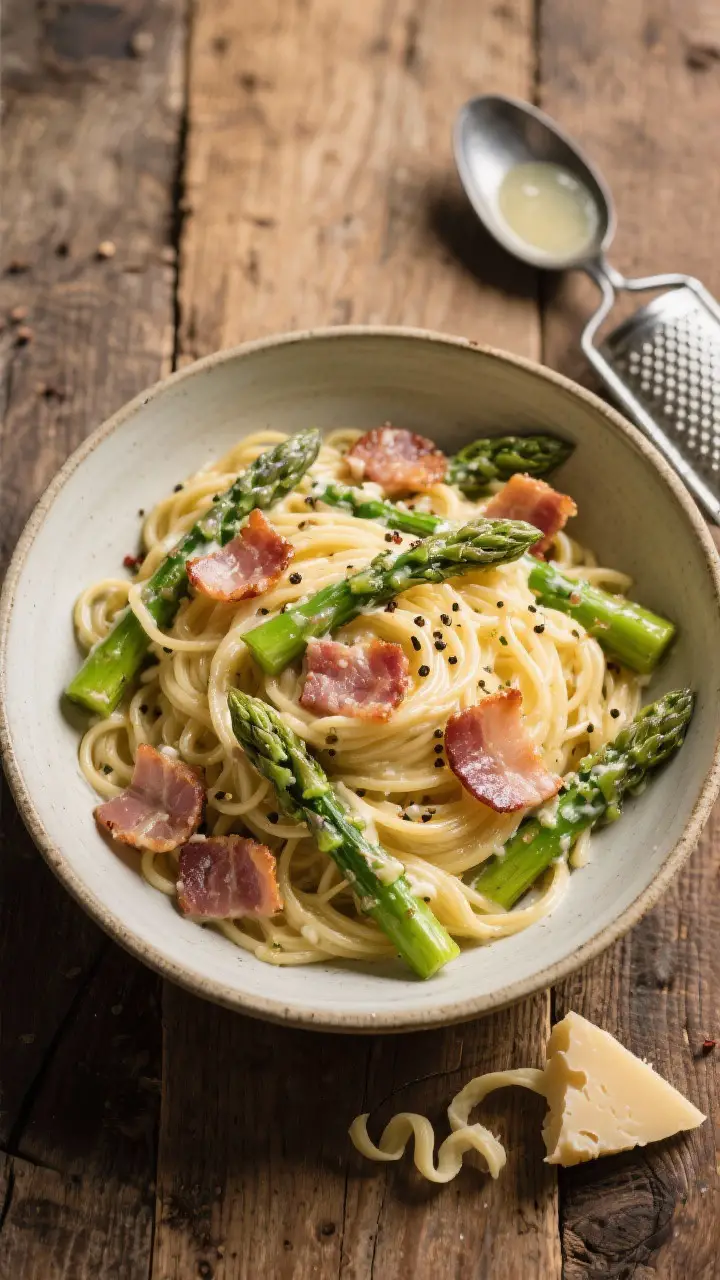
This dish balances indulgence with a good dose of vegetables and protein. Asparagus brings fiber, folate, and vitamins A, C, and K, plus a clean, green flavor that lightens the creamy sauce. Eggs add high-quality protein and healthy fats that keep you satisfied. Using Parmesan for the sauce gives big flavor, so you can keep portions reasonable without feeling like you’re missing out.
If you want to dial it lighter, use slightly less cheese and bacon, and lean into the asparagus.
Common Mistakes to Avoid
- Scrambling the eggs. The sauce should be glossy, not clumpy. Remove the pan from heat before adding the egg mixture and keep the pasta moving.
- Skipping the pasta water. That starchy liquid is your secret tool for creating a smooth, creamy sauce without cream.
- Overcooking the asparagus. You want crisp-tender, not mushy. Keep an eye on it and stop while it’s vibrant green.
- Undersalting the water. Properly salted pasta water seasons the noodles from the inside out.
- Adding cream. Traditional carbonara relies on eggs and cheese for the silkiness.
Cream can mute flavors and weigh it down.
Variations You Can Try
- Swap the meat. Use pancetta or guanciale for a more classic flavor. Turkey bacon works if you prefer a lighter option.
- Go green. Add peas or baby spinach along with the asparagus for extra vegetables and color.
- Change the pasta. Bucatini, fettuccine, or rigatoni all work. Choose shapes that hold onto the sauce.
- Make it smoky. A pinch of smoked paprika or a few drops of liquid smoke (very light hand) can deepen the flavor if your bacon is mild.
- Cheese combo. Try a 50/50 mix of Parmesan and Pecorino for a sharper, saltier bite.
- Creamier feel, still classic. Use an extra egg yolk instead of cream for a richer texture without changing the spirit of the dish.
FAQ
Can I make this without bacon?
Yes.
Use sautéed mushrooms for a savory, meaty texture, or try smoked tofu or tempeh for a similar depth. You may want a bit more olive oil to help the sauce coat the pasta.
Do I need a double boiler to avoid scrambling the eggs?
No. The key is to remove the pan from direct heat, toss quickly, and thin with hot pasta water.
The residual heat from the pasta cooks the eggs gently and creates a smooth sauce.
Is cream ever used in real carbonara?
Traditional Roman carbonara does not use cream. The creaminess comes from eggs, cheese, fat from the meat, and starchy pasta water. Adding cream is a personal preference, but it’s not classic.
Can I use frozen asparagus?
Yes.
Thaw and pat it dry, then sauté briefly so it doesn’t release too much water. It won’t be as crisp as fresh, but it still tastes great.
How do I prevent the sauce from getting too thick?
Keep extra pasta water handy and add it a little at a time while tossing. The sauce will tighten as it sits, so it’s better to leave it slightly looser in the pan.
What if I don’t have Parmesan?
Pecorino Romano is a great substitute with a sharper, saltier profile.
You can also mix in a bit of Grana Padano if that’s what you have.
Can I make it ahead?
This dish is best made and served right away. If you need to prep, you can grate the cheese, chop the bacon and asparagus, and whisk the eggs in advance. Cook and combine at the last minute.
Final Thoughts
Asparagus and Bacon Carbonara is a smart twist on a classic: quick to cook, rich yet bright, and easy to love.
With a few simple techniques—salty pasta water, low heat, steady tossing—you’ll get that glossy sauce every time. Keep it simple or play with the variations to suit your taste. Either way, it’s a weeknight staple that feels like a treat.