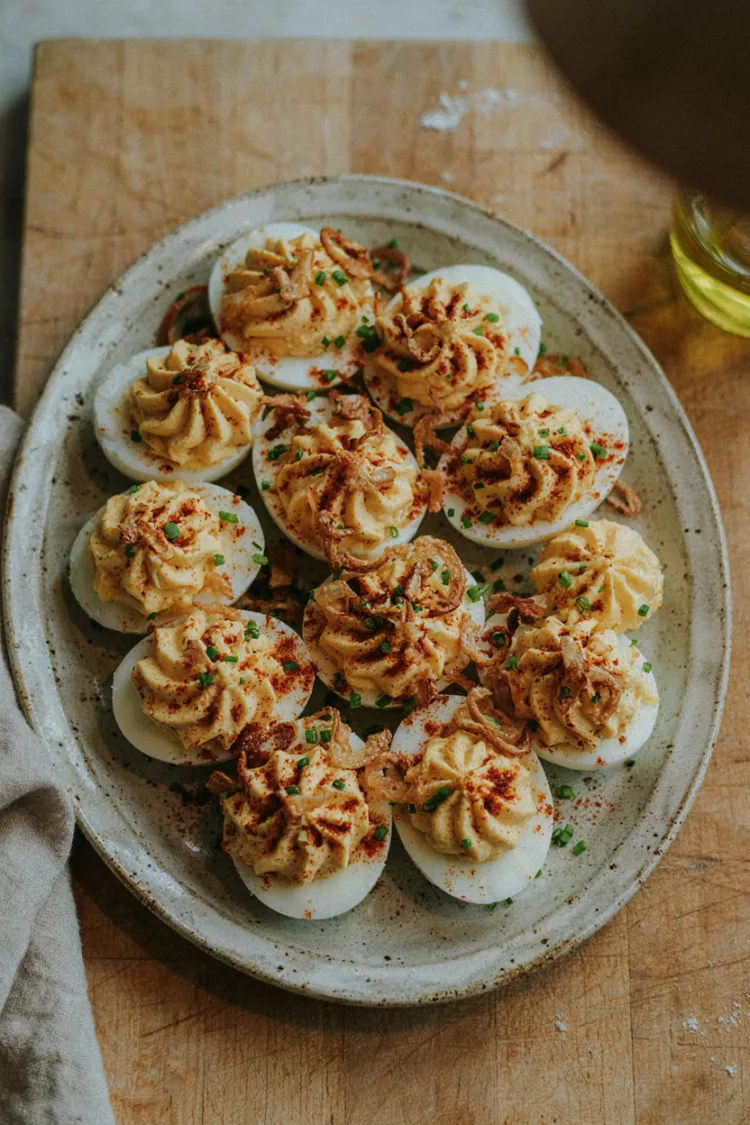
- Makes: 24 halves (12 eggs)
- Active time: 25 minutes
- Make ahead: Cook the eggs and make the filling a day ahead; assemble the day of
- The one thing that matters: An immediate ice bath — it stops the cooking and makes the eggs peel
What you’ll need
- Medium saucepan. For boiling the eggs
- Medium bowl. For mashing the yolks with filling
- Fork. For mashing and mixing the yolk filling
- Piping bag or plastic bag. For neatly filling the egg whites
- Serving platter. For presenting the finished deviled eggs
What you’ll need
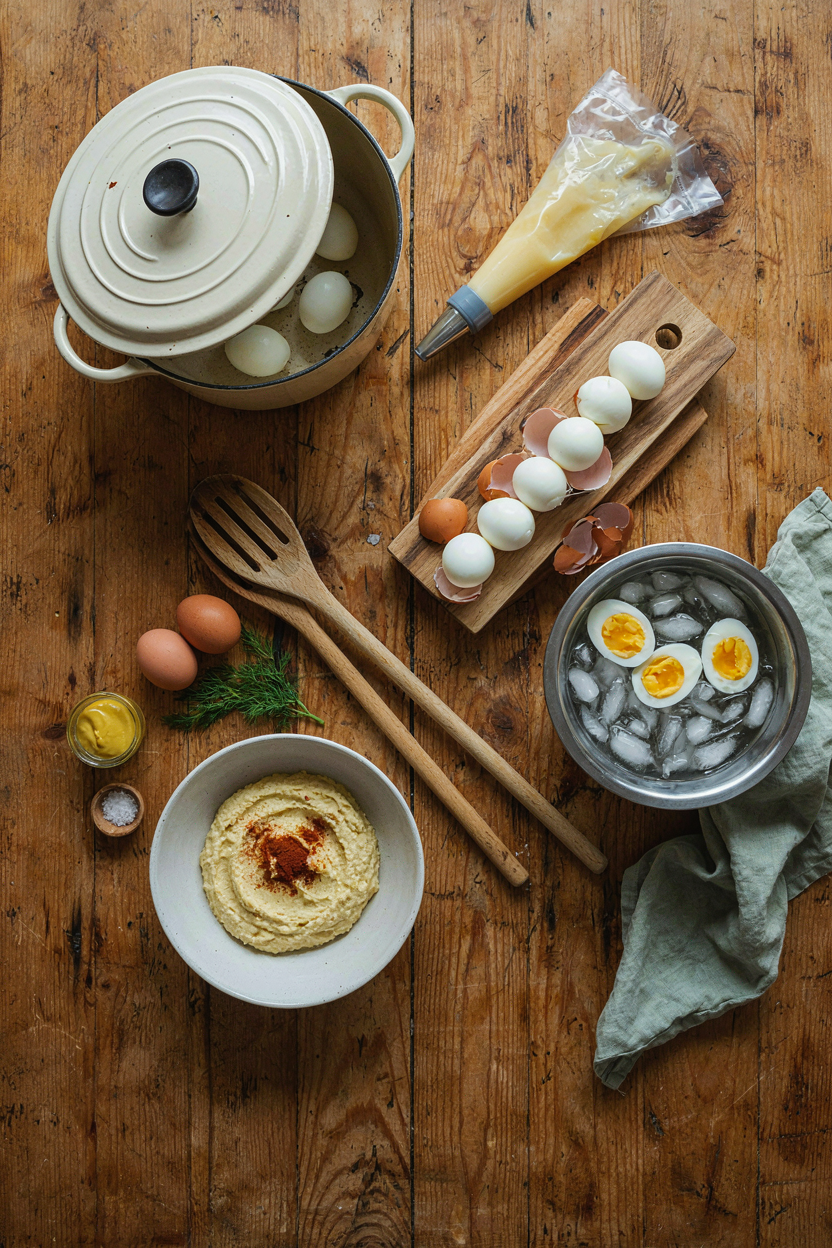
- Large pot with lid. For boiling the eggs. A 3-quart pot fits a dozen comfortably.
- Slotted spoon. For lowering eggs into boiling water and transferring them to the ice bath without splashing.
- Large bowl for ice bath. Bigger than you think — the eggs need room to cool quickly without raising the water temperature.
- Timer. Ten minutes is the sweet spot. A phone timer or kitchen timer keeps you honest.
- Fine-mesh sieve. For pushing the yolks through. This is what makes the filling smooth and lump-free. A fork won’t quite get you there.
- Piping bag or zip-top bag. For filling the whites neatly. A zip bag with a corner cut works fine if you don’t have a piping bag.
- Small mixing bowl. For mashing the yolks with the mayo, mustard, and seasonings.
- Serving platter. A flat platter or a deviled egg carrier keeps them from sliding. Crumpled foil underneath works in a pinch.
Why this works
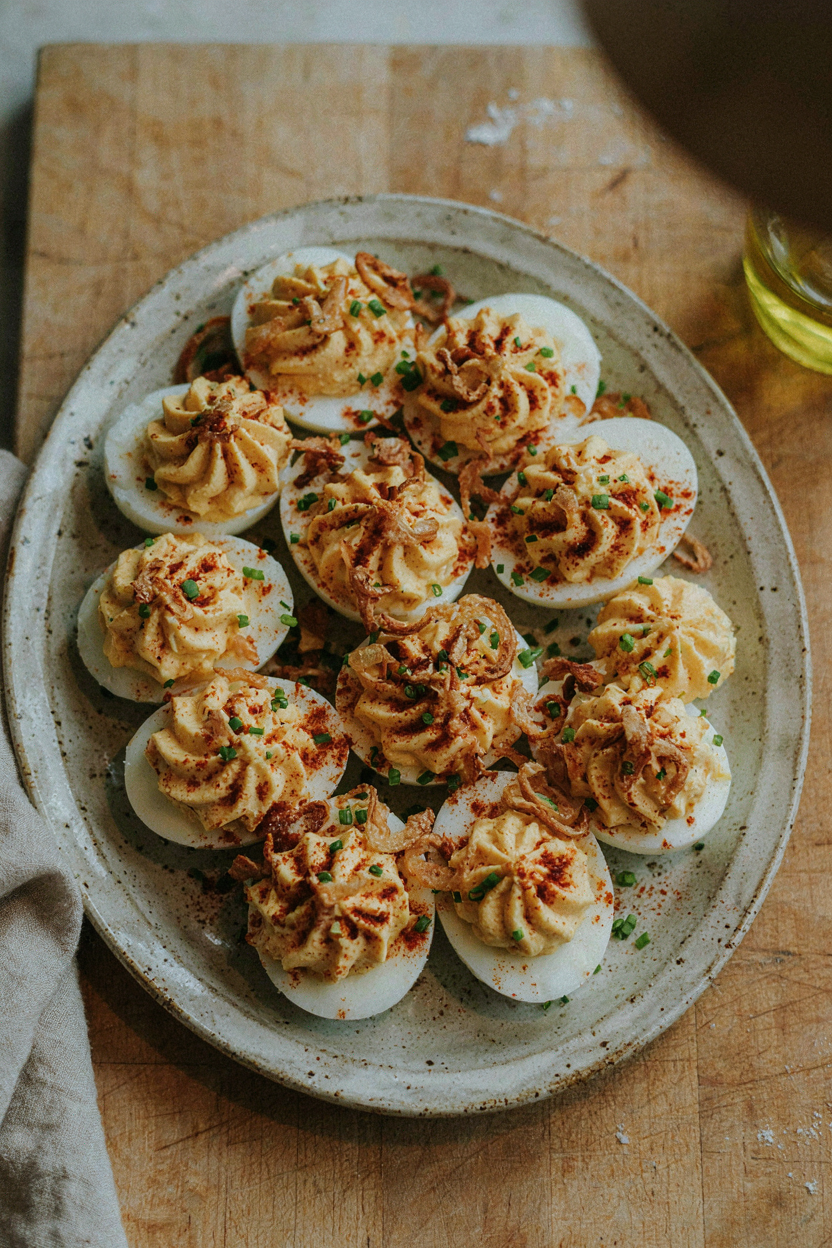
The grey ring is iron and sulfur reacting when an egg is cooked too long or too hot. Pull the eggs at 10 to 11 minutes and plunge them straight into ice water, and it never forms. The ice bath also contracts the egg away from the shell, which is what lets it peel cleanly — and slightly older eggs (a week or two) peel much better than fresh ones, because the membrane has loosened.
For the filling, pushing the yolks through a sieve gets rid of every lump, and making it slightly looser than you want — it firms in the fridge — means it pipes smoothly.
What you need
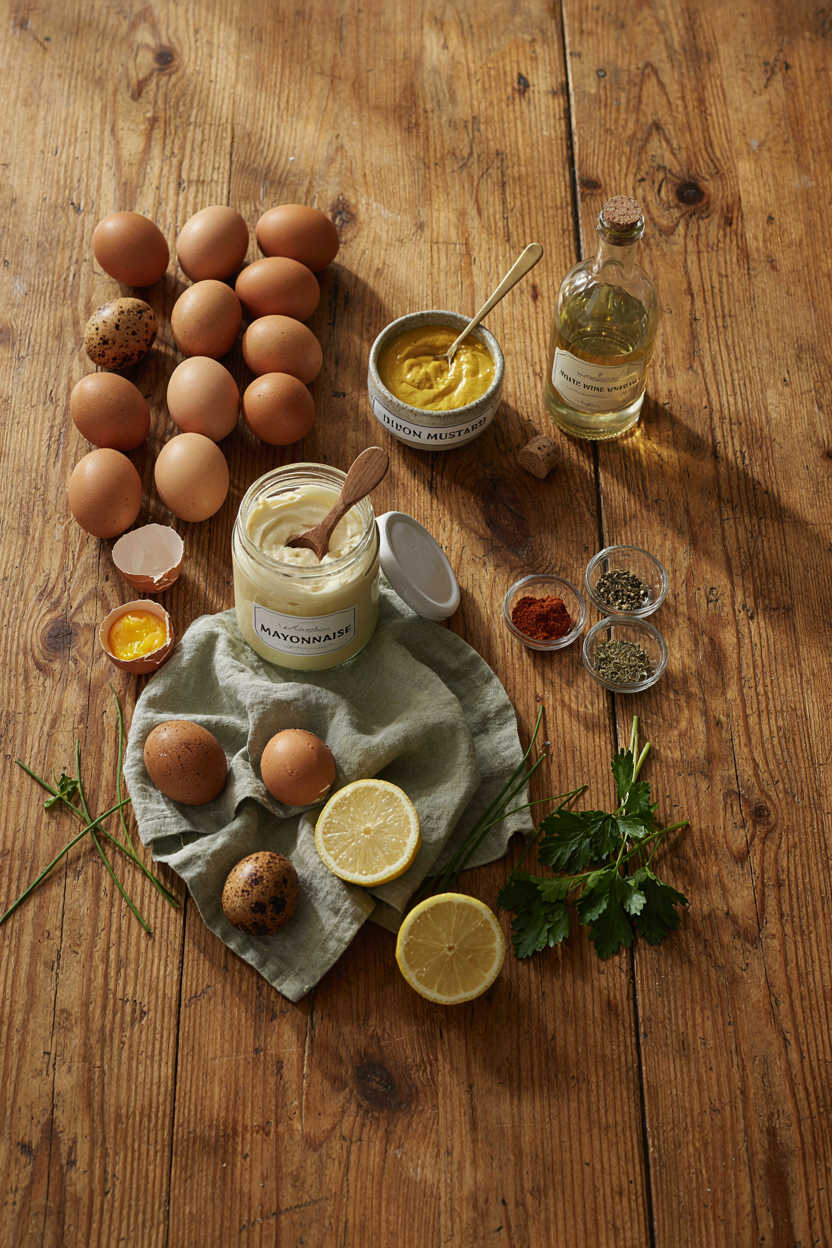
- 12 large eggs, ideally a week or two old
- ⅓ cup (75g) mayonnaise
- 1 tablespoon Dijon mustard
- 1 teaspoon white wine vinegar or pickle brine
- ¼ teaspoon fine salt, pinch of white pepper
- Toppings: smoked paprika, chopped chives, crispy shallots or fried onions, crumbled bacon, or everything-bagel seasoning
How to make them
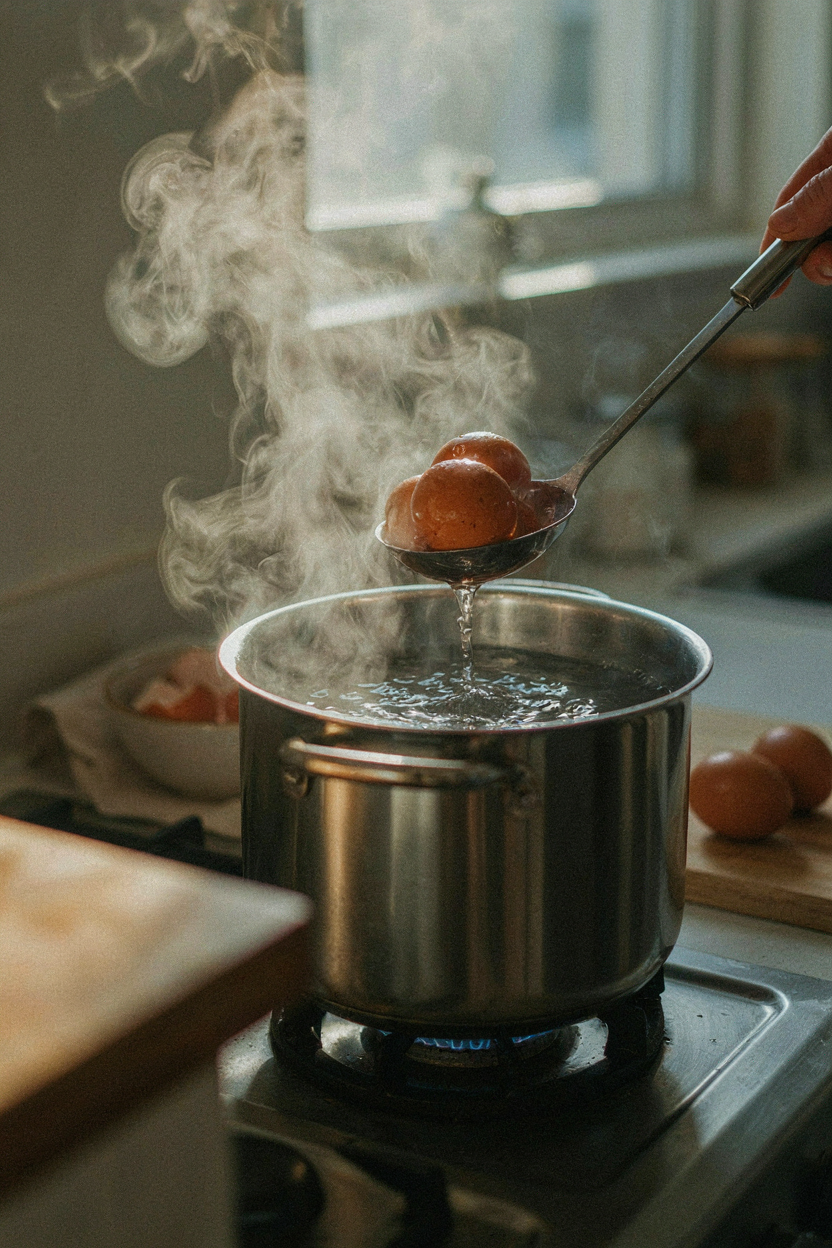
- Cook. Lower the eggs into already-boiling water and boil 10 to 11 minutes. Or set them in a steamer basket over boiling water for 12 minutes — steaming peels even better.
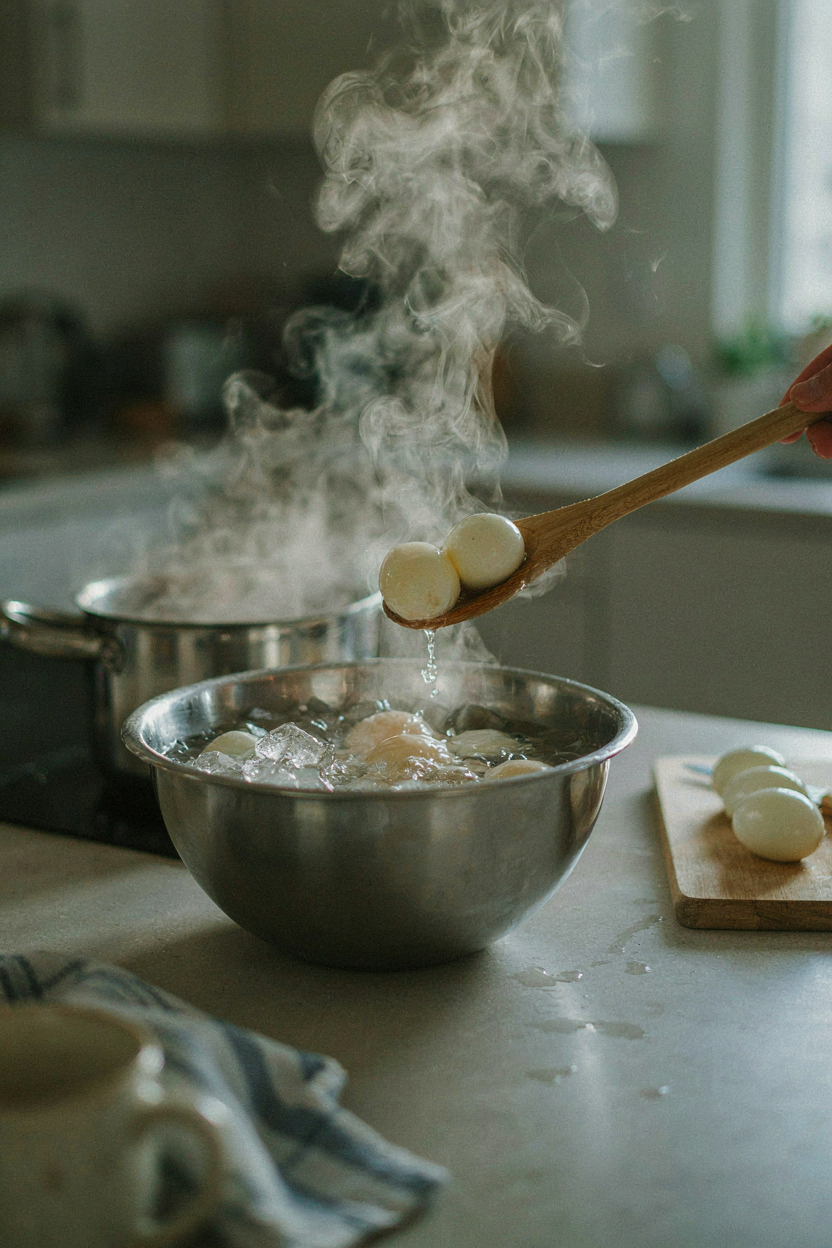
- Shock. Transfer straight to a bowl of ice water and leave 10 minutes. This matters more than anything else; it stops the grey ring and makes them easy to peel.
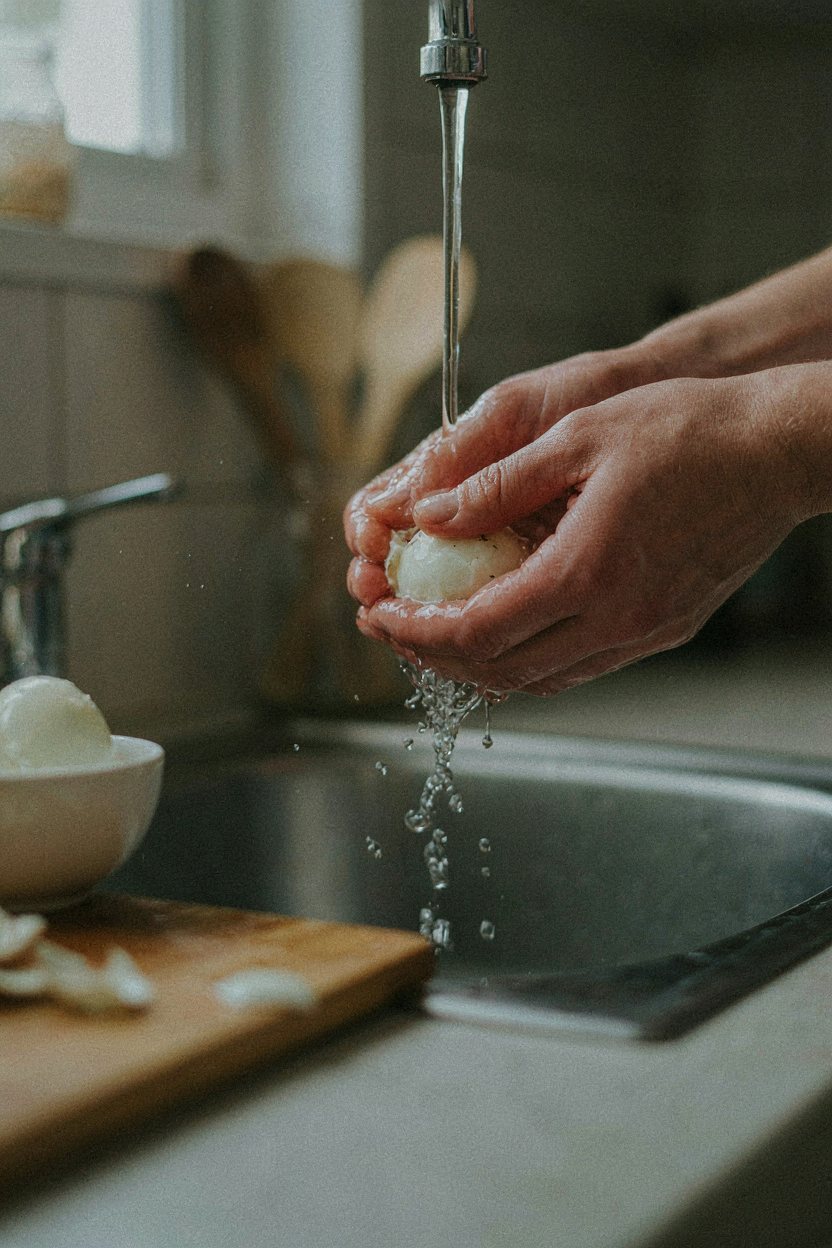
- Peel. Under a thin stream of running water, starting at the wide end where the air pocket is.
- Fill. Halve the eggs, pop the yolks into a bowl, and push them through a fine sieve. Mash in the mayo, Dijon, vinegar, salt and pepper until smooth and slightly loose. Make it taste a little too salty; it will balance with the bland whites.
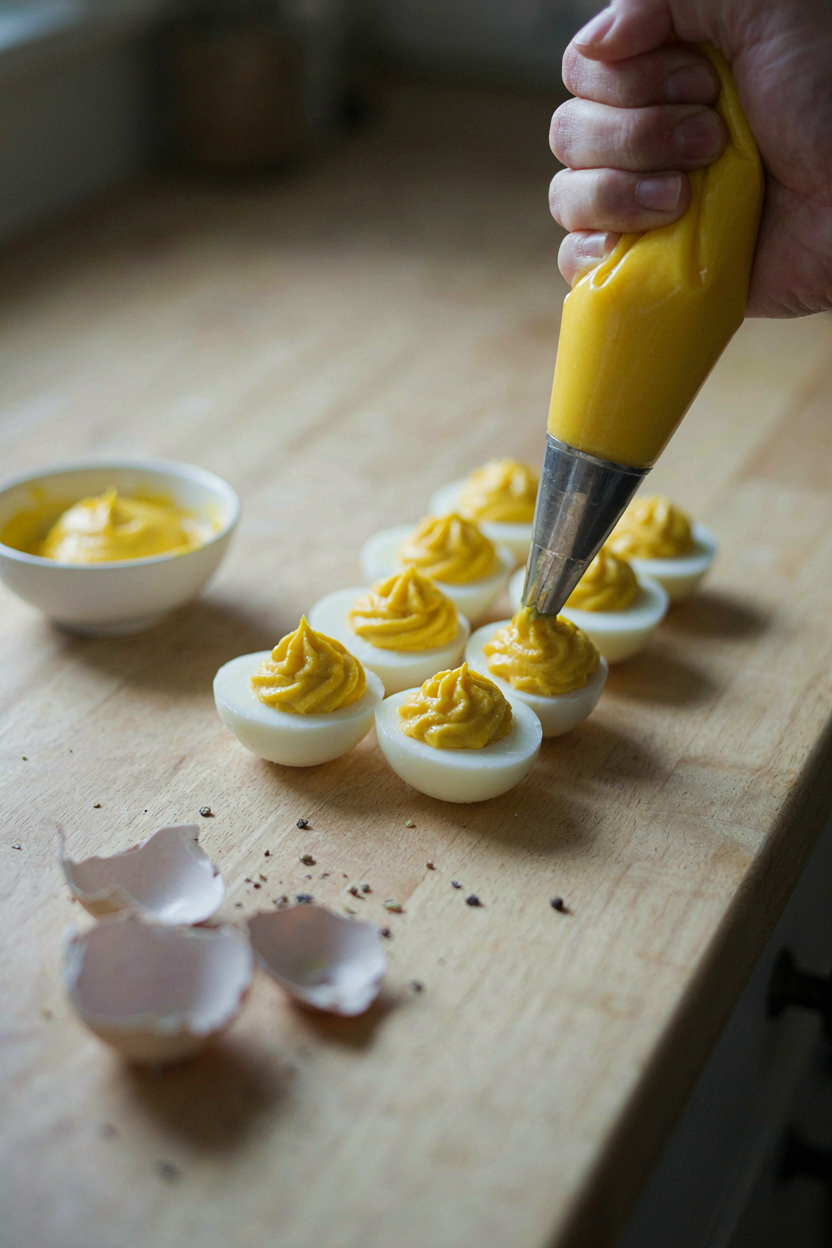
- Pipe. The filling into the whites from a piping bag or a zip bag with a corner cut. Top just before serving.
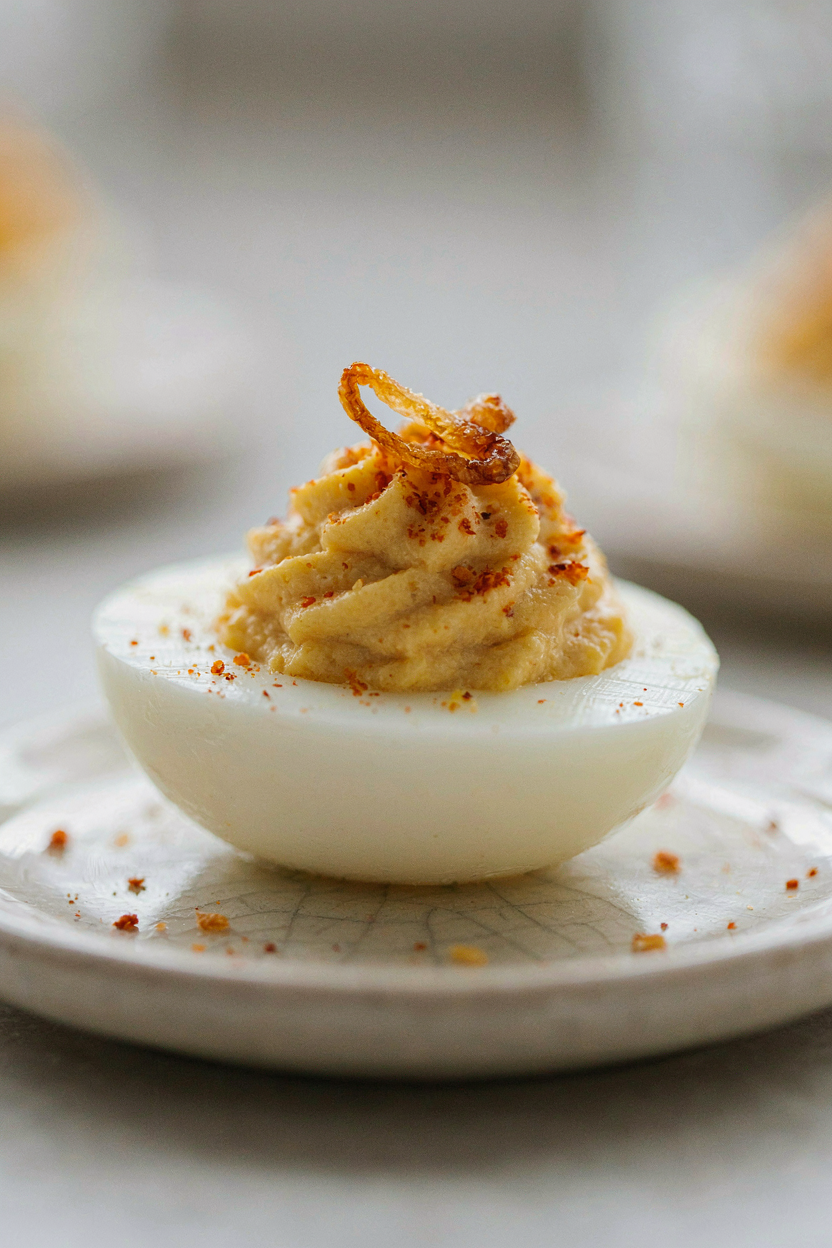
The details that decide it
- Ice bath immediately. No grey ring, easy peel, both come from this. Ten minutes minimum in ice water, and the water has to stay cold. If your bowl is small, refresh the ice.
- Older eggs peel better. Buy them a week or two ahead if you can. Fresh eggs stick to the shell no matter what you do.
- Sieve the yolks. It takes thirty seconds and gets rid of every lump. A fork won’t quite get you there.
- Make the filling slightly loose. It firms in the fridge, so if it looks perfect going in, it will be too stiff coming out. Add a teaspoon of the egg white or a splash of pickle brine if you need to loosen it.
- Top at the last minute. Anything crunchy — shallots, bacon, fried onions — goes on right before serving. If it sits, it gets soggy.
- Taste the filling before piping. It should taste a little too salty; the bland white will balance it. If it tastes right on its own, it will be underseasoned in the finished egg.
What to serve with deviled eggs
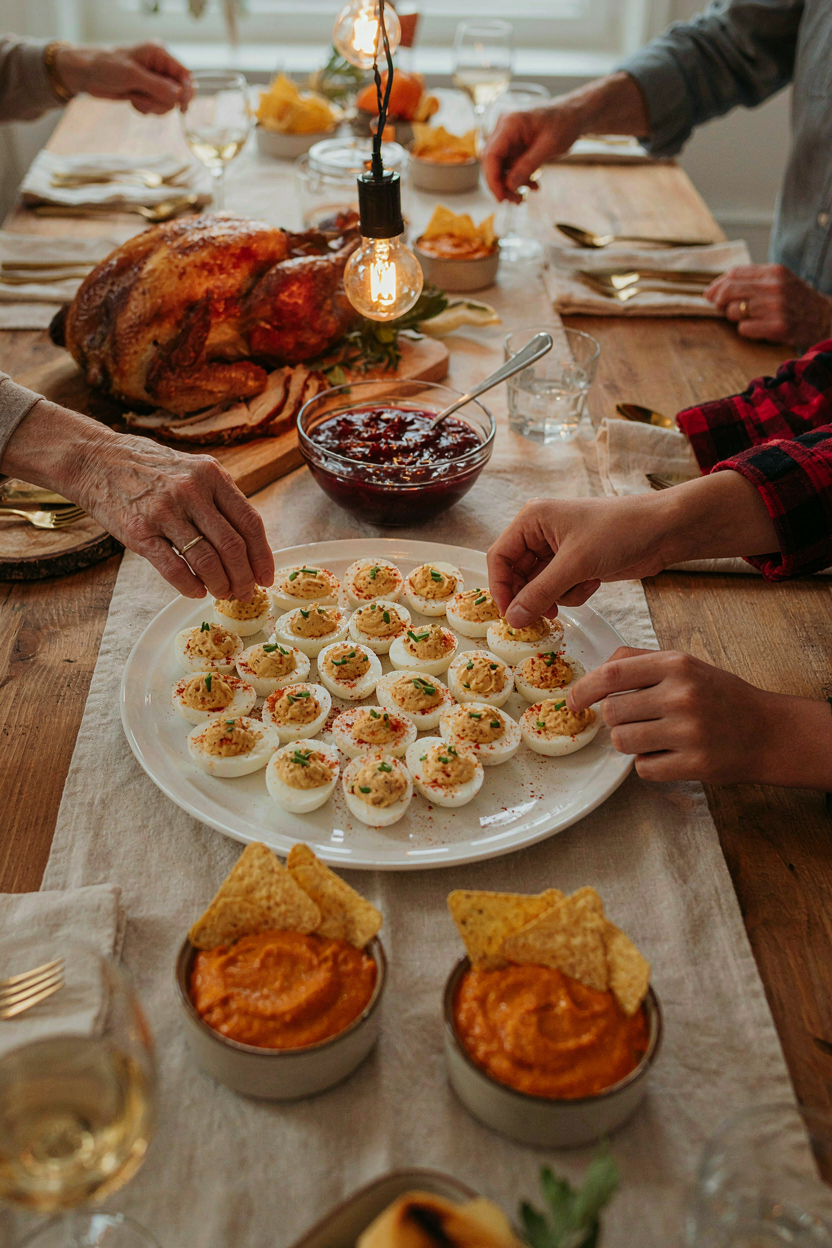
Deviled eggs are an appetizer, and they are the first thing people reach for when they walk in the door. They are also the thing that disappears fastest, so make more than you think you need.
- On an appetizer spread. Alongside the cheese ball, the pinwheels, the stuffed mushrooms. Deviled eggs are the protein on the table, and they cut through all the carbs.
- Before the main meal. While the turkey finishes resting and the sides are being carried out, the deviled eggs are the thing people eat standing up.
- With drinks. A crisp white wine, a light beer, a cocktail. The richness of the yolk wants something dry and sharp to balance it.
- As a passed hors d’oeuvre. If you have helpers, put the deviled eggs on a tray and circulate them. They are easier to eat standing than most appetizers, and they do not require a plate.
Thanksgiving spins
- Curried. Add ½ teaspoon curry powder and a pinch of turmeric to the filling. Top with a raisin and a sprinkle of cilantro. This is the version my brother-in-law asks for every year.
- Smoked paprika and crispy shallot. The classic. A little smoked paprika in the filling, more dusted on top, and a crispy shallot for crunch.
- Whole-grain mustard and maple. A spoon of whole-grain mustard and a teaspoon of maple syrup in the filling. Sweet and sharp, and it tastes like autumn.
- Bacon and chive. Crumbled bacon in the filling, more on top, and a scattering of fresh chives. This is the crowd favorite, and it disappears first.
- Turkey-shaped. The visual crowd-pleaser: a slice of black olive for the head, a triangle of carrot or red pepper for the beak, and thin bell-pepper strips fanned behind each egg as tail feathers. More effort, but it is the version that gets photographed and shared.
- With a tiny spoon of cranberry sauce. Not in the filling — on top, right before serving. It is Thanksgiving on a spoon, and it works better than it should.
Make ahead and scaling
Cook and peel the eggs and make the filling (in the piping bag) up to a day ahead, kept separately in the fridge. Assemble within a few hours of serving. The filling holds fine; the whites get weepy if they sit too long after piping.
For a crowd, an egg holds 2 halves and most people take 2 to 3, so 12 eggs covers about 8 to 10 people as one item on a spread. If deviled eggs are the only appetizer, plan on 18 eggs. A deviled egg carrier or a bed of crumpled foil under the platter keeps them from sliding.
Common problems
- The filling is too stiff. Add a teaspoon of the egg white, a splash of pickle brine, or a little more mayo. It should pipe easily; if it tears the bag, it is too thick.
- The whites are tearing when I scoop the yolks. Let the eggs cool completely before halving. A warm egg is soft and tears. And use a gentle touch; a small spoon works better than your fingers.
- The eggs are not peeling clean. They may be too fresh, the ice bath may not have been cold enough, or they may not have stayed in long enough. Ten minutes minimum, and the water has to be ice water, not just cold tap water.
- The filling tastes bland. It needed more salt, or more mustard, or more acid. Taste it before piping; it should taste almost too salty on its own. If it tastes right plain, it will be underseasoned with the white.
From my kitchen
The first Thanksgiving I made deviled eggs, I used a recipe that said to start the eggs in cold water and bring them to a boil, then simmer for 12 minutes. I did exactly that, and the yolks had a grey-green ring all the way through, and the whites were rubbery. They looked like something from a funeral parlor. Nobody said anything, but I saw them eat around the yolks.
The second year I read about the ice bath. I boiled the water first, lowered the eggs in, and timed it exactly 10 minutes. Then I shocked them in ice water for a full 10 minutes before peeling. The difference was not small. The yolks were bright yellow, the whites were tender, and they peeled like they wanted to be peeled. I brought them to the table in a bowl, and my sister-in-law said “oh, good, deviled eggs” in the tone she uses when she is genuinely pleased, not just being polite.
I make them every year now, and I make them the same way. The ice bath matters. So does the sieve. And I always make too many, because they disappear faster than anything else on the table.
Frequently asked questions
How do I stop the grey ring on deviled eggs?
Do not overcook the eggs, 10 to 11 minutes in boiling water, and put them straight into ice water afterward. The ring comes from cooking too long or too hot. Ten minutes is the sweet spot for a large egg; 11 if they are extra large. And the ice bath has to be actual ice water, not just cold tap water.
Why won’t my hard-boiled eggs peel?
They are too fresh, or they were not shocked in ice water. Use eggs that are a week or two old, and give them a full 10-minute ice bath before peeling. Peel under running water; it helps separate the membrane from the white.
Can I make deviled eggs ahead of time?
Yes. Cook and peel the eggs and make the filling a day ahead, stored separately. Pipe and top them within a few hours of serving. The filling holds fine in the fridge; the whites get weepy if they sit too long after piping, so do not assemble more than 3 to 4 hours ahead.
How many deviled eggs per person?
Two to three halves per person as one item on an appetizer spread. Twelve eggs (24 halves) serves 8 to 10. If deviled eggs are the only appetizer, plan on 3 to 4 halves per person, which means 18 eggs for 10 people.
Can I use a food processor for the filling?
You can, but a sieve is better. A food processor can overwork the yolks and make them gummy. A sieve gives you a light, fluffy texture with no lumps. If you only have a food processor, pulse it gently and check often.
Why is my filling too stiff?
Not enough mayo, or the yolks were very dry. Add a teaspoon of the egg white, a splash of pickle brine, or a little more mayo. It should pipe easily; if it tears the bag, it is too thick. Make it slightly looser than you think it should be; it firms in the fridge.
The bottom line
Boil the eggs 10 to 11 minutes, ice bath immediately, sieve the yolks for a smooth filling, and top at the last minute. Make the parts a day ahead and assemble on the day. The grey ring is a timing problem, and the peel is an ice-bath problem. Solve those two, and everything else is easy.
Save it for the cook-and-peel method, and the turkey shape for the photo.
Thanksgiving Deviled Eggs
Ingredients
Equipment
Method
- Lower the eggs into already-boiling water and boil 10 to 11 minutes. Or set them in a steamer basket over boiling water for 12 minutes — steaming peels even better.
- Transfer straight to a bowl of ice water and leave 10 minutes. This stops the cooking and makes them easy to peel.
- Peel under a thin stream of running water, starting at the wide end where the air pocket is.
- Halve the eggs, pop the yolks into a bowl, and push them through a fine sieve. Mash in the mayo, Dijon, vinegar, salt and pepper until smooth and slightly loose.
- Pipe the filling into the whites from a piping bag or a zip bag with a corner cut. Top just before serving.