- Serves: 10 to 12 as a side
- Active time: 35 minutes
- Make ahead: Bread dried up to a week ahead; assemble the day before
- The one thing that matters: Dry the bread hard, and bake it uncovered long enough for a real crisp top
What you’ll need
- Large skillet. For sauteing the vegetables and toasting the bread
- 9×13 baking dish. For baking the finished stuffing
- Large mixing bowl. For combining all ingredients
- Wooden spoon. For stirring
- Measuring cups and spoons. For accurate seasoning
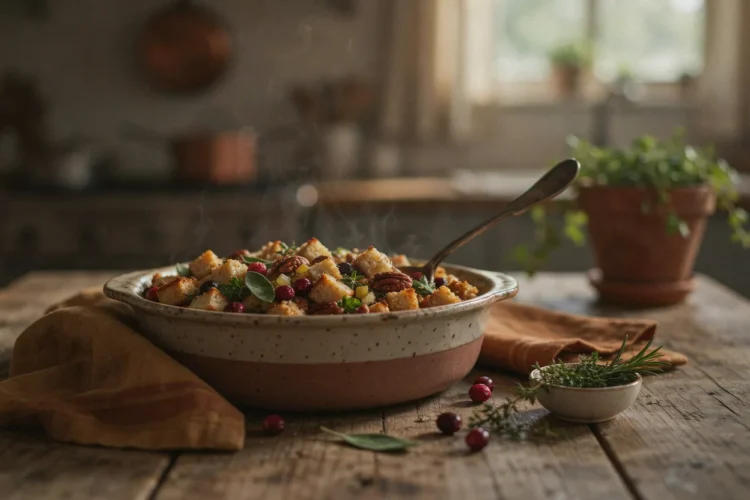
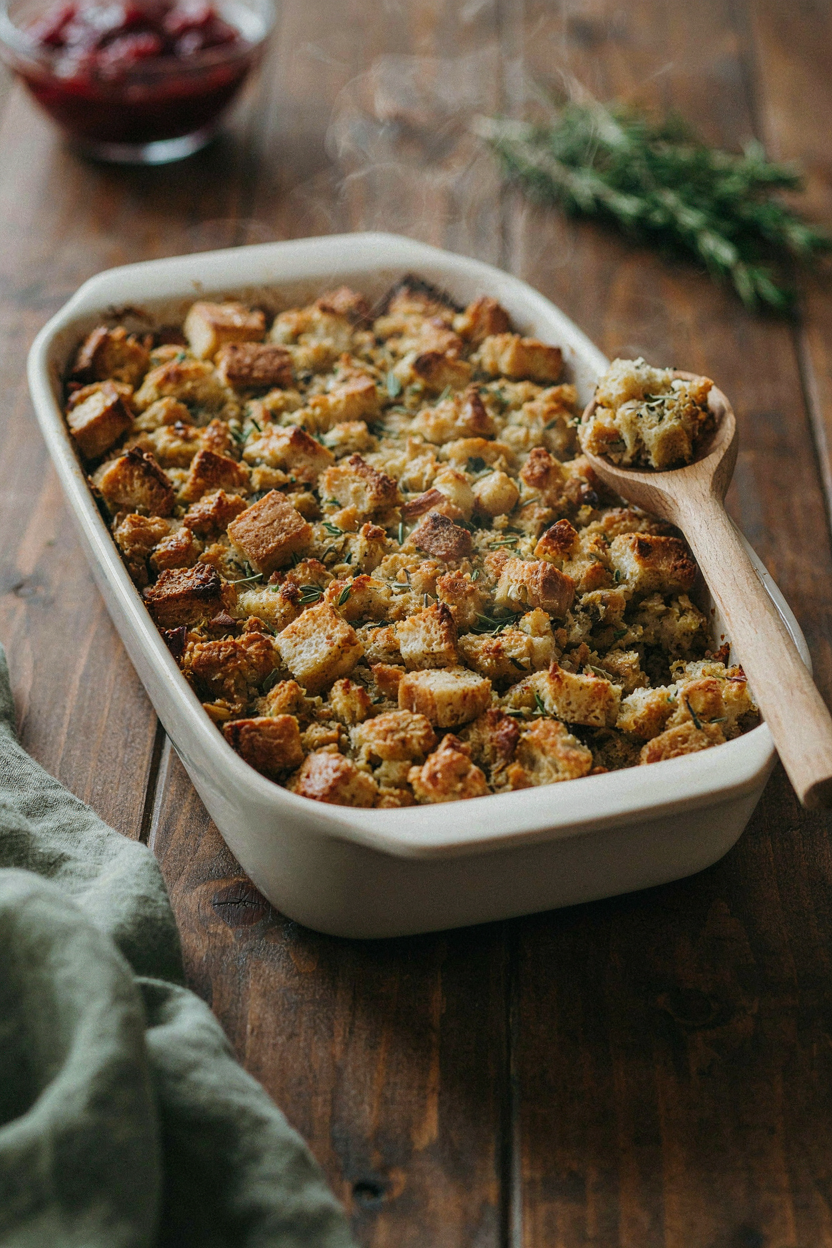
[Photo: a serving spoon in a dish of stuffing, the top deeply browned and craggy, distinct cubes visible]
Stuffing or dressing?
Same starting point, different result. Stuffing is the common term across most of the country, usually made with white or sourdough bread, and drier and chunkier. Dressing is the Southern term, usually cornbread-based, always baked separately, and softer and more custardy. This recipe is the white-bread stuffing. Despite the name, it is still baked in a dish here — see the food-safety note below for why.
Why this works
White and sourdough bread have gluten, so the cubes hold their shape and stay distinct. Cornbread would collapse. The bread has to be genuinely dry — day-old at a minimum, oven-dried is better, so it drinks the stock without turning to paste.
Stuffing uses noticeably less stock than dressing: two and a half to three cups here, versus four or five. The goal is texture, not a bread pudding. Two eggs bind it just enough to hold a scoop without making it wet. And the long uncovered bake is what builds the crisp top and edges that are the whole point, covered the whole time, you get a pale, soft casserole.
What you need
- 1 lb (450g) sturdy white bread or sourdough, cut in 1-inch cubes (about 12 cups), dried
- ¾ cup (170g) butter
- 2 cups diced onion
- 2 cups diced celery
- 4 garlic cloves, minced
- ¼ cup chopped parsley
- 2 tablespoons chopped fresh sage
- 1 tablespoon fresh thyme leaves
- 1 tablespoon chopped fresh rosemary
- 2½ to 3 cups (600–720ml) turkey or chicken stock
- 2 large eggs, beaten
- 1½ teaspoons fine salt, 1 teaspoon black pepper
Optional additions
- 1 lb browned pork or sage sausage
- ½ cup dried cranberries and ½ cup toasted pecans or chestnuts
- 1 tart apple, diced and cooked with the aromatics
How to make it
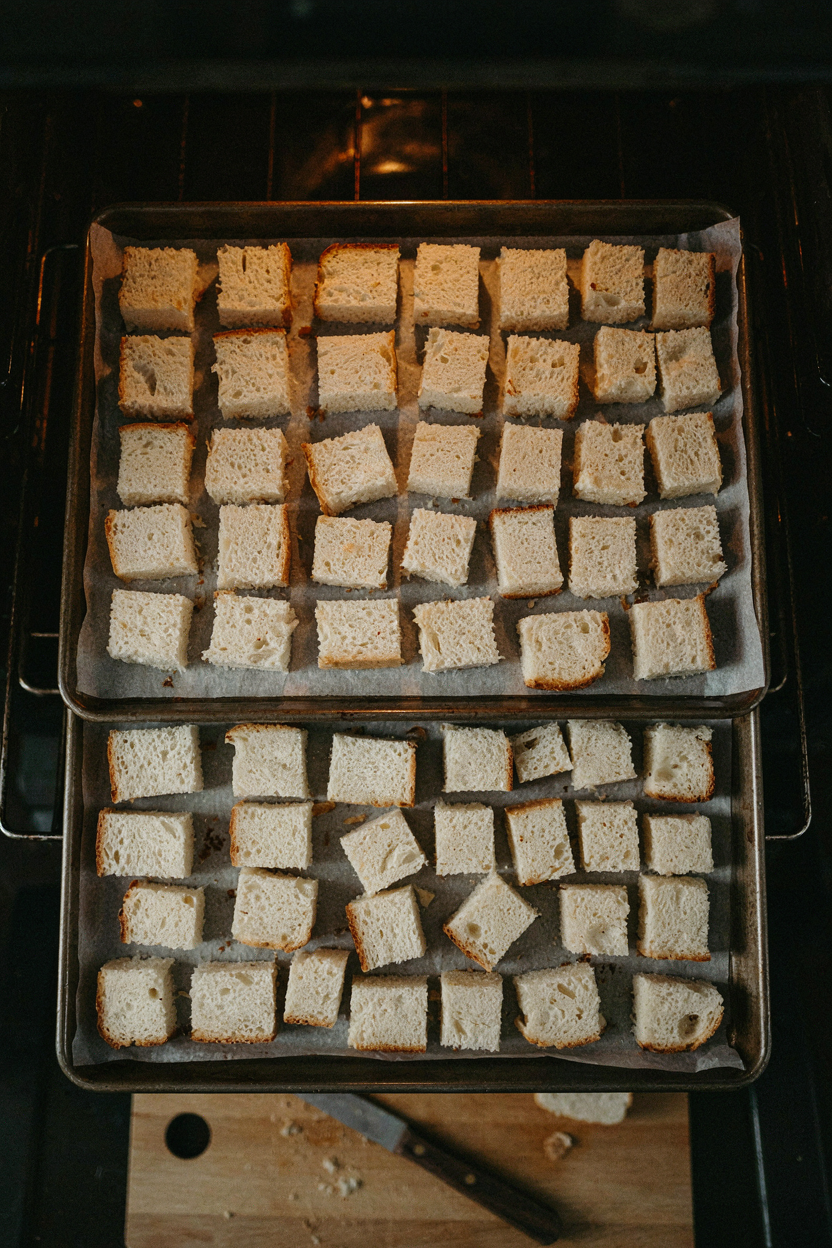
- Dry the bread. Spread the cubes on trays and leave a day or two, or dry in a 275°F oven for 30 to 40 minutes until crisp and pale gold. Plan for this step; properly dried bread is what keeps the stuffing from turning soggy.

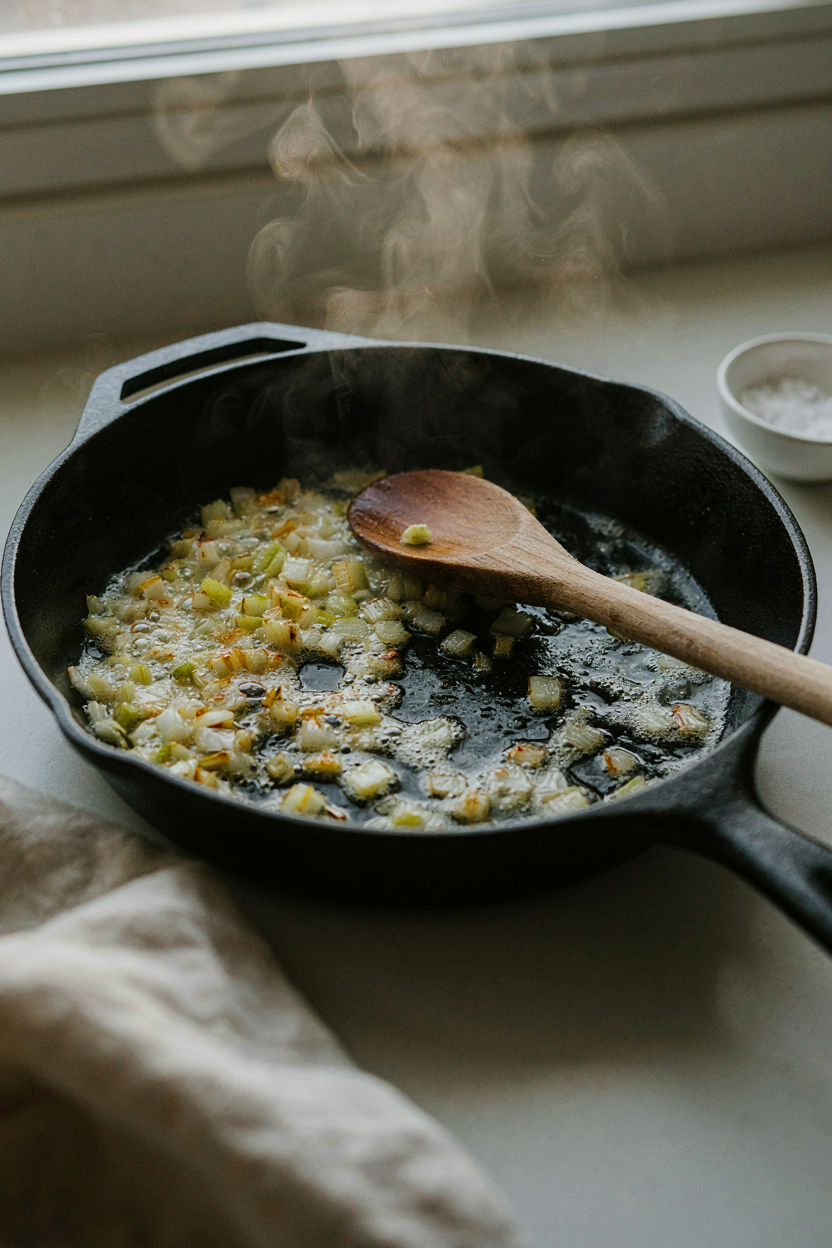
- Aromatics. Melt the butter in a large skillet, letting it just start to brown for extra depth. Cook the onion and celery 10 to 12 minutes until soft. Add the garlic and herbs for the last minute.
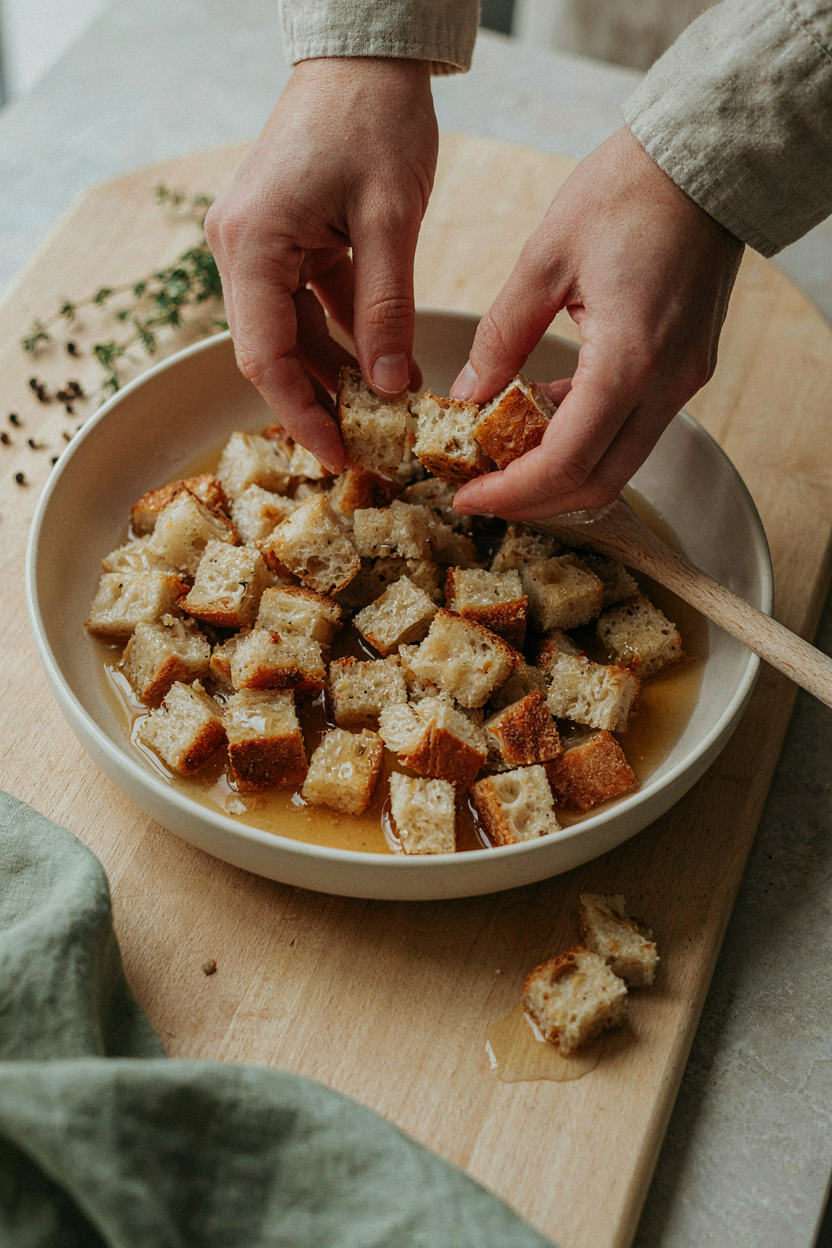
- Combine. In a large bowl, toss the bread with the aromatic butter, salt, pepper and any additions. Pour over 2½ cups of stock and the beaten eggs and fold gently. The cubes should be moistened through but not soaked, add the last of the stock only if it looks dry.
- Bake. Transfer to a buttered 9×13 dish, mounding it slightly. Cover with foil and bake at 350°F (175°C) for 25 minutes. Uncover and bake 25 to 35 minutes more, until the top is deeply browned and crisp.
The details that decide it
- Dry the bread hard. If the bread is not fully dried, the stuffing can turn soft and mushy regardless of how little stock you add.
- Less stock than dressing. Moistened, not soaked. You want to see distinct cubes going into the dish.
- Bake uncovered longer for crisp. Look for a deeply browned, craggy top as your signal that it is ready.
- Brown the butter for the aromatics, it adds a nutty depth that plain melted butter does not.
In the bird, or not?
Cooked inside the turkey, stuffing has to reach 165°F in the center to be safe, and by the time it does, the breast meat is overcooked and dry. That is the whole case for baking it separately. If you want the flavor of stuffing cooked in the bird without the trade-off, spoon a few tablespoons of the turkey’s pan drippings over the stuffing in the last 15 minutes of baking. If you do want the flavor of stuffing cooked inside the bird, add it just before the turkey goes into the oven.
Scaling for a crowd
Dry the bread up to a week ahead; it only gets staler, which is fine. Cook the aromatics 2 days ahead. Assemble the whole dish the day before and refrigerate, then bake on the day. It freezes assembled and unbaked for up to a month.
Plan on about ¾ cup per person. For 20 or more, use two shallower pans rather than one deep one, more surface area means more of the crisp top that everyone actually wants. On the day, it bakes at 350°F alongside the other sides while the turkey rests. It is one of the core sides in our best Thanksgiving side dishes.
Make ahead, storing and freezing
- Bread: dried up to a week ahead, stored airtight once cool.
- Assembled, unbaked: 1 day refrigerated, or 1 month frozen.
- Baked leftovers: 4 days refrigerated. Reheat uncovered so the top re-crisps.
From my kitchen
Soggy stuffing is bread that was not dry enough, too much stock, or both. If your bread is fresh, oven-dry it, do not just cube it and hope. And add the stock gradually. It is far easier to add another splash than to rescue a soaked bowl.
Frequently asked questions
What is the best bread for stuffing?
Sturdy white sandwich bread, a country loaf, or sourdough, cut in 1-inch cubes and dried until crisp. Soft, fresh bread turns to mush.
Should I cook stuffing inside the turkey?
Baking it separately is safer and gives a better texture. Stuffing inside the bird needs to reach 165°F in the center, which overcooks the breast. If you want that flavor, moisten the baked stuffing with turkey drippings at the end.
Why is my stuffing soggy?
The bread was not dried enough, or there was too much stock. Dry the bread hard, use 2½ cups of stock to start, and add more only if it looks dry.
Can I make stuffing ahead?
Yes. Assemble it the day before and refrigerate, then bake on the day. The dried bread can be done up to a week ahead, and the assembled dish freezes unbaked for a month.
How do I get a crisp top?
Bake it uncovered for the second half, 25 to 35 minutes, until the top is deeply browned. Mounding the stuffing slightly in the dish creates more craggy surface to crisp.
The bottom line
Dry bread, browned-butter aromatics, modest stock, a light egg bind, and a long uncovered bake. Distinct cubes, a crisp top, and a tender center, the white-bread stuffing, done in a dish where it is safest.
Pin it alongside the dressing recipe, make whichever one is your table’s tradition, or both.
Thanksgiving Stuffing
Ingredients
Equipment
Method
- Dry the bread. Spread the cubes on trays and leave a day or two, or dry in a 275°F oven for 30 to 40 minutes until crisp and pale gold. This is not a step to skip.
- Aromatics. Melt the butter in a large skillet, letting it just start to brown for extra depth. Cook the onion and celery 10 to 12 minutes until soft. Add the garlic and herbs for the last minute.
- Combine. In a large bowl, toss the bread with the aromatic butter, salt, pepper and any additions. Pour over 2½ cups of stock and the beaten eggs and fold gently. The cubes should be moistened through but not soaked, add the last of the stock only if it looks dry.
- Bake. Transfer to a buttered 9×13 dish, mounding it slightly. Cover with foil and bake at 350°F (175°C) for 25 minutes. Uncover and bake 25 to 35 minutes more, until the top is deeply browned and crisp.