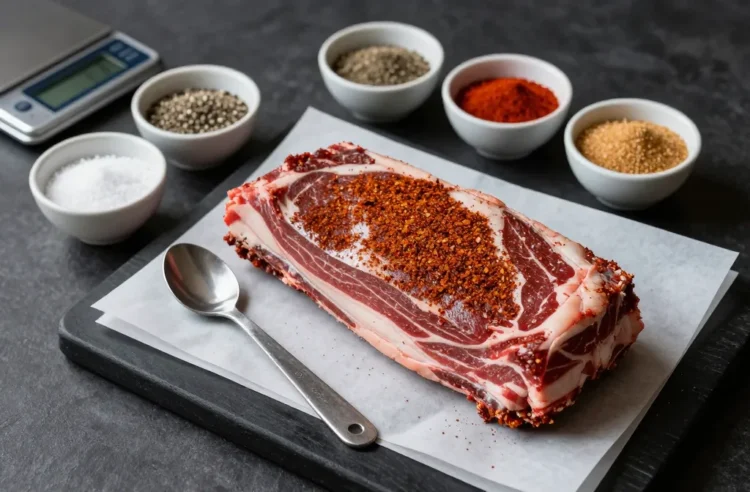
- Best for: Backyard cooks dialing in consistent brisket flavor
- Make ahead: Yes — mix rub up to 1 month ahead, apply 4–24 hours before cooking
- Serves: One 12–15 lb whole packer brisket feeds 12–18
- Key tip: Use 1–1.5 tablespoons of rub per pound of raw brisket; salt level drives taste more than total rub volume
How Much Dry Rub for a Whole Brisket — Weight Ratios Explained is the question that separates guesswork from repeatable results. Too little rub and the bark falls flat; too much and you’re chewing salt. Below, you’ll get exact tablespoon-per-pound ratios, salt math, when to apply, and how to scale for different brisket sizes — plus pro tips for bark, smoke, and crowd planning.
The Gold Ratio: Tablespoons of Rub per Pound
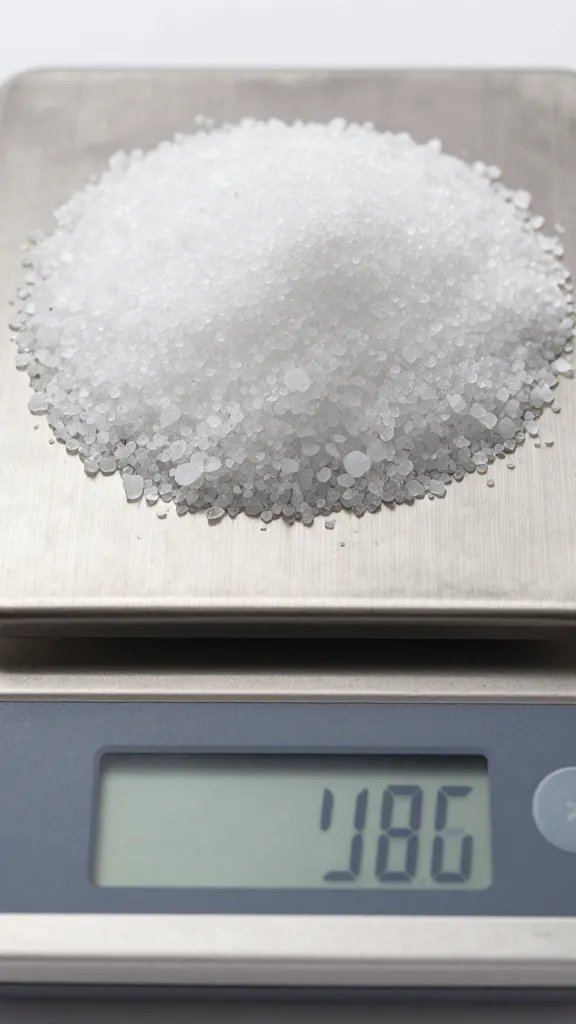
The sweet spot for a whole packer brisket is 1 to 1.5 tablespoons of rub per pound of raw weight. That range accounts for rubs that are saltier (use the low end) or more herbal/sugar-heavy (use the high end).
- 12 lb brisket: 12–18 Tbsp rub (3/4–1 1/8 cups)
- 14 lb brisket: 14–21 Tbsp rub (7/8–1 1/3 cups)
- 16 lb brisket: 16–24 Tbsp rub (1–1 1/2 cups)
Rule of thumb: Start at 1 Tbsp/lb for rubs with over 25% salt; go up to 1.5 Tbsp/lb for low-salt blends.
Salt Math: The Part Everyone Gets Wrong
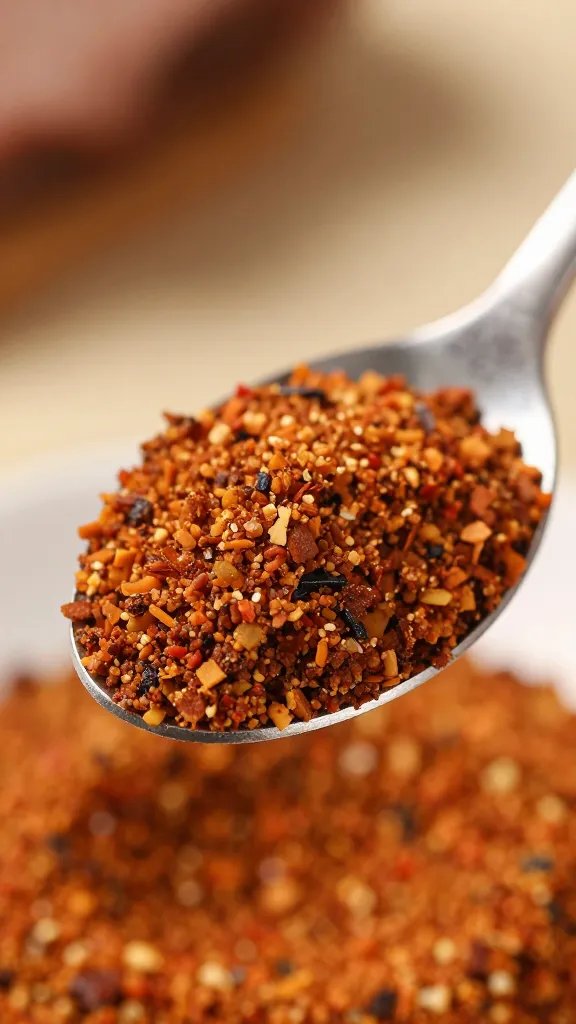
Brisket rub isn’t just “more is more.” Salt concentration decides whether the bark sings or stings. Target 0.8–1.2% salt by raw meat weight for balanced flavor.
- Salt target: 8–12 grams salt per kilogram of raw brisket
- Example (6.5 kg / ~14 lb brisket): 52–78 g salt total in the rub layer
- If your rub is 50% salt: You hit the target with 104–156 g total rub (about 7–11 Tbsp)
- If your rub is 25% salt: You’ll need ~208–312 g total rub (about 14–22 Tbsp)
Quick fix: If you love a heavy bark but your blend is salty, mix a “finishing rub” that’s salt-free (pepper, paprika, garlic, onion). Apply the salty base lightly, then layer on the salt-free mix to build bark without oversalting.
When to Apply the Rub for Best Bark
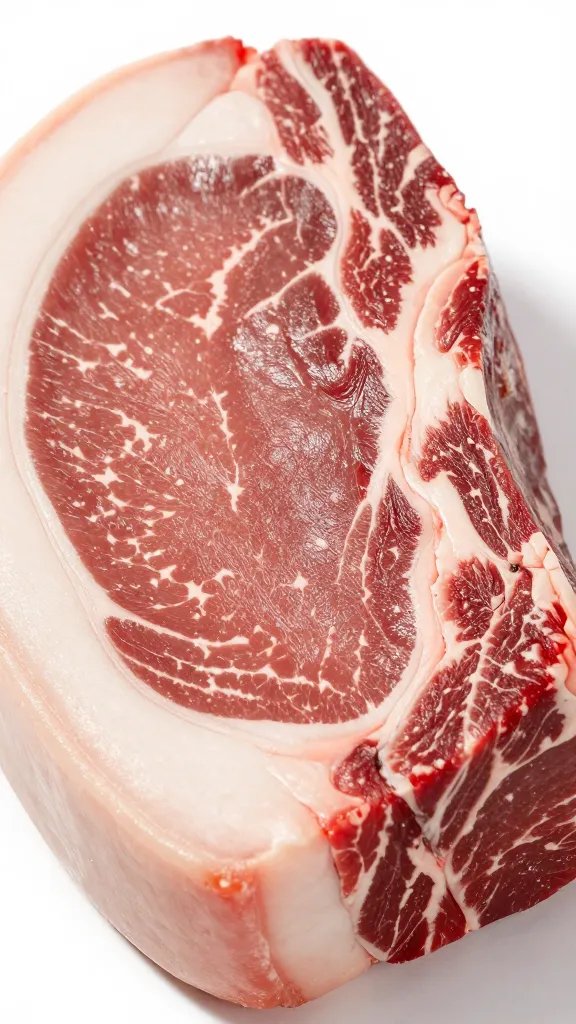
You can nail great bark with three timing approaches. Choose based on schedule and fridge space.
Same-Day (1–2 hours before cook)
- Pat dry. Light coat of binder if desired (see next section).
- Apply 1–1.5 Tbsp/lb. Rest 60–120 minutes so the rub hydrates and sticks.
- Best for: Simple scheduling, slightly looser bark.
Overnight (12–24 hours)
- Apply rub, set on rack, uncovered or loosely tented in the fridge.
- Salt penetrates a bit and surface dries for a firmer bark.
- Best for: Deep flavor and darker crust.
Two-Stage
- Night before: apply 0.6–0.8 Tbsp/lb of a salt-forward base rub.
- Pre-smoker: add 0.4–0.7 Tbsp/lb of a low-salt finishing rub.
- Best for: Control over salt and bark thickness.
Binder or No Binder?
You don’t need a binder for adhesion if the meat surface is tacky, but it helps create even coverage.
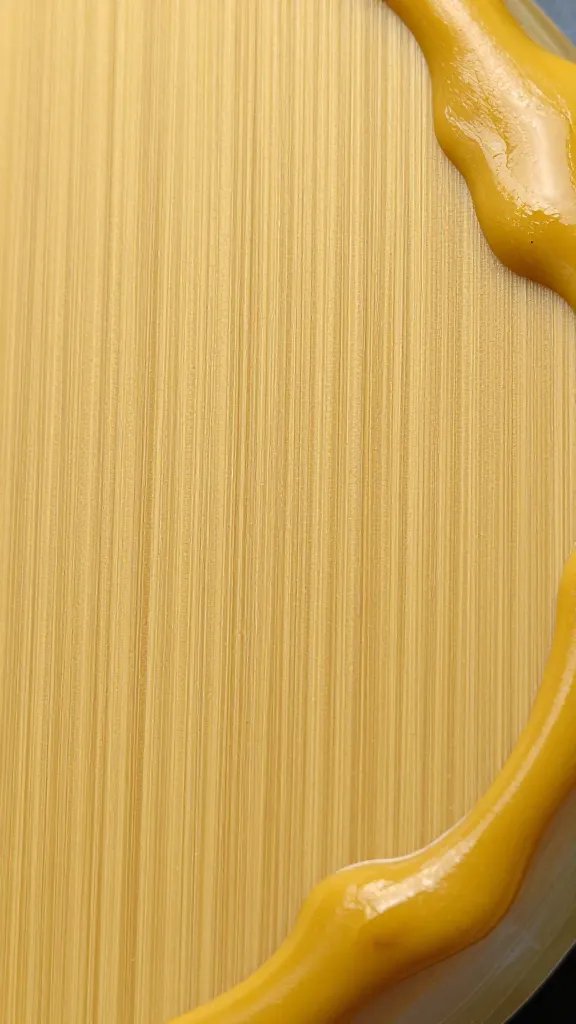
- Mustard: Classic. Flavor cooks off. Thin smear only.
- Worcestershire: Adds umami; go light to avoid a salty stack.
- Oil: Neutral oils work; helps smoke particles stick.
- Water-only: Light spritz works if you prefer no added flavor.
Key tip: Binders don’t replace rub — they just help it stick and hydrate. Use the same total rub amount whether you use a binder or not.
How Rub Choice Changes the Ratio
Different blends pack different punch. Adjust within the 1–1.5 Tbsp/lb window.
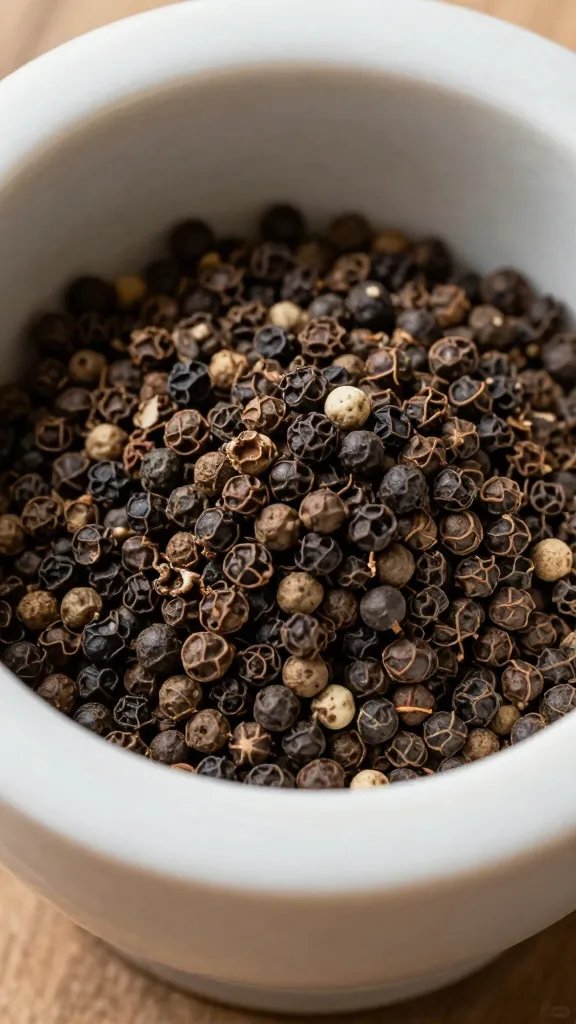
- Texas-style (salt/pepper heavy): Stay near 1 Tbsp/lb. Coarse grind improves bark structure.
- Sugar-forward: Use 1.25–1.5 Tbsp/lb but keep sugar under 20% to avoid bitter notes during long cooks.
- Herb/chile blends: 1.25–1.5 Tbsp/lb to taste; watch heat from cayenne/chipotle.
- Low-sodium: Go up to 1.5 Tbsp/lb or add a separate measured salt dose to hit 1% meat weight.
Applying the Rub: Even Coverage Without Clumps
- Trim brisket to your style; leave 1/4 inch fat cap for protection.
- Pat dry; add binder if using.
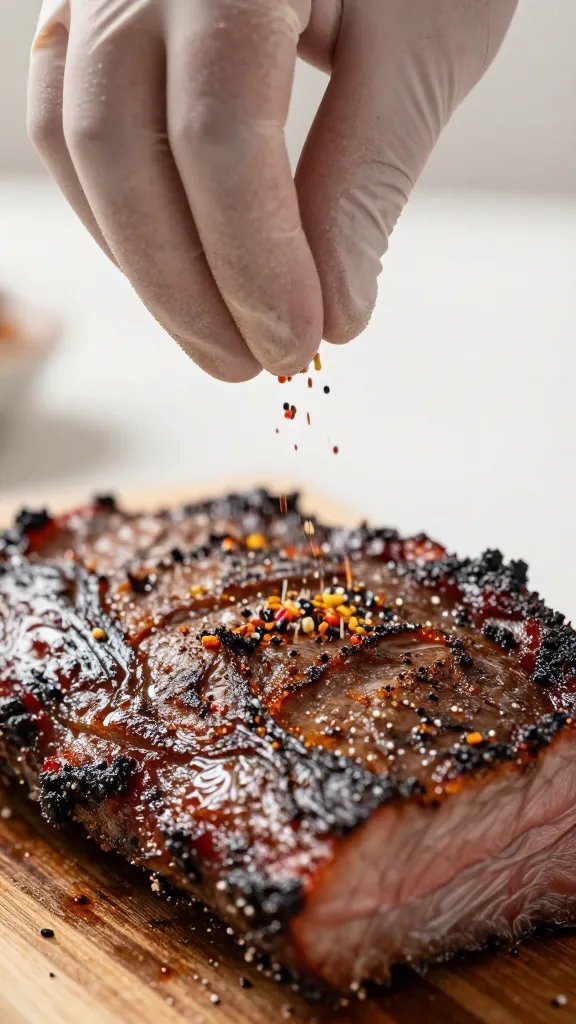
- Hold rub 8–10 inches above the meat and “rain” it down for even granule spacing.
- Coat all sides, edges, and between point/flat seams. Don’t forget the underside.
- Press to adhere; don’t rub hard or you’ll create bald spots.
- Rest as per timing method above before it hits the smoker.
Brisket Size and Crowd Planning
Rub amounts scale cleanly, but service math trips people up.
- Cook loss: Brisket shrinks ~30–40%. A 14 lb raw becomes ~8.5–9.5 lb cooked.
- Portions: Plan 1/2 lb cooked per adult for hearty plates, 1/3 lb for mixed spreads.
- Rub prep: For a 14 lb brisket, pre-mix 1–1.25 cups rub. Better to have a little left than run short mid-coat.
Flavor Pairings and Sauces That Let the Bark Shine
Let the rub lead, sauce support. Serve sauces on the side, not brushed on the bark.
- Bright herb: Try this chimichurri recipe for sliced flat — acidity balances the fat.
- Smoky-sweet: A thinner finishing glaze after the wrap rests works well; keep sugar modest.
- Classic pickles and onions: Crunch and acid cut richness without drowning the rub.
From My Kitchen: What Actually Works
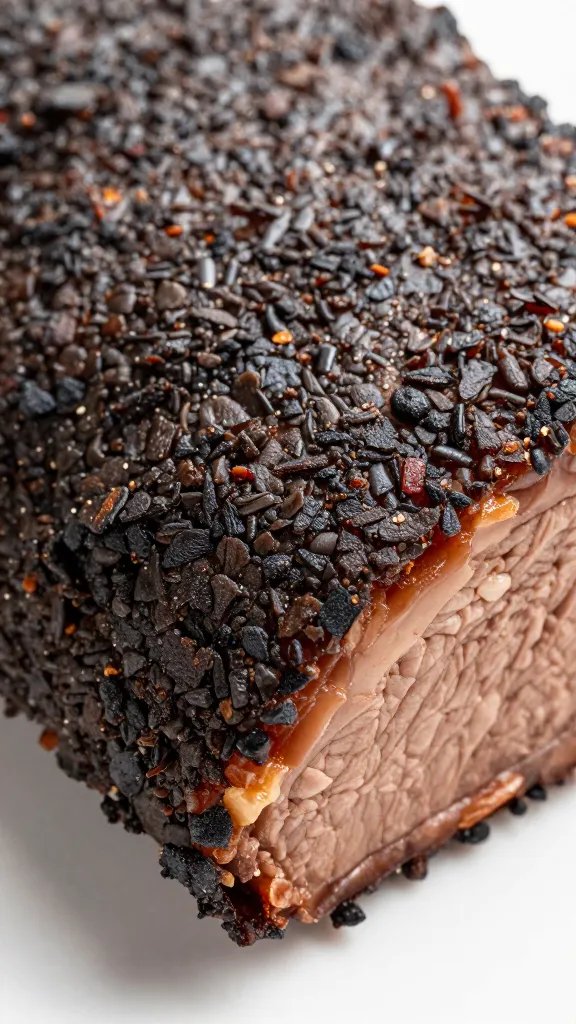
I weigh salt separately at 1% of raw brisket weight and fold it into whatever rub I’m using. That keeps the salt target consistent even when I swap blends. I also sift my rub through a mesh strainer; the even granule size makes a tighter, more even bark. On overnight rubs, I stop at about 75% of the total rub the night before, then finish the final 25% right before it goes on the smoker — it refreshes aroma and color without oversalting. Finally, I quit adding rub the second I stop seeing pink meat; overshooting that point doesn’t improve bark, it just cakes.
Frequently Asked Questions
How much dry rub for a whole brisket in cups?
Plan on 3/4 to 1 1/2 cups depending on brisket size and saltiness of the rub. For a typical 12–15 lb packer, 1 to 1 1/4 cups covers evenly without caking.
What’s the best salt level when making brisket rub?
Aim for 0.8–1.2% salt of the raw meat weight. For a 14 lb brisket (~6.35 kg), that’s about 50–75 grams of salt total in the rub layer.
Should I rub brisket the night before or same day?
Both work. Overnight rubs build a drier surface and slightly deeper flavor; same-day application (1–2 hours prior) is convenient and still forms good bark. If you go overnight, keep salt in check to avoid a harsh exterior.
Can I make brisket rub ahead of time?
Yes. Mix a big batch and store it airtight for up to 1 month. Keep it in a cool, dark place; add fresh-ground pepper right before use for brighter aroma.
How do I avoid an oversalted brisket bark?
Control the salt independently. Weigh salt to 1% of meat weight, then top up with low- or no-salt spices. You can also split the rub into a light salty base plus a salt-free finishing rub before the cook.
What sauces pair well without hiding the rub?
Serve sauces on the side. Bright herbs like fresh chimichurri or a thin vinegar-based mop complement the bark without masking it.
The Bottom Line
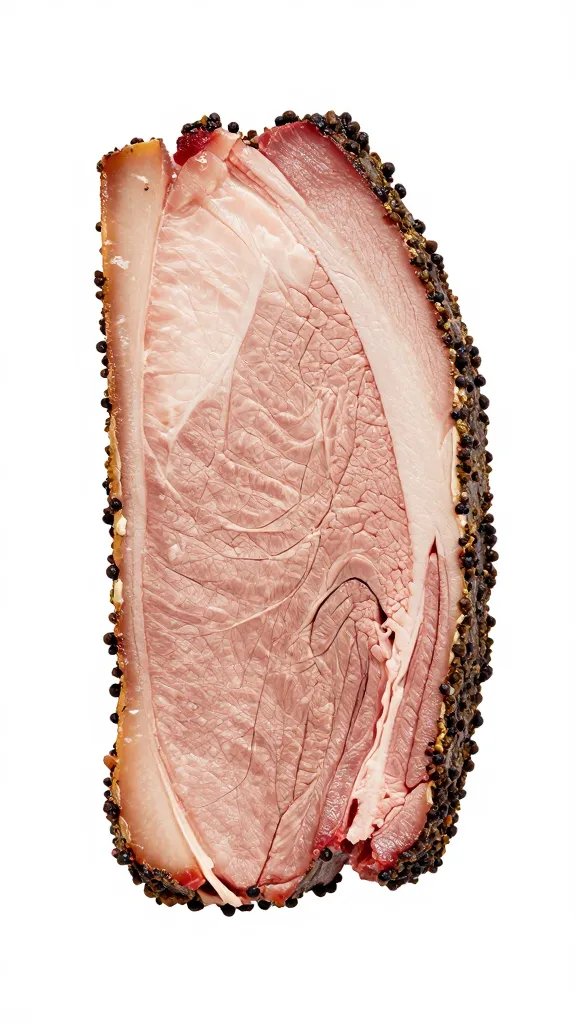
Use 1–1.5 tablespoons of rub per pound and keep salt near 1% of raw weight. Apply evenly, time the rest to your schedule, and let the bark be the star — sauce can ride shotgun.
Planning to try this? Save this post so you can find it when you need it — and tag us when you make it.