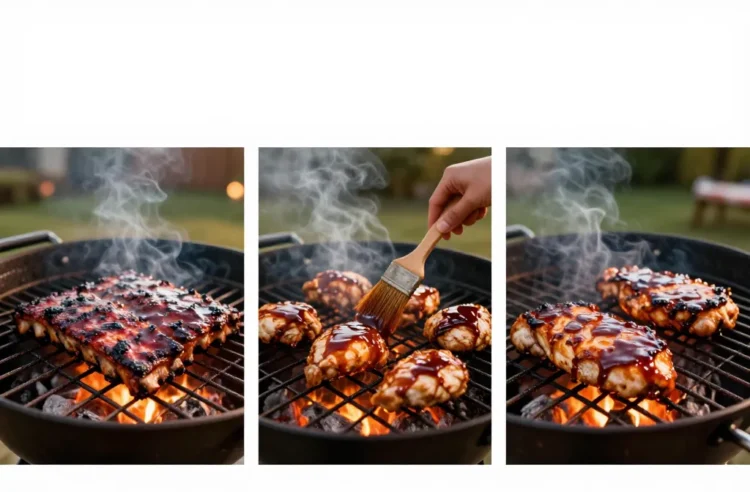
- Best for: Backyard grilling and easy weeknight cookouts
- Make ahead: Yes — mix sauces up to 1 week in advance
- Serves: Families or small crowds (scale by pounds of meat)
- Key tip: Apply sauce in the last 10–15 minutes over low heat to avoid burning
When to Apply BBQ Sauce — Before, During, or After Grilling is a hot debate with a sticky outcome if you get it wrong. Sugar-heavy sauces scorch fast, while thin mop sauces can add layers of flavor as you cook. The right timing depends on your cut of meat, heat level, and the type of sauce. By the end, you’ll know exactly when to sauce for ribs, chicken, pork, and more — plus how to avoid burnt, bitter glaze.
The Science: Why Timing Matters
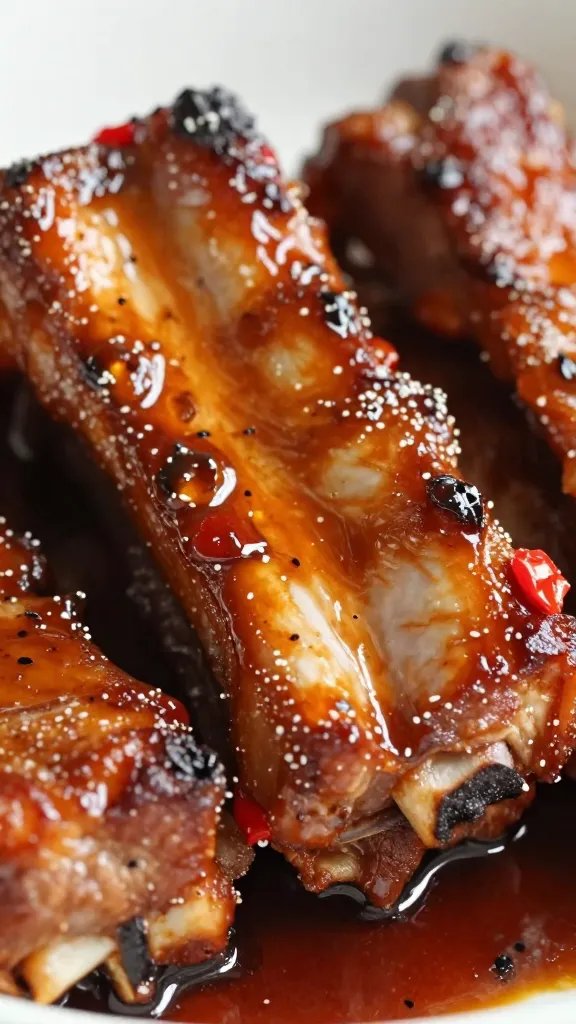
Most BBQ sauces contain sugar (brown sugar, molasses, honey). Sugar begins to burn around 320°F. That means if you slather sauce on early over high heat, you’ll get charred, bitter patches.
Acidity and water content also matter. Thinner, vinegar-forward sauces can handle earlier applications because they reduce slowly and don’t scorch as easily.
Before Grilling: When It Works (and When It Doesn’t)
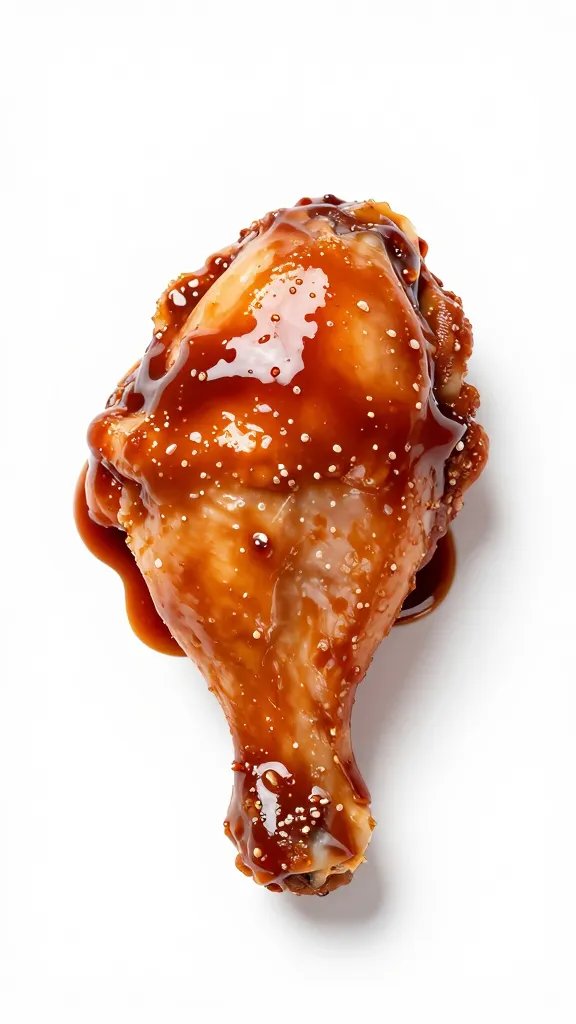
Do it if: your “sauce” is actually a marinade, brine, or dry rub. These season the meat and build flavor before heat ever hits the grill.
- Great before: Dry rubs on ribs/pork shoulder, thin vinegar mops for Carolina-style pork, yogurt-based marinades for chicken.
- Avoid before: Thick, sweet Kansas City–style sauces. They burn early and block browning.
How to do it: Pat meat dry, season with salt/rub, and if using a thin mop, brush lightly 15–30 minutes before grilling to start layering tang without sugar burn.
During Grilling: Layering Flavor Without Scorching
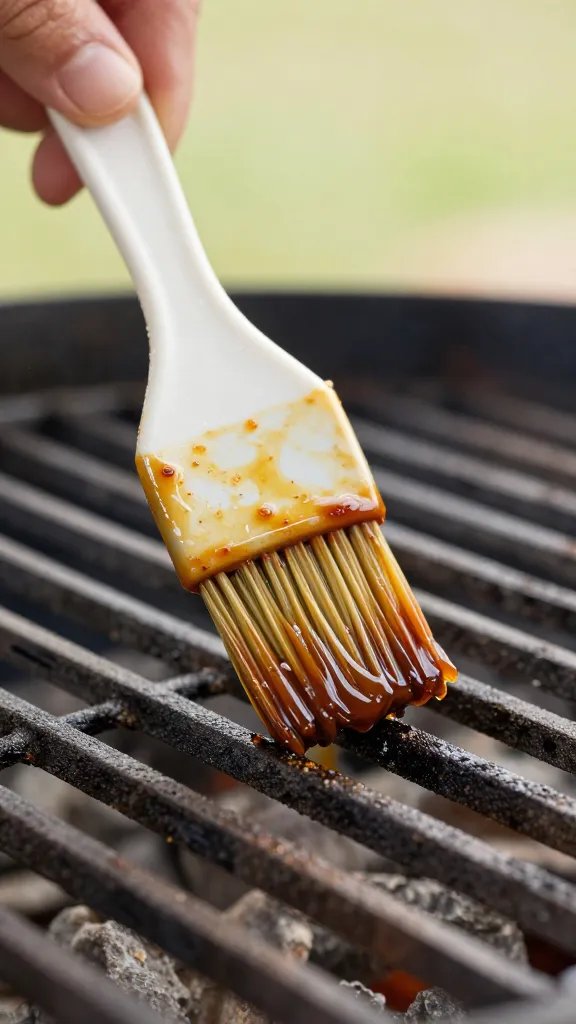
This is the sweet spot for most backyard cooks. You’ll build glaze and shine without torching the sugars if you manage heat and timing.
Timing by Protein
- Chicken (thighs, drumsticks, bone-in): Start saucing 15 minutes before done, over medium-low or indirect heat. Add 2–3 thin coats, turning every 5 minutes.
- Ribs (pork, baby backs/spares): Sauce during the last 30–45 minutes at 225–275°F. Brush 2–3 times to set a lacquer without puddling.
- Pork chops: One light coat in the final 5–8 minutes, flipping once more to set.
- Burgers: Optional. Add a thin swipe in the last 2–3 minutes if you like a sweet edge; otherwise finish after cooking.
- Steak: Skip thick BBQ sauce during cooking. Use compound butter while resting, then serve with sauce on the side.
Heat Management
- Cook indirect to set sauce, then kiss over direct heat for 30–60 seconds per side for caramelization.
- If it sizzles like pancake syrup and smokes hard, your grate is too hot for sauce. Move to a cooler zone.
After Grilling: Bright Finish and Clean Grates
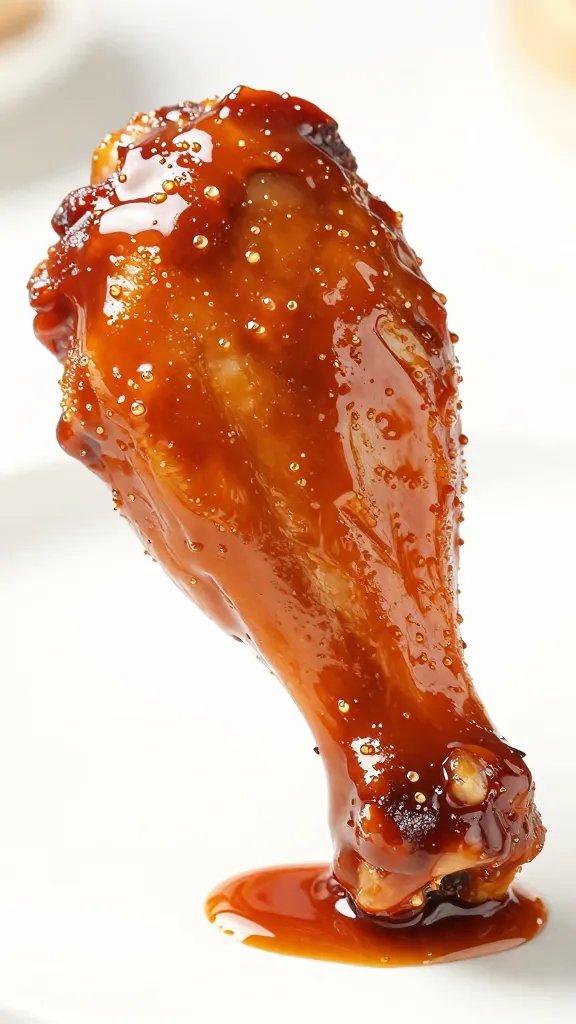
Finishing off the grill keeps flavors fresh and avoids sticky grates. It’s especially good for high-heat cooks and delicate proteins.
- Best after: Grilled chicken breasts, shrimp, salmon, burgers, and any quick-cook cuts seared hot.
- How to do it: Rest meat 3–5 minutes, then toss or brush with warmed sauce. For ribs or chicken, baste lightly right off the grill to boost shine without more caramelization.
- Bonus: You control sweetness and spice at the table, and leftovers won’t taste over-reduced.
Match the Sauce to the Moment
Kansas City–style (thick, sweet): Add late. Think ribs and chicken in the final 10–15 minutes, plus a little after resting.
Carolina vinegar/mustard: Can go earlier. Mop during cooking every 20–30 minutes for pulled pork, then splash after shredding.
Texas-style (thinner, peppery): Use sparingly as a warm dip after slicing brisket or beef ribs, not during the cook.
Fruit glazes (apricot, peach): Extremely burn-prone. Glaze in the last 5 minutes max, or finish off-heat.
Step-by-Step: Foolproof Glaze Timing
- Season first: Salt and dry rub. Let sit 20–60 minutes or overnight for larger cuts.
- Cook to near-done: Aim for 10–15 minutes from target temperature (use a thermometer).
- Lower the heat: Move to indirect or reduce burner to medium-low.
- First thin coat: Brush lightly; do not drench. Close the lid for 4–5 minutes.
- Repeat: Add 1–2 more thin coats, letting each set. Flip once if needed.
- Set and rest: Give a final 1–2 minutes of gentle heat, then rest 5–10 minutes. Add a light finish if desired.
Smart Tools and Safety
- Two brushes, two bowls: Keep a separate clean brush and sauce for finishing to avoid cross-contamination.
- Thermometer: Chicken dark meat 175–190°F for tender bites; breasts 160–165°F; pork chops 145°F + rest.
- Warm the sauce: Gently heat to 150–165°F before brushing so it spreads thinly and sets faster.
- Control thickness: If your sauce is thick, thin with apple juice or vinegar 1–2 tablespoons at a time.
From My Kitchen: What Actually Works
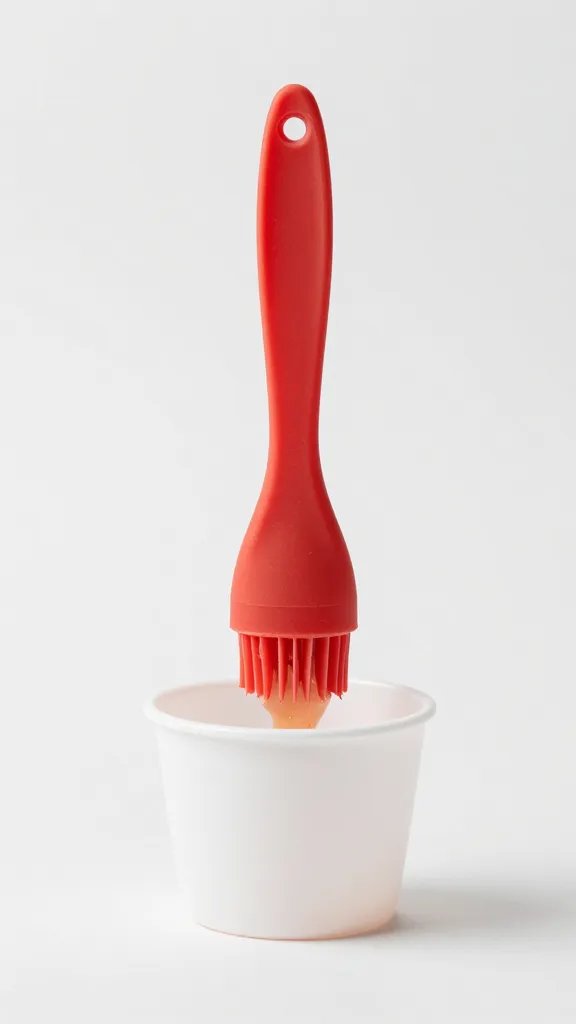
The best ribs I’ve made get three ultra-thin coats at 275°F: first at 45 minutes from done, then 25, then 10. Any thicker and it runs, pooling instead of setting. For chicken thighs, I pull them at 170°F, then glaze twice over low heat to reach 180–185°F; the collagen melts and the glaze tightens just right. One more tip: I always warm sauce to at least 150°F — cold sauce shocks the surface and never lacquers evenly.
If you’re serving sauces on the side for variety, pair smoky meats with something bright like this chimichurri recipe to cut richness, and keep a fresh, crunchy side such as a no-mayo coleslaw for balance.
Frequently Asked Questions
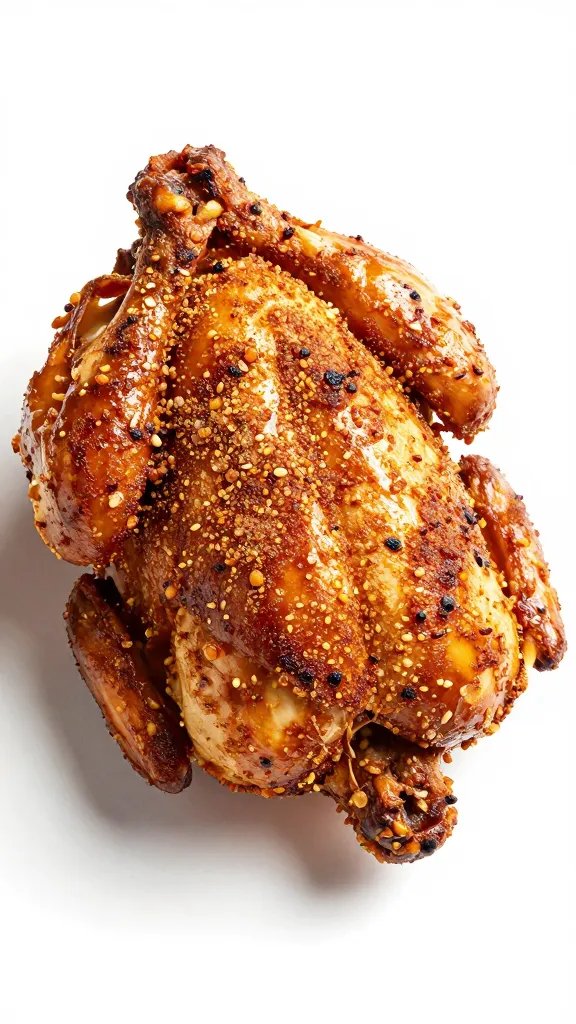
When to Apply BBQ Sauce for chicken so it doesn’t burn?
Brush on in the last 10–15 minutes over medium-low or indirect heat, adding 2–3 thin layers. Finish off-heat if your grill runs hot to avoid scorching sugar-based sauces.
Should I put BBQ sauce on ribs before or after wrapping?
Apply a light coat right before you re-wrap during the last hour to set color and sweetness. Then add another thin coat after unwrapping to finish and lacquer.
Can I marinate meat in BBQ sauce overnight?
Not ideal if the sauce is thick and sugary — it can prevent good browning and turn tacky. Use a marinade or a thinner vinegar-based sauce; save thick BBQ sauce for during/after cooking.
What’s the best temperature to set BBQ sauce on the grill?
Keep it around 225–300°F. At this range, sugars caramelize gently without burning, and layers have time to adhere.
How do I keep sauce from getting too thick or gloopy?
Apply thin coats and warm the sauce first. If it’s still heavy, thin with a splash of apple juice, stock, or vinegar until it brushes easily.
The Bottom Line
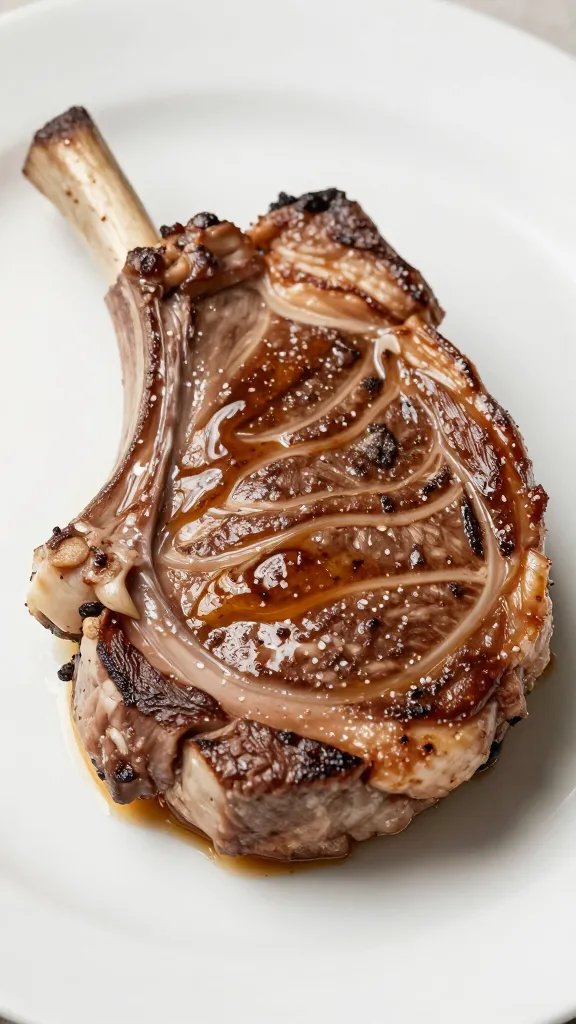
Use thick, sweet sauces late; use thin, tangy mops earlier. Work over lower heat to set layers, then finish with a quick sear or off-heat brush for shine and balance.
Planning to try this? Save this post so you can find it when you need it — and tag us when you make it.