
Zucchini pesto is the kind of recipe that makes weeknight cooking feel exciting again. It’s vibrant, garlicky, and creamy without being heavy. Best of all, it turns a humble vegetable into a sauce that tastes like summer in a bowl.
You can toss it with pasta, spread it on toast, or spoon it over grilled chicken or fish. If you love classic basil pesto but want something lighter—and a bit more budget-friendly—this is a great option.
What Makes This Recipe So Good
- Light and silky: Zucchini adds body without relying on tons of oil or cheese, so the sauce feels fresh rather than heavy.
- Budget-friendly: Zucchini is often inexpensive, especially in season. You use less basil and nuts than a traditional pesto, but still get bold flavor.
- Versatile: This pesto works with pasta, gnocchi, pizza, sandwiches, grain bowls, and roasted vegetables.
- Quick to make: From start to finish, it takes about 20 minutes.
The blender or food processor does most of the work.
- Make-ahead friendly: It stores well, and the flavor actually improves after a few hours in the fridge.
Ingredients
- 2 medium zucchini (about 1 pound), trimmed and roughly chopped
- 1 packed cup fresh basil leaves
- 1/3 cup grated Parmesan or Pecorino Romano, plus more to taste
- 1/4 cup nuts (pine nuts, walnuts, or almonds)
- 2–3 cloves garlic, roughly chopped
- 1 lemon, zested and juiced (start with 1–2 tablespoons juice)
- 1/4–1/3 cup extra-virgin olive oil
- Salt and freshly ground black pepper, to taste
- Optional: pinch of red pepper flakes for gentle heat
- Optional for extra creaminess: 2–3 tablespoons ricotta or Greek yogurt
Step-by-Step Instructions
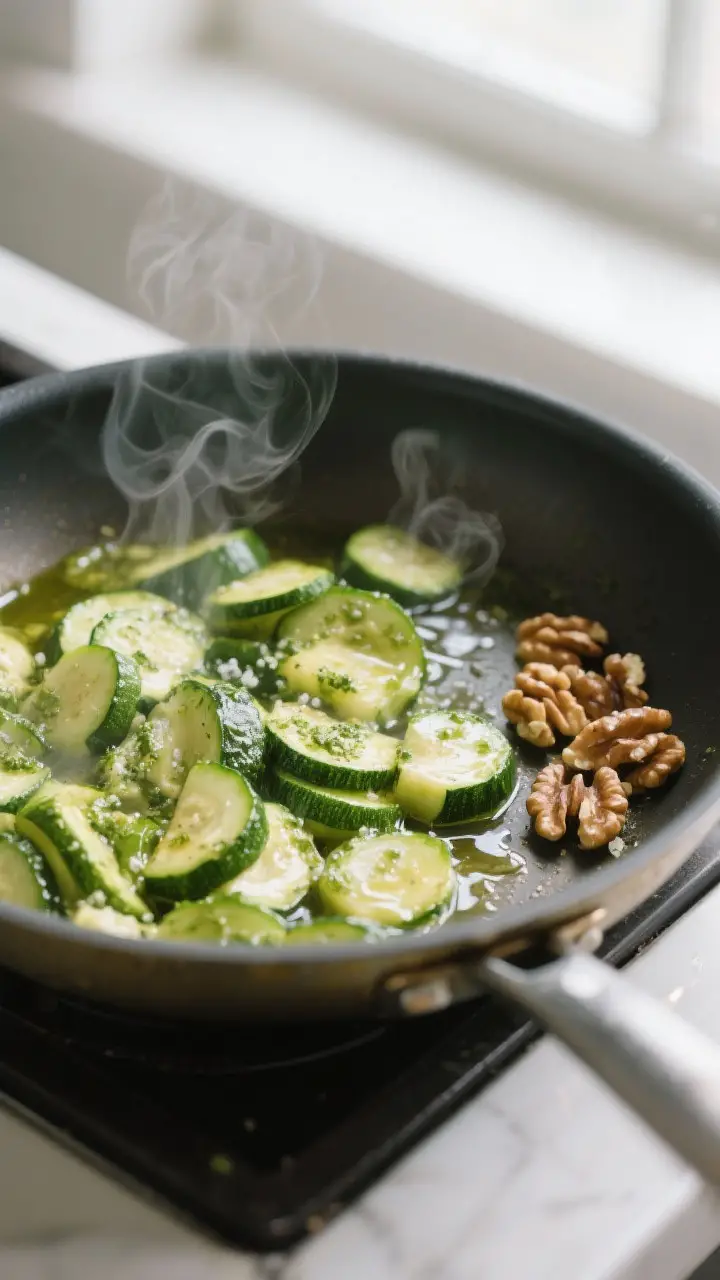
- Lightly cook the zucchini: Warm a tablespoon of olive oil in a skillet over medium heat. Add the chopped zucchini with a pinch of salt. Sauté for 4–6 minutes, just until softened and bright green.
You want the raw edge gone, but not mush. Set aside to cool slightly.
- Toast the nuts: In the same pan (no need to wash), toast the nuts over medium-low heat for 2–3 minutes, shaking the pan often. When fragrant and lightly golden, remove from heat.
This step deepens the flavor.
- Start the base: Add the cooled zucchini, toasted nuts, garlic, lemon zest, basil, and half the cheese to a food processor or blender. Pulse a few times to break everything down.
- Stream in the oil: With the machine running, drizzle in 1/4 cup olive oil. Stop and scrape the sides.
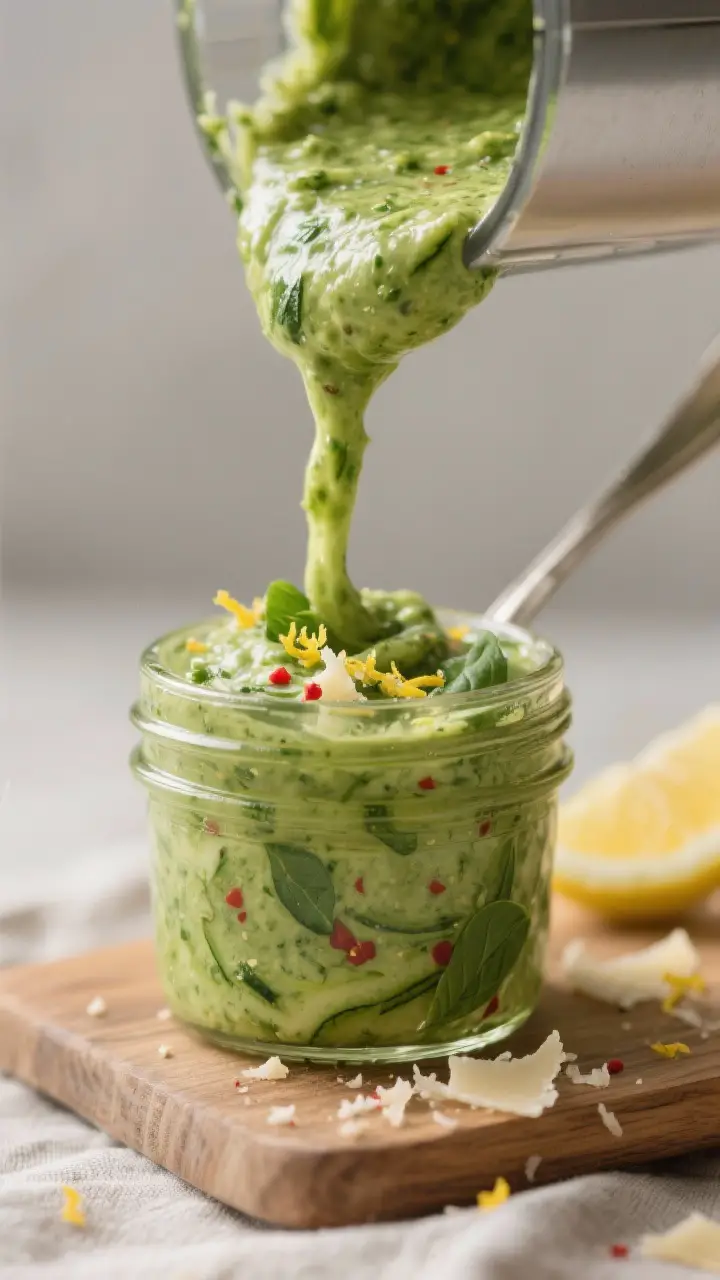
If it looks too thick, add another tablespoon or two of oil or a splash of water. You’re aiming for a spoonable, creamy texture.
- Balance the flavor: Add 1 tablespoon lemon juice, a pinch of red pepper flakes if using, and a few cracks of pepper. Blend again, then taste.
Adjust with more lemon juice for brightness, salt for depth, or cheese for richness.
- Optional creaminess: For a silkier pesto, pulse in the ricotta or Greek yogurt. Blend just until combined. Avoid over-blending to keep the color vibrant.
- Serve or store: Use right away with hot, freshly cooked pasta (reserve some pasta water to help it cling), or spoon into a jar for later.
Top with a thin layer of olive oil if storing.
Storage Instructions
- Refrigerator: Store in an airtight jar for up to 4 days. Press plastic wrap directly onto the surface or cover with a thin layer of oil to reduce browning.
- Freezer: Freeze in small containers or in an ice cube tray for up to 3 months. Pop out cubes and thaw in the fridge or stir into hot pasta to warm through.
- Stir before using: The pesto may separate a bit in storage.
Give it a quick stir and adjust with a squeeze of lemon or splash of water if it thickens.
Health Benefits
- Lower in calories: Compared to classic pesto, this version uses zucchini for bulk, so it’s lighter while still tasting rich.
- Vegetable-forward: Each serving includes a good amount of zucchini, contributing fiber, vitamin C, and potassium.
- Healthy fats: Olive oil and nuts add monounsaturated fats that support heart health and help with nutrient absorption.
- Protein and calcium: Parmesan or Pecorino brings protein and calcium. Add ricotta or Greek yogurt for an extra boost.
- Customizable: You can dial back the cheese, use less oil, or choose walnuts for added omega-3s—whatever fits your goals.
What Not to Do
- Don’t skip salting: Zucchini is mild. Without enough salt, the pesto tastes flat.
Season in stages and taste often.
- Don’t overcook the zucchini: If it gets soggy and dull, the pesto loses its fresh flavor and color. Soften it, don’t stew it.
- Don’t add all the lemon at once: Start small and adjust. Too much acidity can overpower the basil and cheese.
- Don’t blend forever: Over-blending warms the sauce and can turn it murky.
Pulse until smooth, then stop.
- Don’t forget texture: Keep it thick enough to cling to pasta. If it’s watery, add more cheese or a few nuts to thicken.
Alternatives
- Dairy-free: Swap the cheese for nutritional yeast (2–3 tablespoons) and add a pinch of miso for savory depth.
- Nut-free: Use toasted sunflower or pumpkin seeds. They bring similar body and toastiness.
- Herb variations: Mix basil with parsley, mint, or arugula.
Parsley adds freshness; mint brightens; arugula adds peppery bite.
- Creamy finish: Stir in a spoonful of mascarpone or cashew cream for a luxurious texture.
- Spice it up: Add a small roasted jalapeño or a pinch of Aleppo pepper for gentle heat.
- Roasted version: Roast zucchini chunks at 425°F (220°C) with a little oil and salt until just tender and browned. This adds a sweeter, deeper flavor.
FAQ
Can I use raw zucchini instead of cooking it?
Yes, but expect a slightly greener, grassy flavor and a thinner texture. If using raw zucchini, drain any excess liquid after blending, or add more cheese and nuts for body.
What pasta shapes work best with zucchini pesto?
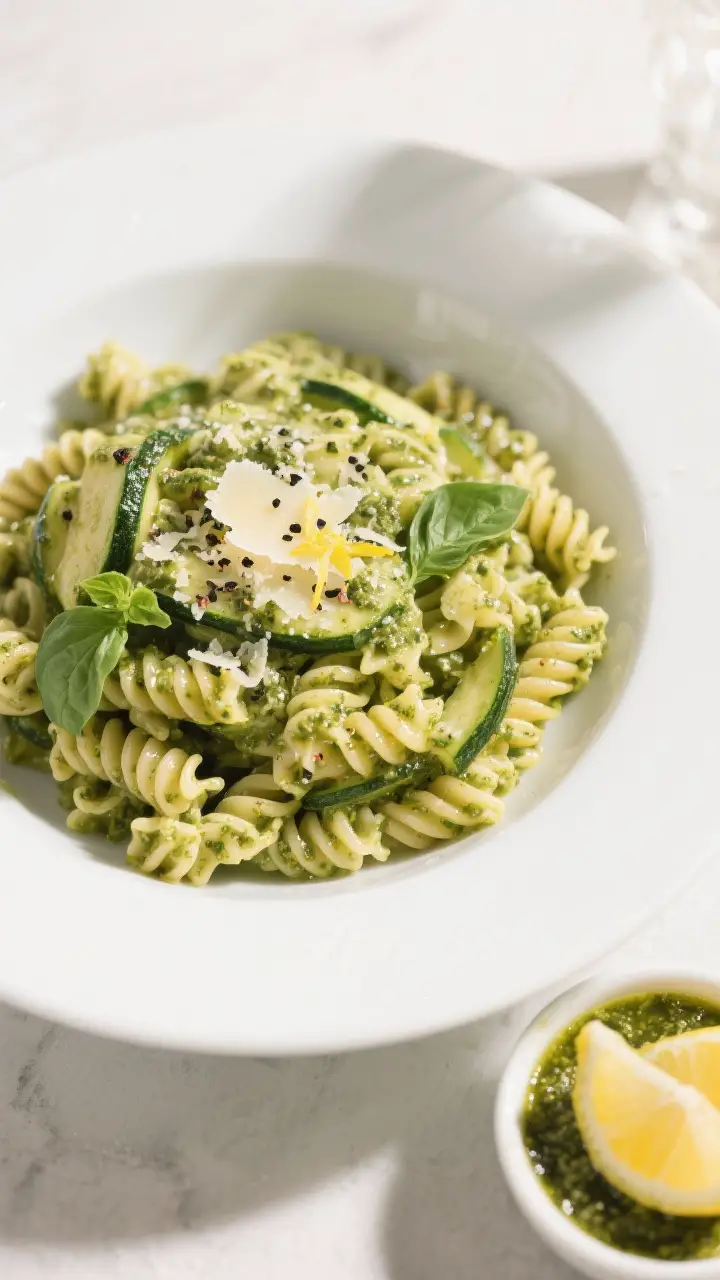
Short shapes with curves or ridges—like fusilli, gemelli, or orecchiette—hold the sauce well.
Long pasta like spaghetti or linguine also works if you add a bit of pasta water to help it coat.
How do I keep the pesto bright green?
Cool the zucchini before blending, avoid over-blending, and add a splash of lemon. Storing with a thin oil layer or pressed plastic wrap also helps prevent oxidation.
Can I make it without basil?
You can. Use parsley and a little mint, or try arugula.
The flavor shifts, but it stays fresh and vibrant. Add a bit more lemon to lift non-basil versions.
What proteins pair well with zucchini pesto?
Grilled chicken, shrimp, salmon, or white beans are great matches. For a vegetarian option, try crispy chickpeas or pan-seared halloumi.
Is it okay to warm the pesto?
Warm it gently by tossing with hot pasta and a splash of pasta water.
Avoid simmering, which can dull the color and flavor.
Can I make this ahead for a party?
Absolutely. Make it up to 2 days in advance, store it covered in the fridge, and stir before serving. Taste and refresh with lemon and a bit of oil if needed.
Final Thoughts
Zucchini pesto is a small kitchen upgrade that makes a big difference.
It’s bright, economical, and endlessly adaptable, ready to rescue leftover pasta or perk up a sandwich. Keep a jar in the fridge and you’ll always have a fast, flavorful option on hand. Once you try it, it just might become your go-to summer sauce—simple, fresh, and consistently delicious.
Printable Recipe Card
Want just the essential recipe details without scrolling through the article? Get our printable recipe card with just the ingredients and instructions.