
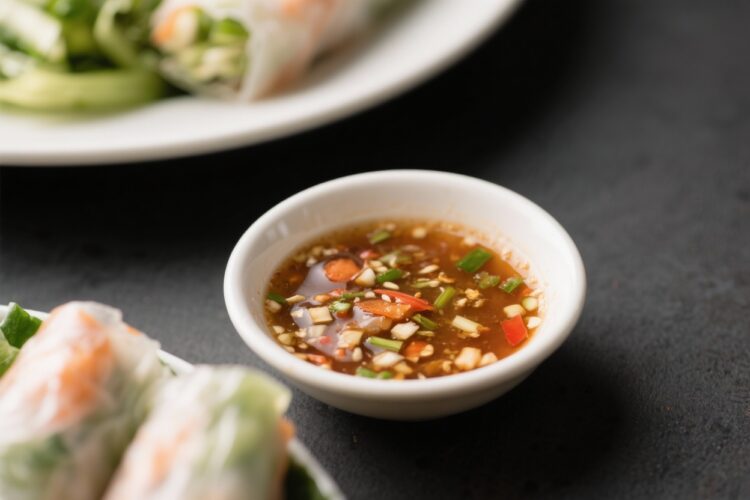
Nuoc cham is the kind of sauce that makes everything taste alive. It’s salty, sweet, tangy, and a little spicy—all in one spoonful. You’ll find it alongside fresh spring rolls, bun cha, grilled meats, and even simple noodle bowls.
The best part? You don’t need special tools or hard-to-find ingredients to make a great version at home. A few pantry basics, the right ratios, and a couple of fresh add-ins will get you there every time.
Why This Recipe Works
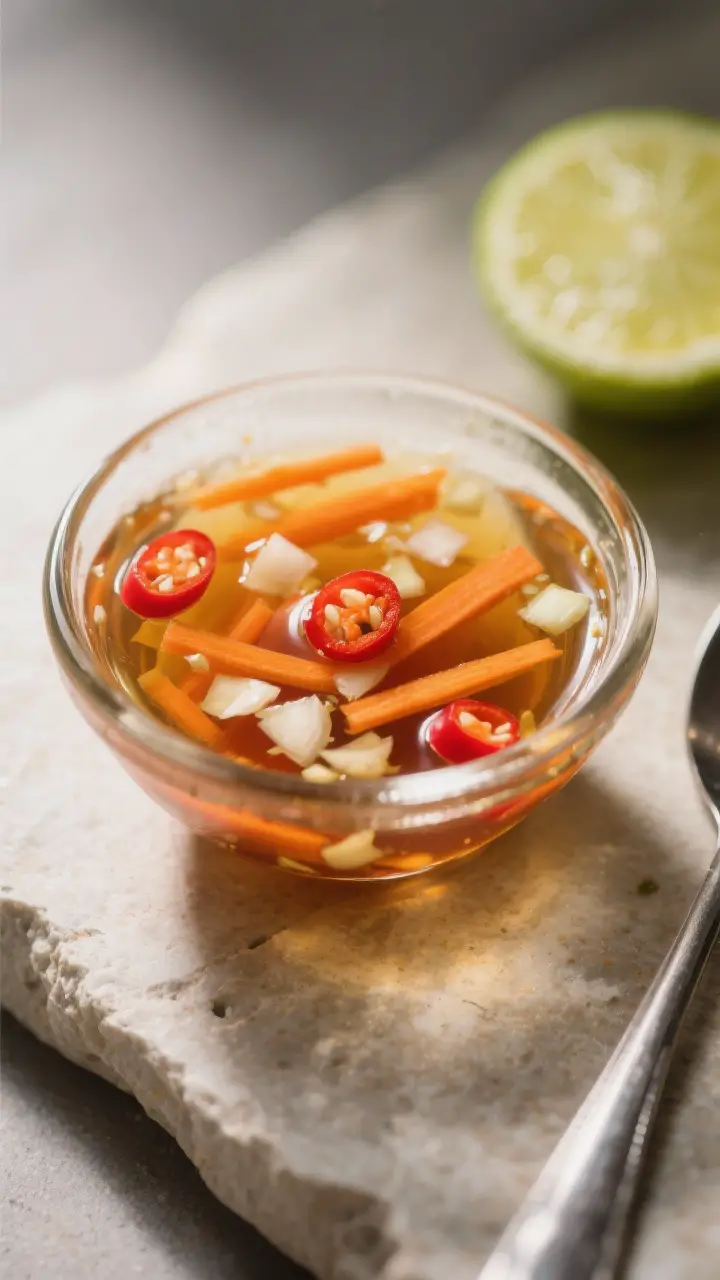
Balance is built in. This recipe uses a simple ratio that keeps fish sauce, sugar, and lime juice in harmony.
It’s easy to tweak for your taste without losing the core flavor.
Clear mixing order matters. Dissolving sugar in warm water first avoids gritty sauce and lets the aromatics shine. It also helps the flavors meld quickly.
Fresh aromatics add depth. Garlic and chili give the sauce a gentle punch, while lime adds brightness. A splash of rice vinegar rounds out the edges for a restaurant-style finish.
Versatile by design. This base works for spring rolls and bun cha, but also doubles as a dressing, marinade, or finishing sauce for grilled meats and vegetables.
Shopping List
- Fish sauce: A good-quality brand like Red Boat or Three Crabs for clean, savory flavor.
- Limes: Freshly squeezed juice is essential.
- Granulated sugar: Dissolves easily and keeps the sauce clear.
- Warm water: Helps dissolve sugar and softens the acidity.
- Rice vinegar: Optional, but adds a smooth, mild tang.
- Garlic: Fresh, finely minced.
- Thai bird’s eye chili or red chili: For heat and color.
- Carrot: Optional, cut into thin matchsticks for crunch and sweetness.
- Lime zest: Optional, for extra citrus aroma.
Step-by-Step Instructions
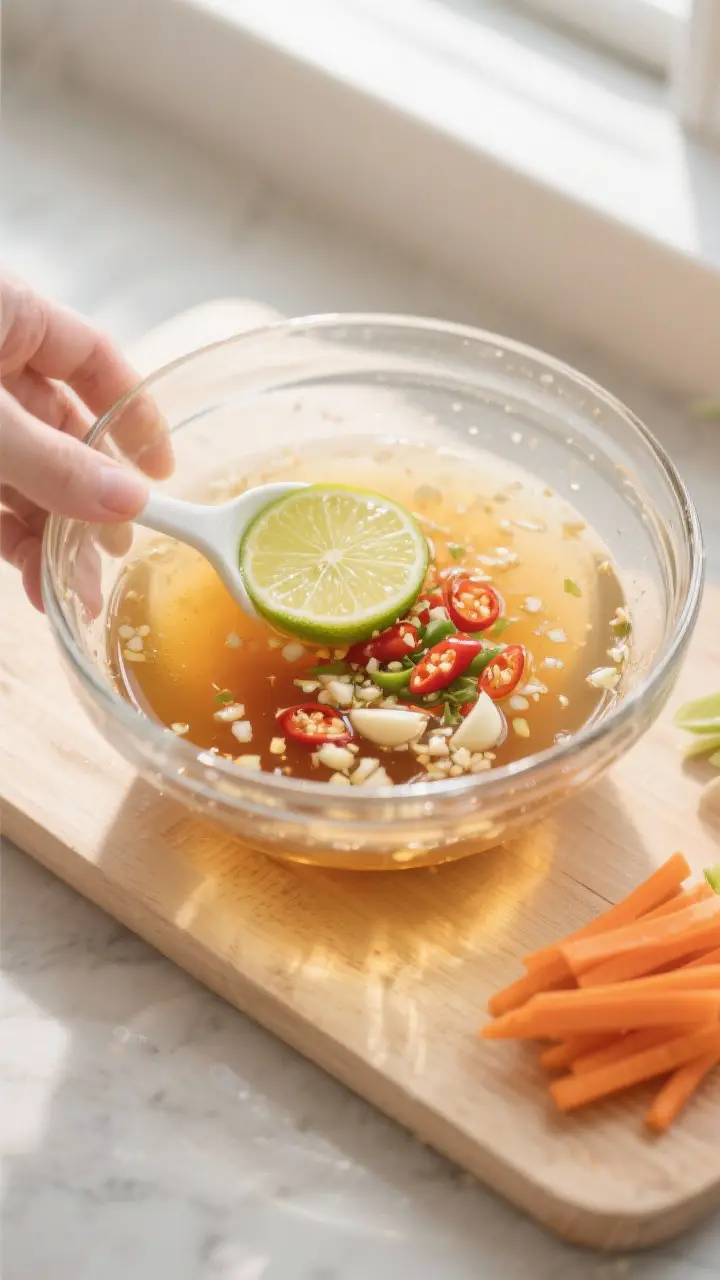
- Make the base. In a small bowl, combine 1/2 cup warm water with 3 tablespoons sugar.
Stir until the sugar is fully dissolved and the liquid is clear.
- Add the savory note. Stir in 1/4 cup fish sauce. Taste—this should be pleasantly salty but not harsh.
- Brighten with acid. Add 3 tablespoons fresh lime juice and 1 tablespoon rice vinegar. Stir and taste again.
You’re looking for a lively, mouthwatering balance of sweet, sour, and salty.
- Layer the aromatics. Finely mince 1–2 cloves garlic and 1 small chili (seeds in for heat, out for mild). Add them to the bowl. Let the sauce sit for 5 minutes to soften the bite of the garlic and bloom the chili.
- Optional texture and color. Add a small handful of very thin carrot matchsticks.
They’ll soak up flavor and add a classic look.
- Fine-tune to taste. If it’s too salty, add a splash of water and a pinch of sugar. Too tart? Add a little more sugar.
Too sweet? A touch more lime or vinegar. Adjust in small increments—nuoc cham shifts quickly.
- Rest briefly. Let the sauce sit 10–15 minutes before serving so the flavors meld. Stir once more and serve with spring rolls, bun cha, or grilled meats.
Keeping It Fresh
Refrigerate in a sealed jar for up to one week without carrots, or 3–4 days with carrots.
The garlic and chili will continue to infuse, deepening the flavor over time.
Stir before serving, as aromatics can settle. If the sauce tastes sharper after chilling, add a teaspoon of warm water to loosen and rebalance.
Make-ahead tip: Mix the liquid base (water, sugar, fish sauce, lime, vinegar) and store it. Add garlic, chili, and carrots right before serving for the freshest snap.
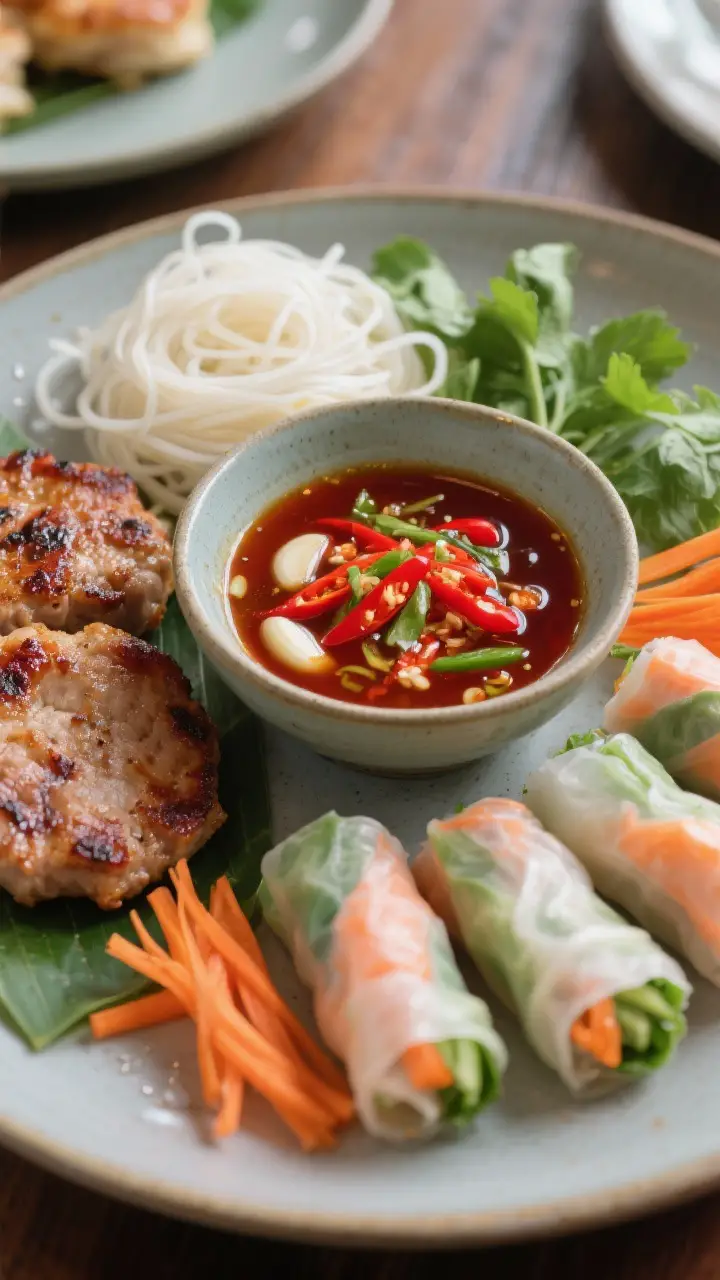
Benefits of This Recipe
- Foolproof ratio: Easy to memorize and adapt, even if your limes are extra tart or your fish sauce is stronger.
- Restaurant-quality flavor: Clean, bright, and layered, with familiar Vietnamese profile.
- Flexible use: Works as a dipping sauce, salad dressing, or light marinade for pork, shrimp, or tofu.
- Quick and affordable: No special equipment and minimal prep time.
- Customizable heat: Adjust chili to suit anyone at the table.
Common Mistakes to Avoid
- Using bottled lime juice. It dulls the flavor and adds bitterness.
Fresh makes a huge difference.
- Skipping the sugar dissolve step. If the sugar isn’t fully dissolved, the sauce can taste grainy and unbalanced.
- Overloading with garlic. Raw garlic is potent. Start small; you can always add more after a 5-minute rest.
- Forgetting to taste and adjust. Fish sauces vary in saltiness, and limes vary in acidity. Always taste before serving.
- Adding aromatics too early for long storage. Garlic and chili can overpower after a few days.
Add them closer to serving time if you’re storing the base.
Variations You Can Try
- Classic Bun Cha Style: Add more carrot matchsticks and a few thin slices of green papaya or daikon for crunch. Slightly sweeter and milder overall.
- Ginger Twist: Add 1 teaspoon finely grated ginger for a warm, zesty note that pairs well with grilled pork or shrimp.
- Citrus Blend: Replace half the lime juice with yuzu or calamansi (if available) for a floral, nuanced acidity.
- Mellow Heat: Use sliced Fresno or jalapeño instead of bird’s eye chilies for a gentler spice and a pop of red or green color.
- Vegan Version: Swap fish sauce for a vegan fish sauce made from seaweed and mushrooms, or use light soy sauce plus a splash of rice vinegar and a pinch of salt to taste.
- Garlic-Lime Zest: Add a pinch of lime zest to amplify citrus aroma without extra acidity.
FAQ
What if my nuoc cham is too salty?
Add warm water a tablespoon at a time, plus a pinch of sugar to keep the balance. Taste after each addition so you don’t wash out the flavor.
Can I use lemon instead of lime?
Yes, but expect a different flavor.
Lemon is less fragrant and a bit sharper. If using lemon, consider adding a touch more sugar or a splash of rice vinegar for roundness.
How spicy should it be?
It’s up to you. Traditional versions often have a modest kick.
Start with half a chili, taste, and add more if you want a bolder heat.
Is there a substitute for fish sauce?
For a vegan option, use a quality vegan fish sauce or a mix of light soy sauce, a little rice vinegar, and a pinch of salt. It won’t be identical, but it will still be tasty and balanced.
Can I make it ahead?
Absolutely. Make the base up to a week ahead and refrigerate.
Add garlic, chili, and carrot just before serving for the freshest flavor and texture.
Why does my sauce look cloudy?
Undissolved sugar or pulp from limes can cause cloudiness. Dissolve sugar fully in warm water and strain lime juice if you want a clearer look. The flavor won’t suffer if it’s slightly cloudy.
What dishes go best with nuoc cham?
Fresh spring rolls, bun cha, grilled pork or chicken, vermicelli bowls, crispy egg rolls, and even simple cucumber salads.
It also makes a great drizzle for fried fish.
Can I reduce the sugar?
Yes, but do it gradually. Sugar balances salt and acid. If you cut too much, the sauce can taste harsh.
You can soften it with a little extra water or a splash more vinegar instead.
How do I get that “restaurant” taste?
Use a good fish sauce, fresh lime juice, and let the sauce rest 10–15 minutes before serving. A small splash of rice vinegar and very finely minced garlic make a noticeable difference.
In Conclusion
Nuoc cham is all about balance and brightness. With a simple ratio, fresh citrus, and a few aromatics, you can make a sauce that wakes up any dish.
Keep the method straightforward, taste as you go, and adjust to your preferences. Once you’ve got the hang of it, you’ll want a jar in the fridge at all times—ready for spring rolls, bun cha, and whatever else needs a fresh, lively boost.
Printable Recipe Card
Want just the essential recipe details without scrolling through the article? Get our printable recipe card with just the ingredients and instructions.