
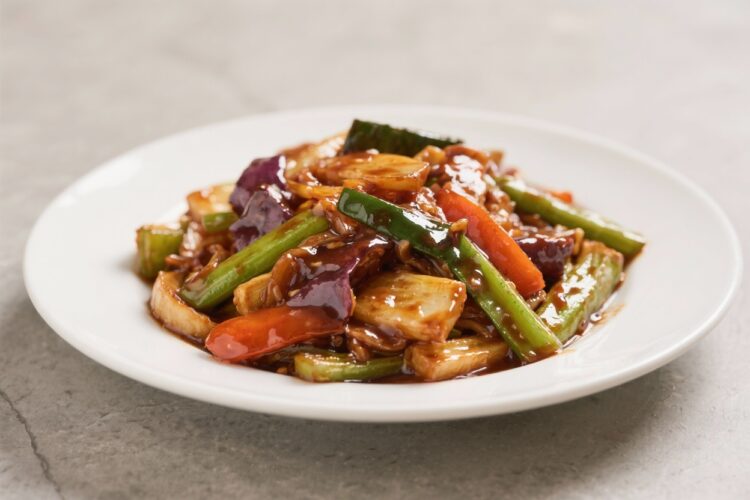
This Vegetable Teriyaki Stir Fry is the kind of weeknight dinner that feels like a small win. It’s colorful, quick to make, and loaded with crisp-tender vegetables in a glossy, savory-sweet sauce. You get restaurant-style flavor without complicated steps or specialty tools.
Plus, it’s easy to customize with whatever veggies you have on hand. Whether you’re new to stir-frying or a seasoned home cook, this one is straightforward and satisfying.
What Makes This Recipe So Good
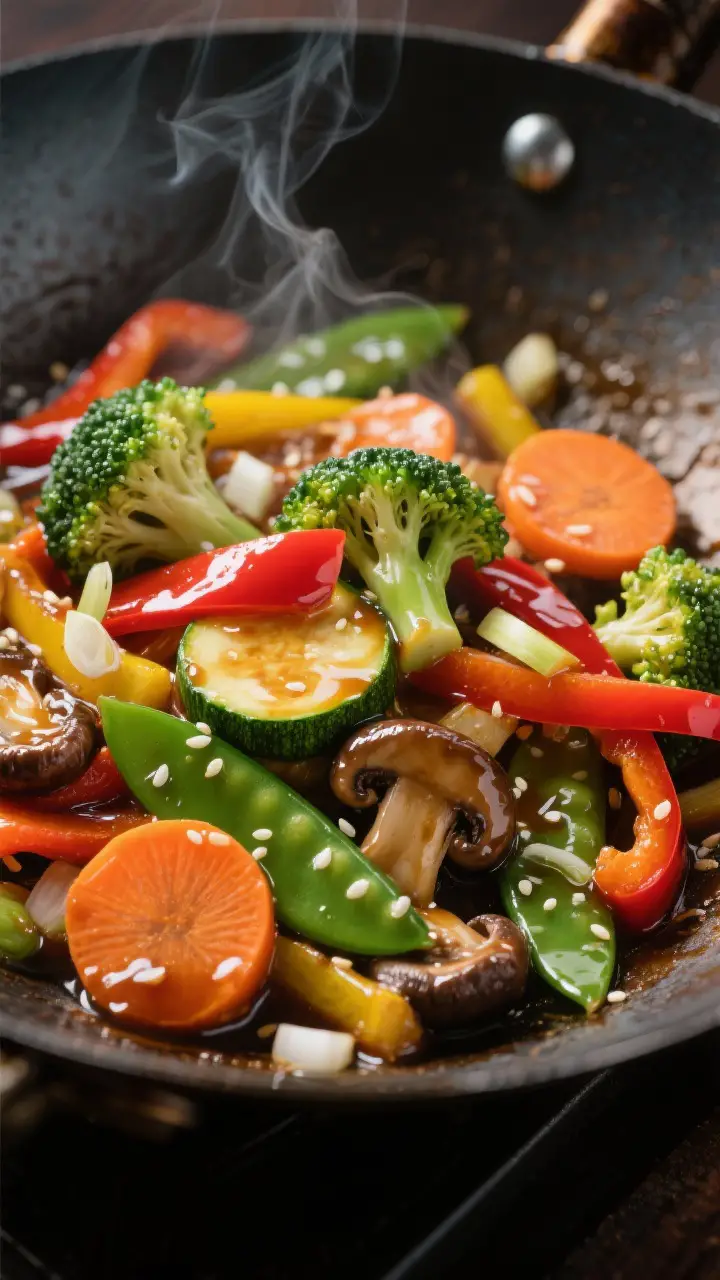
- Quick and easy: From chopping to plating, you can have dinner ready in 25–30 minutes.
- Balanced flavor: The sauce is sweet, savory, and a little tangy, with a hint of ginger and garlic.
- Flexible: Use any vegetables you like or add tofu, tempeh, or your favorite protein.
- Weeknight-friendly: No deep frying, no long marinades, and minimal cleanup.
- Nutrient-dense: A rainbow of vegetables brings fiber, vitamins, and antioxidants.
Ingredients
- Vegetables:
- 1 red bell pepper, thinly sliced
- 1 yellow bell pepper, thinly sliced
- 1 small broccoli crown, cut into small florets
- 1 medium carrot, thinly sliced on the bias
- 1 small zucchini, halved and sliced
- 1 cup sugar snap peas or snow peas, trimmed
- 4–5 scallions, sliced (white and green parts separated)
- 1 cup mushrooms, sliced (optional)
- Aromatics & Oil:
- 2 tablespoons neutral oil (avocado, canola, or peanut)
- 3 cloves garlic, minced
- 1 tablespoon fresh ginger, grated
- Teriyaki Sauce:
- 1/3 cup low-sodium soy sauce or tamari
- 3 tablespoons water
- 2 tablespoons rice vinegar
- 2–3 tablespoons brown sugar or maple syrup (to taste)
- 1 tablespoon toasted sesame oil
- 1 tablespoon cornstarch
- 1/4 teaspoon red pepper flakes (optional)
- To Serve:
- Cooked rice or noodles
- Sesame seeds
- Lime wedges (optional)
How to Make It
- Whisk the sauce: In a small bowl, whisk soy sauce, water, rice vinegar, brown sugar, sesame oil, cornstarch, and red pepper flakes until smooth. Set aside.
The cornstarch will thicken the sauce later.
- Prep the vegetables: Slice everything into bite-sized pieces. Keep the hard veggies (carrots, broccoli) separate from softer ones (zucchini, peppers, mushrooms). This helps you cook them in the right order.
- Heat the pan: Place a large skillet or wok over medium-high heat.
Add 1 tablespoon of oil and let it get hot until it shimmers.
- Start with the sturdy veggies: Add carrots and broccoli. Stir-fry for 2–3 minutes, just until they begin to soften and get a little color.
- Add the rest: Push the veggies to the edges. Add the remaining 1 tablespoon of oil to the center, then add peppers, zucchini, mushrooms, and the white parts of the scallions.
Stir-fry for another 2–3 minutes until crisp-tender.
- Add aromatics: Make a space in the center, add garlic and ginger, and cook for 30 seconds until fragrant. Don’t let them burn.
- Coat with sauce: Give the sauce a quick stir (cornstarch settles), then pour it into the pan. Toss everything to coat.
Cook for 1–2 minutes until the sauce is glossy and thick enough to cling to the vegetables.
- Finish and serve: Turn off the heat. Stir in the green parts of the scallions. Taste and adjust with a splash of soy sauce for salt, or a pinch of sugar for sweetness.
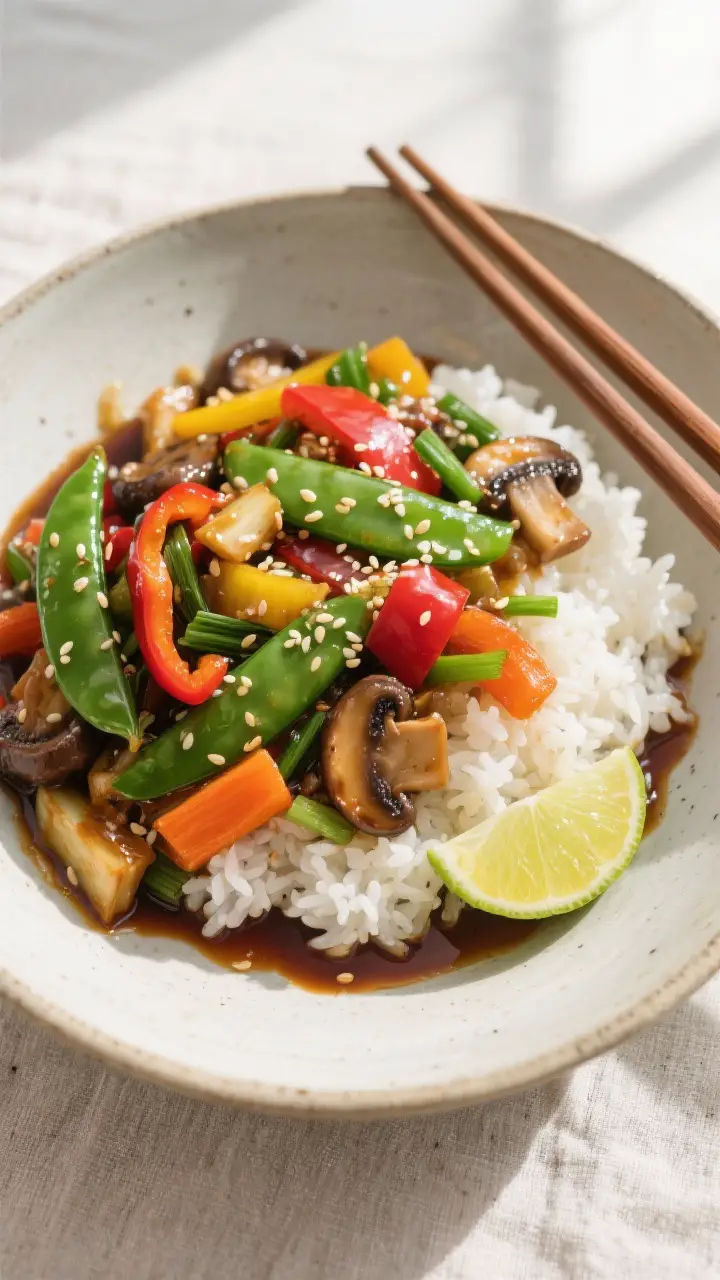
Serve over rice or noodles. Garnish with sesame seeds and a squeeze of lime if you like.
How to Store
- Refrigerator: Store leftovers in an airtight container for up to 4 days. Reheat gently over medium heat with a splash of water to loosen the sauce.
- Freezer: The vegetables may soften after thawing, but it’s still tasty.
Freeze up to 2 months. Thaw in the fridge overnight and reheat in a skillet.
- Meal prep tip: Keep cooked rice separate to avoid sogginess. Reheat rice covered with a damp paper towel in the microwave.
Benefits of This Recipe
- High in veggies: You’ll get a wide range of vitamins, minerals, and fiber in one bowl.
- Customizable: Adjust the sweetness, saltiness, and spice to fit your taste or dietary needs.
- Budget-friendly: Uses everyday produce and pantry staples.
Great for clearing out the fridge.
- Quick cooking: Stir-frying keeps vegetables crisp and bright, and reduces cooking time.
- Scalable: Double the sauce and veggies for family dinners or weekly meal prep.
Pitfalls to Watch Out For
- Overcrowding the pan: Too many veggies at once can steam instead of sear. Cook in batches if needed.
- Overcooking: Aim for crisp-tender. Mushy vegetables lose texture and color quickly.
- Skipping the cornstarch whisk: Cornstarch settles fast.
Stir the sauce right before you pour it in, or it won’t thicken evenly.
- Low heat: Stir-frying needs medium-high heat for good flavor and texture.
- Not tasting as you go: A small splash of soy sauce, vinegar, or a pinch of sugar at the end can make the flavors pop.
Variations You Can Try
- Protein boost: Add crispy tofu, tempeh, or seared shrimp or chicken. Cook the protein first, set aside, then add back with the sauce.
- Gluten-free: Use tamari or certified gluten-free soy sauce. Check labels on vinegar and cornstarch if needed.
- Low-sugar: Reduce the sweetener to 1 tablespoon and add a little extra ginger for brightness.
- Extra heat: Stir in chili-garlic sauce, gochujang, or sliced fresh chilies with the aromatics.
- Citrus twist: Add 1 teaspoon of orange zest to the sauce for a bright, slightly fruity note.
- Sesame crunch: Top with toasted sesame seeds and a drizzle of chili crisp for texture and kick.
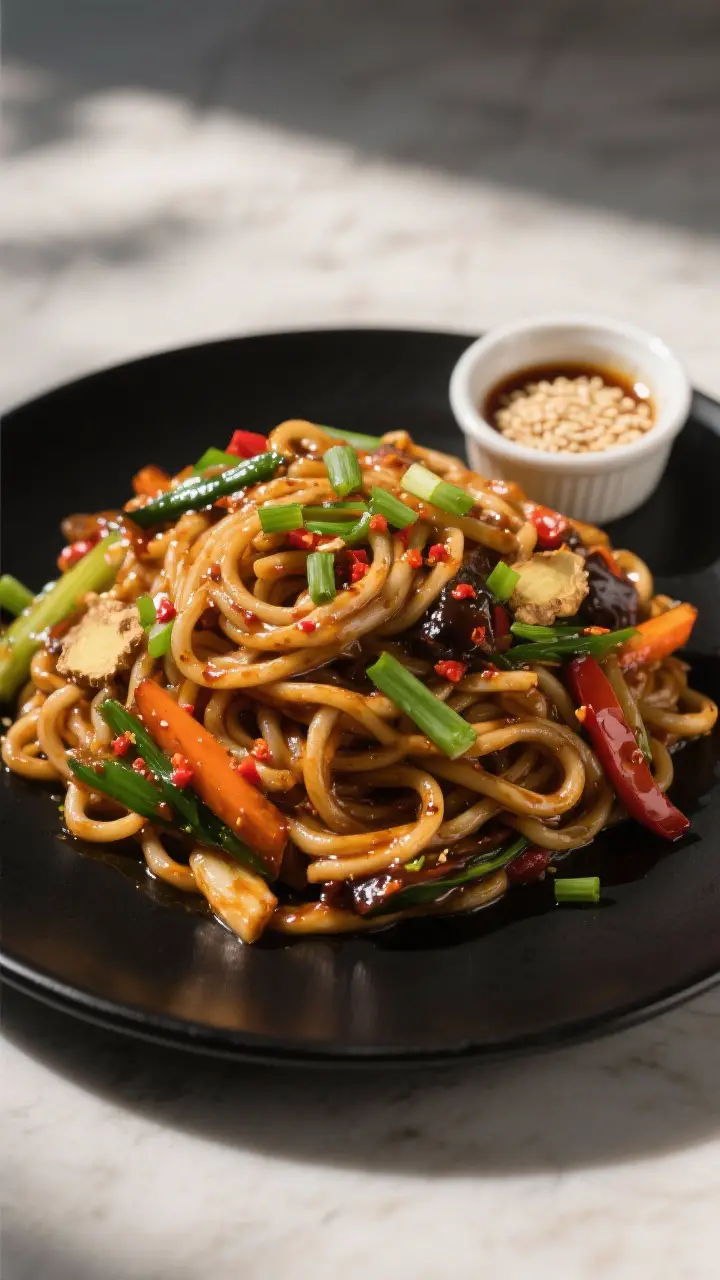
- Noodle version: Toss with cooked udon, rice noodles, or soba in the pan after the sauce thickens.
FAQ
Can I use frozen vegetables?
Yes.
Use a hot pan and cook from frozen without thawing. Expect a bit more moisture; cook off the liquid before adding the sauce so it doesn’t turn watery.
What if I don’t have rice vinegar?
Use apple cider vinegar or white wine vinegar in the same amount. Add a small pinch of sugar if the vinegar tastes sharper.
How do I prevent soggy vegetables?
Cut vegetables evenly, cook over medium-high heat, and avoid overcrowding.
Add the sauce only when the vegetables are crisp-tender and there’s no water pooling in the pan.
Is there a soy-free option?
Use coconut aminos in place of soy sauce. It’s naturally sweeter, so reduce or skip the added sugar and adjust to taste.
Can I make the sauce ahead?
Absolutely. Mix the sauce up to 4 days in advance and store it in the fridge.
Stir well before using because the cornstarch will settle.
What oil works best?
Choose a high-heat, neutral oil like avocado, canola, peanut, or grapeseed. Save extra-virgin olive oil for another recipe; it can smoke at higher temperatures.
Final Thoughts
Vegetable Teriyaki Stir Fry delivers big flavor with simple steps and everyday ingredients. It’s fast, flexible, and easy to make your own, whether you like it sweeter, spicier, or packed with extra greens.
Keep this one in your weeknight rotation and swap in whatever veggies you’ve got. A warm bowl over rice or noodles is always the kind of dinner that hits the spot.