
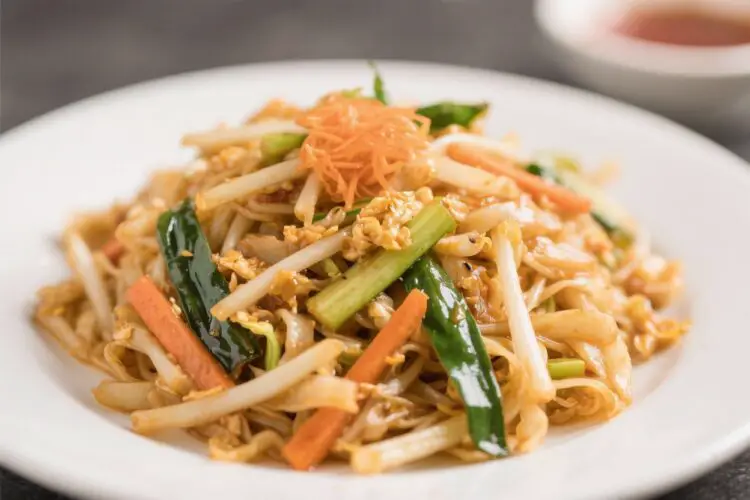
Pad Thai is one of those dishes that feels special but is surprisingly doable on a weeknight. With springy rice noodles, a tangy-sweet sauce, and plenty of crisp vegetables, it hits every craving in one bowl. This version keeps things vegetarian, but it’s still deeply satisfying and full of texture.
You’ll get the signature flavors of tamarind, lime, and a little heat, balanced with crunchy peanuts and fresh herbs. If you’ve ever wanted a fast, colorful noodle dish that tastes like your favorite takeout, this is it.
Why This Recipe Works
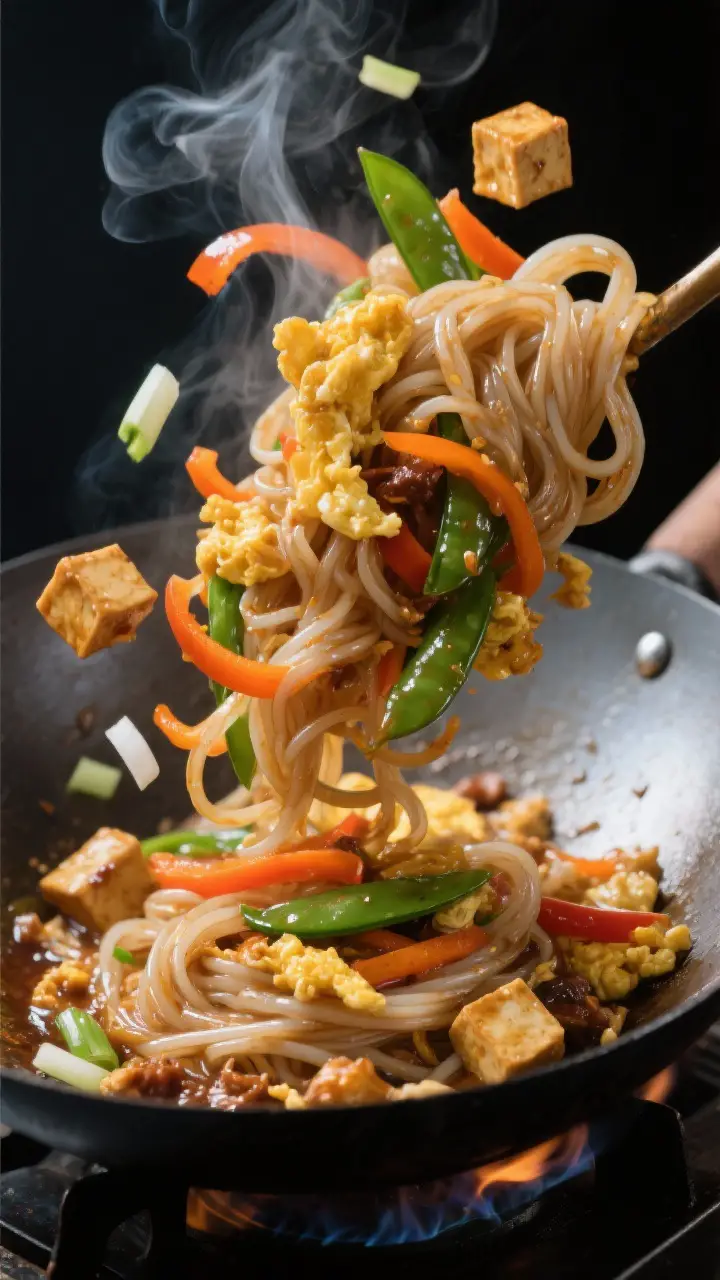
This Vegetable Pad Thai keeps the ingredient list manageable while staying true to the dish’s flavor profile. The sauce combines tamarind for tang, soy sauce for depth, and brown sugar for sweetness, with a touch of lime juice to brighten everything at the end.
We use high-heat stir-frying to keep the vegetables crisp and the noodles bouncy instead of soggy. A quick scrambled egg adds body and richness, while fresh herbs and peanuts bring crunch and aroma right before serving.
Shopping List
- Rice noodles (8–10 oz, flat Pad Thai-style)
- Eggs (2 large; omit for vegan)
- Firm tofu (8 oz, pressed and cubed) or extra veggies if skipping tofu
- Neutral oil (such as peanut, canola, or avocado oil)
- Garlic (3 cloves, minced)
- Green onions (4, sliced; white and green parts separated)
- Bean sprouts (2 cups)
- Carrots (1 large, julienned or grated)
- Bell pepper (1 medium, thinly sliced)
- Snow peas or snap peas (1 cup, halved)
- Fresh cilantro (small handful, chopped)
- Fresh lime (1–2, cut into wedges)
- Roasted peanuts (1/3 cup, roughly chopped)
Sauce Ingredients:
- Tamarind paste or concentrate (2–3 tablespoons; adjust to taste)
- Low-sodium soy sauce (3 tablespoons) or tamari
- Brown sugar (2 tablespoons) or palm sugar
- Rice vinegar (1 tablespoon)
- Sriracha or chili paste (1–2 teaspoons, to taste)
- Water (2–3 tablespoons, to loosen the sauce as needed)
Optional add-ins: Thai basil, red chili flakes, sesame oil, radish, or extra greens like baby spinach.
Instructions
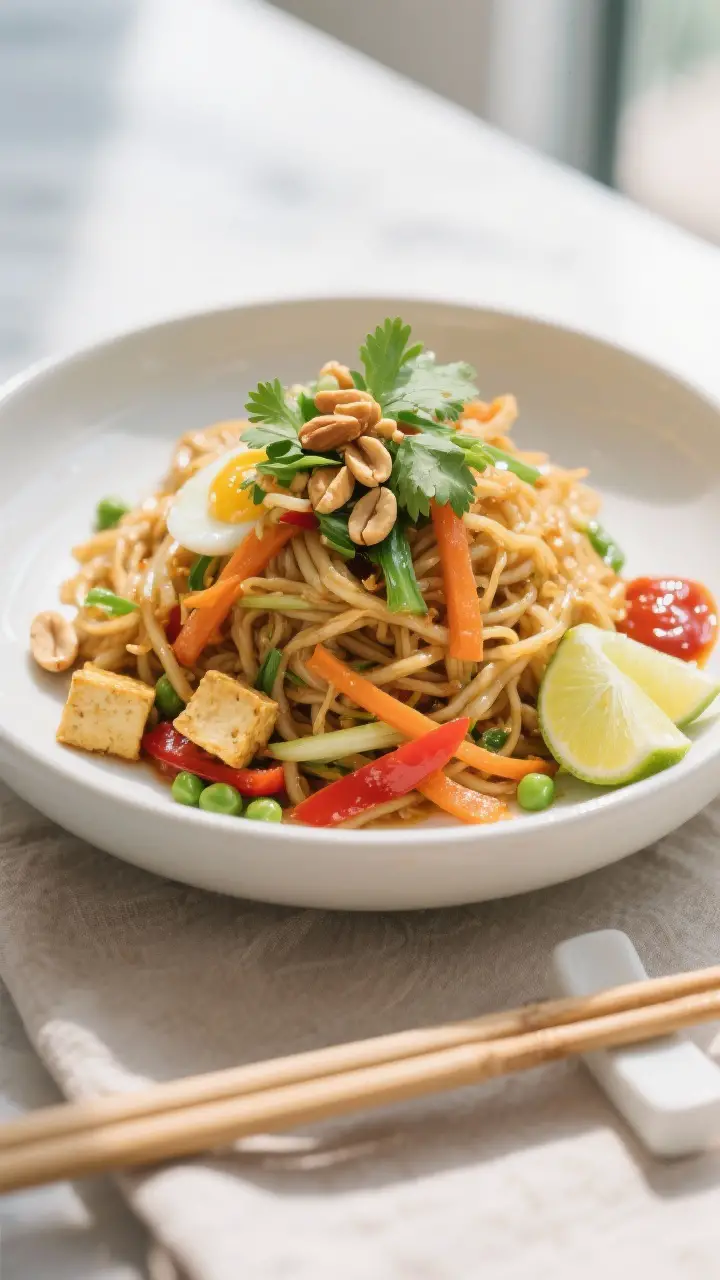
- Soak the noodles: Place rice noodles in a large bowl and cover with very hot tap water. Let them soften for 20–30 minutes until pliable but slightly underdone.
Drain and set aside. If they stick, toss with a teaspoon of oil.
- Make the sauce: In a small bowl, whisk tamarind paste, soy sauce, brown sugar, rice vinegar, and sriracha. Add 2 tablespoons water to loosen.
The sauce should taste tangy, sweet, and savory. Adjust with more tamarind or sugar to balance.
- Prep the vegetables: Mince garlic, slice green onions (keep whites and greens separate), julienne the carrots, slice the bell pepper, and halve the peas. Rinse and drain bean sprouts.
Press and cube tofu if using.
- Cook the tofu (optional but recommended): Heat 1 tablespoon oil in a large nonstick pan or wok over medium-high heat. Add tofu and cook until golden on all sides, 5–7 minutes. Season with a splash of soy sauce, transfer to a plate, and set aside.
- Scramble the eggs: In the same pan, add a little oil if needed.
Pour in beaten eggs and scramble just until set. Slide them to one side of the pan or remove to the tofu plate.
- Stir-fry aromatics: Add 1 tablespoon oil. Add garlic and the white parts of the green onions.
Stir-fry for 30 seconds until fragrant, being careful not to burn the garlic.
- Add vegetables: Toss in carrots, bell pepper, and peas. Stir-fry 2–3 minutes until crisp-tender. You want a bit of crunch.
- Add noodles and sauce: Add the softened noodles and the sauce.
Toss continuously with tongs to coat everything evenly. If the noodles look dry or clump, sprinkle in a tablespoon of water at a time.
- Finish with sprouts and tofu: Add bean sprouts, cooked tofu, and scrambled eggs. Stir-fry for 1–2 minutes more.
Turn off heat and squeeze in juice from half a lime. Taste and adjust—add more soy for salt, sugar for sweetness, or tamarind/lime for tang.
- Garnish and serve: Top with the green parts of the green onions, chopped peanuts, and cilantro. Serve with lime wedges and extra sriracha on the side.
Storage Instructions
Pad Thai is best fresh, but leftovers can be stored in an airtight container in the fridge for up to 3 days.
Reheat in a nonstick skillet over medium heat with a splash of water to loosen the noodles. You can also microwave in short bursts, stirring in between. Avoid freezing, as rice noodles tend to break and turn mushy once thawed.
Why This is Good for You
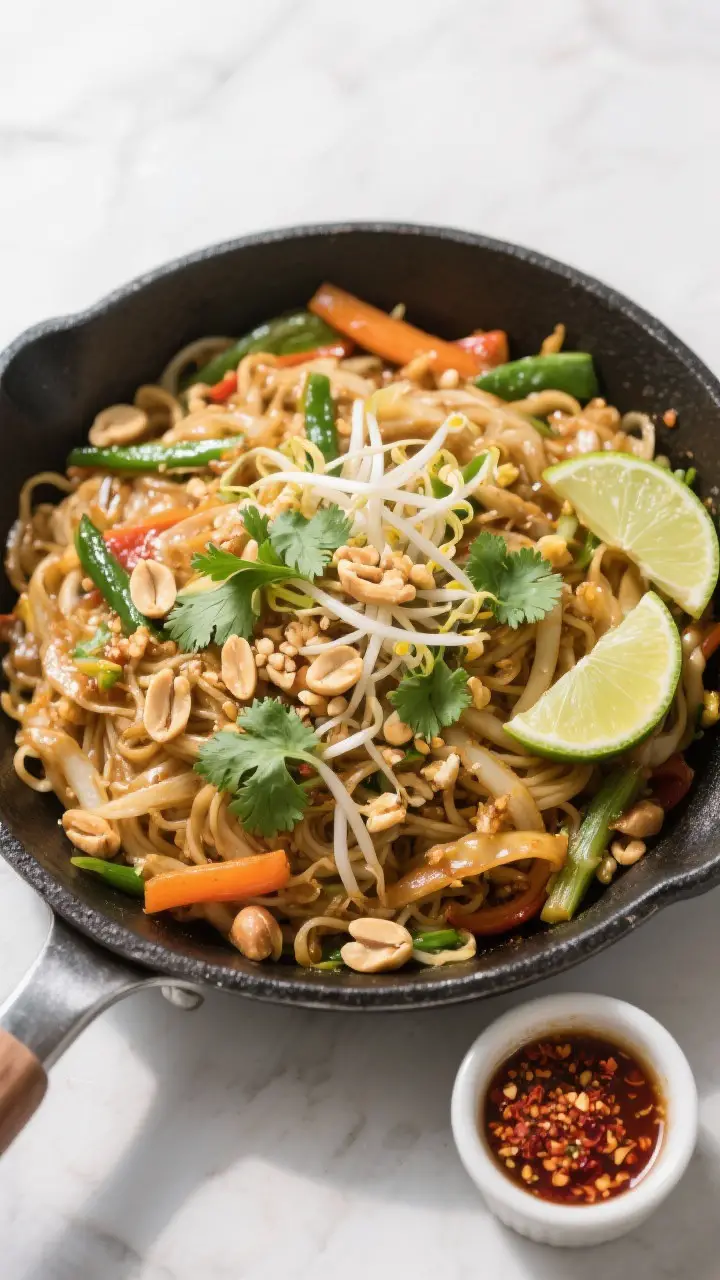
- Vegetable-heavy: Bell peppers, carrots, and peas bring fiber, vitamin C, and antioxidants.
- Protein options: Tofu and eggs add protein and keep you full.
You can boost this further with edamame or extra tofu.
- Balanced plate: The mix of carbs, protein, and healthy fats (from peanuts) creates steady energy without a heavy feel.
- Lower sodium control: Using low-sodium soy sauce and your own sauce mix helps moderate salt compared to takeout.
Common Mistakes to Avoid
- Over-soaking noodles: If they’re fully soft before hitting the pan, they’ll turn mushy. Aim for pliable but slightly firm; they’ll finish cooking in the sauce.
- Low heat: Stir-fry over medium-high heat so vegetables stay crisp and noodles don’t steam.
- Skipping prep: Have everything chopped and sauces mixed before cooking. Pad Thai cooks fast, and pausing can lead to overcooked noodles.
- Burning garlic: Add garlic briefly and keep it moving.
Burnt garlic makes the whole dish bitter.
- Heavy sauce: The sauce should coat, not drown, the noodles. Add water a splash at a time to loosen rather than more soy sauce.
Alternatives
- Vegan: Skip the eggs and use extra tofu or edamame. Swap honey (if using) for sugar or agave.
- Gluten-free: Use tamari or coconut aminos instead of soy sauce.
Most rice noodles are already gluten-free—check the label.
- No tamarind? Mix 2 tablespoons lime juice with 1 tablespoon rice vinegar and a teaspoon of brown sugar. It won’t be identical, but it’s close.
- Extra vegetables: Try broccoli florets, baby bok choy, mushrooms, or zucchini. Keep the pieces thin so they cook quickly.
- Spice level: Add Thai bird’s eye chilies for real heat, or keep it mild and serve chili oil on the side.
FAQ
What kind of noodles should I use?
Use flat rice noodles labeled for Pad Thai, usually about 1/4-inch wide.
Wider noodles work too but will need a bit more sauce and tossing to coat evenly.
Can I make this without tofu or eggs?
Yes. Simply add more vegetables or use edamame for protein. The dish will still be flavorful thanks to the sauce and toppings.
How do I keep the noodles from sticking?
Soak the noodles just until pliable, drain well, and toss quickly in the pan with sauce.
If they clump, add a tablespoon of water or a tiny drizzle of oil and keep tossing over heat.
Is tamarind necessary?
Tamarind gives Pad Thai its signature tang. If you can’t find it, use a mix of lime juice and rice vinegar with a touch of sugar. It’s a solid substitute, though the flavor will be slightly different.
How spicy is this recipe?
Mild to medium, depending on how much sriracha you add.
Start small and adjust at the end. You can always serve extra chili sauce at the table.
Can I prep this ahead?
Yes. Chop vegetables, press and cube tofu, and mix the sauce up to two days ahead.
Soak the noodles just before cooking for the best texture.
What pan should I use?
A carbon steel wok is ideal, but a large nonstick or stainless-steel skillet works well. The key is high heat and room to toss the noodles.
How do I make it nut-free?
Skip the peanuts and add a sprinkle of toasted sesame seeds or crispy shallots for crunch. Check your soy sauce brand to ensure it’s produced in a nut-free facility if needed.
In Conclusion
Vegetable Pad Thai is proof that a fast, homemade dinner can still taste complex and restaurant-worthy.
With a balanced sauce, crisp vegetables, and a handful of fresh toppings, it’s bright, satisfying, and easy to adapt to your kitchen. Keep the heat high, don’t over-soak the noodles, and taste as you go. You’ll have a colorful bowl of noodles that checks every box—tangy, sweet, savory, and just the right amount of crunch.
Printable Recipe Card
Want just the essential recipe details without scrolling through the article? Get our printable recipe card with just the ingredients and instructions.