

Hyderabadi biryani has a way of making the whole house smell like a celebration. This vegetable version brings the same charm: long, fluffy grains of basmati rice, tender vegetables, and a warm, complex spice profile. It’s rich without being heavy, and special without being fussy.
If you’ve ever thought biryani was complicated, this method keeps it straightforward while staying true to its roots. With a bit of planning and some patience, you’ll get a biryani that tastes restaurant-quality—and feels homemade.
Why This Recipe Works
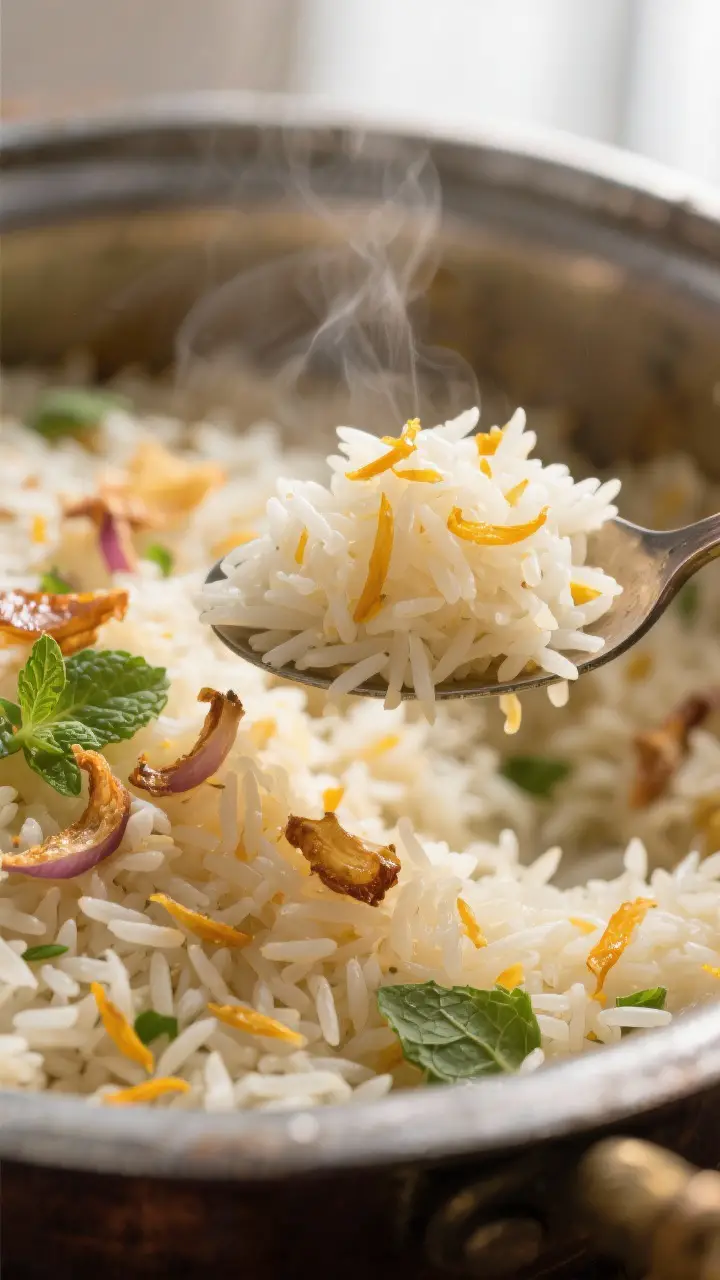
This Hyderabadi-style biryani uses the classic dum method—layering parboiled rice over marinated vegetables and sealing the pot to steam. That’s how you get distinct grains and deep flavor without overcooking anything.
The marinade acts like a flavor bath, so the vegetables absorb spices while staying juicy. Ghee and fried onions add a sweet, savory backbone, while saffron milk adds aroma and that signature “golden” finish.
We keep the spice mix balanced and familiar. Whole spices perfume the rice, ground spices season the vegetables, and fresh herbs lift everything.
The result is a biryani that’s fragrant, colorful, and easy to repeat any day of the week.
What You’ll Need
- Basmati rice: 2 cups, aged if possible, rinsed and soaked for 30 minutes
- Mixed vegetables: 4 cups (carrot, potato, cauliflower, green beans, peas), cut into bite-size pieces
- Yogurt: 1 cup, full-fat and whisked
- Onions: 3 large, thinly sliced (for birista/fried onions)
- Tomato: 1 medium, chopped
- Ginger-garlic paste: 2 tablespoons
- Green chilies: 2–3, slit
- Fresh herbs: 1 cup mint leaves, 1 cup cilantro, roughly chopped
- Lemon juice: 1–2 tablespoons
- Whole spices: 2 bay leaves, 6–8 green cardamoms, 1–2 black cardamoms, 6–8 cloves, 1-inch cinnamon stick, 1 star anise, 1 teaspoon cumin seeds
- Ground spices: 1 teaspoon turmeric, 2 teaspoons Kashmiri red chili powder, 2 teaspoons coriander powder, 1 teaspoon garam masala
- Ghee: 3–4 tablespoons
- Neutral oil: 3–4 tablespoons (for frying onions)
- Saffron: a big pinch soaked in 1/4 cup warm milk (or 1/2 teaspoon rose water + 1/2 teaspoon kewra water as optional aromatics)
- Salt: to taste
- Water: for parboiling rice
Instructions
- Rinse and soak the rice: Wash basmati until the water runs mostly clear. Soak for 30 minutes. This helps the grains cook long and separate.
- Make the fried onions (birista): Heat oil in a wide pan.
Fry sliced onions on medium heat, stirring often, until deep golden and crisp at the edges. Drain on paper towels. Reserve the onion-flavored oil.
- Marinate the vegetables: In a large bowl, combine yogurt, ginger-garlic paste, chilies, half the chopped herbs, chopped tomato, ground spices, 2 tablespoons fried onions, 1 tablespoon ghee, lemon juice, and salt.
Add vegetables and mix well. Rest 20–30 minutes.
- Parboil the rice: Bring a large pot of salted water to a rolling boil with the whole spices and cumin seeds. Add soaked, drained rice.
Cook until about 70% done—the grain should still have a slight bite. Drain immediately. Remove the whole spices if you like.
- Start the base: In a heavy, wide pot (preferably with a tight-fitting lid), heat 1 tablespoon ghee plus 1 tablespoon onion oil.
Add a few whole spices if you removed them from the rice. Spread the marinated vegetables in an even layer. Sauté 2–3 minutes to wake up the spices.
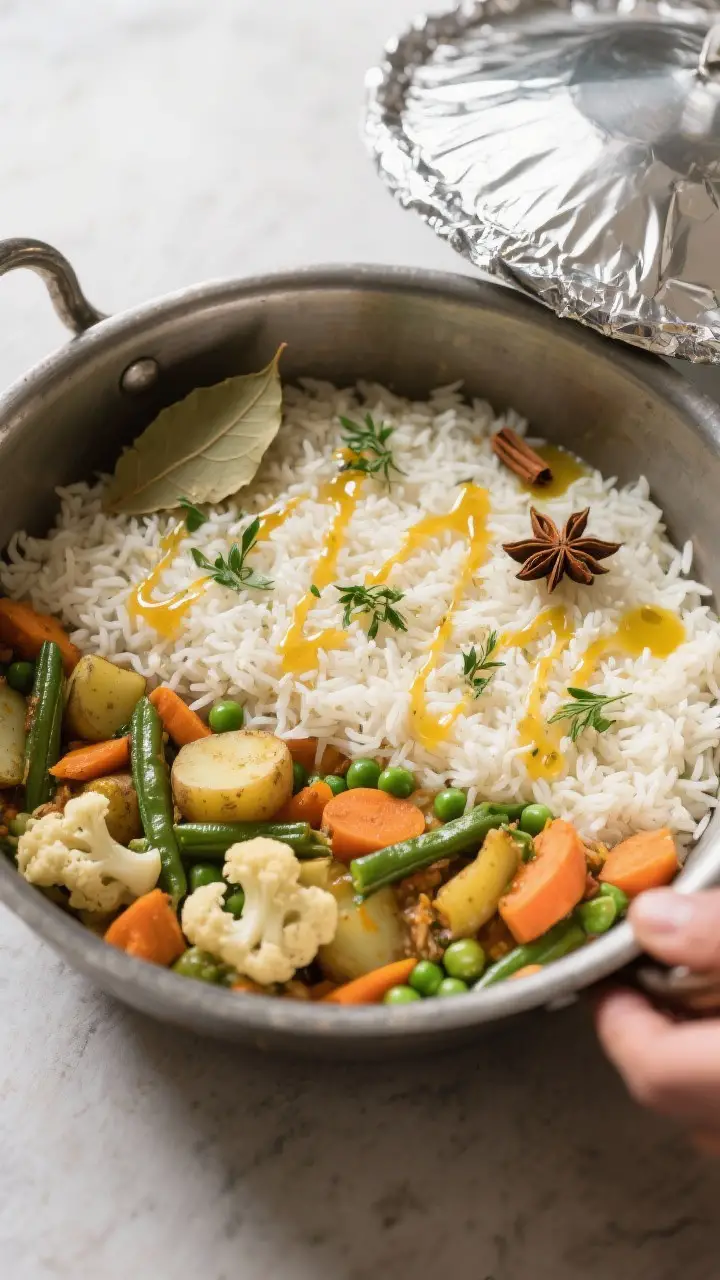
- Layer the rice: Spread the parboiled rice over the vegetables in an even layer.
Don’t stir.
- Add toppings: Drizzle saffron milk over the rice. Sprinkle most of the remaining fried onions and the remaining herbs. Dot with 1–2 tablespoons ghee.
Add rose/kewra water if using.
- Seal for dum: Cover the pot with foil or a clean kitchen towel, then the lid to seal steam. Place over medium heat for 5 minutes, then reduce to very low heat for 20–25 minutes. Alternatively, place the pot on a tawa (griddle) to diffuse heat and prevent scorching.
- Rest and fluff: Turn off the heat and let it rest, covered, for 10 minutes.
Gently fluff from the sides with a flat spoon, lifting rice without breaking the grains.
- Serve: Plate with extra fried onions, a squeeze of lemon, and fresh herbs. Pair with raita, salan, or a cucumber-onion salad.
Keeping It Fresh
Leftover biryani keeps well for up to 3 days in the fridge. Cool it quickly, then store in an airtight container.
Reheat with a sprinkle of water or milk, covered, on low heat or in the microwave to bring back moisture. For freezing, portion into small containers and thaw in the fridge overnight before reheating.
Tip: Keep fried onions separate in a small container. Add them fresh when serving to maintain crunch and aroma.

Benefits of This Recipe
- Balanced meal: You get complex carbs from basmati, fiber and micronutrients from vegetables, and protein from yogurt.
- Customizable heat: Adjust chili levels without losing flavor depth, thanks to the spice blend and aromatics.
- Make-ahead friendly: The marinade and fried onions can be prepped a day ahead, streamlining dinner night.
- Great for gatherings: Scales well and holds beautifully on low heat for serving.
- Naturally vegetarian: Satisfying enough for mixed crowds, with no need for side mains.
Common Mistakes to Avoid
- Overcooking the rice: If the rice is fully cooked before layering, it will turn mushy during dum.
Keep it at about 70% done.
- Skipping the soak: Soaking basmati is key for long grains and even cooking.
- Too much water in the base: Watery marinades can steam the vegetables to mush. Use thick yogurt and don’t add extra liquids.
- High heat during dum: Gentle heat is crucial. Use a heat diffuser or tawa if your pot tends to scorch.
- Neglecting salt: Salt the rice water and the marinade.
Undersalted biryani tastes flat.
Alternatives
- Vegan version: Use thick coconut yogurt or cashew yogurt. Replace ghee with neutral oil or coconut oil. Skip dairy milk; infuse saffron in warm plant milk or water.
- Grain swaps: For a twist, try seeraga samba rice (shorter grain, intensely aromatic).
Adjust parboil timing accordingly.
- Vegetable variations: Add bell peppers, mushrooms, baby corn, or paneer/tofu cubes. Keep sizes uniform for even cooking.
- Nut and fruit add-ins: Toss in cashews and raisins sautéed in ghee for a festive touch.
- Spice profile shifts: For a smokier vibe, add a small pinch of black cardamom powder or a touch of mace. Keep it subtle.
FAQ
Can I make this biryani in the oven?
Yes.
Assemble in an oven-safe pot or Dutch oven, seal with foil and a lid, and bake at 350°F (175°C) for about 25–30 minutes. Let it rest 10 minutes before opening.
What if I don’t have saffron?
You can skip it and use a mix of warm milk with a pinch of turmeric for color, plus a few drops of rose or kewra water for aroma. The flavor won’t be identical, but it will still be lovely.
How do I stop the rice from breaking?
Use aged basmati, soak it, and avoid stirring after layering.
During fluffing, use a gentle lifting motion from the sides with a flat spoon or fork.
Can I cook the vegetables first?
A brief sauté is fine, but avoid fully cooking them. They will finish on dum and should remain tender, not mushy.
Is pressure cooker or Instant Pot biryani possible?
Yes, but timing is tricky. For the Instant Pot, parboil rice separately, then layer and steam on low using the sauté-to-keep-warm method with a sealed lid for 10–12 minutes.
Avoid high pressure to protect grain texture.
What should I serve with it?
Onion raita, boondi raita, mirchi ka salan, or a simple cucumber-tomato-onion salad with lemon. Papad and a wedge of lime are great extras.
How can I make it spicier without overpowering it?
Add more green chilies or use a spicier red chili powder, keeping Kashmiri chili for color. A small pinch of black pepper also adds heat without dominating the aroma.
In Conclusion
Vegetable Biryani, Hyderabadi style, is all about balance: aromatic rice, spiced vegetables, and the gentle drama of steam-sealed cooking.
With a few smart steps—soaking rice, marinating well, layering thoughtfully—you can achieve a biryani that feels festive and tastes deeply satisfying. Make it your signature weekend dish, or prep ahead for a weekday treat. Either way, the first spoonful will tell you it was worth the wait.