
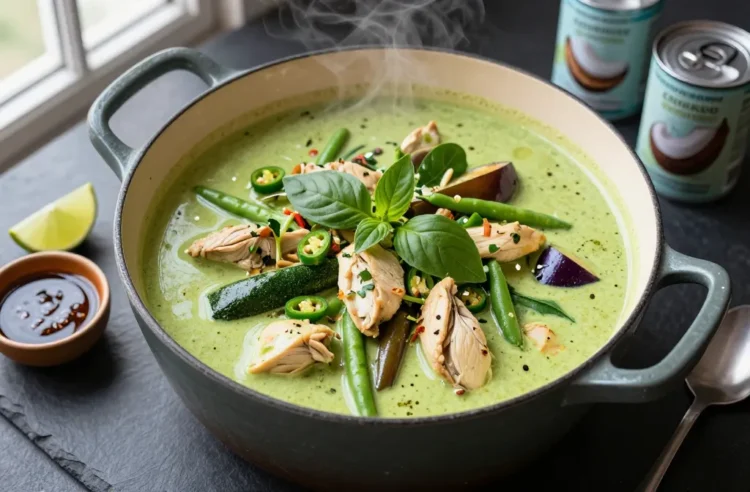
Feeding a crowd and still craving something bold, cozy, and surprisingly low-carb? Thai green curry checks all the boxes: silky coconut richness, bright herbs, and that addictive lemongrass-lime kick. We’ll batch it for 25, make it ahead without sacrificing freshness, and reheat like pros so it tastes even better the next day. Ready to win dinner without breaking a sweat?
1. Build A Flavor Bomb Base (For 25, Without Losing Your Mind)
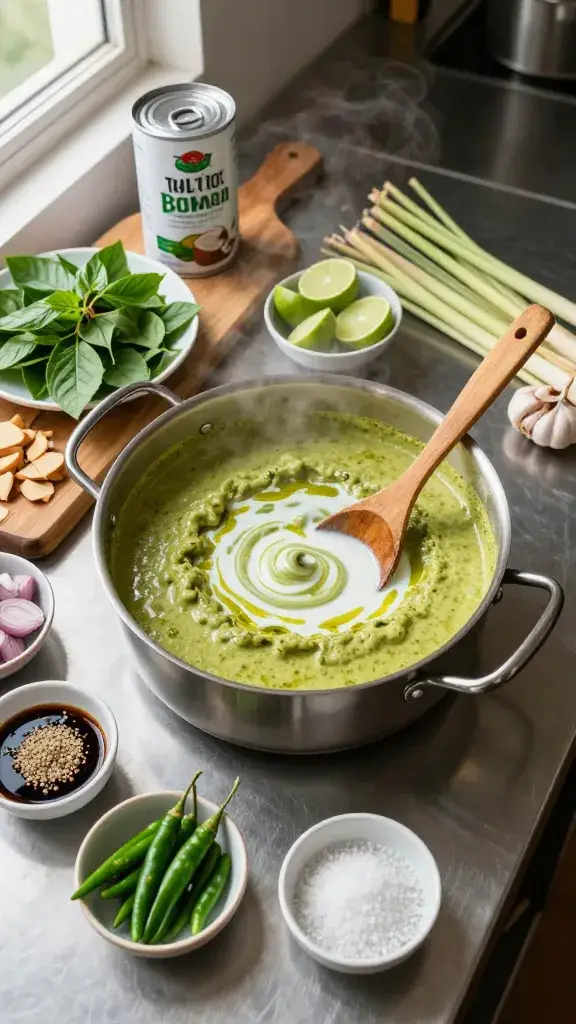
Great green curry starts with a fragrant, balanced base. You want bold heat, citrusy lift, and deep savory notes that hold up across a big batch. Nail this foundation, and everything else feels easy.
Key Components
- Green curry paste: Use a quality store-bought paste for consistency. Mae Ploy or Maesri deliver clean heat and classic aromatics.
- Coconut milk: Full-fat only for lush texture. Light coconut milk will taste thin and sad, FYI.
- Herb and citrus finish: Thai basil, makrut lime leaf (or zest), and fresh lime juice bring that signature high note.
- Salty-sweet balance: Fish sauce for backbone, a touch of low-carb sweetener to round it out (monk fruit or allulose), and sea salt to finish.
Base Recipe For 25 (Approx. 6–7 Quarts Finished)
- Green curry paste: 2 to 2.5 cups (start with 2, add more to taste)
- Full-fat coconut milk: 14 to 16 cans (13.5 oz each), shaken
- Chicken stock (or veg stock): 12 to 14 cups
- Fish sauce: 1 to 1.25 cups (add gradually)
- Low-carb sweetener: 3 to 4 tablespoons, or to taste
- Makrut lime leaves: 18 to 22 leaves, bruised (or zest of 6–8 limes)
- Thai basil: 8 to 10 packed cups, leaves picked
- Lime juice: 1 to 1.5 cups, added at the end
- Neutral oil (coconut or avocado): 1/2 cup for blooming paste
Method (Base Only)
- Bloom the paste: Warm oil in a wide pot, sauté curry paste 2–3 minutes until glossy and fragrant.
- Add coconut milk gradually: Stir in 4–5 cans to emulsify, then add the rest and stock.
- Season: Stir in fish sauce and sweetener. Add makrut leaves.
- Simmer: 10–12 minutes gentle simmer. Taste. Adjust salt, heat, and sweetness.
- Finish later: Hold basil and lime juice for serving time.
Why this rocks: a bloomed paste plus full-fat coconut milk gives a silky, restaurant-level base that scales beautifully without turning dull.
2. Choose Low-Carb Proteins And Veg That Don’t Go Mushy
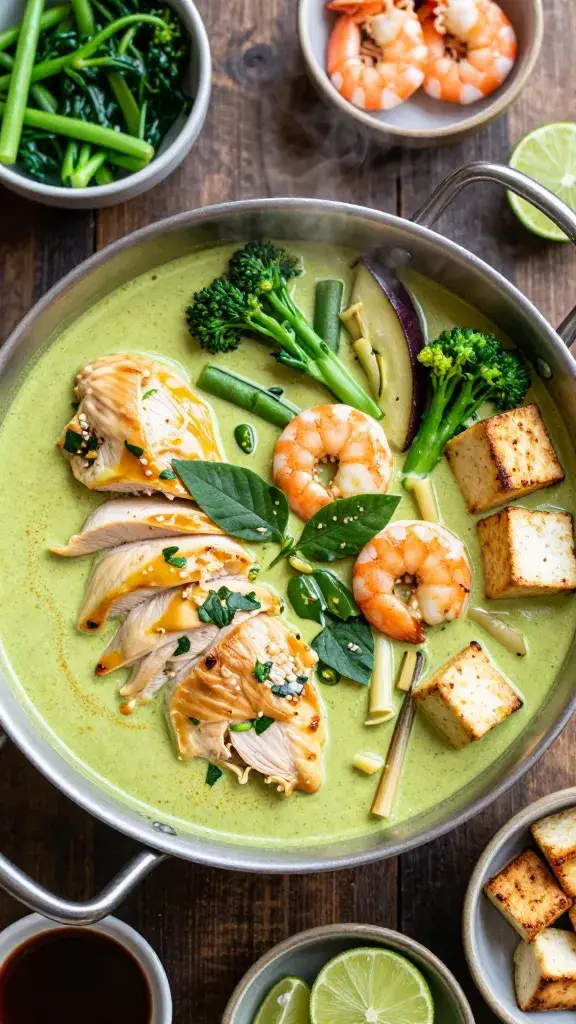
You want satisfying bites that keep their shape after chilling and reheating. Low-carb doesn’t mean boring—just smart swaps and good textures. Think tender chicken, bouncy shrimp, and crisp-tender greens.
Protein Options (Pick 2–3)
- Chicken thighs: 12–14 lbs, boneless/skinless, sliced thin. Juicy, forgiving, reheat-friendly.
- Shrimp: 6–8 lbs, 21/25 size, peeled. Poach gently in curry right before serving or reheat carefully.
- Firm tofu: 6–8 lbs, pressed and cubed, pan-seared for texture.
- Beef sirloin or flank: 8–10 lbs, thin-sliced against the grain. Add at the end so it stays tender.
Low-Carb Veg Heroes
- Green beans: 6–8 lbs, trimmed. Stay snappy even next day.
- Broccoli florets: 6–7 lbs, medium florets. Add late to keep bite.
- Zucchini: 8–10 medium, half-moons. Add near the end to avoid mush.
- Baby bok choy or choy sum: 5–6 lbs, sliced. Gorgeous in brothy curries.
- Bell peppers (green or mixed): 10–12 peppers, sliced. Sweet bite, minimal carbs per serving.
- Thai eggplant (optional, moderate carb): 5–6 lbs, quartered. Classic texture if you can find it.
Smart Add-Ins
- Bamboo shoots: 6–8 cans, sliced and rinsed. Crunchy, ultra low-carb.
- Fresh herbs: Thai basil and cilantro for brightness.
- Chiles: Sliced Thai bird’s eye or serrano for table-side heat control.
Use this lineup when you want a hearty, low-carb spread that still feels vibrant and abundant.
3. Cook Now, Feast Later: Make-Ahead Strategy For Peak Flavor
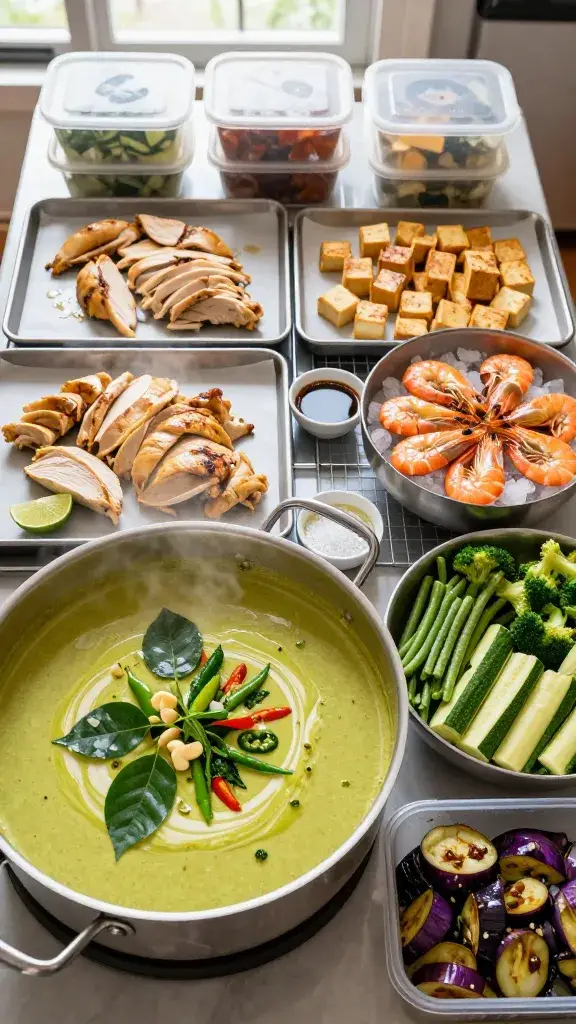
Big-batch curry tastes even better the next day—if you treat it right. The trick? Cook components separately, then combine like a puzzle when serving.
The Batch Plan
- Day 1 — Build Base: Make the curry base as above. Cool quickly. Refrigerate up to 4 days or freeze up to 2 months.
- Day 1 — Par-Cook Proteins:
- Chicken: Poach slices in salted water or stock until just cooked. Chill separately.
- Shrimp: Don’t cook yet; it overcooks fast. Save for Day 2/3.
- Tofu: Pan-sear cubes golden. Chill.
- Beef: Keep raw and sliced; you’ll simmer briefly when serving.
- Day 1 — Prep Veg: Wash, cut, and store in airtight containers with paper towels to absorb moisture. Keep delicate greens separate.
Cooling And Storage (Food Safety That Still Tastes Great)
- Cool hot liquids fast: Divide curry into shallow pans, set in an ice bath, stir until warm—not steaming—before refrigerating.
- Label everything: Date, contents, spice level. Your future self will thank you.
- Store herbs and lime separately: Add fresh so flavors pop.
Assembly On Serving Day
- Warm the base to a simmer.
- Add sturdy veg (green beans, broccoli, peppers) 6–8 minutes.
- Add proteins:
- Chicken/tofu: Simmer 3–5 minutes to heat through.
- Beef: Slip in and cook 1–2 minutes until just pink.
- Shrimp: Add last, 2–3 minutes until just opaque.
- Stir in delicate veg (bok choy, zucchini) 2–3 minutes.
- Kill the heat. Add Thai basil and lime juice. Taste and rebalance salt/sweet/acid.
This plan gives you flexibility for parties, meal prep, or a week of dinners that still taste fresh. Seriously, it’s a lifesaver.
4. Keep It Low-Carb Without Compromising Comfort
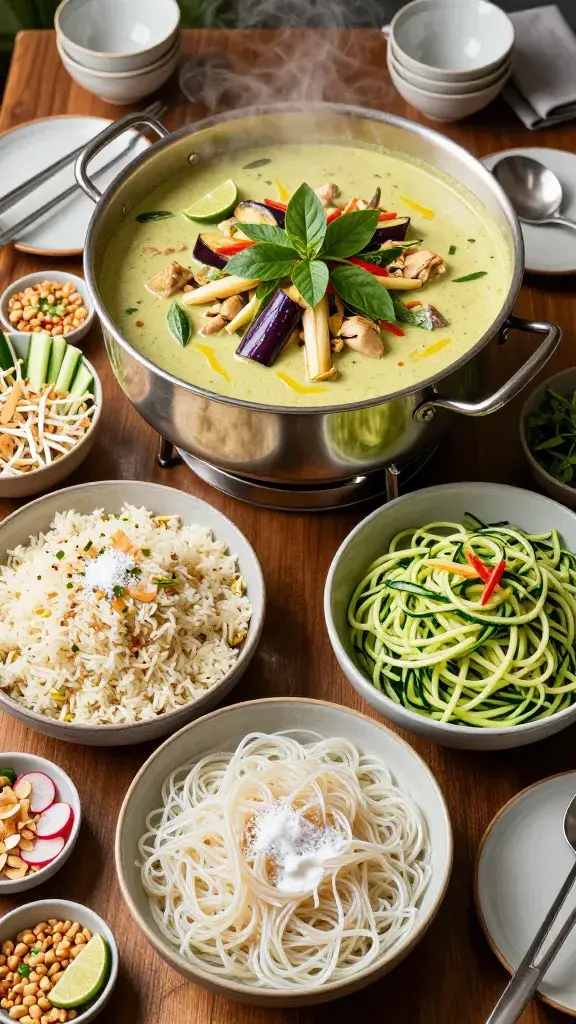
We’re skipping rice but keeping that cozy bowl energy. Texture and toppings do the heavy lifting so nobody misses the starch. It’s all about contrast—creamy broth, crunchy veg, herbaceous lift.
Low-Carb Serving Ideas
- Cauliflower rice: 10–12 lbs, sautéed in coconut oil with salt and a squeeze of lime. Soaks up sauce like a champ.
- Shirataki rice or noodles: 18–20 packs. Rinse well, pan-dry, then toss with a splash of coconut milk and salt.
- Zoodle pile-up: 14–16 medium zucchinis spiralized. Quick sauté, then ladle curry on top.
- Cabbage “noodles”: 8–10 lbs shredded green cabbage sautéed until just tender.
Toppings Bar (AKA Crowd Control)
- Herbs: Thai basil, cilantro, mint
- Crunch: Toasted coconut flakes, roasted peanuts or cashews (if you’re not strict), crispy shallots
- Heat: Sliced chiles, chili crisp (watch carbs), or extra curry paste whisked with coconut milk
- Acid: Lime wedges
- Extra umami: Fish sauce or soy/coconut aminos at the table
Balancing The Macros
- Lean toward more protein and non-starchy veg to keep carbs tight.
- Rely on the coconut fat for satiety and that luscious mouthfeel.
- Use monk fruit/allulose sparingly; taste first—coconut milk already brings gentle sweetness.
Use this game plan when you want that indulgent curry vibe without the carb coma. Trust me, nobody will feel deprived.
5. Reheat Like A Pro: Zero Split Sauce, Maximum Freshness
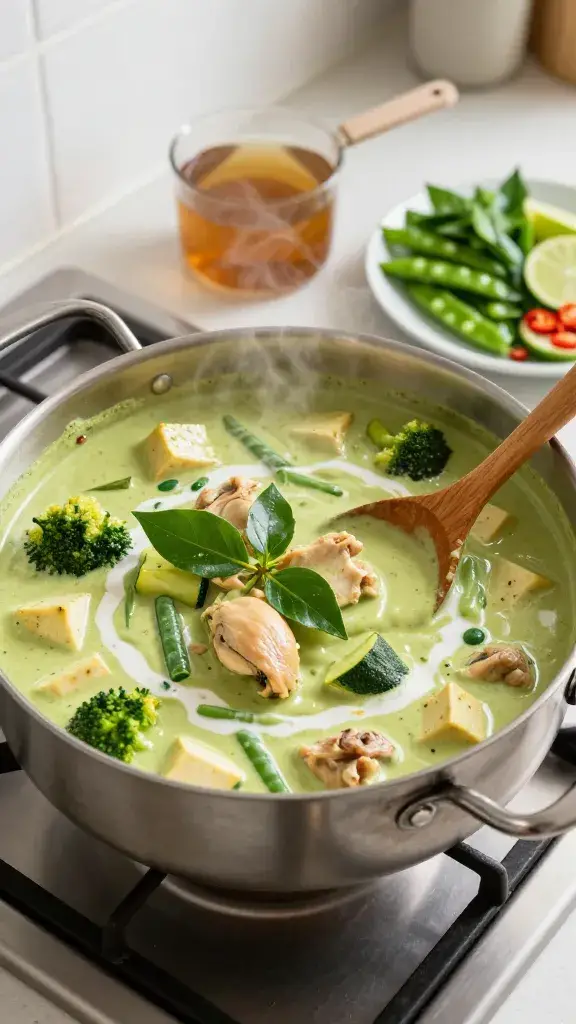
Coconut curries reheat beautifully if you avoid boiling them to death. Gentle heat, smart sequencing, and a fresh finish keep the sauce glossy and the proteins tender. Here’s your foolproof roadmap.
Reheating The Whole Pot (Stovetop)
- Transfer chilled curry to a wide pot. Add 1–2 cups water or stock if very thick.
- Heat on medium-low, stirring gently. Keep it below a simmer to prevent splitting.
- Once steaming-hot, add delicate veg or pre-cooked proteins to warm through 3–5 minutes.
- Kill heat. Add fresh Thai basil and lime juice for brightness.
Reheating In Batches (Best For Parties)
- Hold base hot in one pot (170–180°F—steamy but not bubbling).
- Poach proteins to order in a smaller saucepan with a few ladles of base.
- Add veg in waves so every serving stays crisp-tender.
- Finish bowls with basil and lime at the pass. Restaurant vibes, IMO.
Microwave Reheat (Individual Portions)
- Place curry in a microwave-safe bowl. Cover loosely.
- Heat 60–90 seconds, stir, then another 45–60 seconds until hot.
- Add basil and a squeeze of lime after heating.
Prevent Splitting And Dull Flavors
- Don’t boil after Day 1: Gentle heat only.
- Whisk in a splash of coconut milk or a knob of coconut cream at the end to restore sheen.
- Re-balance: A pinch of salt, a dab of curry paste, and a squeeze of lime wake it right up.
Freezer Tips
- Freeze base only in quart containers. Add proteins/veg fresh after thawing.
- Thaw overnight in the fridge. Reheat gently, then finish with basil and lime.
Use these techniques when cooking ahead for events, meal trains, or your future self who deserves great curry on a Tuesday.
Ready to ladle up something epic? With this plan, you’ll serve a low-carb, coconut-rich Thai green curry to 25 people without stress—and with leftovers that reheat like a dream. Grab a big pot, cue the basil, and make your kitchen smell ridiculously good.