
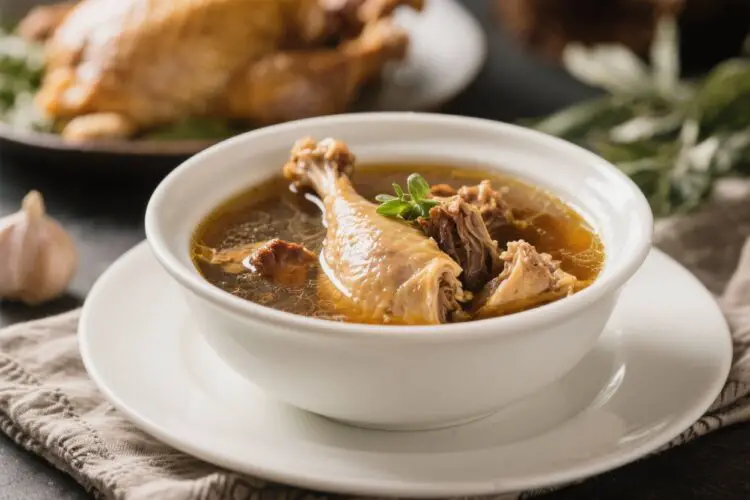
If you’ve ever wondered how to make soups, gravies, and sauces taste richer, the answer is simple: a good turkey stock. It’s a smart way to use the leftover turkey carcass and trimmings, and it turns scraps into pure kitchen gold. The process is hands-off, the ingredients are basic, and the result is deeply comforting.
Once you make it at home, the boxed stuff won’t compare. Keep a few jars in the freezer, and weeknight cooking gets a whole lot easier.
What Makes This Special
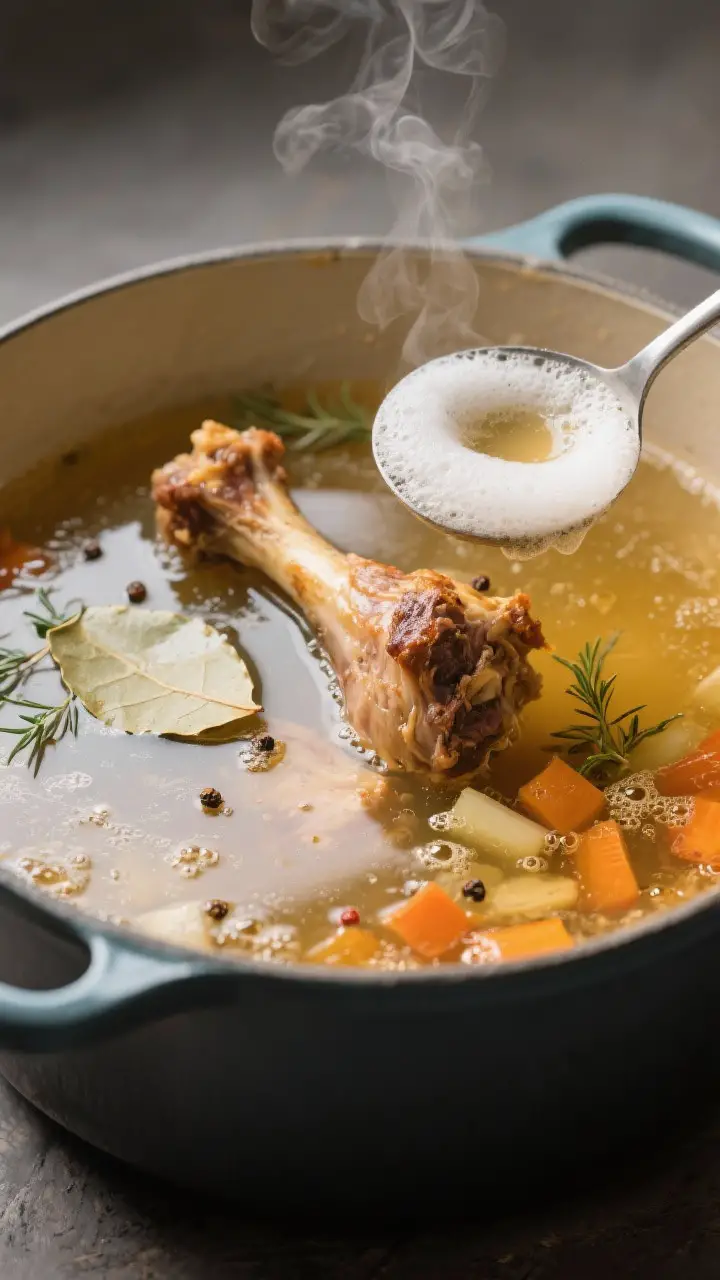
This turkey stock leans on roasted bones, a classic mirepoix, and patience. The slow simmer draws out gelatin, which gives body and a silky mouthfeel you can’t fake.
It’s versatile—neutral enough for many cuisines, but rich with subtle roasted notes. You can build it plain for flexible use, or add herbs and aromatics to match your favorite dishes.
- Budget-friendly: Uses bones and vegetable odds and ends you already have.
- Freezer-friendly: Keeps beautifully for months.
- Better texture: Natural gelatin gives gravies and soups a polished finish.
- Customizable: Adjust salt, herbs, and aromatics to fit any recipe.
What You’ll Need
- Turkey carcass and bones (from a roasted turkey; include wings, neck, and leftover skin)
- 2 medium onions, quartered (leave skins on for color, rinsed)
- 3 carrots, cut into chunks
- 3 celery stalks, cut into chunks (use leaves if you have them)
- 1 head of garlic, halved horizontally (optional, but great for depth)
- 1–2 bay leaves
- 10–12 whole peppercorns
- Fresh herbs: a few sprigs of parsley and thyme (or dried if that’s what you have)
- Cold water (enough to cover the bones by about an inch)
- Salt to taste (or skip and season later when cooking with the stock)
- A splash of apple cider vinegar or white wine (optional; helps draw minerals and flavor from bones)
Step-by-Step Instructions
- Break down the bones: If your turkey carcass is large, break it into pieces so it fits snugly in a large stockpot or Dutch oven. Smaller pieces expose more surface area and extract more flavor.
- Optional roast for extra depth: If your bones aren’t already roasted, spread them on a sheet pan with the onions, carrots, and celery.
Roast at 425°F (220°C) for 25–35 minutes until browned. This step boosts color and flavor.
- Load the pot: Add bones, vegetables, garlic, bay leaves, peppercorns, and herbs to the pot. Add a splash of vinegar or wine if using.
- Cover with cold water: Pour in enough cold water to cover by about an inch.
Cold water helps draw out gelatin slowly and evenly.
- Bring to a gentle simmer: Heat over medium until you see small bubbles break the surface. Do not boil. Boiling makes stock cloudy and can turn it bitter.
- Skim the foam: During the first 30 minutes, skim off gray foam and any scum with a spoon or ladle. This keeps your stock clean and clear.
- Simmer low and slow: Partially cover and maintain a very gentle simmer for 3–4 hours.
Add a little water if needed to keep ingredients barely submerged.
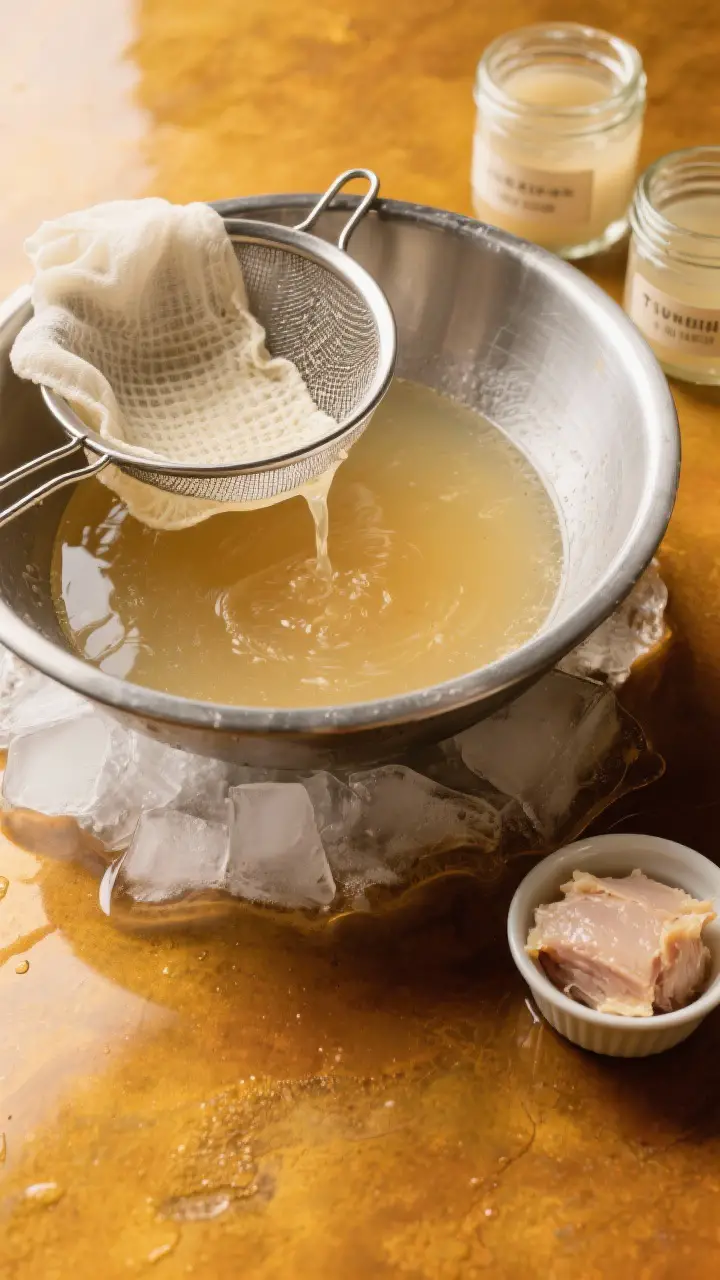
- Strain: Use tongs to remove big pieces, then pour the stock through a fine mesh strainer into another pot or large bowl. For ultra-clear stock, line the strainer with cheesecloth.
- Chill safely: Cool quickly by setting the bowl in an ice bath or dividing into shallow containers. Refrigerate until fully chilled.
The fat will rise and solidify on top.
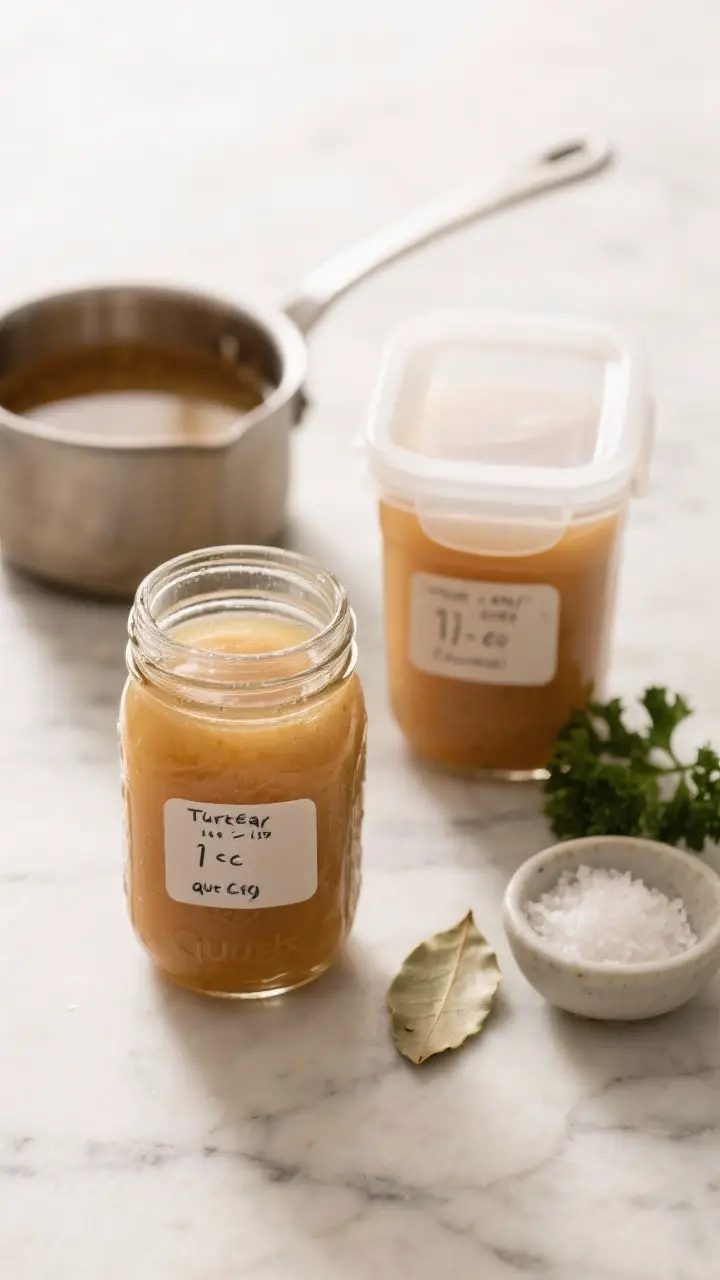
- Degrease and store: Lift off the solid fat. Season the stock lightly with salt now, or keep it unsalted for flexibility. Transfer to jars or containers for the fridge or freezer.
Keeping It Fresh
- Fridge: 4–5 days in airtight containers.
- Freezer: Up to 6 months.
Leave headspace in jars to prevent cracking, or freeze flat in zip bags.
- Ice cube method: Freeze in ice cube trays, then bag the cubes. Great for deglazing pans or adding a hit of flavor to sauces.
- Gel layer is a good sign: If your chilled stock jiggles, that’s the gelatin doing its job. It will liquefy when heated.
Why This is Good for You
Homemade turkey stock offers more than flavor.
The slow simmer pulls collagen and minerals from the bones, giving you a broth rich in gelatin and amino acids. It’s also a low-waste way to stretch a roast turkey into multiple meals. Plus, you control the sodium and ingredients, making it cleaner and more adaptable than store-bought options.
What Not to Do
- Don’t boil hard: A rolling boil makes cloudy, harsh stock and can break emulsions in sauces later.
- Don’t over-salt early: Stock reduces in recipes.
Season lightly or not at all until you use it.
- Don’t skip the skim: Removing foam and scum leads to cleaner flavor and better clarity.
- Don’t overcrowd with strong flavors: Too much rosemary, sage, or star anise can dominate. Keep it balanced.
- Don’t leave it out to cool forever: Cool quickly for food safety. Aim to get it into the fridge within two hours.
Recipe Variations
- Roasted Tomato Turkey Stock: Add 2 halved Roma tomatoes and a tablespoon of tomato paste when roasting the bones and veggies for deeper color and umami.
- Ginger-Scallion Stock: Swap parsley and thyme for 2 inches of sliced ginger, 4 scallions, and a splash of soy.
Excellent for noodle soups.
- Smoky Chili Stock: Add a dried ancho or guajillo chili and a teaspoon of smoked paprika. Use for chili, tortilla soup, or braises.
- Lemon-Herb Light Stock: Add lemon peel (no pith) and extra parsley for a bright, clean finish. Ideal for risotto or spring soups.
- Pressure Cooker Shortcut: Cook at high pressure for 45 minutes with natural release.
You’ll get great extraction in less time.
FAQ
Can I use raw turkey parts instead of a carcass?
Yes. Use wings, drumsticks, necks, or backs. Roasting them first builds flavor, but you can make a lighter stock without roasting if you prefer a cleaner taste.
Why is my stock cloudy?
Cloudiness usually comes from a hard boil or aggressive stirring.
Keep the heat low, skim early, and strain gently through a fine mesh. It won’t affect taste much, but clarity looks nicer.
Do I have to peel the vegetables?
No. Just wash them well.
Onion skins add color, and carrot skins are fine. If you want a very delicate stock, peel them for a cleaner flavor.
What if my stock doesn’t gel?
It’s still good. Gel depends on bone-to-water ratio and simmer time.
Next time, add more joint-heavy parts (wings, necks) or simmer longer. A small splash of vinegar can help extraction.
Can I reuse the bones for a second batch?
You can, but the second stock will be weaker and lighter. If you try it, add fresh aromatics and plan to reduce the final stock to concentrate it.
Should I salt the stock?
Lightly salting is fine, but many cooks keep stock unsalted so it doesn’t get too salty when reduced in soups or gravies.
Season to taste when you use it in a dish.
How much stock will this make?
From a typical 12–14 pound turkey carcass, you’ll get about 3–4 quarts, depending on your pot size and reduction. You can top up with water during the simmer to maintain volume.
What’s the best way to store it?
Portion it by how you cook: 1-cup containers for sauce making, 2–4 cups for soups. Label with the date.
Freeze flat in bags for easy stacking.
Can I make it in a slow cooker?
Yes. Load everything into a slow cooker, cover with water, and cook on low for 8–12 hours. Strain, chill, and store as usual.
It’s a set-it-and-forget-it method with great results.
What should I do with the fat cap?
You can discard it or save it. Turkey fat adds flavor to roasted potatoes or sautéed vegetables. Store it in the fridge for up to a week or freeze for longer.
In Conclusion
Turkey stock is the quiet hero of a good kitchen—simple to make, endlessly useful, and a smart way to stretch leftovers.
With a gentle simmer and a few pantry staples, you’ll end up with liquid flavor that lifts everything it touches. Keep some on hand, and weeknight cooking instantly feels more confident and comforting. Once you get into the habit, it’s hard to imagine cooking without it.
Printable Recipe Card
Want just the essential recipe details without scrolling through the article? Get our printable recipe card with just the ingredients and instructions.