

Ajad is the crunchy, tangy little salad that makes Thai satay sing. It cools the palate, cuts through richness, and adds a bright snap to every bite. If you’ve had satay with that creamy peanut sauce, this is the fresh counterpoint you remember.
It’s simple, quick, and made with everyday ingredients. Once you make it, you’ll wonder how grilled meats ever went without it.
Why This Recipe Works
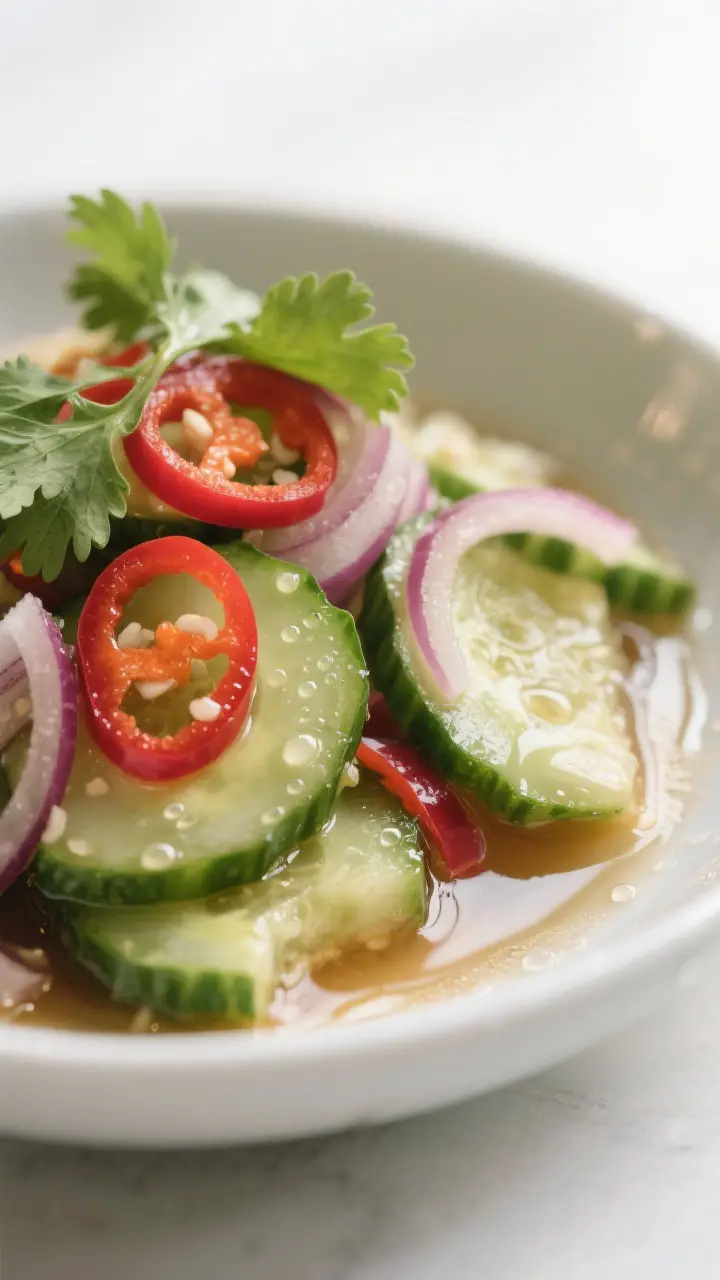
This relish balances sweet, sour, and salty—the heart of Thai flavor. Crisp cucumber and red onion bring texture, while rice vinegar gives clean acidity without harshness.
A touch of sugar rounds it out, and a pinch of salt makes everything pop. Fresh chilies add gentle heat, but you control the spice level. The result is a bright, refreshing condiment that pairs with rich dishes and fried foods alike.
What You’ll Need
- English cucumber (or Persian cucumbers) – thin-skinned and crisp
- Red onion – or shallots for a milder bite
- Red chilies – Thai bird’s eye for heat, or jalapeño for mild
- Rice vinegar – unseasoned if possible
- Granulated sugar – to balance acidity
- Salt – fine sea salt or kosher
- Warm water – to dissolve the sugar and mellow the vinegar
- Optional add-ins: chopped cilantro, sliced carrot, white pepper
How to Make It
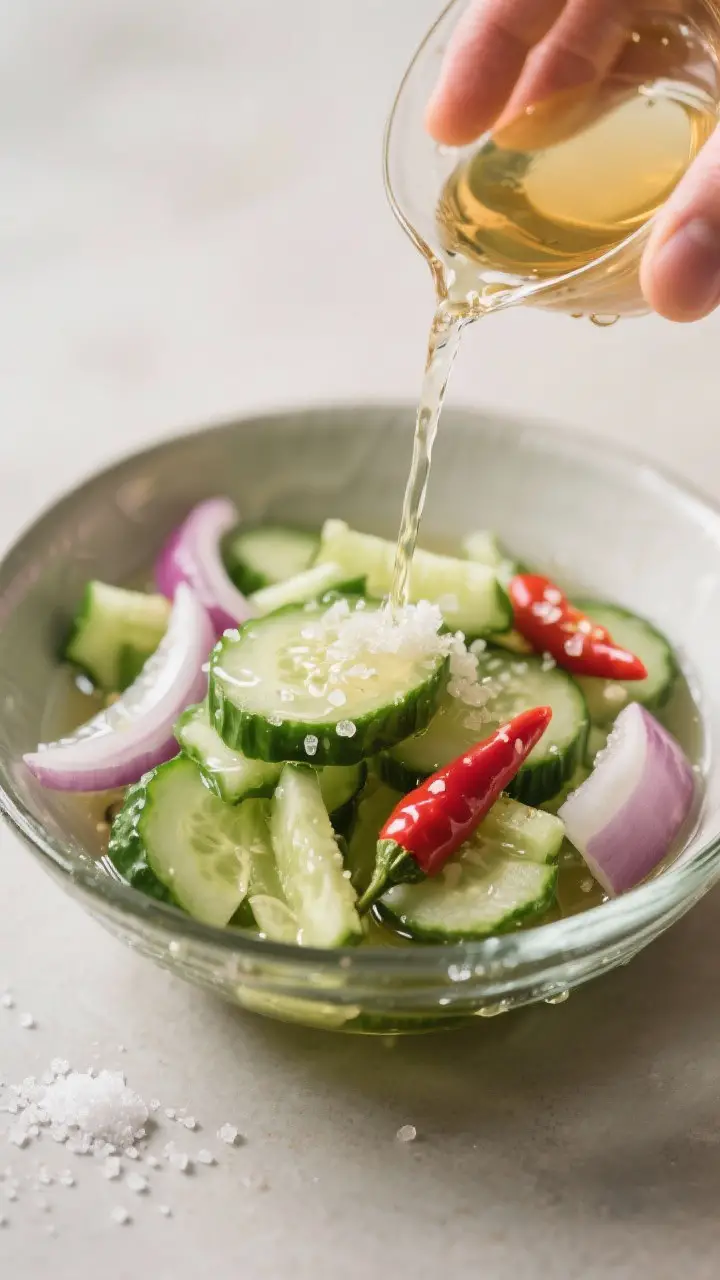
- Make the quick pickle base. In a small bowl, whisk 1/4 cup rice vinegar, 2 tablespoons warm water, 1–2 tablespoons sugar, and 1/4 teaspoon salt until dissolved.
Taste and adjust so it’s bright but balanced—sweet should soften the tartness, not overpower it.
- Prep the vegetables. Halve the cucumber lengthwise, scoop out seeds if watery, and slice into thin half-moons. Thinly slice red onion. Slice chilies into thin rounds (remove seeds for less heat).
- Combine. In a medium bowl, add cucumber, onion, and chilies.
Pour the vinegar mixture over the top and toss gently to coat.
- Rest briefly. Let the relish sit for 10–15 minutes so flavors meld and the onion softens slightly. This is where the magic happens.
- Finish and serve. Taste and adjust salt or sugar if needed. Add a sprinkle of chopped cilantro if you like.
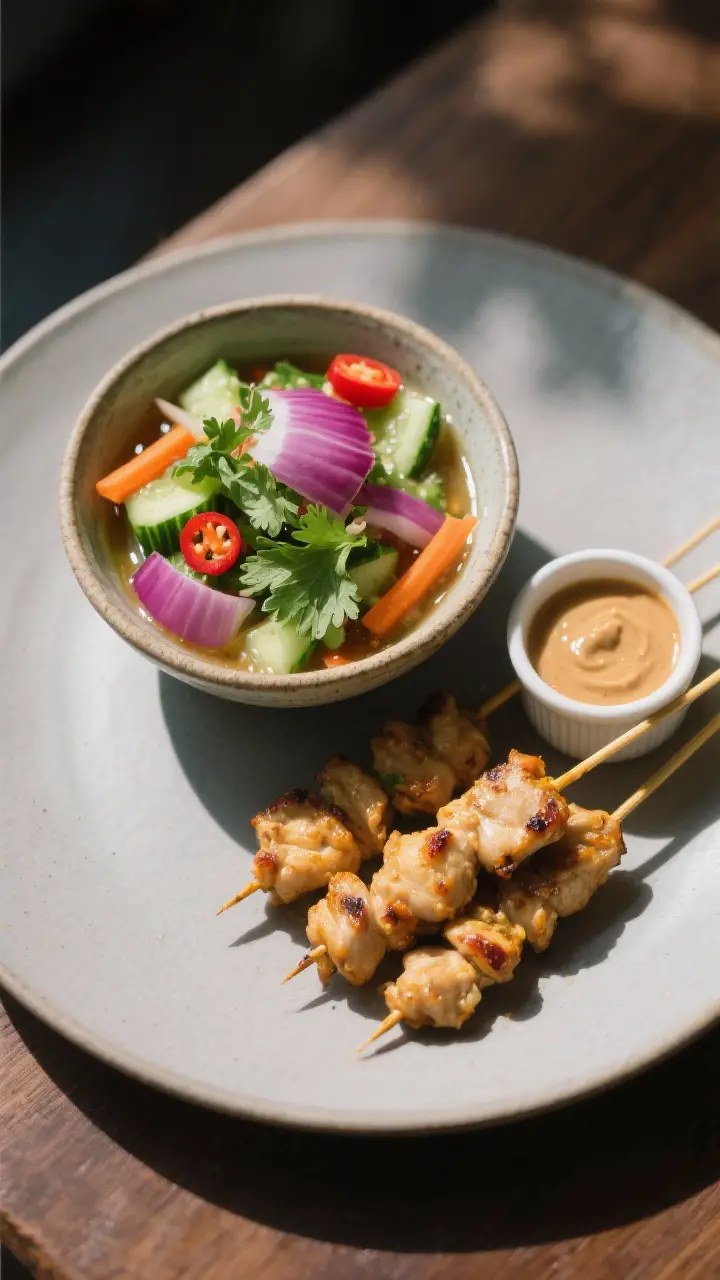
Serve alongside satay with peanut sauce, or with grilled meats, fried fish, or rice dishes.
How to Store
- Refrigerate: Keep in an airtight container for up to 3 days.
- Texture tips: The cucumbers will release water over time. If it gets too diluted, drain lightly and add a splash of rice vinegar to refresh.
- Make-ahead: For max crunch, prep the vinegar mixture and sliced onions/chilies up to a day ahead, then slice cucumbers and combine 30 minutes before serving.
Health Benefits
- Hydrating and light: Cucumbers are mostly water, helping hydration without heaviness.
- Lower in added sugar: Compared to many condiments, this uses a small amount of sugar, and you can reduce it further.
- Antioxidants and vitamins: Red onion and chilies contribute quercetin, vitamin C, and capsaicin.
- Calorie-friendly: Big flavor for very few calories, which helps balance richer dishes like satay with peanut sauce.
Pitfalls to Watch Out For
- Over-sweetening: Ajad should taste bright, not syrupy. Add sugar gradually and taste as you go.
- Using seasoned vinegar: It already contains sugar and salt.
If that’s all you have, reduce added sugar and salt significantly.
- Watery cucumbers: If using garden cucumbers with large seeds, scoop the seeds or lightly salt, rest 10 minutes, and pat dry before mixing.
- Too much onion bite: If your onions are sharp, rinse slices in cold water and drain before adding.
- Over-marinating: The longer it sits, the softer the cucumbers become. For crunch, make close to serving time.
Recipe Variations
- Classic Thai street style: Keep it minimal—cucumber, shallot, mild red chili, a hint of sugar, and clear vinegar bite.
- Carrot crunch: Add thin matchsticks of carrot for color and extra snap.
- Fragrant herb twist: Stir in chopped cilantro or a few mint leaves right before serving.
- Mellow garlic: Add 1 small clove grated or very finely minced for savory depth; go light to avoid overpowering.
- Citrus lift: Add a squeeze of lime at the end for a zesty edge; reduce vinegar slightly to compensate.
- No-heat version: Skip chilies or use red bell pepper for color without spice.
FAQ
Can I use another vinegar?
Yes. White wine vinegar or apple cider vinegar works, but they taste stronger.
Start with a little less and adjust. Avoid distilled white vinegar unless you balance with extra sugar and water.
How spicy should Ajad be?
It’s usually mild to medium. The heat should complement, not dominate.
Use thin slices of Thai chilies for punch or swap for jalapeño to keep it gentle.
Can I make it sugar-free?
You can reduce sugar to 1–2 teaspoons, but a touch of sweetness is traditional and helps round out the vinegar. If avoiding sugar, try a few drops of your preferred sweetener, then adjust to taste.
What’s the best cucumber to use?
English or Persian cucumbers are ideal because they’re thin-skinned and less seedy. If using standard cucumbers, peel, halve, scoop seeds, and slice thin.
How do I serve it with satay?
Serve Ajad chilled in a small bowl alongside skewers and peanut sauce.
Alternate bites of satay with a spoonful of relish to reset your palate and cut richness.
Can I add fish sauce?
Some cooks add a dash for umami. If you do, reduce the salt and start with 1/2 teaspoon, then taste before adding more. It will make the relish more savory.
Why is my relish bitter?
Old cucumbers or pithy ends can be bitter.
Trim the ends generously and taste a slice before mixing. Also, very harsh distilled vinegar can read as bitter—balance with more sugar and a splash of water.
In Conclusion
Thai Cucumber Relish is simple, bright, and endlessly useful. It brings balance to rich foods and adds freshness to any plate.
With a handful of ingredients and a few minutes, you get a crisp, tangy side that tastes like summer. Make it once, and it’ll become a staple every time satay is on the menu.