
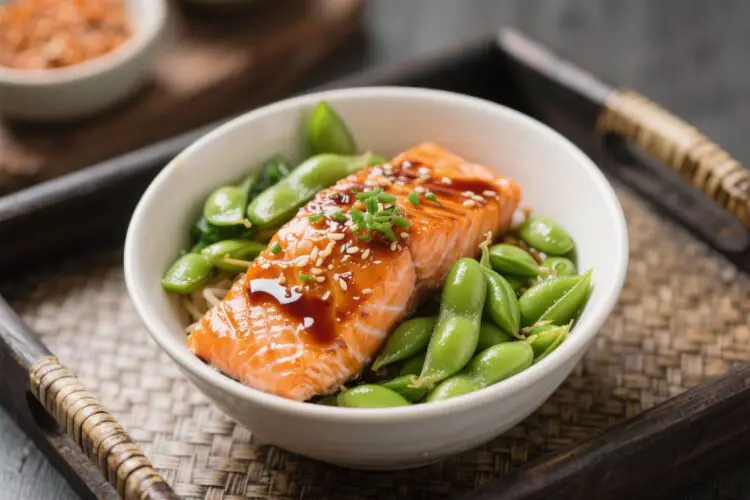
This bowl brings together tender teriyaki-glazed salmon, warm rice, and bright edamame for a weeknight meal that tastes like takeout but feels homemade. The sauce is sticky, savory, and a little sweet, with fresh ginger and garlic to keep it lively. You’ll get a colorful bowl with crunch from veggies and a silky finish from the glaze.
It’s quick enough for busy nights, but special enough to make you feel like you did something good for yourself.
What Makes This Recipe So Good
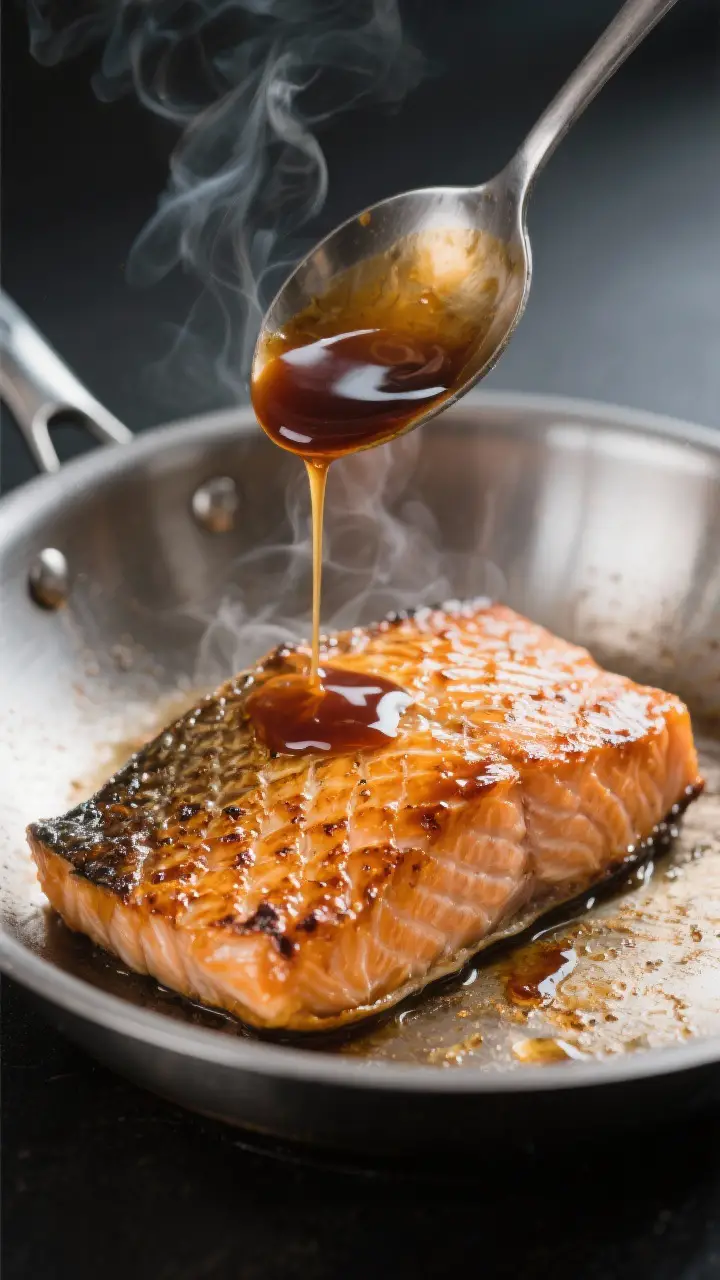
- Big flavor, simple steps: The teriyaki sauce uses basic pantry ingredients and cooks in minutes.
- Balanced bowl: Salmon for protein, rice for comfort, edamame and veggies for color and crunch.
- Flexible: Swap in brown rice, cauliflower rice, or quinoa. Add extra vegetables, or use frozen edamame.
- Meal-prep friendly: Makes great leftovers and reheats well without getting dry.
- Better than takeout: Less oil, no mystery ingredients, and you can control the sweetness and salt.
Shopping List
- Salmon: 1 to 1.25 pounds skin-on salmon fillets
- Rice: 2 cups cooked jasmine or brown rice
- Edamame: 1 cup shelled edamame (frozen is fine)
- Vegetables: 1 small cucumber, 1 medium carrot, 2 green onions
- Aromatics: 2 cloves garlic, 1 tablespoon fresh ginger
- Teriyaki sauce base: 1/3 cup low-sodium soy sauce or tamari, 3 tablespoons mirin or rice vinegar, 2 tablespoons honey or brown sugar
- Thickener: 2 teaspoons cornstarch
- Oil: 1 tablespoon neutral oil (avocado, canola, or grapeseed)
- Garnishes: Sesame seeds, lime wedges, and optional chili flakes or sriracha
- Optional add-ins: Steamed broccoli, sliced avocado, pickled ginger
How to Make It
- Cook the rice: Make your favorite rice and keep it warm. Leftover rice works great; just reheat with a splash of water.
- Prep the veggies: Slice the cucumber thin, julienne the carrot, and chop the green onions.
Set aside. Microwave or briefly boil the edamame until tender, then drain.
- Make the teriyaki sauce: In a small bowl, whisk 1/3 cup soy sauce, 3 tablespoons mirin or rice vinegar, 2 tablespoons honey or brown sugar, minced garlic, and grated ginger. In a separate cup, mix cornstarch with 2 teaspoons water until smooth.
- Thicken the sauce: Pour the sauce mixture into a small saucepan over medium heat.
When it simmers, whisk in the cornstarch slurry. Cook 1–2 minutes until glossy and slightly thick. Remove from heat.
Taste and adjust sweetness or salt.
- Prep the salmon: Pat the fillets dry and cut into 2–3 inch pieces for faster cooking. Lightly season with a pinch of salt and pepper.
- Sear the salmon: Heat the oil in a large skillet over medium-high. Place salmon skin-side down and cook 3–4 minutes until the skin is crisp and the sides turn opaque halfway up.
- Glaze and finish: Flip the salmon, reduce heat to medium, and spoon teriyaki sauce over the fish.
Cook 2–3 more minutes, spooning more sauce on top, until the salmon flakes easily but is still juicy. Remove from heat.
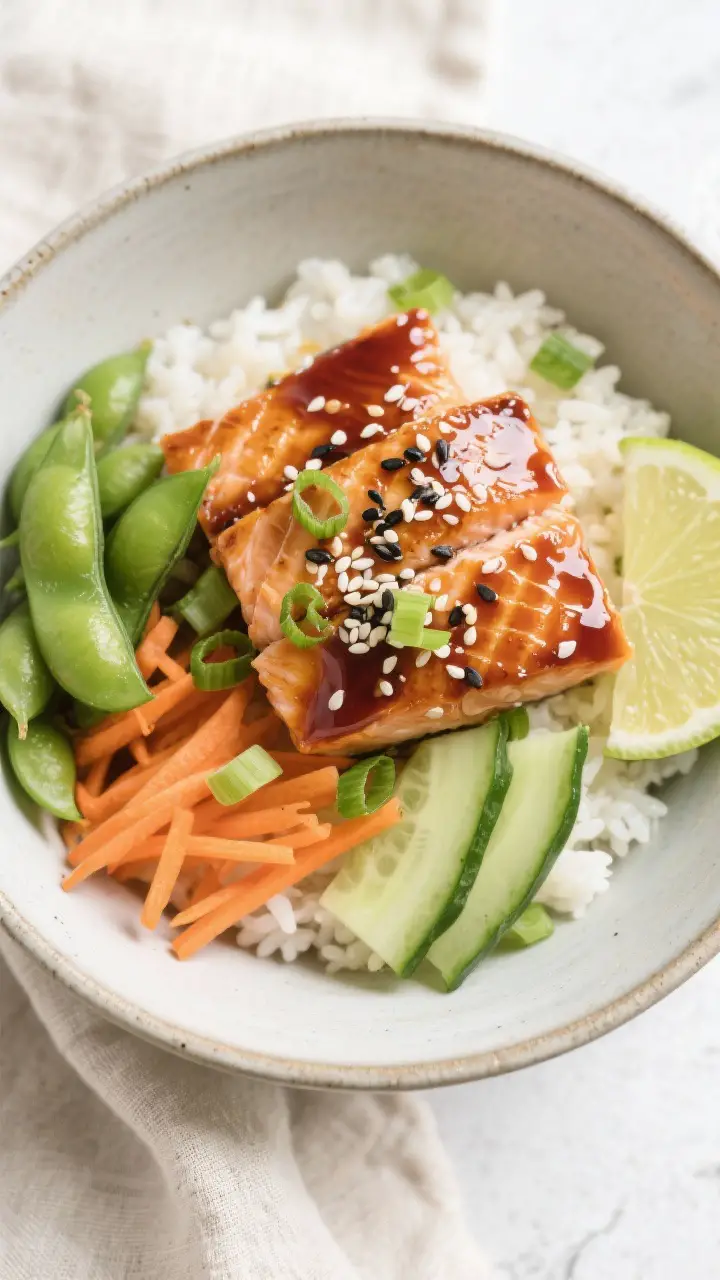
- Assemble the bowls: Add warm rice to bowls. Top with edamame, cucumber, carrot, and pieces of salmon.
Drizzle extra sauce over everything.
- Garnish: Sprinkle with sesame seeds and green onions. Add chili flakes or a squeeze of lime for brightness. Serve immediately.
Keeping It Fresh
Store leftover components separately if possible.
Keep salmon and sauce together in an airtight container for up to 2 days in the fridge. Rice and vegetables can keep 3–4 days. Reheat the salmon gently in a skillet over low heat with a splash of water or extra sauce to keep it moist.
If you’re meal-prepping, keep raw cucumber and fresh herbs separate and add them right before eating for the best texture.
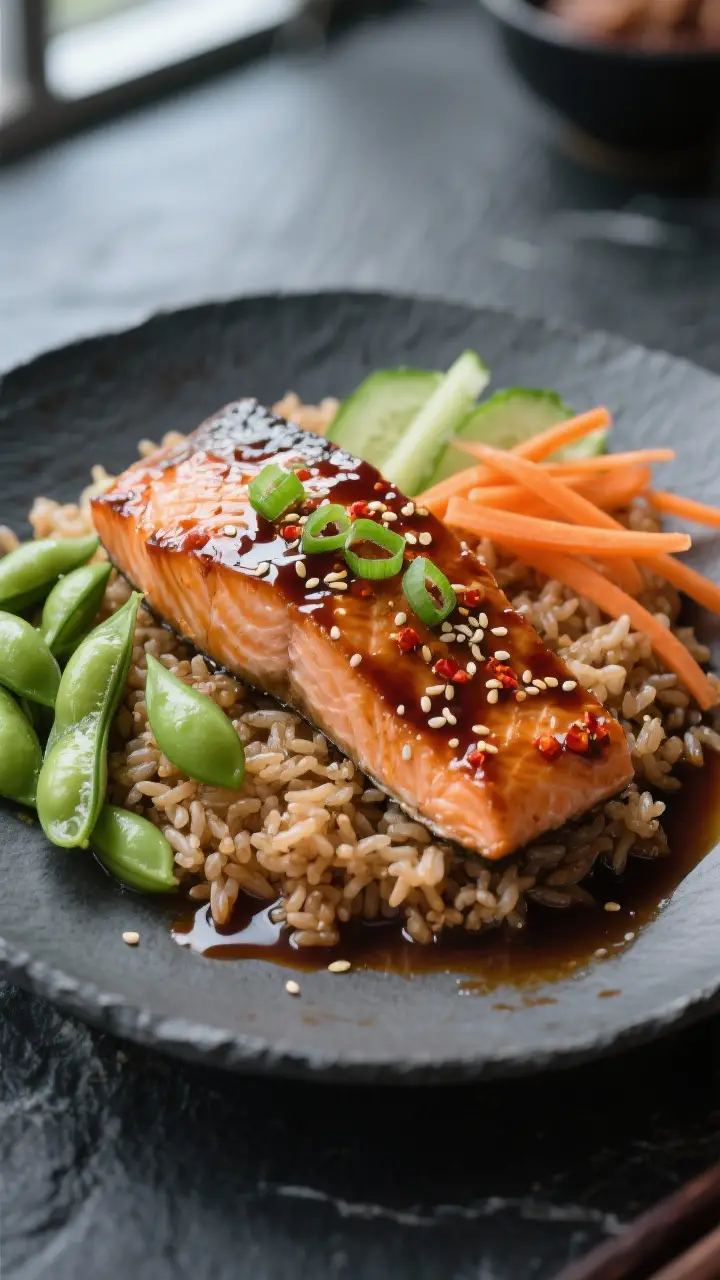
Why This is Good for You
- Omega-3s: Salmon is rich in EPA and DHA, which support heart and brain health.
- Lean protein: A satisfying, steady source of energy that helps support muscle and satiety.
- Fiber and micronutrients: Edamame and veggies bring fiber, folate, vitamin K, and antioxidants.
- Balanced macros: Carbs from rice, protein from salmon and edamame, and healthy fats from the fish give you a rounded meal.
- Lower sodium control: Using low-sodium soy sauce and making your own sauce helps manage salt intake.
Pitfalls to Watch Out For
- Overcooking the salmon: It goes from juicy to dry quickly. Pull it off the heat when it flakes with gentle pressure and is still moist in the center.
- Too much sauce thickness: The glaze should be pourable. If it gets too thick, whisk in a little water to loosen.
- Watery rice: Use slightly drier rice for bowls so the sauce doesn’t make things mushy.
Day-old rice is ideal.
- Unbalanced sweetness: Taste your sauce. Add a splash of vinegar for brightness if it’s too sweet, or a bit more honey if it’s too salty.
- Skipping the pat-dry step: Wet salmon won’t sear well. Drying it helps crisp the skin and develop flavor.
Alternatives
- Protein swaps: Try trout, cod, or shrimp.
For a plant-based option, use extra-firm tofu or tempeh and pan-sear before glazing.
- Grain options: Brown rice adds nuttiness and fiber. Quinoa, barley, or cauliflower rice all work well.
- Sauce tweaks: Use maple syrup instead of honey for a deeper flavor. Add a teaspoon of sesame oil for nuttiness or a dash of chili paste for heat.
- Veggie add-ins: Steamed broccoli, sugar snap peas, radishes, or shredded red cabbage add texture and color.
- Gluten-free: Choose tamari or coconut aminos instead of regular soy sauce and confirm other ingredients are certified gluten-free.
FAQs
Can I bake the salmon instead of searing it?
Yes.
Brush the salmon with a little sauce and bake at 400°F (205°C) for 10–12 minutes, depending on thickness. Warm the remaining sauce on the stove and pour it over the salmon after baking.
Do I have to use fresh ginger and garlic?
Fresh is best for a bright flavor, but you can use 1/2 teaspoon each of garlic powder and ground ginger in a pinch. Taste the sauce and adjust as needed.
Can I make the sauce ahead of time?
Absolutely.
Make it up to 5 days in advance and store in the fridge. Reheat gently and whisk in a splash of water if it thickens too much.
What if I only have frozen salmon?
Thaw it overnight in the fridge or under cold running water while still sealed. Pat dry very well before cooking to get a good sear.
How can I reduce the sodium?
Use low-sodium soy sauce or tamari and skip extra salt on the salmon.
Add more vinegar and ginger to boost flavor without increasing salt.
Is this good for meal prep?
Yes. Portion rice, edamame, and cooked salmon into containers, keep sauce on the side, and add fresh veggies just before eating. It reheats well in the microwave or on the stovetop.
What if I don’t like edamame?
Swap in peas, steamed broccoli florets, or sautéed green beans.
You’ll keep the color and texture without changing the overall vibe.
Final Thoughts
This Teriyaki Salmon Bowl with Edamame is the kind of meal that feels effortless but tastes like you put in extra care. The sauce shines, the salmon stays tender, and the bowl comes together with simple, reliable steps. Keep it classic or switch up the grains and veggies to fit what you have.
Once you try it, you’ll have a new go-to for quick, satisfying dinners that deliver every time.