
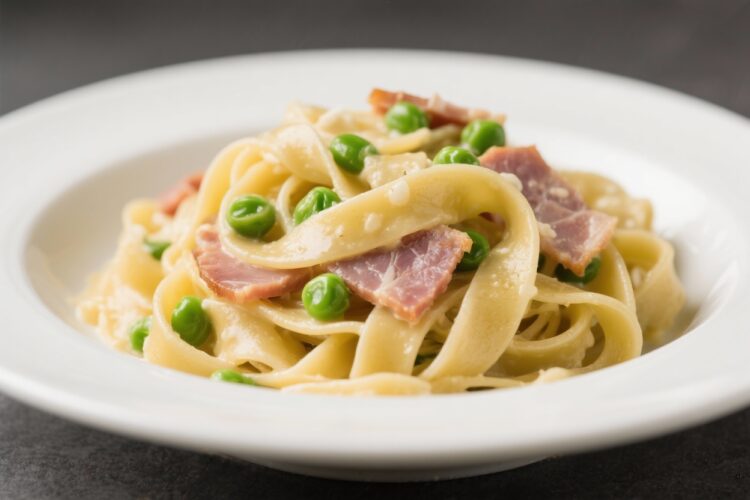
This is the kind of pasta you make when you want something warm, satisfying, and easy. Tagliatelle with peas and ham hits all the right notes: salty, sweet, creamy, and just a little bit buttery. It feels cozy without being heavy, and it comes together in the time it takes to boil the pasta.
You don’t need fancy ingredients, just a few basics and a big skillet. It’s simple food that tastes like home.
What Makes This Recipe So Good
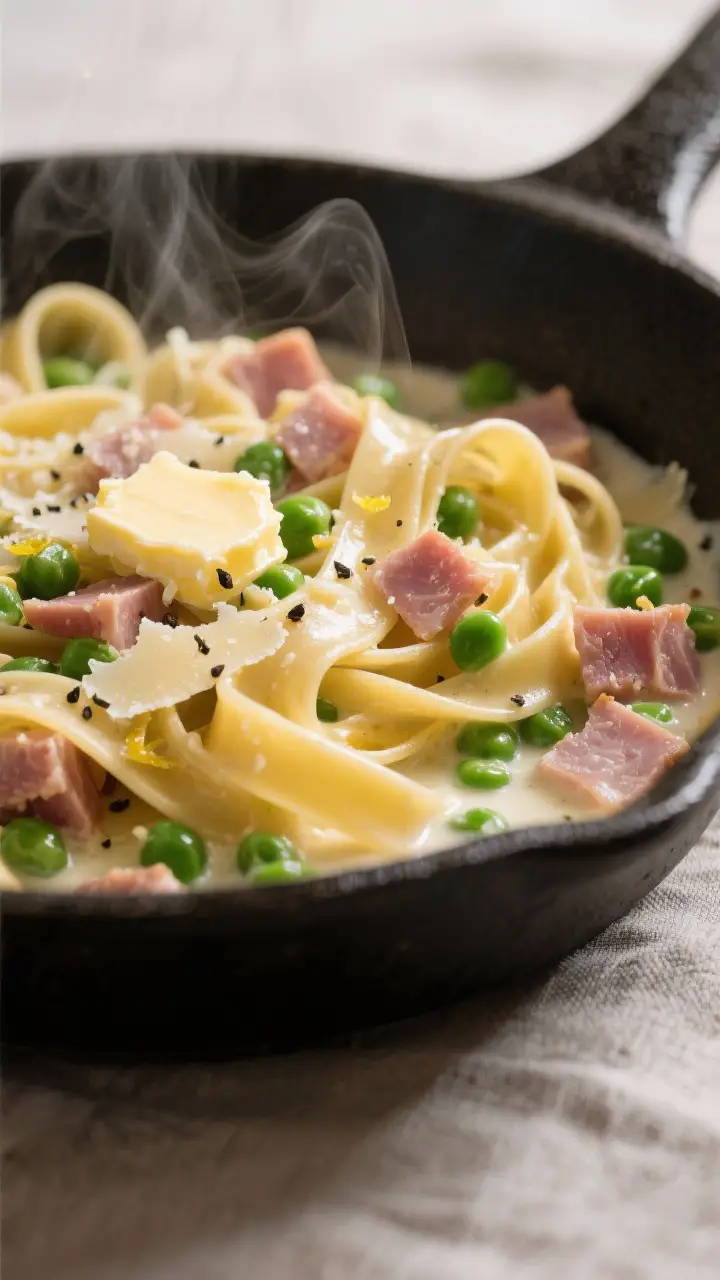
- Balanced flavors: The savory ham, sweet peas, and gentle creaminess make every bite satisfying without being rich or cloying.
- Fast and reliable: From start to finish, you can have dinner on the table in 25 minutes. Perfect for busy weeknights.
- Minimal ingredients: Mostly pantry and freezer staples.
No special shopping trip required.
- Kid- and crowd-friendly: Familiar flavors that please picky eaters and grown-ups alike.
- Flexible: Works with different pastas, hams, and even dairy-free tweaks if needed.
Ingredients
- 12 oz (340 g) tagliatelle or fettuccine
- 1 cup frozen peas, no need to thaw
- 6 oz (170 g) cooked ham, diced (thick-sliced deli ham, leftover roast, or prosciutto cotto)
- 2 tbsp unsalted butter
- 1 tbsp olive oil
- 1 small shallot or 1/2 small onion, finely chopped
- 1 garlic clove, minced
- 1/2 cup dry white wine or low-sodium chicken broth
- 3/4 cup heavy cream (or 1/2 cup cream + 1/4 cup whole milk)
- 1/2 cup finely grated Parmesan or Grana Padano, plus more for serving
- Zest of 1/2 lemon (optional) and a squeeze of lemon juice
- Salt and freshly ground black pepper
- Red pepper flakes (optional)
How to Make It
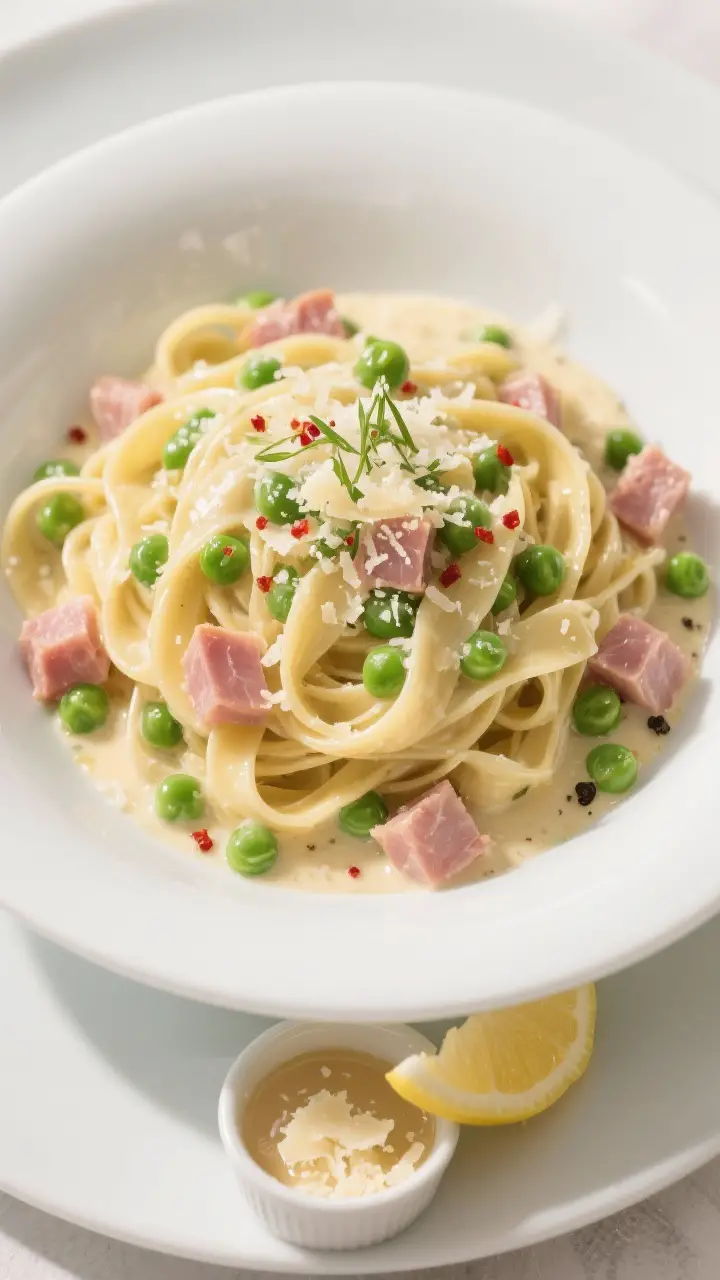
- Boil the pasta: Bring a large pot of well-salted water to a boil. Cook the tagliatelle until just shy of al dente. Reserve about 1 cup of pasta water, then drain.
- Sweat the aromatics: While the pasta cooks, set a large skillet over medium heat.
Add olive oil and 1 tbsp butter. Sauté the shallot with a pinch of salt until soft and translucent, about 3 minutes. Stir in the garlic and cook 30 seconds.
- Deglaze: Pour in the white wine or broth.
Let it simmer for 1–2 minutes, scraping up any browned bits, until slightly reduced.
- Add ham and peas: Stir in the ham and frozen peas. Cook for 2–3 minutes, just until the peas brighten and the ham warms through.
- Make it creamy: Reduce heat to medium-low. Add the cream and a splash of pasta water.
Simmer gently for 1–2 minutes to thicken. Season with black pepper and a pinch of salt if needed.
- Toss with pasta: Add the drained tagliatelle to the skillet. Sprinkle in the Parmesan and toss, loosening with more pasta water as needed until the sauce clings silkily.
Add lemon zest and a small squeeze of lemon juice if using.
- Finish and serve: Stir in the remaining 1 tbsp butter for extra gloss. Taste and adjust with salt, pepper, and red pepper flakes. Serve immediately with more Parmesan.
Keeping It Fresh
This pasta is best right after it’s made, when the sauce is silky and the tagliatelle still has some bite.
If you have leftovers, store them in an airtight container in the fridge for up to 2 days. Add a splash of water or milk when reheating to bring the sauce back to life. Warm gently on the stove over low heat or in the microwave at 50–70% power, stirring halfway.
Tip: If you know you’ll have leftovers, cook the pasta one minute less than al dente.
It will finish softening when you reheat it, so it won’t turn mushy.
Why This is Good for You
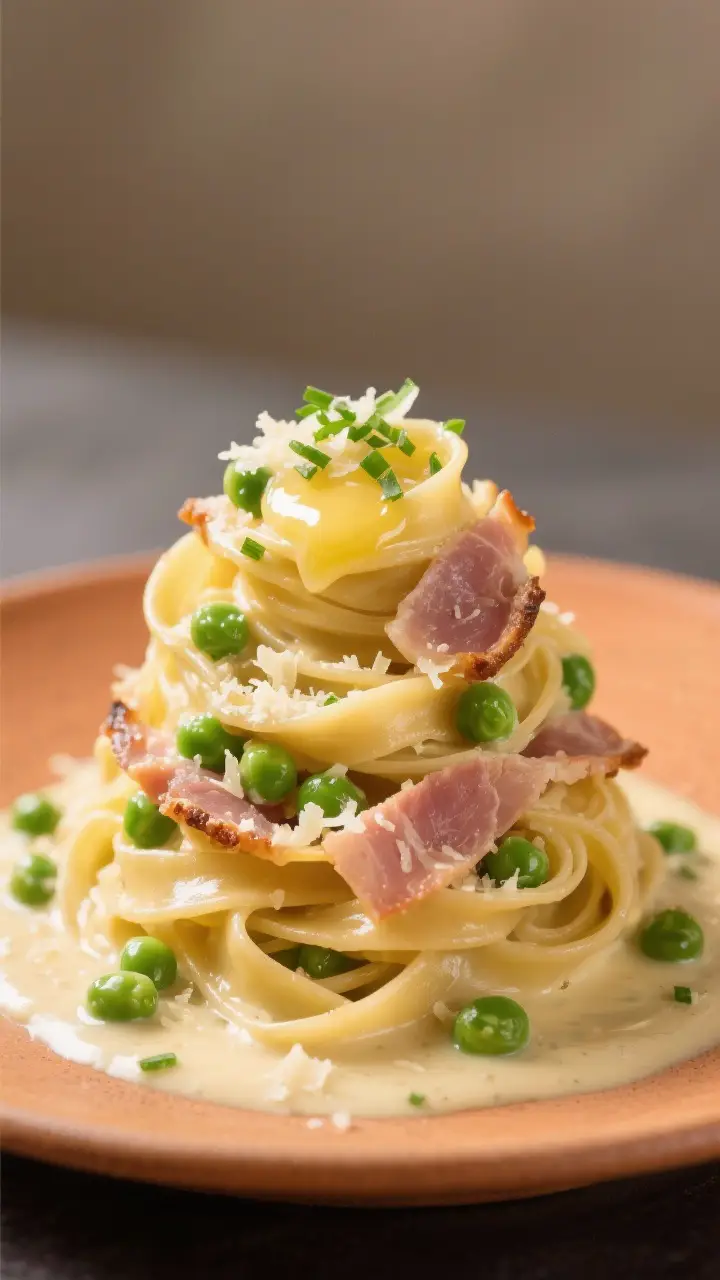
- Protein and fiber: Ham adds protein, and peas bring fiber and micronutrients like vitamin K, vitamin C, and folate.
- Energy-sustaining carbs: Pasta gives steady energy, especially if you choose bronze-cut or whole-wheat varieties.
- Balanced indulgence: A modest amount of cream and cheese goes a long way. The lemon zest and juice brighten the dish, helping it feel lighter.
- Portion-friendly: Pair with a simple green salad to keep the meal balanced without feeling restricted.
What Not to Do
- Don’t overcook the pasta: The sauce needs a little chew in the noodles to hold up. Pull the pasta early and finish it in the pan.
- Don’t skip the pasta water: The starch helps the sauce emulsify and cling.
Plain water won’t do the same job.
- Don’t boil the cream hard: Keep it at a gentle simmer. A hard boil can make the sauce greasy or split.
- Don’t add too much salt upfront: The ham and Parmesan are salty. Taste before salting the sauce.
- Don’t overcrowd with extras: Too many add-ins can water down the sauce.
Keep it focused and balanced.
Recipe Variations
- Lighter dairy: Swap half the cream for whole milk or evaporated milk. Add an extra tablespoon of Parmesan to keep it flavorful.
- No alcohol: Use chicken or vegetable broth instead of wine. A squeeze of lemon at the end adds brightness.
- Smoky twist: Replace ham with diced pancetta or smoked bacon.
Render the fat first and use it to sauté the shallot.
- Spring herbs: Finish with chopped chives, parsley, or tarragon. Fresh herbs lift the sauce without adding heaviness.
- Vegetarian version: Skip the ham and add sautéed mushrooms for a savory bite. Use vegetable broth and bump up the Parmesan.
- Whole-wheat or gluten-free: Use whole-wheat tagliatelle for extra fiber, or your favorite gluten-free pasta.
Watch the cooking time closely.
- Lemon-pepper: Add extra zest and a few grinds of pepper for a brighter, zippier finish.
FAQ
Can I use a different pasta shape?
Yes. Fettuccine, pappardelle, or even short shapes like rigatoni work well. Just adjust cooking time and save that pasta water for the sauce.
Do I have to use heavy cream?
No.
You can use half-and-half or a mix of milk and cream. The sauce will be a bit thinner, so use less pasta water and add a touch more Parmesan.
What kind of ham is best?
Any cooked ham that you enjoy works. Thick-cut deli ham, leftover baked ham, or prosciutto cotto are all great.
Avoid very sweet glazed ham if you don’t want the sauce to lean sweet.
Can I make it ahead?
You can prep the components. Chop the ham and shallot, measure the cheese, and have the peas ready. Cook the pasta and finish the sauce right before serving for the best texture.
How can I make it a bit healthier?
Use whole-wheat pasta, reduce the cream slightly, and add extra peas or a handful of baby spinach.
Keep the Parmesan for flavor, but measure it instead of eyeballing.
What if my sauce is too thick?
Add more hot pasta water a splash at a time and toss until it loosens and coats the pasta smoothly. Keep the heat low to maintain a glossy emulsion.
What if my sauce looks thin?
Toss the pasta in the sauce over low heat and add more Parmesan. The cheese and starch will help thicken it.
Give it a minute; it often tightens as it rests.
Can I use fresh peas?
Absolutely. Blanch them for 1–2 minutes in the pasta water, scoop them out, and proceed. Fresh peas cook very quickly and stay bright and sweet.
Wrapping Up
Tagliatelle with peas and ham is the kind of meal that proves simple cooks smarter.
A few good ingredients, a little technique, and you get a creamy, comforting bowl of pasta in minutes. Keep this one in your weeknight rotation, and don’t be afraid to tweak it to your taste. The basics are solid, and the result always feels like a small win at the end of a long day.