
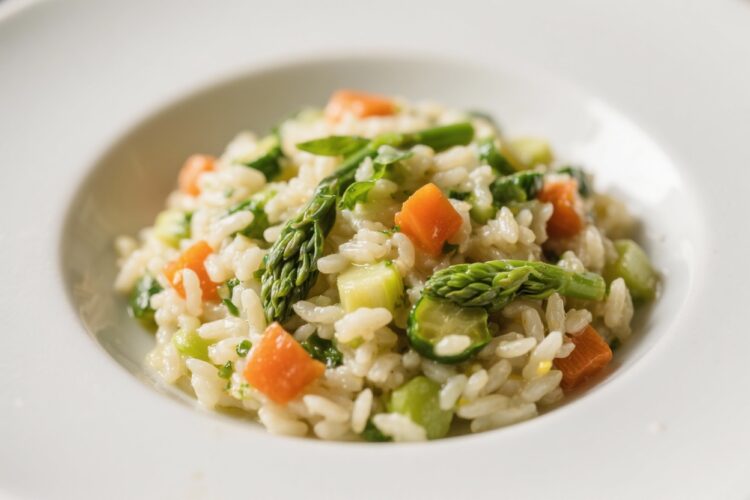
Spring risotto is one of those dishes that feels special without being fussy. It’s creamy and cozy, but the bright vegetables keep it light and fresh. Think tender asparagus, sweet peas, and a hint of lemon all wrapped in silky rice.
If you’ve never made risotto before, don’t worry—this version is straightforward and forgiving. With a little stirring and patience, you’ll end up with a restaurant-worthy bowl at home.
What Makes This Recipe So Good
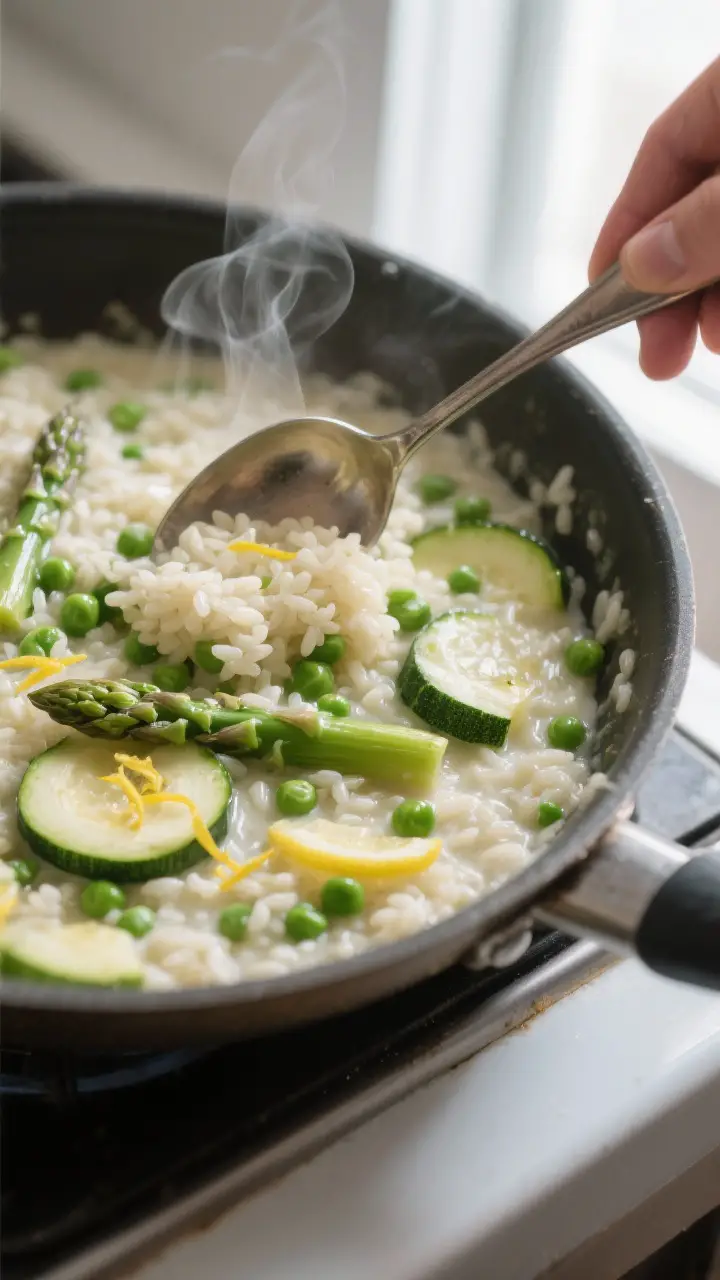
- Balanced flavors: The richness of Parmesan and butter meets crisp spring vegetables and lemon zest. Every bite has a clean, bright finish.
- All-in-one meal: It’s filling on its own, but pairs easily with grilled chicken, shrimp, or a leafy salad.
- Flexible: Swap in whatever looks best at the market—snap peas, leeks, zucchini, or tender spinach.
- Foolproof texture: Warm broth and steady stirring build that classic creamy finish without heavy cream.
- Make-ahead friendly: You can par-cook the rice to 75% done and finish it right before serving for stress-free hosting.
Ingredients
- 4 cups low-sodium vegetable or chicken broth, plus more as needed
- 2 tablespoons olive oil
- 2 tablespoons unsalted butter, divided
- 1 small yellow onion or 2 shallots, finely chopped
- 2 cloves garlic, minced
- 1 1/2 cups Arborio or Carnaroli rice
- 1/2 cup dry white wine (optional, but recommended)
- 1 cup asparagus, trimmed and cut into 1-inch pieces
- 1 cup fresh or frozen peas
- 1 small zucchini, diced (optional)
- Zest of 1 lemon, plus 1–2 teaspoons lemon juice
- 3/4 cup finely grated Parmesan cheese, plus more for serving
- 2 tablespoons chopped fresh herbs (parsley, chives, or mint)
- Kosher salt and freshly ground black pepper, to taste
- Extra-virgin olive oil, for finishing (optional)
How to Make It
- Warm the broth: In a saucepan, bring the broth to a gentle simmer.
Keep it warm over low heat. Using warm broth helps the rice cook evenly and stay creamy.
- Sauté the aromatics: In a large, wide skillet or Dutch oven, heat the olive oil and 1 tablespoon butter over medium heat. Add the onion and a pinch of salt.
Cook until translucent and soft, about 4–5 minutes. Stir in the garlic for 30 seconds.
- Toast the rice: Add the Arborio rice. Stir to coat with the oil and butter.
Cook for 1–2 minutes, until the edges look slightly translucent and you smell a nutty aroma.
- Deglaze with wine: Pour in the white wine and stir until it’s mostly absorbed. If not using wine, add a ladle of broth instead.
- Add broth gradually: Add one ladle of warm broth and stir gently. When the liquid is mostly absorbed, add another ladle.
Keep repeating, stirring often. Adjust heat to maintain a steady simmer, not a boil.
- Cook the vegetables: When the rice is about halfway cooked (after 10–12 minutes), add the asparagus and zucchini. Continue adding broth as needed.
At the 15-minute mark, stir in the peas. The rice should be tender with a slight bite, and the sauce creamy and loose.
- Finish and season: Turn off the heat. Stir in the remaining 1 tablespoon butter, Parmesan, lemon zest, and lemon juice.
Adjust salt and pepper. Fold in fresh herbs. If the risotto thickens too much, add a splash of warm broth to loosen.
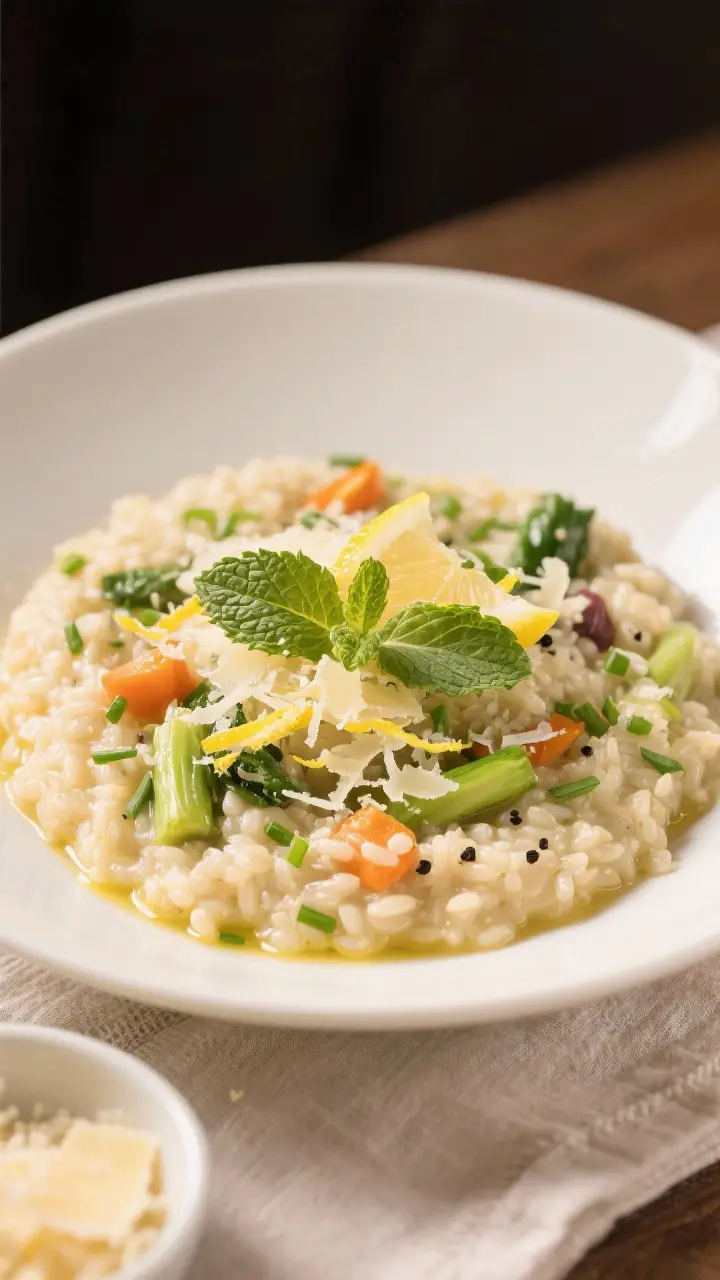
- Serve immediately: Spoon into warm bowls.
Drizzle with a little extra-virgin olive oil and add more Parmesan if you like. The texture should flow slowly on the plate, not sit in a tight mound.
How to Store
- Refrigerate: Store leftovers in an airtight container for up to 3 days. Add a splash of water or broth before reheating to restore creaminess.
- Reheat gently: Warm on the stovetop over low heat, stirring and loosening with liquid as needed.
Microwave in short bursts with a little added broth, stirring between bursts.
- Avoid freezing: Risotto doesn’t freeze well; the texture becomes grainy. If you must, freeze in small portions and expect some change in texture.
Why This is Good for You
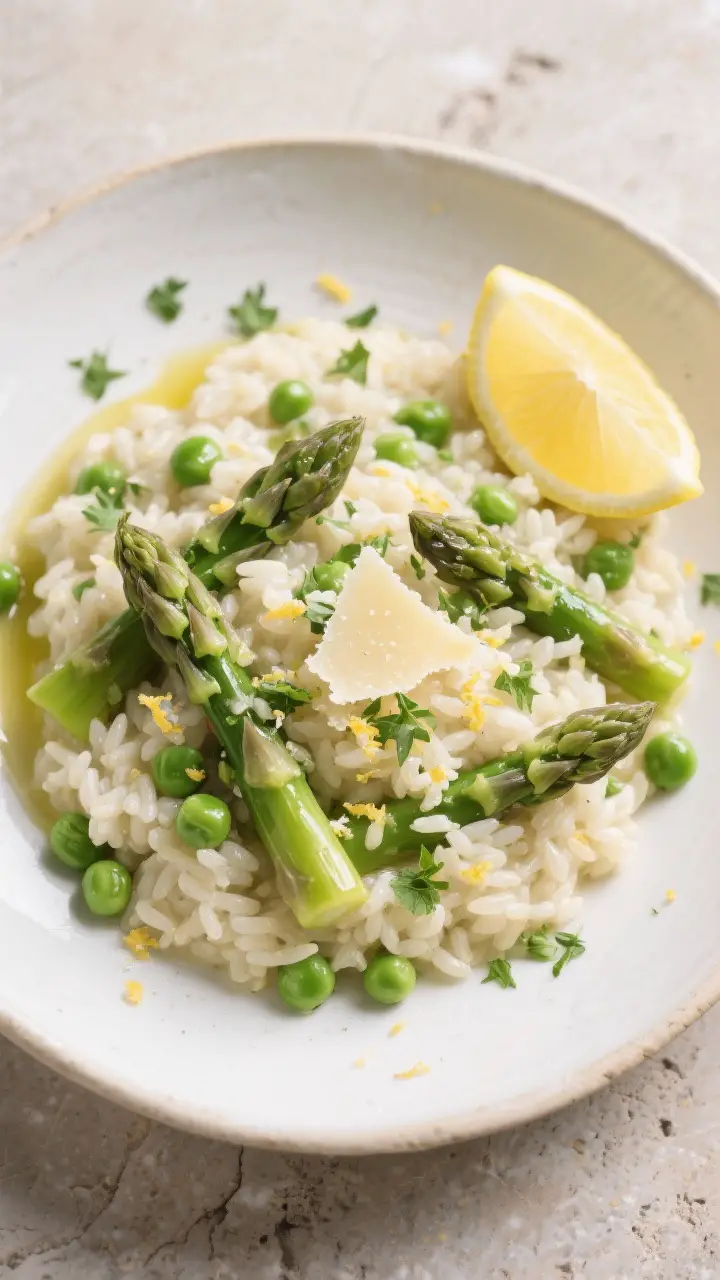
- Fiber and vitamins: Asparagus and peas bring fiber, vitamin C, K, folate, and antioxidants that support immunity and healthy digestion.
- Controlled richness: The creamy texture comes from starch released by the rice. You only need a modest amount of butter and cheese for a satisfying finish.
- Fresh herbs and lemon: Bright flavors help you use less salt without losing taste, supporting heart health and balance.
- Vegetable-forward: This recipe packs a generous dose of seasonal produce in a comforting format, which can help increase your daily veggie intake.
Common Mistakes to Avoid
- Using cold broth: Cold liquid shocks the rice and stalls cooking.
Keep your broth warm at all times.
- Boiling too hard: A rapid boil can break the grains and dry out the risotto. Aim for a steady, gentle simmer.
- Overcooking the vegetables: Add asparagus and peas toward the end so they stay crisp and green, not mushy or dull.
- Letting it get too thick: Risotto should be creamy and slightly loose. If it sits, stir in more warm broth before serving.
- Skipping the final stir-in: Butter, Parmesan, lemon, and herbs bring the dish together.
Don’t skip that last step.
Alternatives
- Dairy-free: Use olive oil instead of butter and a dairy-free Parmesan alternative or nutritional yeast. Add a splash of oat cream if you want extra richness.
- Grain swaps: Try pearled barley for a nutty chew or farro for a heartier texture. These will take longer and need more broth.
- Protein add-ins: Stir in cooked shrimp, shredded rotisserie chicken, or crispy pancetta for more protein.
- Veggie swaps: Use snap peas, leeks, baby spinach, or artichoke hearts.
Keep the total vegetable amount similar so the texture stays balanced.
- No wine: Replace with extra broth plus 1 teaspoon white wine vinegar or lemon juice for brightness.
FAQ
Can I use a different rice?
Arborio and Carnaroli are best because they’re high in starch, which creates creaminess. If you use long-grain rice, you won’t get the same silky texture. Carnaroli is slightly more forgiving and tends to stay al dente.
Do I have to stir constantly?
You don’t need to stir nonstop.
Regular stirring—every minute or so—helps release starch and prevents sticking. Just don’t walk away for long stretches.
What if I don’t have vegetable broth?
Water works in a pinch, but add more aromatics and season carefully. You can simmer water with onion ends, herb stems, and a bay leaf for 15 minutes for quick “broth.”
How do I know when the risotto is done?
Taste it.
The rice should be tender with a slight bite in the center. The consistency should be creamy and flow like lava when you tilt the pan.
Can I make it ahead for guests?
Yes. Cook the risotto until the rice is about 75% done, spread it on a tray to cool, and refrigerate.
To serve, reheat with warm broth and finish with butter, cheese, lemon, and herbs.
Is wine necessary?
No, but it adds brightness. If skipping wine, add a squeeze of lemon and an extra pinch of salt to balance the flavors.
How can I make it more lemony?
Increase the zest, add a touch more juice, and finish with a few drops of good olive oil. Fresh herbs like mint or chives also lift the citrus notes.
What’s the best pan to use?
A wide, heavy-bottomed skillet or Dutch oven is ideal.
The large surface area helps the liquid reduce evenly and keeps the rice from steaming.
In Conclusion
Spring Vegetable Risotto is the kind of meal that feels both comforting and refreshing. With a few simple steps and good ingredients, you get a bowl that’s creamy, bright, and full of seasonal flavor. Keep the broth warm, stir steadily, and taste as you go.
Serve it right away, and let the fresh vegetables and lemon shine. It’s a reliable favorite for weeknights, dinner parties, and everything in between.