
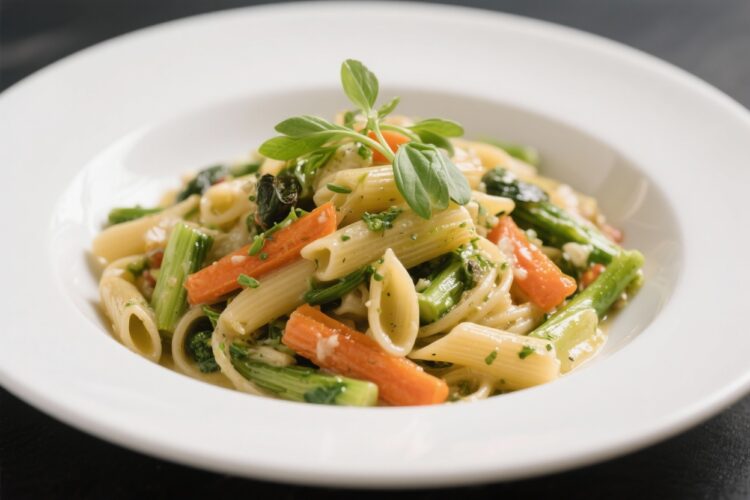
Spring vegetable primavera is one of those meals that feels like sunshine in a bowl. It’s bright, crisp, and full of the first tender vegetables of the season. The flavors are clean but satisfying, with a light sauce that clings to every strand of pasta.
You’ll get the comfort of a classic pasta dish without the heaviness, and it comes together fast enough for a weeknight. This is the kind of recipe that makes you look forward to cooking at home.
Why This Recipe Works
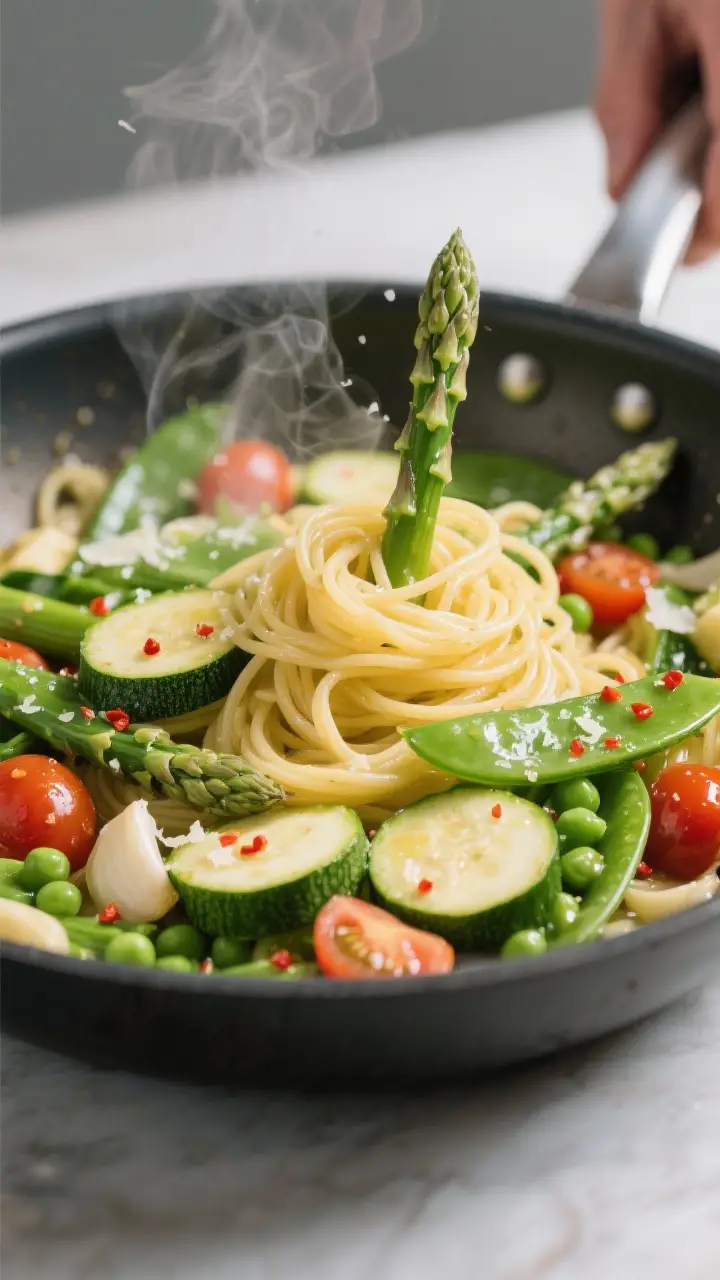
This primavera keeps things simple so the vegetables can shine. A quick sauté in olive oil and butter keeps the veggies crisp-tender, while garlic and lemon add freshness without overpowering the dish.
Instead of a heavy cream sauce, a splash of reserved pasta water and grated Parmesan create a silky coating that feels rich but stays light.
Using a mix of spring vegetables gives the dish layers of texture and color. Tender asparagus, sweet peas, and peppery arugula balance each other out. The pasta cooks alongside the prep, so everything comes together in under 35 minutes.
What You’ll Need
- Pasta: 12 ounces spaghetti, linguine, or fettuccine
- Olive oil: 3 tablespoons, divided
- Butter: 2 tablespoons
- Garlic: 3–4 cloves, thinly sliced
- Shallot: 1 medium, finely sliced (or 1/2 small red onion)
- Asparagus: 1 bunch, trimmed and cut into 1-inch pieces
- Snap peas or snow peas: 1 cup, trimmed
- Fresh or frozen peas: 1 cup
- Zucchini: 1 small, halved lengthwise and sliced
- Cherry tomatoes: 1 cup, halved
- Arugula or baby spinach: 2 cups, loosely packed
- Lemon: Zest of 1 and juice of 1/2
- Parmesan cheese: 3/4 cup freshly grated, plus more for serving
- Red pepper flakes: 1/4–1/2 teaspoon (optional)
- Fresh herbs: 1/4 cup chopped basil and/or parsley
- Salt and black pepper: To taste
- Reserved pasta water: 1–1.5 cups
How to Make It
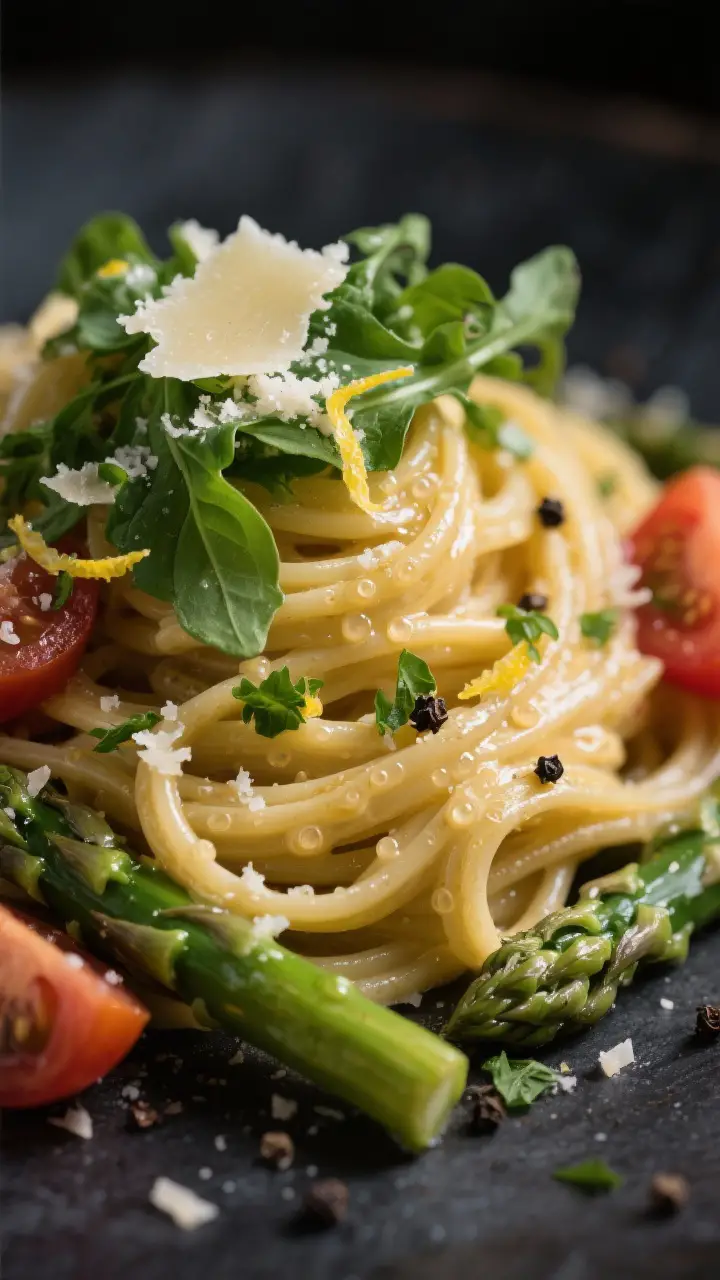
- Boil the pasta: Bring a large pot of salted water to a rolling boil.
Cook the pasta until just shy of al dente. Reserve 1–1.5 cups of the starchy cooking water, then drain.
- Sauté aromatics: While the pasta cooks, heat 2 tablespoons olive oil and the butter in a large skillet over medium heat. Add the shallot and cook until soft, about 2 minutes.
Add the garlic and a pinch of red pepper flakes and cook 30 seconds until fragrant.
- Cook sturdy veggies first: Add asparagus and zucchini with a pinch of salt. Sauté 3–4 minutes, stirring occasionally, until bright and just tender.
- Add quick-cooking veggies: Stir in snap peas and peas. Cook 2–3 minutes more.
Toss in cherry tomatoes and cook just until they begin to soften, about 1 minute.
- Combine with pasta: Add the drained pasta to the skillet along with 3/4 cup reserved pasta water and the remaining 1 tablespoon olive oil. Toss over medium heat until the pasta is glossy and the liquid reduces slightly, 1–2 minutes.
- Create the sauce: Reduce the heat to low. Add the Parmesan a little at a time, tossing constantly so it melts smoothly.
Add more pasta water as needed to form a light, silky sauce that coats the pasta.
- Finish with freshness: Stir in the lemon zest, lemon juice, arugula, and herbs. Toss just until the greens wilt. Taste and season with salt and black pepper.
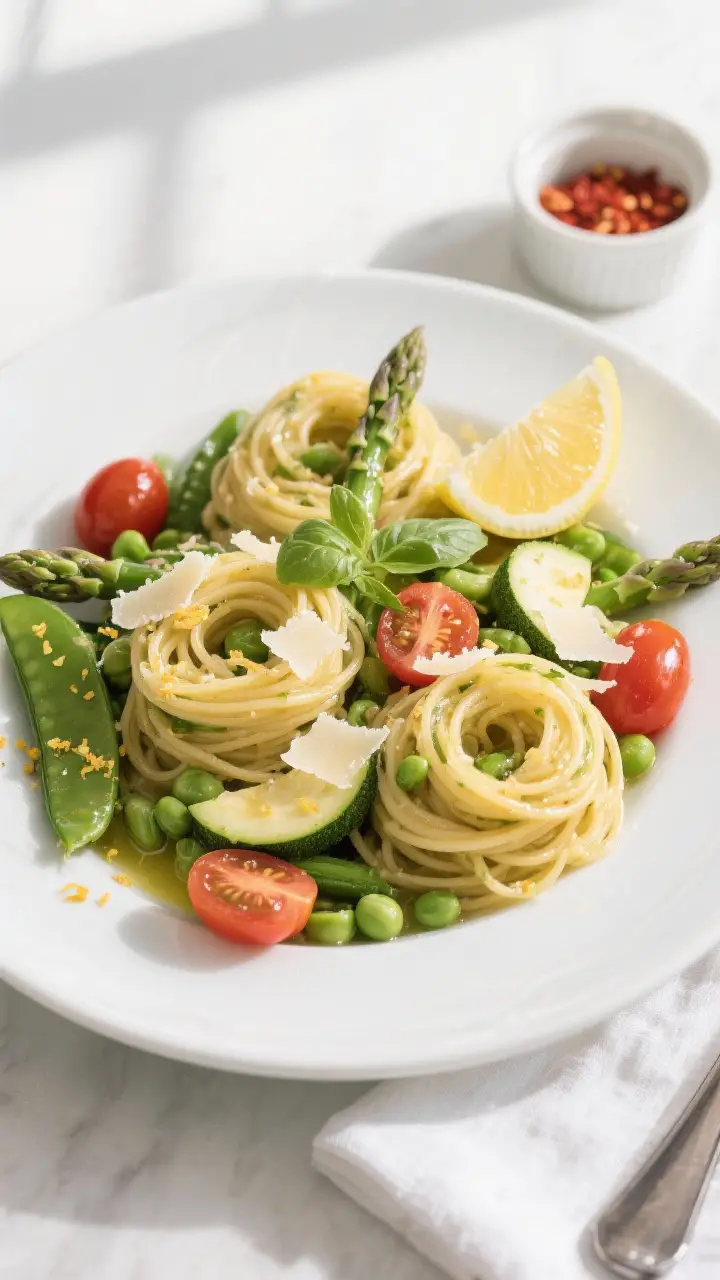
- Serve: Plate immediately with extra Parmesan, a drizzle of olive oil, and more herbs if you like.
How to Store
Let leftovers cool, then store in an airtight container in the fridge for up to 3 days.
To reheat, add a splash of water or stock to a skillet and warm over medium heat, tossing until loosened and hot. Avoid the microwave if possible—it can overcook the vegetables and make the pasta rubbery.
If you plan for leftovers, keep the greens and herbs separate and stir them in when reheating. This keeps the color bright and the flavors fresh.
Benefits of This Recipe
- Fast and flexible: Ready in about 30 minutes with easy swaps based on what you have.
- Light but satisfying: A simple emulsion of pasta water and Parmesan gives a creamy feel without heavy cream.
- Veggie-forward: Packed with fiber, vitamins, and antioxidants from a rainbow of spring produce.
- Budget-friendly: Uses seasonal vegetables and pantry staples to create a restaurant-style meal at home.
- Great for entertaining: Colorful, impressive, and easy to scale up.
What Not to Do
- Don’t overcook the vegetables: Aim for crisp-tender.
Mushy vegetables will dull both flavor and color.
- Don’t skip the pasta water: It’s the key to a glossy, cohesive sauce that clings to the pasta.
- Don’t add Parmesan all at once: Add gradually off direct high heat to prevent clumping.
- Don’t drown it in lemon juice: A little brightens; too much overwhelms the delicate spring flavors.
- Don’t let the pasta sit: Serve right away for the best texture and sheen.
Recipe Variations
- Creamy Primavera: Stir in 1/4–1/3 cup heavy cream or mascarpone with the Parmesan for a richer sauce.
- Protein Boost: Add sautéed shrimp, grilled chicken, or crispy chickpeas. For a quicker option, toss in a can of white beans.
- Lemon-Herb Upgrade: Finish with extra lemon zest and a handful of finely chopped dill or tarragon.
- Gluten-Free: Use your favorite gluten-free pasta and watch the cook time closely. Reserve extra pasta water, as GF pasta can absorb more liquid.
- Vegan Version: Skip the butter and Parmesan.
Use extra-virgin olive oil and a couple tablespoons of nutritional yeast, plus a splash of almond or oat milk for body.
- Roasted Vegetable Twist: Roast asparagus, zucchini, and tomatoes at 425°F until caramelized, then toss with the pasta and sauce.
- Heat Lovers: Add more red pepper flakes or a spoon of Calabrian chili paste for a slow burn.
FAQ
Can I make this ahead?
You can prep the vegetables and grate the cheese ahead of time, but cook the pasta and assemble right before serving. If you must make it in advance, undercook the pasta by a minute and reheat with a splash of water in a skillet.
What pasta shape works best?
Long shapes like spaghetti or linguine coat well with the light sauce. Short shapes like penne or orecchiette also work if you prefer more bites of vegetables in each forkful.
How do I keep the sauce from clumping?
Lower the heat before adding cheese and stir constantly.
Add the Parmesan in small handfuls, alternating with splashes of pasta water, to keep it smooth and glossy.
Can I use frozen vegetables?
Yes. Frozen peas are perfect, and you can use frozen mixed vegetables in a pinch. Add them straight to the pan without thawing and cook just until warmed through to avoid sogginess.
What if I don’t have arugula?
Baby spinach, chopped kale (quickly wilted), or fresh basil leaves work well.
You can also skip the greens and add more herbs for freshness.
How do I make it dairy-free?
Use olive oil instead of butter and swap Parmesan for nutritional yeast or a dairy-free Parmesan alternative. Add a splash of unsweetened plant milk to help the sauce emulsify.
How salty should the pasta water be?
Salt the water so it tastes like the sea. This is the main chance to season the pasta from the inside, which makes the whole dish taste better.
Can I add wine?
Absolutely.
After sautéing the aromatics, deglaze with 1/4 cup dry white wine and let it reduce by half before adding the vegetables. It adds a gentle acidity and depth.
What’s the best way to cut the vegetables?
Keep pieces bite-sized and uniform so everything cooks evenly. For asparagus, cut into 1-inch pieces; for zucchini, thin half-moons work well; halved cherry tomatoes hold their shape.
Is this good for meal prep?
It’s best fresh, but it can work for meal prep if you keep the greens and herbs separate and reheat gently with water or stock.
Expect the vegetables to soften a bit on day two.
Final Thoughts
Spring vegetable primavera is a simple way to celebrate fresh produce without fuss. With a few pantry staples and a handful of seasonal vegetables, you’ll have a colorful, balanced pasta that feels special. Keep the technique in mind—crisp veggies, starchy pasta water, gradual cheese—and you can adapt it all season long.
Serve it on a busy weeknight or for friends on the weekend, and watch it disappear fast.