
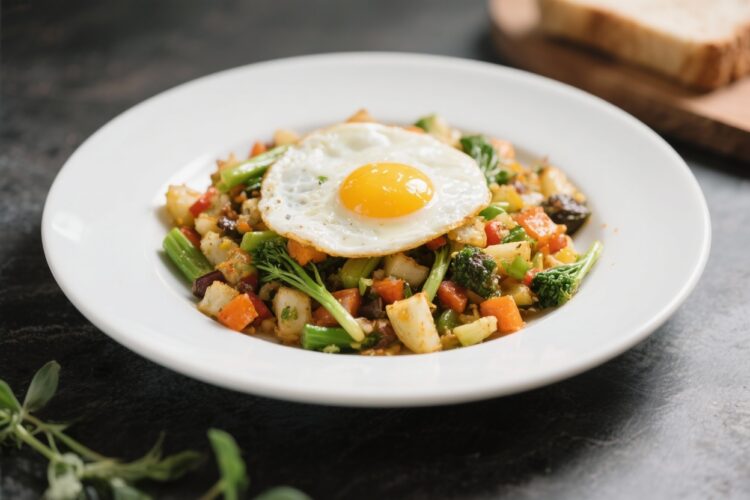
Spring mornings call for something fresh, colorful, and satisfying. This spring vegetable hash with eggs checks all the boxes—crisp-tender veggies, golden potatoes, and jammy or runny eggs, all in one pan. It’s the kind of meal that feels special but comes together quickly with pantry staples and seasonal produce.
Serve it for breakfast, brunch, or even a light dinner. It’s flexible, forgiving, and easy to make your own.
What Makes This Recipe So Good
- Seasonal flavor: Asparagus, peas, and tender greens bring bright, sweet notes and a pop of color.
- One-pan ease: Everything cooks in a single skillet, which keeps cleanup simple.
- Balanced and filling: Potatoes add hearty comfort, while eggs and veggies bring protein and fiber.
- Customizable: Swap in whatever spring produce you have—leeks, radishes, or zucchini all work.
- Great any time of day: It’s not just for breakfast. Pair it with a side salad and you’ve got dinner.
What You’ll Need
- Olive oil or butter: For sautéing and flavor.
Use a mix for richness.
- Yukon gold or red potatoes (about 1 lb): Diced small for fast, even cooking.
- Asparagus (1 bunch): Trimmed and cut into 1-inch pieces.
- Leek or small onion: Thinly sliced for sweetness and depth.
- Garlic (2–3 cloves): Minced.
- Bell pepper (optional): Diced for extra color and sweetness.
- Fresh or frozen peas (1 cup): Add at the end to keep them bright.
- Baby spinach or kale (2–3 cups): Slightly wilted for a fresh finish.
- Eggs (4–6): Cooked directly in the hash.
- Fresh herbs: Chives, dill, or parsley, chopped.
- Lemon: Zest and juice for brightness.
- Salt and black pepper: To season at every step.
- Red pepper flakes (optional): For gentle heat.
- Parmesan or goat cheese (optional): A creamy, salty finish.
Step-by-Step Instructions
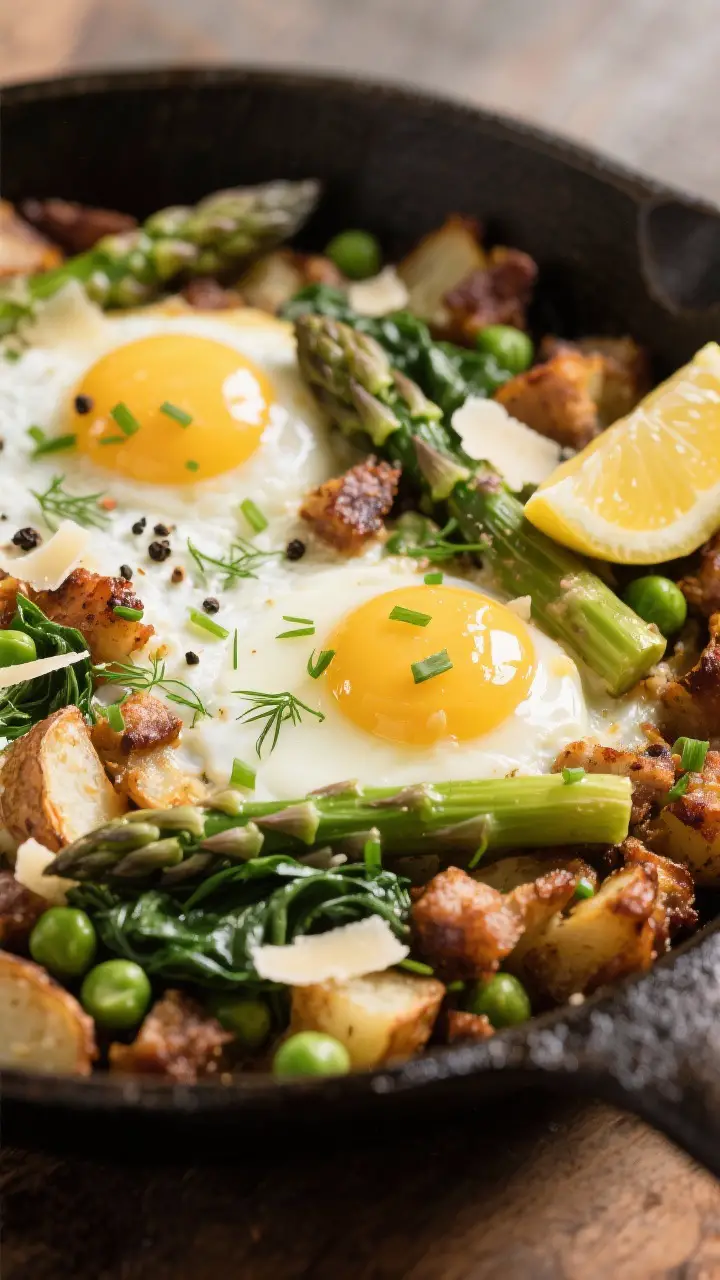
- Prep the produce: Dice potatoes into small cubes (about 1/2 inch). Slice the leek (white and light green parts) and rinse well. Trim asparagus and cut into 1-inch pieces.
Mince garlic. Chop herbs. Have peas and greens ready.
- Start the potatoes: Heat a large skillet over medium heat with 2 tablespoons olive oil or 1 tablespoon oil + 1 tablespoon butter.
Add potatoes and a generous pinch of salt and pepper. Cook, stirring occasionally, until golden and mostly tender, about 10–12 minutes.
- Add aromatics: Stir in the leek or onion and bell pepper if using. Cook until soft and fragrant, 4–5 minutes.
If the pan looks dry, drizzle in another splash of oil.
- Season and layer flavor: Add garlic and a pinch of red pepper flakes. Cook 30–60 seconds until fragrant. Taste a potato, then adjust salt and pepper.
This step sets the base flavor, so don’t skip it.
- Cook the spring vegetables: Add asparagus and cook 3–4 minutes until crisp-tender. Stir in peas and cook 1–2 minutes. Add greens and let them wilt.
Grate in a little lemon zest for brightness.
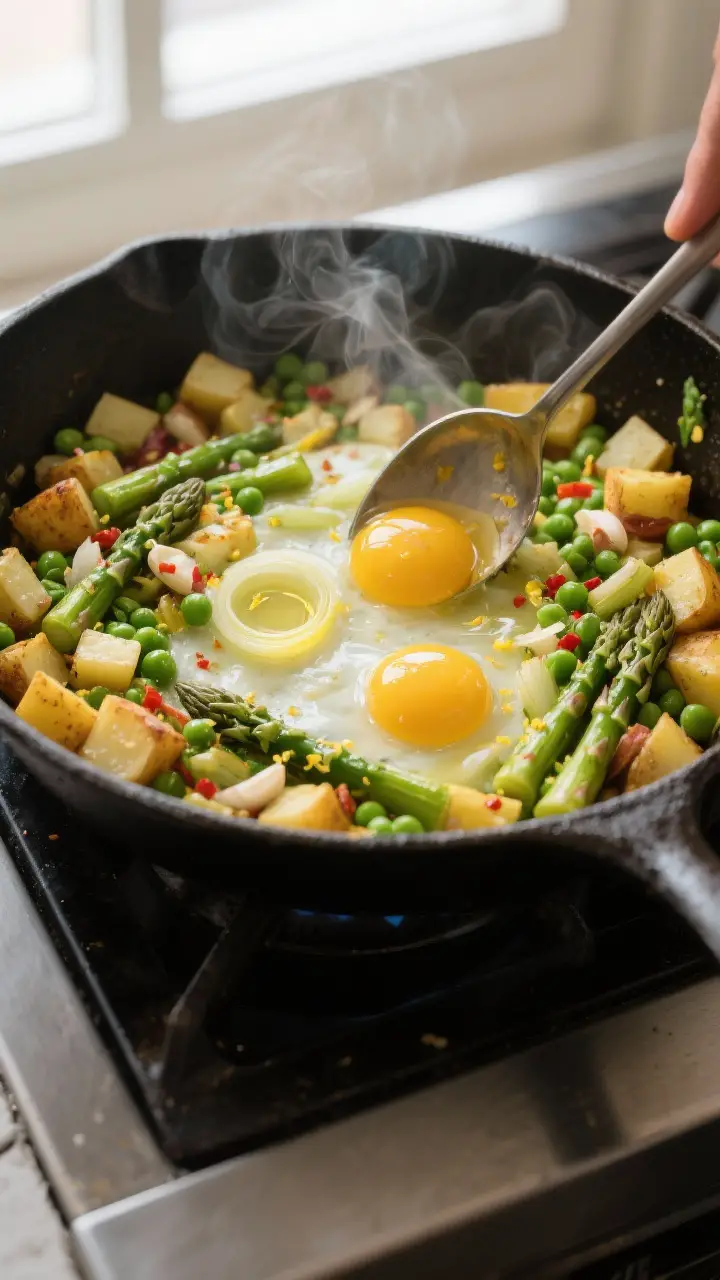
- Create wells for eggs: Use a spoon to make small spaces in the hash. Crack an egg into each well. Sprinkle eggs with a pinch of salt and pepper.
- Set the eggs: Cover the skillet with a lid.
Cook over medium-low heat until whites are set and yolks are done to your liking, about 5–7 minutes for runny yolks. For firmer yolks, give it an extra minute or two.
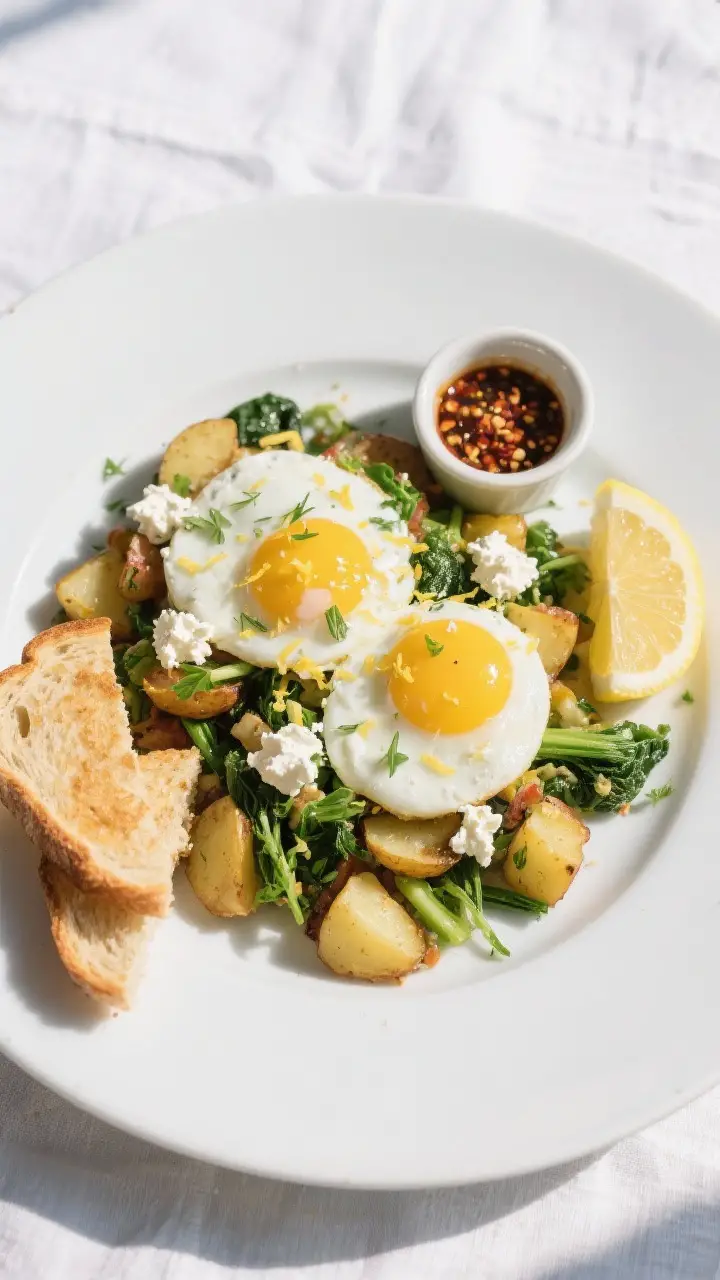
- Finish and serve: Squeeze in a little lemon juice, scatter herbs, and sprinkle with Parmesan or dollops of goat cheese if you like. Serve straight from the skillet with toast on the side.
Storage Instructions
- Refrigerate: Store leftover hash (without eggs) in an airtight container for up to 4 days.
Eggs are best cooked fresh.
- Reheat: Warm the hash in a skillet over medium heat with a splash of oil or water until hot. Add fresh eggs and cook as directed.
- Meal prep tip: Par-cook diced potatoes in the skillet, cool, and refrigerate. They crisp faster later and save time on busy mornings.
- Freezing: Not ideal for this recipe.
Potatoes can get mealy and greens lose texture after thawing.
Benefits of This Recipe
- Nutrient-dense: Asparagus, peas, and greens bring vitamins A, C, K, plus fiber. Eggs add high-quality protein and choline.
- Balanced plate: A mix of complex carbs, protein, and healthy fats keeps you full and energized.
- Seasonal eating: Cooking with spring produce means better flavor and usually better prices.
- Weeknight-friendly: Ready in about 30 minutes and uses basic ingredients.
- Flexible diet-wise: Easy to make vegetarian, dairy-free, or gluten-free with simple tweaks.
What Not to Do
- Don’t overcrowd the pan: Potatoes won’t crisp if they’re piled high. Use a large skillet or cook in batches.
- Don’t skip seasoning early: Salt and pepper the potatoes as they cook.
Waiting until the end leads to flat flavor.
- Don’t overcook asparagus and peas: You want snap and color. Add them near the end.
- Don’t crack eggs into a dry skillet: Make sure there’s enough moisture or oil so the whites don’t stick and burn.
- Don’t forget acid: A squeeze of lemon at the end lifts everything. It’s a small step with a big payoff.
Alternatives
- Veggie swaps: Try zucchini, snap peas, broccolini, radishes, or baby carrots.
Just adjust cook times for tenderness.
- Greens: Use arugula, Swiss chard, or beet greens. Add delicate greens right at the end.
- Egg options: If you prefer, fry or poach eggs separately, then place on top. Soft-scrambled eggs also work.
- Flavor boosters: Add smoked paprika, za’atar, or herbes de Provence.
Finish with pesto or a drizzle of chili crisp.
- Protein additions: Fold in cooked bacon, pancetta, smoked salmon, or chickpeas for extra protein.
- Dairy-free: Skip the cheese and finish with extra herbs or a spoonful of dairy-free pesto.
- Make it hearty: Add sweet potatoes or use leftover roasted potatoes for deeper flavor.
FAQ
Can I use frozen vegetables?
Yes. Frozen peas are perfect, and frozen asparagus can work in a pinch. Add them toward the end and cook just until heated through so they don’t turn mushy.
What’s the best pan for this recipe?
A large, heavy skillet works best—cast iron or stainless steel.
You want room for the potatoes to brown and space to nestle the eggs.
How do I keep the potatoes from sticking?
Preheat the pan, use enough oil, and avoid moving the potatoes too soon. Let them sit until they release naturally and form a crust before stirring.
How do I know when the eggs are done?
The whites should be opaque and set. Gently tap the yolk with a spoon—if it jiggles slightly, it’s runny; if it’s firm, it’s cooked through.
Keep the lid on to set the tops evenly.
Can I make this spicy?
Absolutely. Add red pepper flakes with the garlic or finish with hot sauce, chili oil, or a sprinkle of Aleppo pepper.
Is there a way to make it vegan?
Yes. Skip the eggs and add a can of rinsed chickpeas or cubes of crispy tofu.
Finish with a squeeze of lemon and a dollop of dairy-free pesto or tahini sauce.
What should I serve with it?
Crusty toast, a simple green salad, or sliced avocado work well. For brunch, add a side of fruit and coffee or tea.
In Conclusion
This spring vegetable hash with eggs is simple, bright, and endlessly adaptable. It makes the most of seasonal produce without fussy steps or complicated equipment.
With crispy potatoes, tender greens, and perfectly cooked eggs, it’s a crowd-pleaser any day of the week. Keep it in your rotation, and swap in whatever fresh veggies you find—spring never tasted so good.
Printable Recipe Card
Want just the essential recipe details without scrolling through the article? Get our printable recipe card with just the ingredients and instructions.