

Spring brings a wave of tender greens and crisp, colorful produce, and a gratin is one of the easiest ways to celebrate it. This recipe layers asparagus, peas, leeks, and zucchini under a light, golden crust that’s creamy but not heavy. It’s the kind of dish that feels cozy yet fresh, perfect for a weeknight or a relaxed weekend lunch.
Serve it alongside roasted chicken or enjoy it as a main with a simple salad. Either way, it makes spring vegetables shine without much fuss.
What Makes This Special
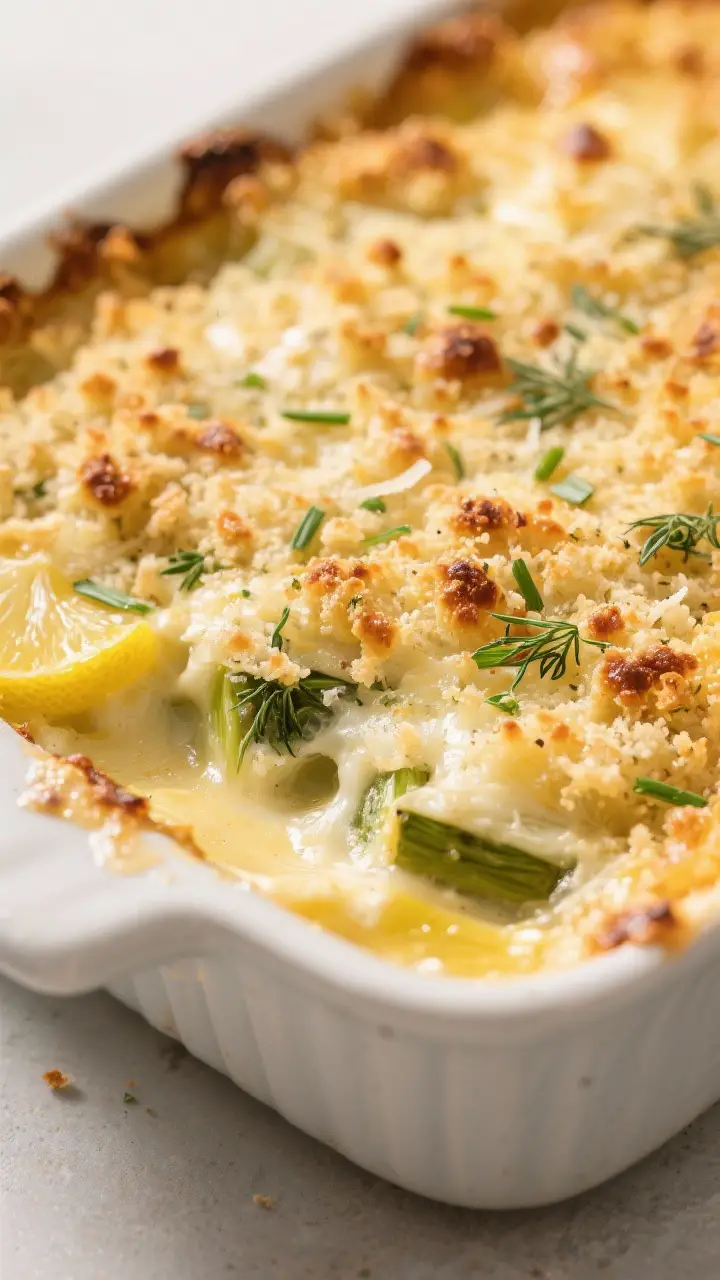
This gratin is lighter than the classic potato version, but still satisfying. The sauce leans on a gentle mix of milk and a touch of cream, so the vegetables stay front and center.
Fresh herbs and a hint of lemon brighten every bite, and a crisp breadcrumb-and-cheese topping adds welcome crunch. It’s also flexible: swap vegetables based on what looks best at the market. Best of all, the prep is straightforward, and most of it can be done ahead.
Shopping List
- 1 large leek, white and light green parts only, thinly sliced
- 2 medium zucchini, thinly sliced into half-moons
- 1 bunch asparagus, trimmed and cut into 1-inch pieces
- 1 cup fresh or frozen peas
- 2 cups baby spinach
- 2 cloves garlic, minced
- 2 tablespoons olive oil
- 2 tablespoons unsalted butter
- 2 tablespoons all-purpose flour
- 1 cup whole milk
- 1/2 cup heavy cream (or substitute more milk)
- 1/2 cup grated Parmesan cheese, plus extra for topping
- 1/2 cup grated Gruyère or sharp cheddar
- 1 teaspoon Dijon mustard
- 1 teaspoon lemon zest
- 2 tablespoons lemon juice
- 1/4 cup chopped fresh herbs (parsley, chives, or dill)
- 1 cup fresh breadcrumbs (or panko)
- Salt and black pepper
Instructions
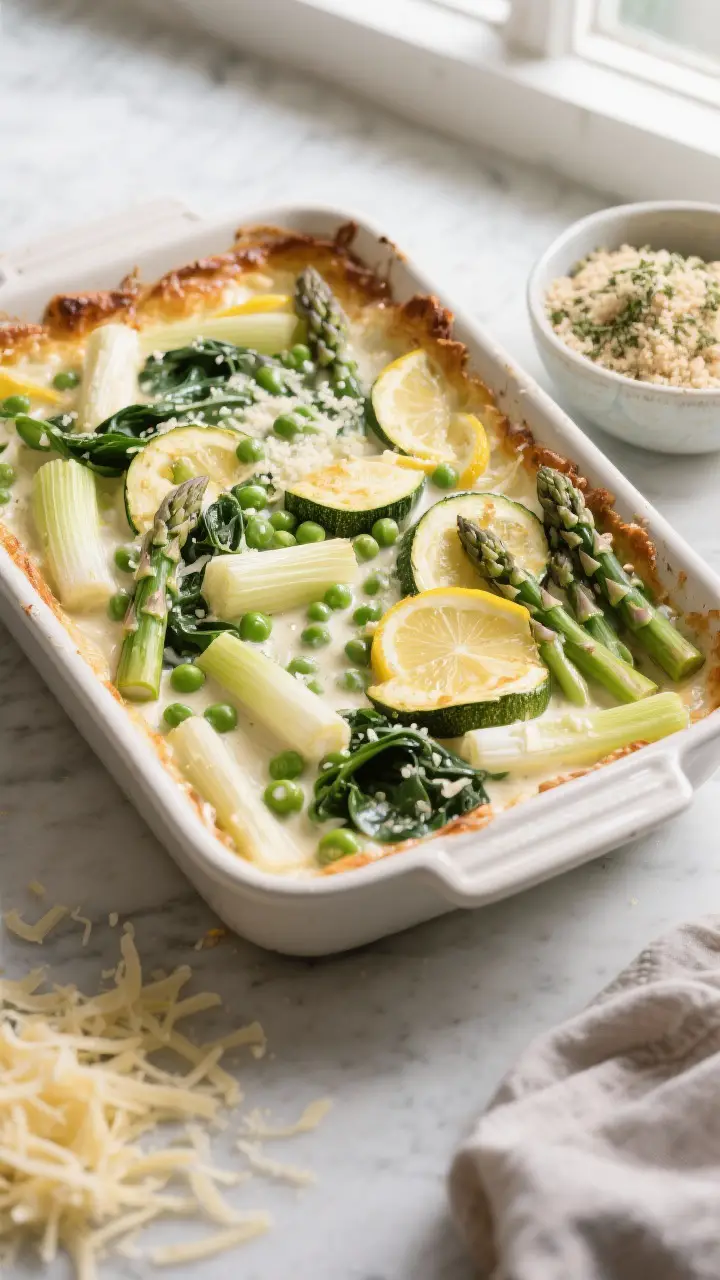
- Preheat and prep the dish: Heat the oven to 400°F (200°C).
Lightly grease a 9×13-inch baking dish or similar casserole with olive oil or butter.
- Cook the leeks: Warm the olive oil in a large skillet over medium heat. Add the sliced leeks with a pinch of salt and cook, stirring, until soft and sweet, about 5–6 minutes. Stir in the garlic and cook 30 seconds.
- Soften the zucchini: Add the zucchini to the skillet and cook until just tender and lightly golden in spots, 4–5 minutes.
Avoid overcooking to keep some bite.
- Blanch the asparagus and peas: Bring a pot of salted water to a boil. Add asparagus and cook 2 minutes, then add peas and cook 1 minute more. Drain and rinse under cold water to stop the cooking.
- Wilt the spinach: Add spinach to the skillet with the leeks and zucchini.
Cook 1–2 minutes until just wilted. Turn off heat and fold in the asparagus and peas. Season with salt and pepper.
- Make the light cream sauce: In a small saucepan, melt the butter over medium heat.
Whisk in the flour and cook 1 minute to form a smooth paste. Slowly whisk in the milk and cream until no lumps remain. Simmer, whisking, until slightly thickened, 3–4 minutes.
- Flavor the sauce: Remove from heat and whisk in Dijon, lemon zest, lemon juice, Parmesan, and half of the Gruyère.
Taste and season with salt and pepper. The sauce should be well-seasoned and bright.
- Combine in the baking dish: Spread the vegetable mixture in the prepared dish. Pour the sauce evenly over the top, gently tossing with a spatula to coat without mashing the vegetables.
Sprinkle with the remaining Gruyère.
- Make the topping: In a bowl, combine breadcrumbs, a small handful of extra Parmesan, a drizzle of olive oil, and the chopped herbs. Season with a pinch of salt and pepper. Scatter over the gratin.
- Bake: Bake for 18–22 minutes, until the top is golden and crisp and the edges are bubbling.
If needed, broil for 1–2 minutes at the end for extra color, watching carefully.
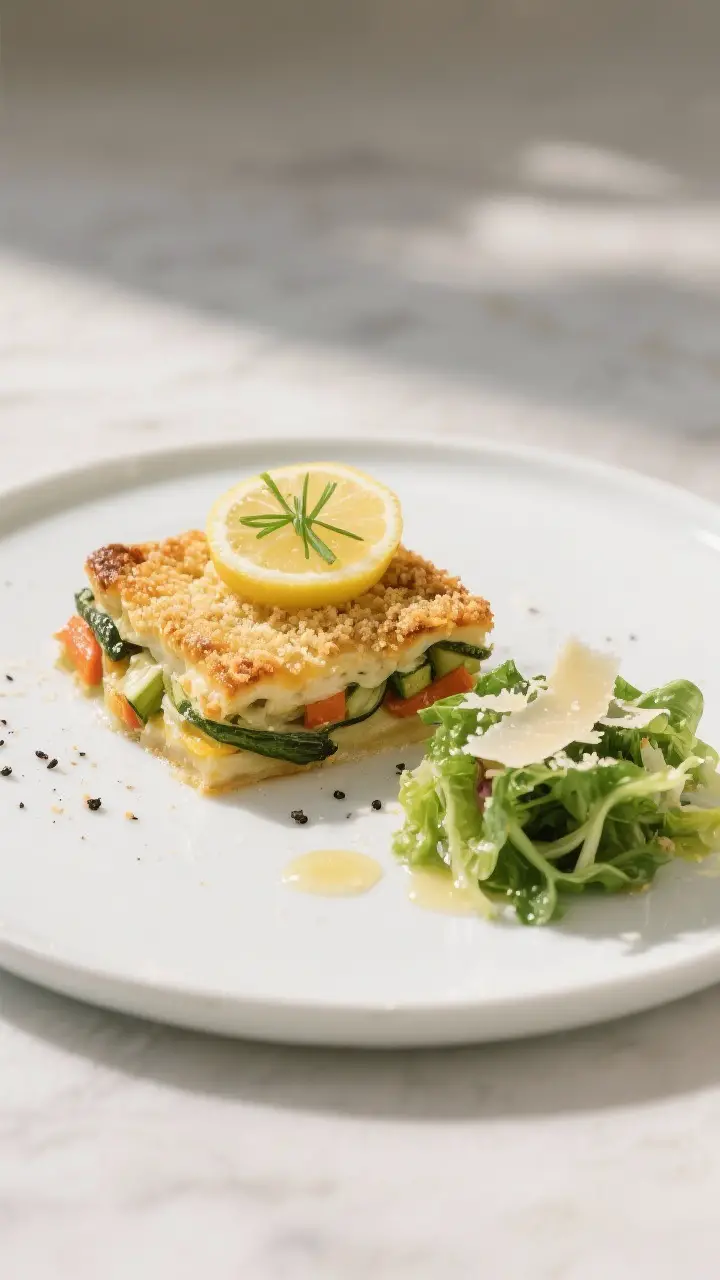
- Rest and serve: Let the gratin rest for 5–10 minutes to set. Spoon into shallow bowls or serve in squares. Finish with a squeeze of lemon and cracked pepper if you like.
Storage Instructions
Cool the gratin completely, then cover and refrigerate for up to 3 days.
Reheat covered at 350°F (175°C) until warmed through, about 15–20 minutes. For crisper crumbs, uncover for the last few minutes. You can also reheat individual portions in a skillet over medium-low heat with a splash of water or milk, then top with fresh crumbs if desired.
Freezing isn’t ideal because tender spring vegetables can turn mushy after thawing.
Health Benefits
- High in fiber: Asparagus, peas, and zucchini offer fiber that supports digestion and helps keep you full.
- Vitamins and minerals: This mix brings vitamin C, vitamin K, folate, and potassium to the table, which support immunity, bone health, and heart health.
- Balanced richness: A modest amount of dairy gives protein and calcium without making the dish heavy.
- Herbs and lemon: Fresh herbs and citrus add flavor that reduces the need for extra salt or butter.
Common Mistakes to Avoid
- Overcooking the vegetables: Keep them slightly firm before baking. They’ll continue cooking in the oven.
- Underseasoning the sauce: The sauce should taste lively on its own. Adjust salt, pepper, and lemon before pouring it over.
- Soggy topping: Toss breadcrumbs with a little oil and cheese so they crisp up.
Broil briefly if needed.
- Skipping the rest: Give the gratin a few minutes after baking. It sets up and slices more neatly.
- Watery gratin: Pat zucchini dry if very watery, and don’t overload the dish with excess liquid from blanched veggies.
Alternatives
- Dairy-free: Use olive oil instead of butter, a barista-style oat milk for the sauce, and a plant-based cheese or nutritional yeast. Thicken with a cornstarch slurry instead of flour if preferred.
- Gluten-free: Swap flour for a 1:1 gluten-free blend or cornstarch, and use gluten-free breadcrumbs.
- Different vegetables: Try broccolini, snap peas, baby carrots (thinly sliced), or artichoke hearts.
Keep pieces similar in size for even cooking.
- Protein add-ins: Fold in shredded rotisserie chicken, flaked salmon, or white beans for a heartier meal.
- Cheese swap: Goat cheese brings tang, fontina melts beautifully, and pecorino adds a salty bite. Adjust salt if using a saltier cheese.
- Make-ahead: Assemble up to the breadcrumb step, cover, and refrigerate for up to 24 hours. Add crumbs just before baking.
Can I use frozen vegetables?
Yes, but thaw and drain them well.
Pat dry to remove excess moisture so the gratin doesn’t get watery. Frozen peas work especially well.
How do I keep the topping crunchy when reheating?
Reheat covered until hot, then uncover for the last few minutes. If you have extra breadcrumbs, add a fresh sprinkle before the final few minutes in the oven.
Is there a way to make it lighter?
Use all milk instead of milk and cream, and reduce the cheese by a third.
A squeeze of lemon and extra herbs will keep the flavor bright.
What size pan should I use?
A 9×13-inch dish gives a nice balance of creamy vegetables and crisp topping. For a thicker gratin, use a smaller, deeper dish and add a few extra minutes of baking.
Can I prepare it ahead and bake later?
Yes. Par-cook the vegetables, make the sauce, and combine them in the dish.
Chill, then top with breadcrumbs right before baking to keep them crisp.
What should I serve with it?
Try roasted chicken, grilled fish, or a simple green salad with a mustardy vinaigrette. Crusty bread is great for catching the creamy sauce.
Final Thoughts
Spring Vegetable Gratin brings comfort and brightness together in one dish. It’s forgiving, flexible, and easy to love, whether you serve it as a side or a main.
Keep the seasoning lively, don’t overcook the vegetables, and let the topping get nicely golden. With those simple steps, you’ll have a gratin that tastes like spring, any night of the week.