
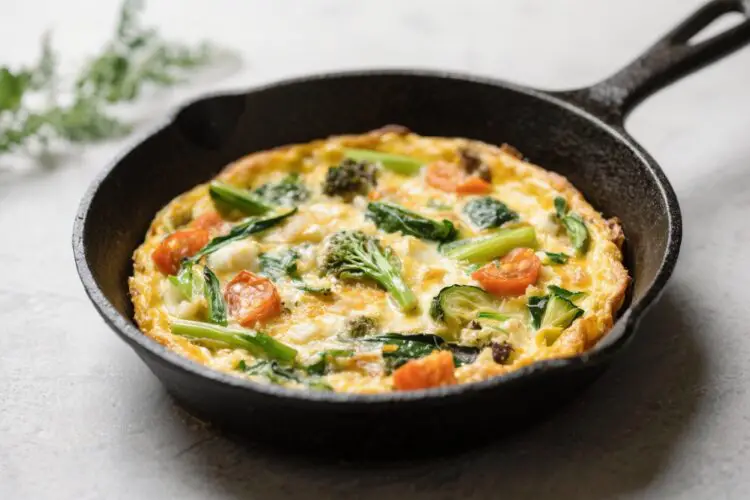
A frittata is one of those dishes that feels special but comes together with almost no fuss. This spring vegetable version is light, colorful, and loaded with the season’s best produce. It’s perfect for weekend brunch, quick weeknight dinners, or meal prep.
You can use what you have, skip what you don’t, and still end up with something satisfying. Best of all, it cooks in one pan and makes your kitchen smell amazing.
What Makes This Recipe So Good
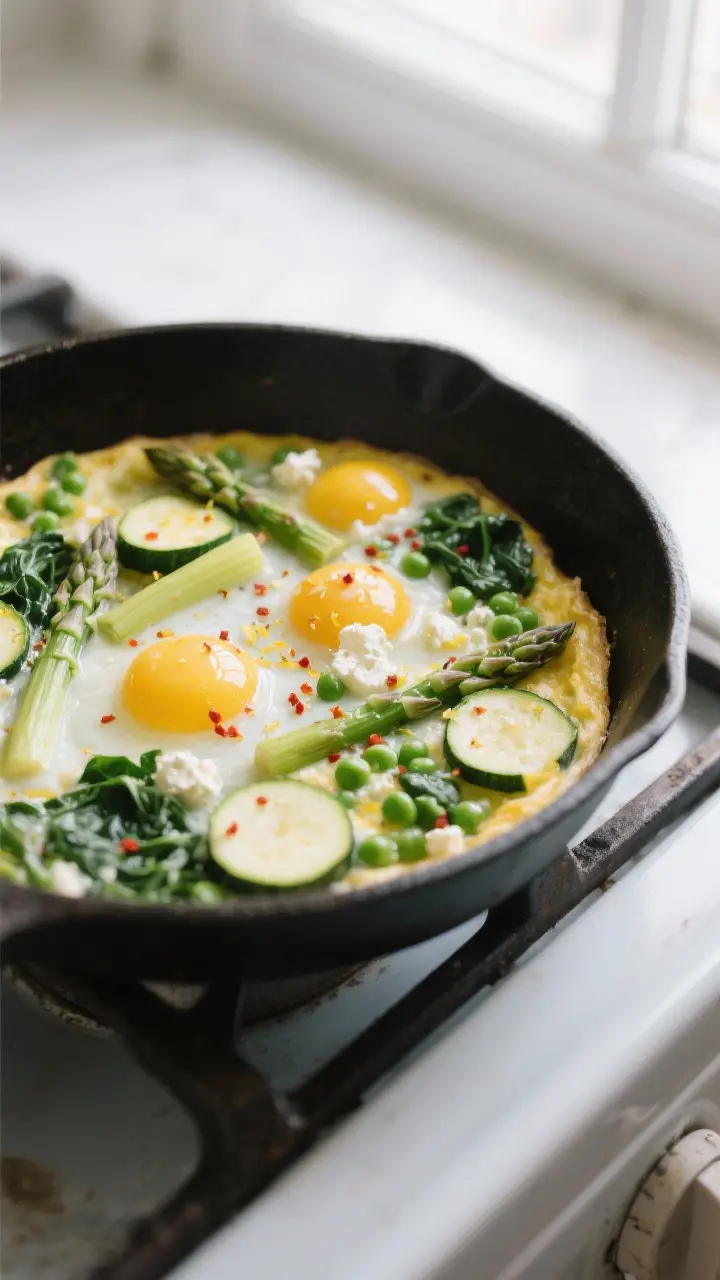
- Fast and flexible: Ready in about 30 minutes and easy to adapt to whatever vegetables you’ve got.
- One-skillet cooking: Fewer dishes, more flavor. Everything softens and caramelizes together.
- Light yet filling: Eggs, veggies, and a touch of cheese make a balanced meal that isn’t heavy.
- Great warm or cold: Delicious straight from the skillet or at room temperature, which makes it ideal for picnics or packed lunches.
- Seasonal spotlight: Asparagus, peas, and spring onions bring a fresh, sweet bite you won’t get year-round.
What You’ll Need
- 8 large eggs
- 1/4 cup whole milk or half-and-half (or use unsweetened non-dairy milk)
- 1 cup asparagus, trimmed and cut into 1-inch pieces
- 1 cup baby spinach, roughly chopped
- 1/2 cup peas (fresh or frozen)
- 1 small leek or 3 spring onions, thinly sliced (white and light green parts)
- 1 small zucchini, halved lengthwise and thinly sliced
- 2 cloves garlic, minced
- 1/2 cup crumbled goat cheese or feta (or 3/4 cup shredded Gruyère or cheddar)
- 2 tablespoons olive oil or butter
- Salt and black pepper, to taste
- 1/4 teaspoon red pepper flakes (optional)
- 1 tablespoon fresh herbs like dill, chives, or parsley, chopped
- 1 lemon (zest only, optional, for brightness)
Instructions
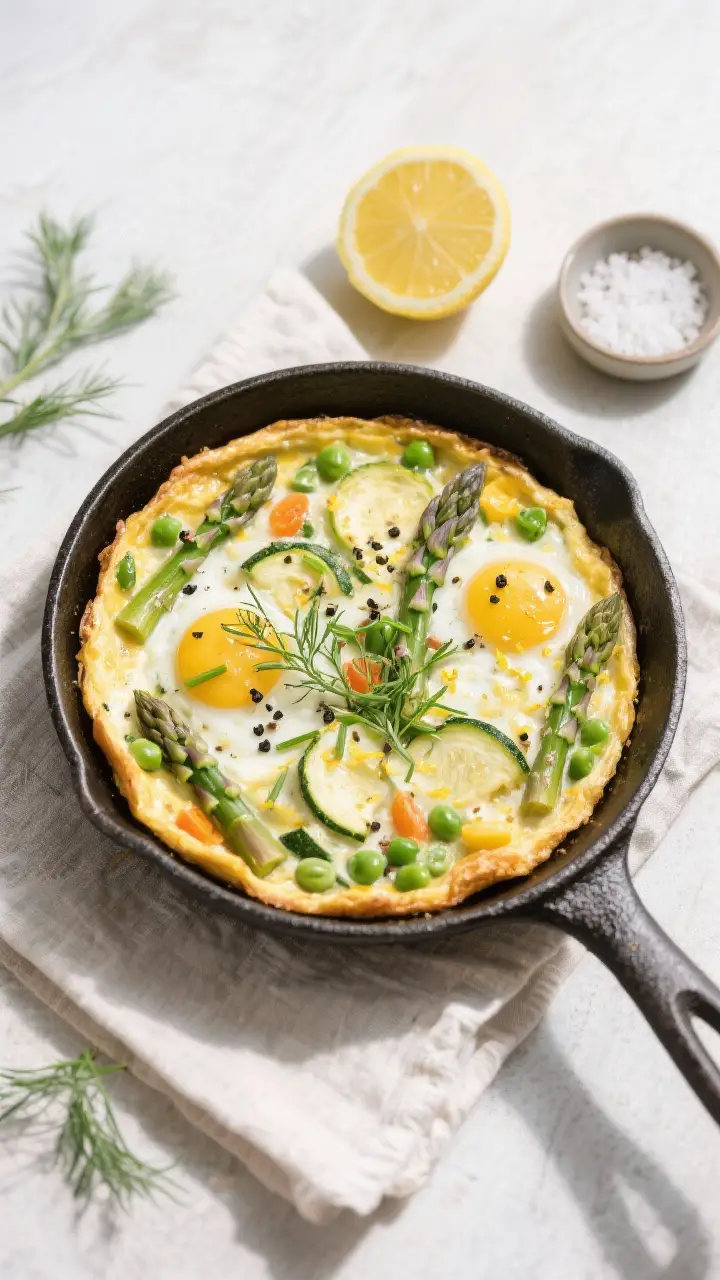
- Preheat the oven: Set to 375°F (190°C).
Place a rack in the center. Use a 10- to 12-inch oven-safe skillet, ideally cast iron or stainless steel.
- Beat the eggs: In a large bowl, whisk eggs, milk, 1/2 teaspoon salt, and a few grinds of pepper until smooth and lightly frothy. Stir in half the cheese and the fresh herbs.
Set aside.
- Warm the skillet: Heat olive oil over medium. Add leeks (or spring onions) with a pinch of salt. Cook 3–4 minutes, stirring, until soft and fragrant but not browned.
- Sauté the vegetables: Add asparagus and zucchini.
Cook 3–5 minutes until they start to soften. Stir in garlic and red pepper flakes. Cook 30 seconds, then add peas and spinach.
Cook just until spinach wilts.
- Season the base: Taste the vegetables and add a pinch more salt and pepper if needed. Spreading the flavor now helps the whole frittata taste balanced.
- Add the egg mixture: Reduce heat to medium-low. Pour eggs over the vegetables, tilting the pan to distribute evenly.
Use a spatula to gently nudge veggies so eggs seep into gaps.
- Top with cheese and zest: Sprinkle remaining cheese evenly on top. Add lemon zest if using for a bright, springy finish.
- Set on the stovetop: Cook 2–3 minutes without stirring, just until edges look slightly set and the center is still glossy.
- Bake to finish: Transfer the skillet to the oven. Bake 8–12 minutes, until the center is just set and a knife inserted near the middle comes out clean or with soft curds.
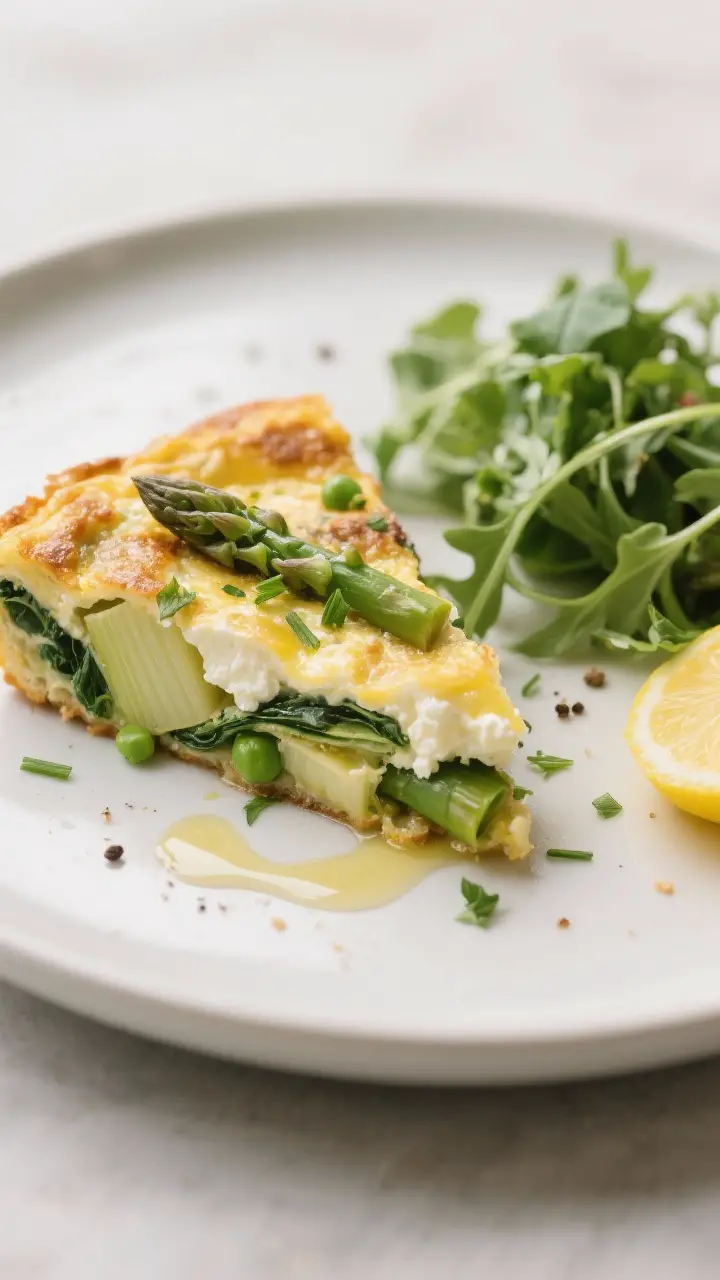
- Rest and serve: Let it sit 5 minutes.
Slice into wedges. Finish with extra herbs, cracked pepper, and a squeeze of lemon if you like.
How to Store
- Refrigerate: Cool completely, then store slices in an airtight container for up to 4 days.
- Reheat: Warm gently in a skillet over low heat or in the oven at 300°F (150°C) for 8–10 minutes. Microwave in 20–30 second bursts to avoid rubbery eggs.
- Freeze: You can freeze slices for up to 2 months, though texture is best when fresh.
Wrap individually, then store in a freezer bag. Thaw overnight in the fridge before reheating.
Benefits of This Recipe
- High in protein and fiber: Eggs and vegetables deliver steady energy without a heavy feeling.
- Seasonal and budget-friendly: Spring produce is often cheaper and more flavorful in season.
- Low waste: A great way to use leftover herbs, cheese ends, and stray vegetables in your crisper.
- Versatile meal: Works for breakfast, lunch, or dinner, and pairs with salad, soup, or crusty bread.
- Meal prep friendly: Keeps well and tastes good cold, so it’s ideal for busy weeks.
Common Mistakes to Avoid
- Overcooking the eggs: Pull the frittata when it looks slightly underdone in the center. It will finish setting as it rests.
- Using raw, watery vegetables: Sauté first to remove excess moisture.
This prevents a soggy texture and bland flavor.
- Too much dairy: A splash of milk is great, but heavy cream can weigh it down. Keep the ratio light for a tender crumb.
- Skipping seasoning: Season the vegetables before adding the eggs, then season again if needed. Layered seasoning = better flavor.
- Wrong pan: Non-oven-safe pans can warp or melt.
Use a skillet that can go from stovetop to oven.
Alternatives
- Cheese swaps: Try Parmesan, Pecorino Romano, ricotta dollops, or shredded mozzarella.
- Vegetable swaps: Broccolini, cherry tomatoes (patted dry), bell pepper, or mushrooms (sauté until browned) work well.
- Herb twists: Basil, mint, or tarragon bring bright, spring flavors. Use what you love.
- Dairy-free: Use olive oil instead of butter, and skip the cheese or use a dairy-free alternative.
- Protein add-ins: Fold in cooked bacon, ham, or smoked salmon. Keep total add-ins to about 1–1.5 cups so it sets properly.
- Spice it up: Add a pinch of smoked paprika, za’atar, or everything bagel seasoning on top.
FAQ
Can I make this without an oven?
Yes.
After the eggs go in, cover the skillet and cook on low heat for 8–12 minutes, until just set. The top won’t brown, but it will cook through.
How do I know when the frittata is done?
Look for edges that are puffed and set, with a center that’s barely firm. A knife inserted near the center should come out mostly clean.
Don’t wait for deep browning or it may be dry.
What size skillet should I use?
A 10-inch skillet makes a thicker frittata, while a 12-inch makes it thinner and faster to cook. Both work; just adjust baking time by a couple of minutes.
Can I prep the vegetables ahead of time?
Absolutely. Chop and sauté the veggies up to 2 days ahead.
Store in the fridge, then rewarm slightly before adding the eggs.
Why is my frittata watery?
Likely too much moisture from vegetables or not sautéing long enough. Salt and cook veggies until most of their liquid evaporates before adding eggs.
Is it okay to use egg whites?
You can replace up to half the whole eggs with egg whites. The texture will be slightly less rich but still tender if you don’t overbake.
What should I serve with it?
A simple arugula salad with lemon and olive oil is perfect.
Toasted bread, roasted potatoes, or fruit salad also pair well.
Can I make mini frittatas?
Yes. Divide the mixture into greased muffin tins and bake at 350°F (175°C) for 12–18 minutes, depending on size, until set.
In Conclusion
This Spring Vegetable Frittata Skillet is bright, practical, and endlessly adaptable. It highlights the best of the season while staying weeknight easy.
With a handful of fresh vegetables, a few eggs, and one skillet, you get a meal that checks all the boxes: tasty, wholesome, and simple. Make it once, and it’ll be in your regular rotation all spring long.