
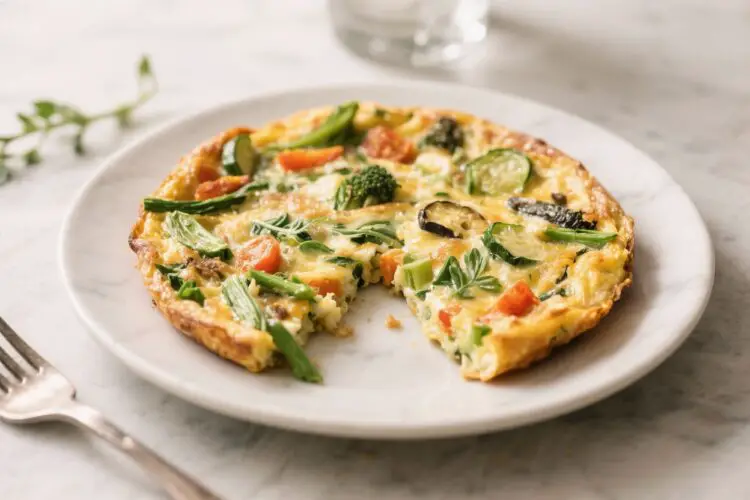
Spring vegetables have a way of making everything feel lighter and more hopeful. This frittata brings all that fresh flavor to your table with minimal effort and simple ingredients. It’s a reliable brunch star, an easy lunch, and a quick weeknight dinner.
You can serve it warm or at room temperature, which makes it great for entertaining or meal prep. If you love seasonal produce and a fluffy, custardy egg dish, this will be your new go-to.
What Makes This Recipe So Good
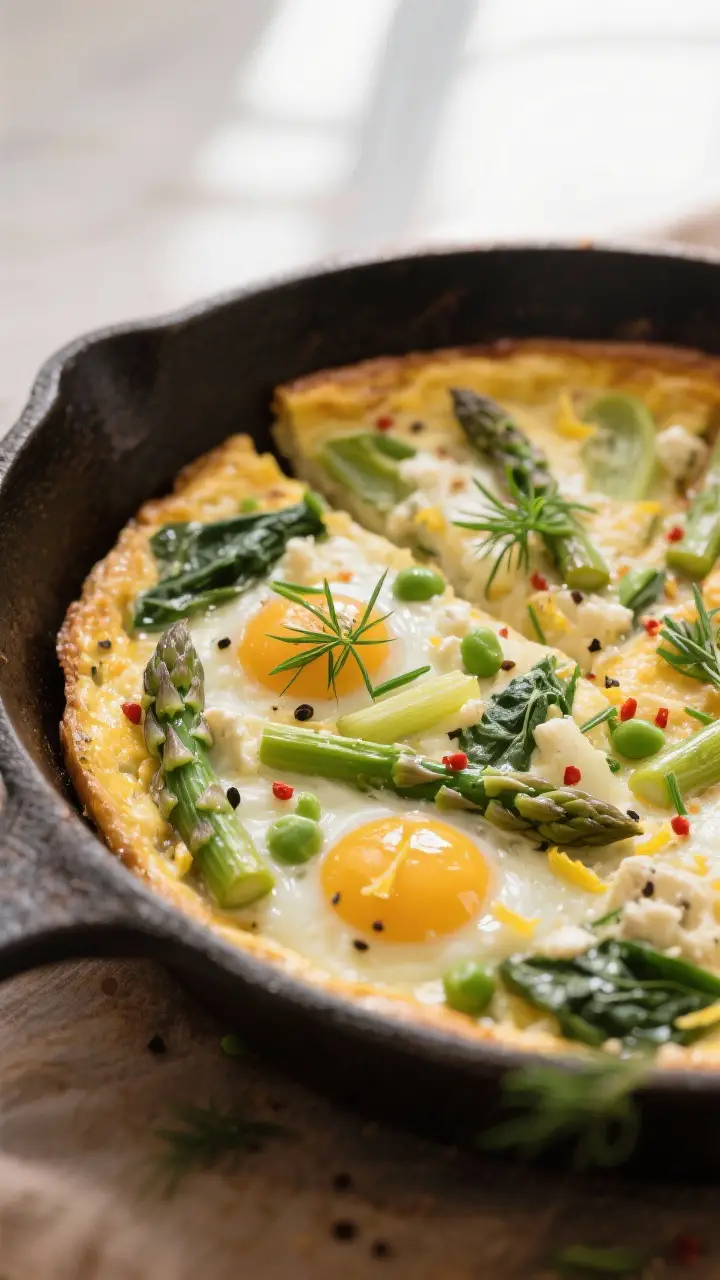
- It’s flexible: Use whatever spring vegetables you have—think asparagus, peas, leeks, spinach, or herbs. Mixing and matching is part of the fun.
- Quick and simple: One skillet, a few minutes on the stovetop, and a short finish in the oven.
That’s it.
- Light yet satisfying: Eggs and cheese give you protein and richness without feeling heavy.
- Perfect hot or cold: Serve it fresh from the oven or pack chilled slices for lunch. It reheats well too.
- Great for guests: It feels special but doesn’t require special skills. Pair with a salad and crusty bread and you’re done.
What You’ll Need
- 8 large eggs
- 1/3 cup whole milk or half-and-half (for a creamier texture)
- 1 cup shredded cheese (Gruyère, feta, goat cheese, or sharp cheddar all work)
- 1 tablespoon olive oil
- 1 tablespoon butter
- 1 small leek, white and light green parts only, thinly sliced (or 1/2 small onion)
- 1 cup asparagus, cut into 1-inch pieces
- 1/2 cup peas (fresh or frozen)
- 1 cup baby spinach, roughly chopped
- 2 tablespoons fresh herbs, chopped (chives, parsley, dill, or mint)
- 1 garlic clove, minced
- 1/2 teaspoon kosher salt (plus more to taste)
- 1/4 teaspoon black pepper
- Pinch of red pepper flakes (optional)
- Lemon zest from 1/2 lemon (optional, but brightens everything)
Equipment: 10-inch oven-safe skillet (cast iron or nonstick), mixing bowl, whisk, spatula.
How to Make It
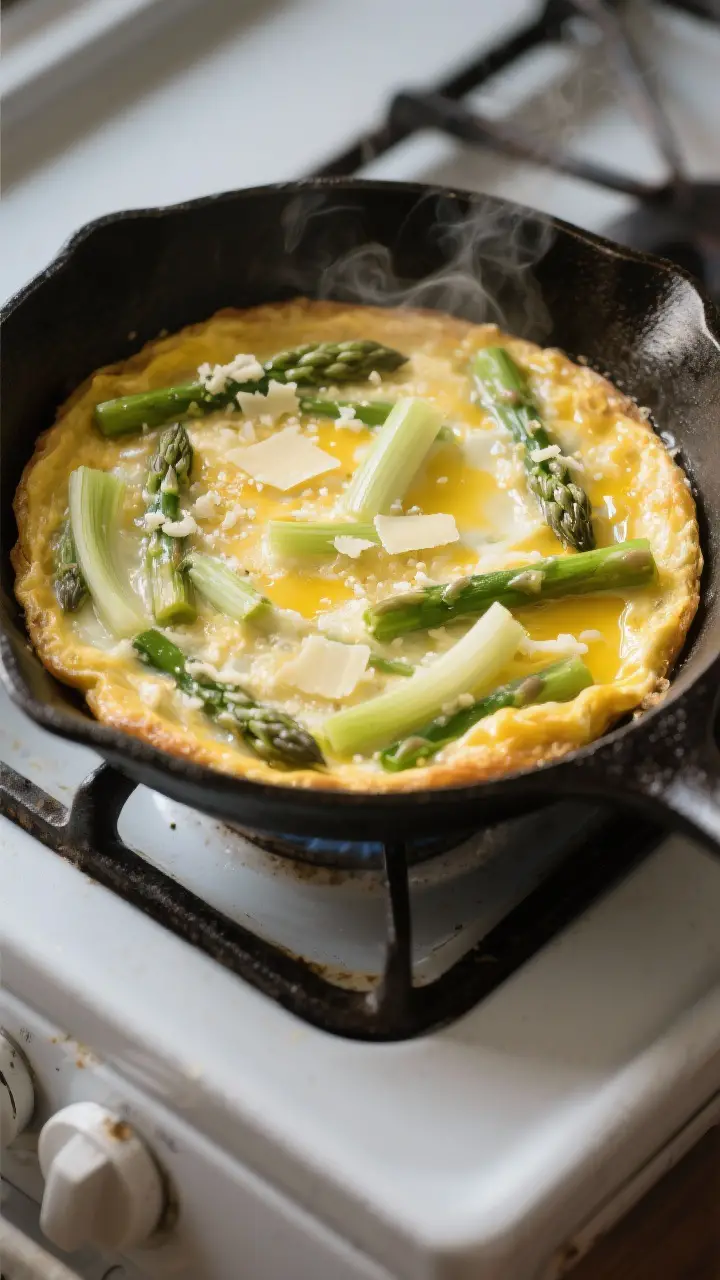
- Preheat the oven: Set your oven to 375°F (190°C).
This ensures the frittata sets evenly and gets a light golden top.
- Whisk the eggs: In a large bowl, whisk eggs with milk or half-and-half until smooth and slightly frothy. Season with salt, pepper, and red pepper flakes if using. Stir in half the cheese and the lemon zest.
- Cook the aromatics: Heat olive oil and butter in your skillet over medium heat.
Add the leek and a pinch of salt. Cook 3–4 minutes until soft and fragrant, not browned.
- Add the vegetables: Stir in asparagus and cook 2–3 minutes until just tender. Add peas and garlic; cook 1 minute.
Add spinach and let it wilt. Taste and adjust salt.
- Pour in the eggs: Reduce heat to medium-low. Pour the egg mixture over the vegetables, gently stirring to distribute.
Sprinkle remaining cheese on top.
- Let it set on the stovetop: Cook without stirring for 2–3 minutes. You’ll see the edges firm up while the center stays slightly runny.
- Finish in the oven: Transfer the skillet to the oven and bake 8–12 minutes. The frittata is done when the center is just set and no longer jiggly.
Avoid overbaking or it will turn rubbery.
- Add herbs and rest: Remove from the oven and scatter fresh herbs over the top. Let it rest for 5 minutes to finish setting and make slicing easier.
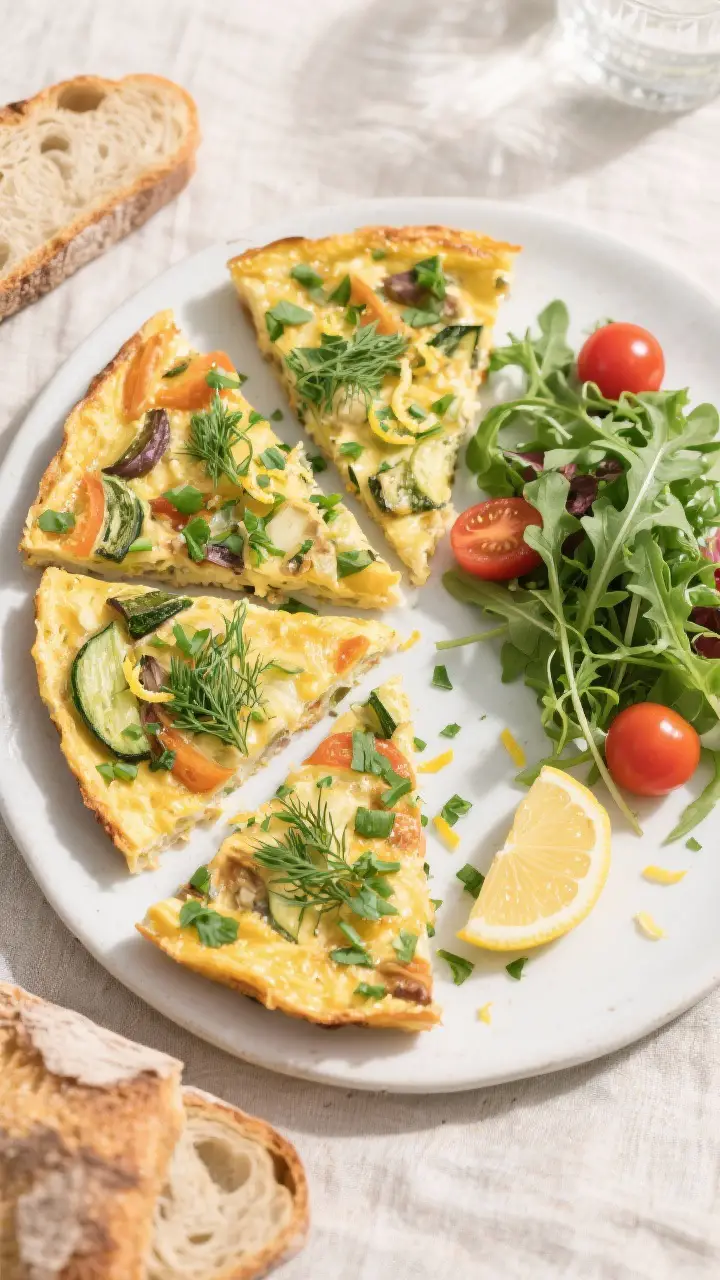
- Serve: Slice into wedges. Enjoy warm or at room temperature with a simple green salad, tomatoes, or toast.
Storage Instructions
- Refrigerate: Cool completely, then store slices in an airtight container for up to 4 days.
- Reheat: Warm in a 300°F (150°C) oven for 8–10 minutes or microwave in short bursts.
Cover to prevent drying out.
- Freeze: Wrap slices tightly and freeze up to 2 months. Thaw overnight in the fridge before reheating.
- Meal prep tip: Pack individual portions with a handful of arugula and a lemon wedge for easy lunches.
Benefits of This Recipe
- Seasonal nutrition: Asparagus, peas, spinach, and herbs are rich in fiber, vitamins, and antioxidants.
- Protein-packed: Eggs deliver satisfying protein, keeping you full without heavy carbs.
- Low effort, high payoff: Minimal prep, one pan, and a beautiful result.
- Budget-friendly: Uses basic staples plus whatever veggies are on sale or in your garden.
- Versatile: Works for breakfast, brunch, lunch, or dinner.
What Not to Do
- Don’t skip pre-cooking vegetables: Raw vegetables release water and make the frittata watery. Sauté them first.
- Don’t overbake: Dry, spongy eggs are the result.
Pull it when the center is just set.
- Don’t use too much dairy: A little milk or cream is great, but too much makes the frittata dense and custardy in a heavy way.
- Don’t use a small skillet: Overcrowding leads to uneven cooking. A 10-inch skillet is ideal for 8 eggs.
- Don’t forget to season: Eggs love salt. Taste your vegetables before adding the eggs, then season the mixture too.
Recipe Variations
- Mediterranean: Use spinach, cherry tomatoes, olives, and feta.
Finish with oregano and a drizzle of olive oil.
- Green-on-green: Asparagus, zucchini ribbons, peas, and basil. Use goat cheese for tang.
- Smoked salmon: Add flaked hot-smoked salmon, chives, and dill. Skip extra salt and use crème fraîche instead of milk.
- Mushroom and leek: Sauté mushrooms until browned and add thyme.
Gruyère or Swiss cheese fit perfectly.
- Dairy-free: Use olive oil only, skip cheese, and add extra herbs and a squeeze of lemon at the end for brightness.
- Potato base: Pan-fry thin potato slices until tender, then pour eggs over. Great for a heartier meal.
FAQ
Can I make this frittata without an oven-safe skillet?
Yes. Cook the vegetables in a regular skillet, then transfer everything to a greased baking dish.
Pour in the eggs and bake at 375°F (190°C) until set, about 12–15 minutes.
How do I know when a frittata is done?
Look for a gently puffed surface and a center that’s set but still moist. If you insert a knife, it should come out clean with no runny egg, and the top shouldn’t be browned too deeply.
What cheeses work best?
Gruyère, goat cheese, feta, cheddar, or Parmesan all work well. Use something that melts nicely or adds a salty punch.
You can combine two for a more interesting flavor.
Can I use frozen vegetables?
Absolutely. Thaw and pat dry first, then sauté to remove excess moisture. Frozen peas are perfect and don’t need thawing—just add them straight to the pan.
Is this good for meal prep?
Yes.
It stores well and reheats quickly. Make it on Sunday and enjoy slices through the week with salad or grain bowls.
How can I make it fluffier?
Whisk the eggs thoroughly to incorporate air, and don’t overcook. A small splash of dairy helps, and letting the frittata rest for a few minutes after baking keeps the texture tender.
What can I serve with it?
A simple arugula salad with lemon, roasted potatoes, or buttered toast.
For brunch, add fresh fruit and coffee. For dinner, a light soup or grain salad works well.
In Conclusion
A Spring Vegetable Frittata is a simple way to celebrate fresh produce without fuss. With a few pantry staples and whatever greens you have, you’ll get a bright, satisfying meal any time of day.
Keep the steps easy, don’t overcook, and finish with herbs for a fresh lift. It’s the kind of recipe you’ll make once and then keep making all season.
Printable Recipe Card
Want just the essential recipe details without scrolling through the article? Get our printable recipe card with just the ingredients and instructions.