
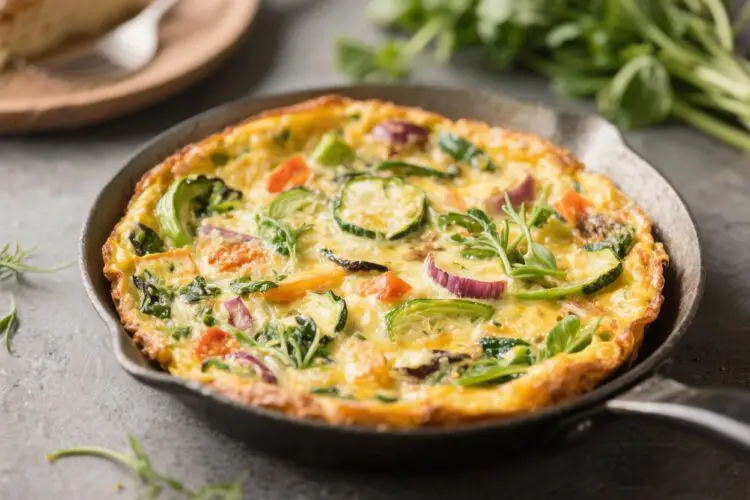
Spring is the season for crisp greens and tender veggies, and this frittata makes the most of them. It’s simple to throw together, cooks in one pan, and feels special enough for a weekend brunch or a light weeknight dinner. You get soft eggs, sweet bursts of peas, and a little char from asparagus and leeks.
Add a sprinkle of goat cheese or Parmesan, and it tastes like sunshine on a plate.
What Makes This Recipe So Good
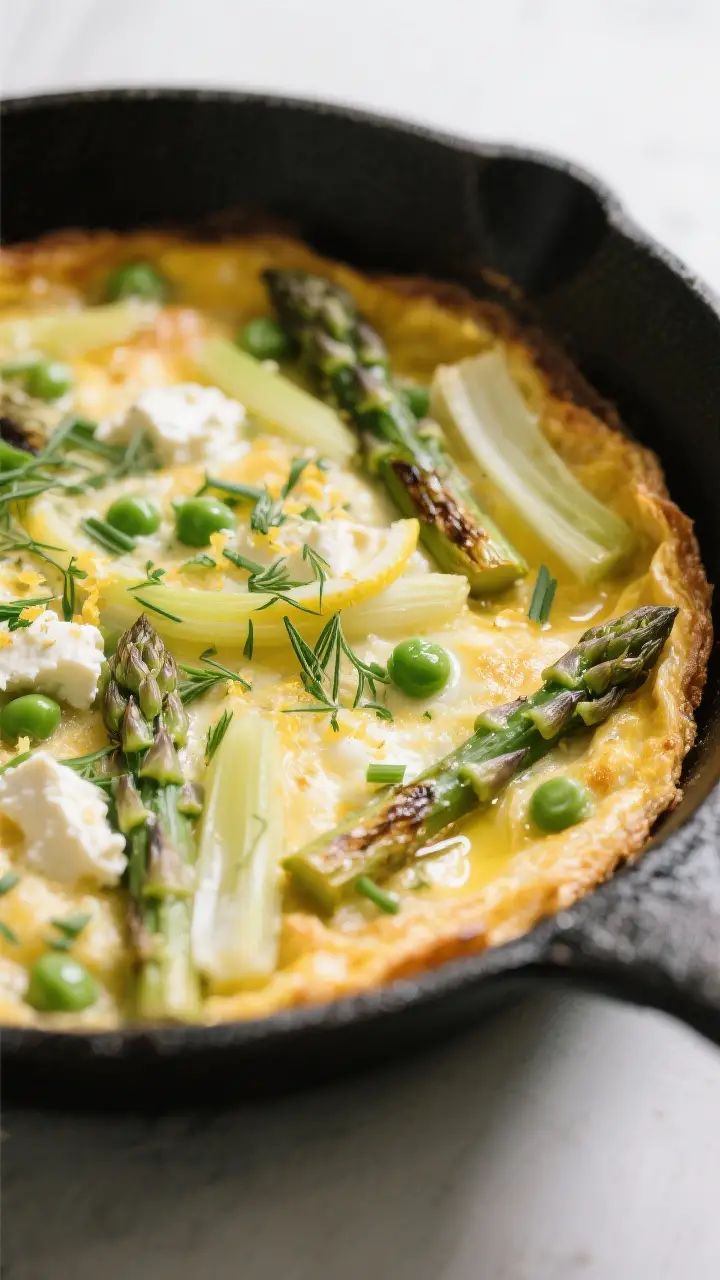
- Seasonal flavor: Spring vegetables like asparagus, peas, and leeks are naturally sweet and tender, so the frittata tastes fresh without much fuss.
- One-pan convenience: Everything cooks in a skillet, then finishes in the oven. Fewer dishes, less hassle.
- Flexible: Swap in what you have—spinach for arugula, scallions for leeks, feta for goat cheese. It’s hard to mess up.
- Meal-prep friendly: It keeps well, reheats easily, and works for breakfast, lunch, or dinner.
- Balanced and satisfying: Packed with protein and fiber, it feels light but keeps you full.
What You’ll Need
- 8 large eggs
- 1/4 cup whole milk or half-and-half (for a richer texture)
- 1 cup asparagus, trimmed and cut into 1-inch pieces
- 1 cup baby spinach or arugula, lightly packed
- 1/2 cup fresh or frozen peas, thawed if frozen
- 1 small leek, white and light green parts only, thinly sliced (or 1/2 small onion)
- 1/2 cup crumbled goat cheese or feta (or 1/3 cup grated Parmesan)
- 2 tablespoons olive oil (or a mix of butter and olive oil)
- 1 small clove garlic, minced
- 1 tablespoon fresh herbs like dill, chives, or parsley, chopped
- Salt and freshly ground black pepper, to taste
- Optional: Zest of 1/2 lemon for brightness
Instructions
- Preheat the oven: Set your oven to 375°F (190°C).
Place a 10-inch oven-safe skillet (cast iron works great) on the stove.
- Prep the eggs: In a medium bowl, whisk the eggs, milk, a generous pinch of salt, and black pepper until smooth. Stir in the fresh herbs and lemon zest, if using. Set aside.
- Cook the leeks: Heat olive oil in the skillet over medium heat.
Add the sliced leeks with a pinch of salt and cook 3–4 minutes, stirring, until softened and fragrant.
- Sauté the asparagus: Add the asparagus pieces and cook 3–5 minutes, until crisp-tender and bright green. If the pan looks dry, add a splash more oil.
- Add garlic and peas: Stir in the garlic and peas. Cook 1 minute, just until the garlic smells aromatic and the peas are warmed through.
- Wilt the greens: Add the spinach or arugula and toss until just wilted, about 30–60 seconds.
Taste the veggies and adjust with a little salt and pepper.
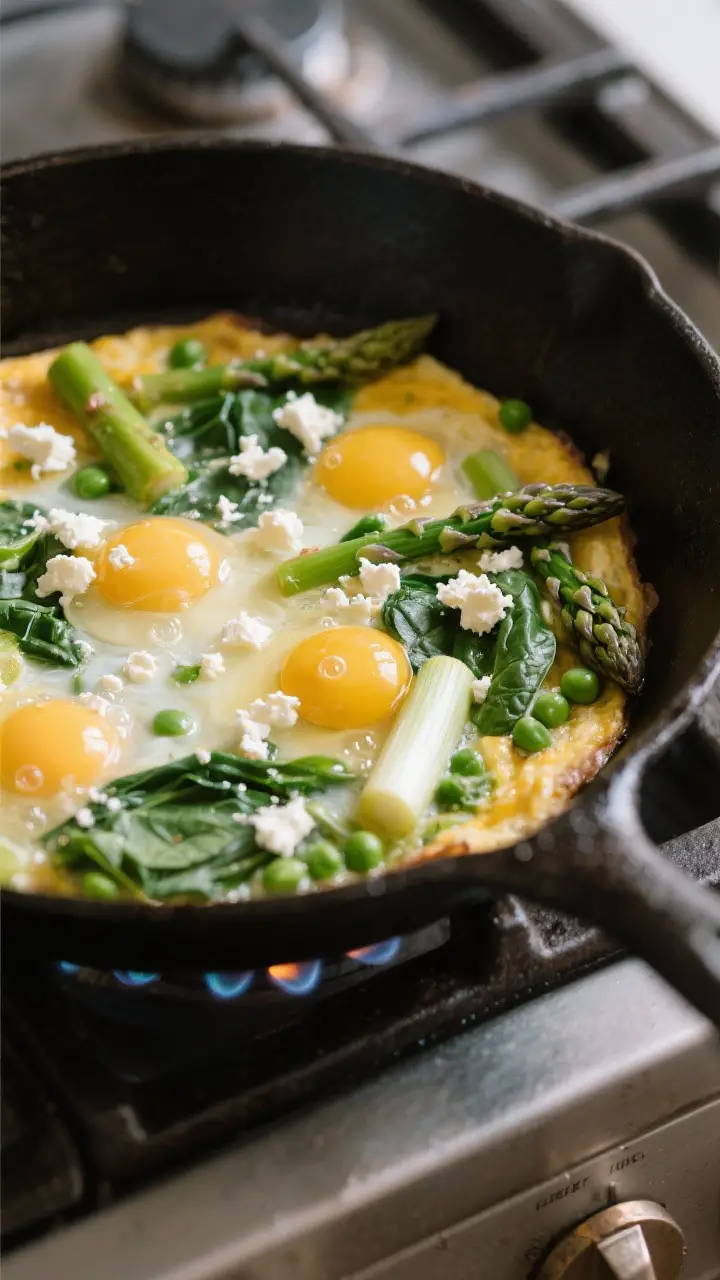
- Add the eggs: Spread the vegetables evenly in the pan. Pour the egg mixture over the top, tilting the pan to distribute. Sprinkle the goat cheese (or your cheese of choice) evenly.
- Set on the stovetop: Cook on medium-low heat for 2–3 minutes without stirring.
You want the edges to begin to set while the center is still loose.
- Bake: Transfer the skillet to the oven and bake 8–12 minutes, until the frittata is puffed, the center is just set, and a knife inserted near the middle comes out clean. Avoid overbaking, which can make eggs rubbery.
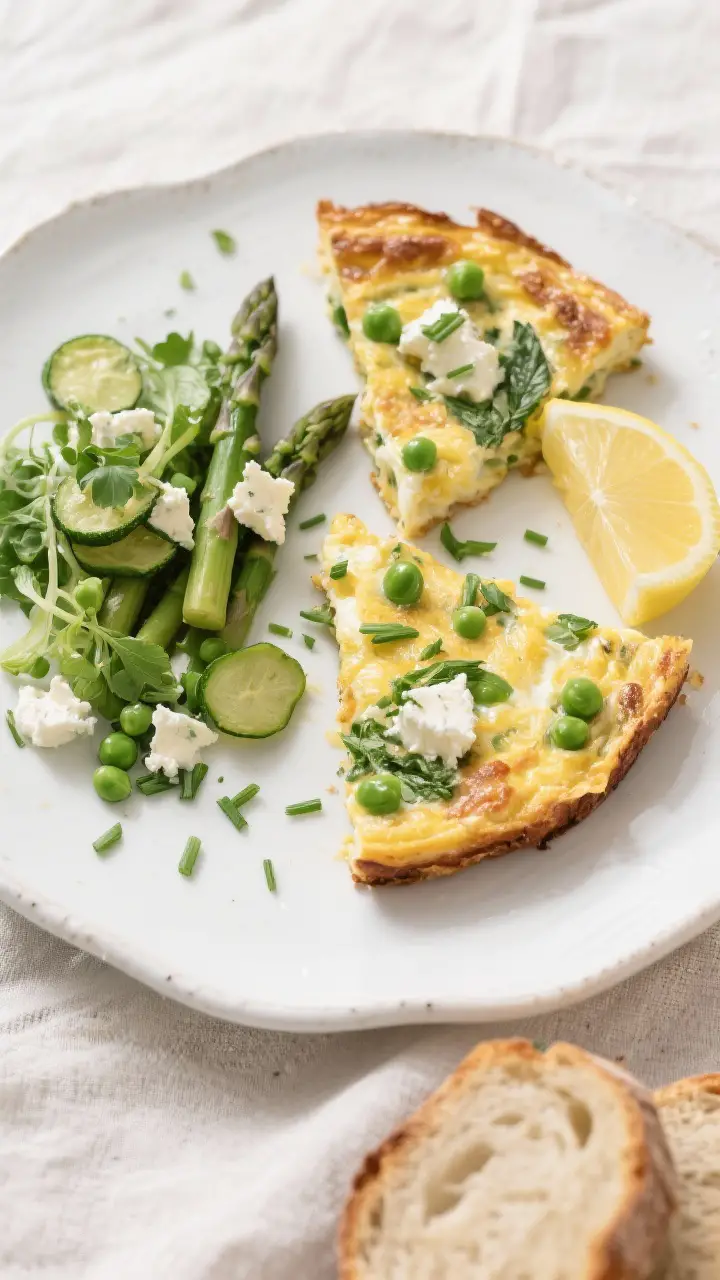
- Rest and serve: Let it cool for 5 minutes. Slice into wedges and serve warm or at room temperature.
Finish with extra herbs or a squeeze of lemon, if you like.
Keeping It Fresh
- Storage: Cool completely, then store slices in an airtight container in the fridge for up to 4 days.
- Reheating: Warm in a 300°F (150°C) oven for 8–10 minutes or microwave gently at 50% power in 30-second bursts. Avoid high heat to keep the eggs tender.
- Freezing: Not ideal, but possible. Wrap portions tightly and freeze up to 1 month.
Thaw overnight in the fridge, then reheat low and slow.
- Serve later: Frittata tastes great at room temperature, so it’s perfect for meal prep or a picnic.
Health Benefits
- High-quality protein: Eggs provide essential amino acids, keeping you full and supporting muscle maintenance.
- Fiber and micronutrients: Asparagus, peas, and greens add fiber, folate, vitamin K, and antioxidants that support digestion and overall health.
- Healthy fats: Olive oil brings heart-healthy monounsaturated fats that help with nutrient absorption.
- Lower-carb, veggie-forward: This recipe keeps refined carbs to a minimum while packing in produce.
What Not to Do
- Don’t skip seasoning: Season the veggies and the egg mixture. Under-seasoned eggs taste flat.
- Don’t overcook: Pull the frittata when the center is just set. Overbaking leads to a dry, spongy texture.
- Don’t overload with watery veggies: If using tomatoes or zucchini, pre-sauté and drain to avoid sogginess.
- Don’t use a pan that sticks: A well-seasoned cast iron or a good nonstick, oven-safe skillet is key to clean slices.
- Don’t crank the heat: High heat on the stovetop can scorch the bottom before the center sets.
Recipe Variations
- Green goddess: Use all green veggies—broccolini, asparagus, peas, and spinach—with goat cheese and fresh dill.
- Smoked salmon: Fold in flaked smoked salmon and chives.
Skip the extra salt and use a little lemon zest.
- Mushroom and spring onion: Sauté sliced mushrooms until browned, then add scallions and peas. Finish with Parmesan.
- Dairy-free: Use a splash of unsweetened almond milk and skip the cheese, or use a dairy-free alternative.
- Hearty add-ins: Add diced cooked potatoes or crumbled cooked bacon for a more filling version.
- Herb-forward: Double the parsley and chives, and add tarragon for a delicate anise note.
FAQ
Can I make this without an oven-safe skillet?
Yes. Cook the veggies in a regular skillet, then transfer everything to a greased 9-inch pie dish or baking dish.
Pour in the eggs and bake until set.
How do I know when the frittata is done?
Look for a puffed top with the center just set and no visible liquid. A knife inserted near the center should come out mostly clean. The eggs will continue to firm up as they rest.
Can I use only egg whites?
You can.
Use 12–14 egg whites to replace the 8 whole eggs. The texture will be a bit lighter and less rich, so consider adding an extra tablespoon of olive oil or a little dairy for moisture.
What cheeses work best?
Goat cheese, feta, and Parmesan are great. Gruyère or sharp cheddar also work well.
Avoid very wet fresh mozzarella unless you blot it dry and use small amounts.
Can I make it ahead?
Yes. Bake, cool, and refrigerate. Reheat gently before serving or enjoy at room temperature.
It’s a great make-ahead dish for brunch.
What if I don’t have leeks?
Use a small onion or a few scallions. Cook until soft and sweet before adding the other vegetables.
How thick should the frittata be?
About 1 to 1.5 inches thick in a 10-inch skillet is ideal. If your pan is larger, reduce bake time slightly; if smaller, increase time a few minutes.
Final Thoughts
A spring vegetable frittata is the kind of recipe that fits your life—quick to prep, flexible with ingredients, and always satisfying.
Use what looks best at the market, keep the seasoning simple, and avoid overcooking. With a crisp salad or some crusty bread, you’ve got an easy meal that feels fresh and bright any day of the week.
Printable Recipe Card
Want just the essential recipe details without scrolling through the article? Get our printable recipe card with just the ingredients and instructions.