
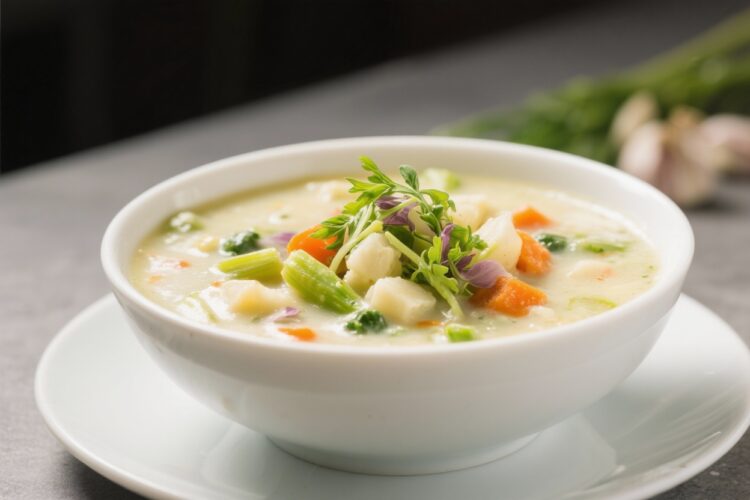
Spring vegetable chowder is comfort food with a fresh twist. It’s creamy, cozy, and full of the season’s best produce—think tender asparagus, sweet peas, leeks, and new potatoes. This is one of those bowls that feels both wholesome and satisfying, without being heavy.
It’s easy enough for a weeknight, yet pretty enough to serve to friends. Grab your spring veggies and let’s make something that tastes like sunshine after rain.
What Makes This Recipe So Good
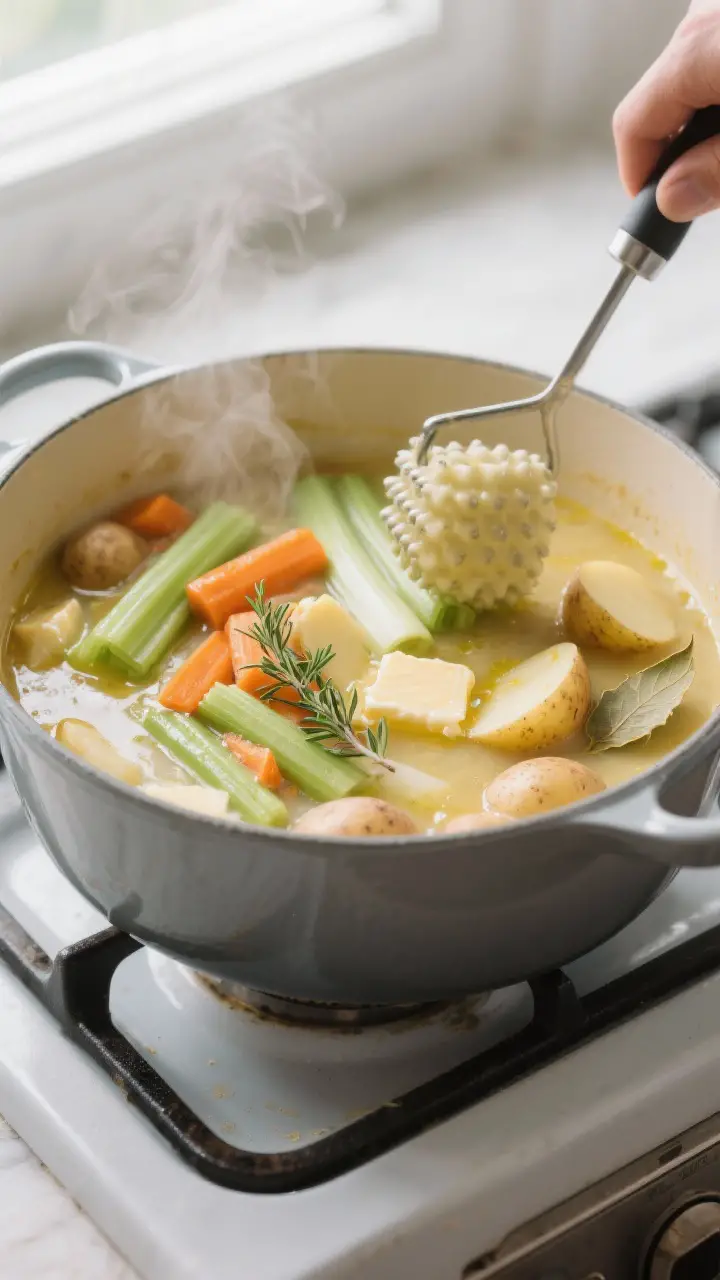
- Light but creamy: You get the richness of chowder without the weight, thanks to a blend of broth, milk, and a quick mash of potatoes for body.
- Showcases spring produce: Leeks, asparagus, peas, carrots, and tender herbs shine here. Use what’s fresh and local if you can.
- Flexible and forgiving: Swap in spinach for kale, use shallots instead of leeks, or add corn if you like a touch of sweetness.
- One pot, minimal fuss: Everything simmers together for simple cleanup and straightforward cooking.
- Make-ahead friendly: Tastes even better the next day as the flavors meld.
What You’ll Need
- 2 tablespoons unsalted butter (or olive oil for dairy-free)
- 1 tablespoon olive oil (adds flavor and prevents butter from browning)
- 2 medium leeks, white and light green parts, thinly sliced and rinsed well
- 2 cloves garlic, minced
- 2 carrots, diced
- 3 celery ribs, diced
- 1 pound baby potatoes, quartered (Yukon gold or red new potatoes)
- 1 teaspoon kosher salt, plus more to taste
- 1/2 teaspoon black pepper
- 1/2 teaspoon dried thyme (or 1 teaspoon fresh thyme leaves)
- 1 bay leaf
- 4 cups low-sodium vegetable broth (or chicken broth)
- 1 cup whole milk (or half-and-half for richer chowder; use unsweetened oat milk for dairy-free)
- 1 bunch asparagus, trimmed and cut into 1-inch pieces
- 1 cup fresh or frozen peas
- 2 cups chopped baby spinach (or kale, finely chopped)
- 1 tablespoon lemon juice, plus more to taste
- 2 tablespoons chopped fresh dill (or parsley/chives)
- Optional finishes: 1/4 cup grated Parmesan, crispy bacon bits, a drizzle of olive oil, or crushed red pepper flakes
Instructions
- Prep the vegetables. Clean and slice the leeks, dice the carrots and celery, and quarter the potatoes.
Trim and cut the asparagus. Measure everything so cooking is smooth.
- Sweat the aromatics. In a large pot or Dutch oven, heat butter and olive oil over medium heat. Add leeks, carrots, and celery with a pinch of salt.
Cook 6–8 minutes, stirring, until leeks are soft and glossy, not browned.
- Add garlic and seasonings. Stir in the garlic, thyme, black pepper, and bay leaf. Cook 30–60 seconds until fragrant.
- Simmer the base. Add potatoes, broth, and 1 teaspoon salt. Bring to a boil, then lower to a gentle simmer.
Cook 12–15 minutes, until potatoes are just fork-tender.
- Thicken naturally. Using a potato masher, mash a few potato pieces right in the pot. This releases starch and gives the chowder body without flour.
- Add the creamy element. Pour in the milk and stir. Keep heat at a gentle simmer; do not boil vigorously after adding dairy.
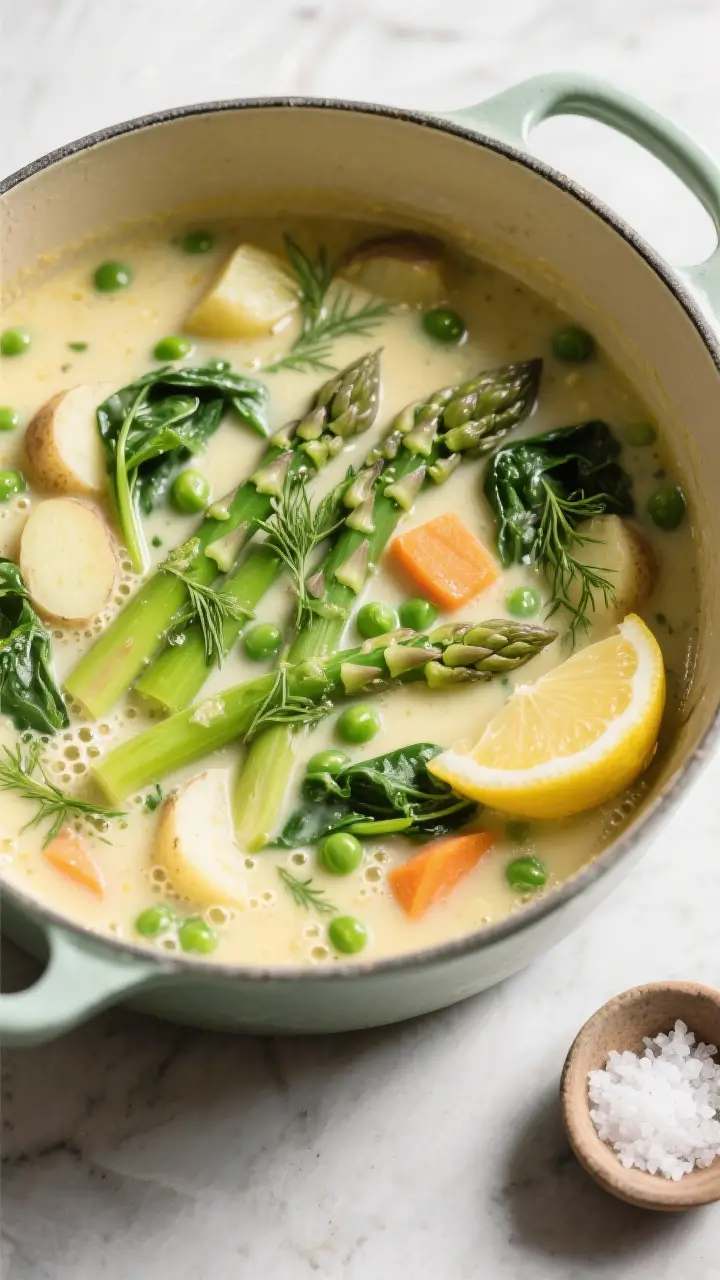
- Stir in spring veggies. Add asparagus and peas.
Simmer 3–5 minutes, until asparagus is tender-crisp and peas are bright.
- Finish with greens and herbs. Stir in spinach until just wilted, 1–2 minutes. Remove the bay leaf. Add lemon juice and dill.
Taste and adjust with more salt, pepper, or lemon.
- Optional enrichments. Stir in Parmesan for extra depth, or top bowls with crispy bacon, olive oil, or red pepper flakes.
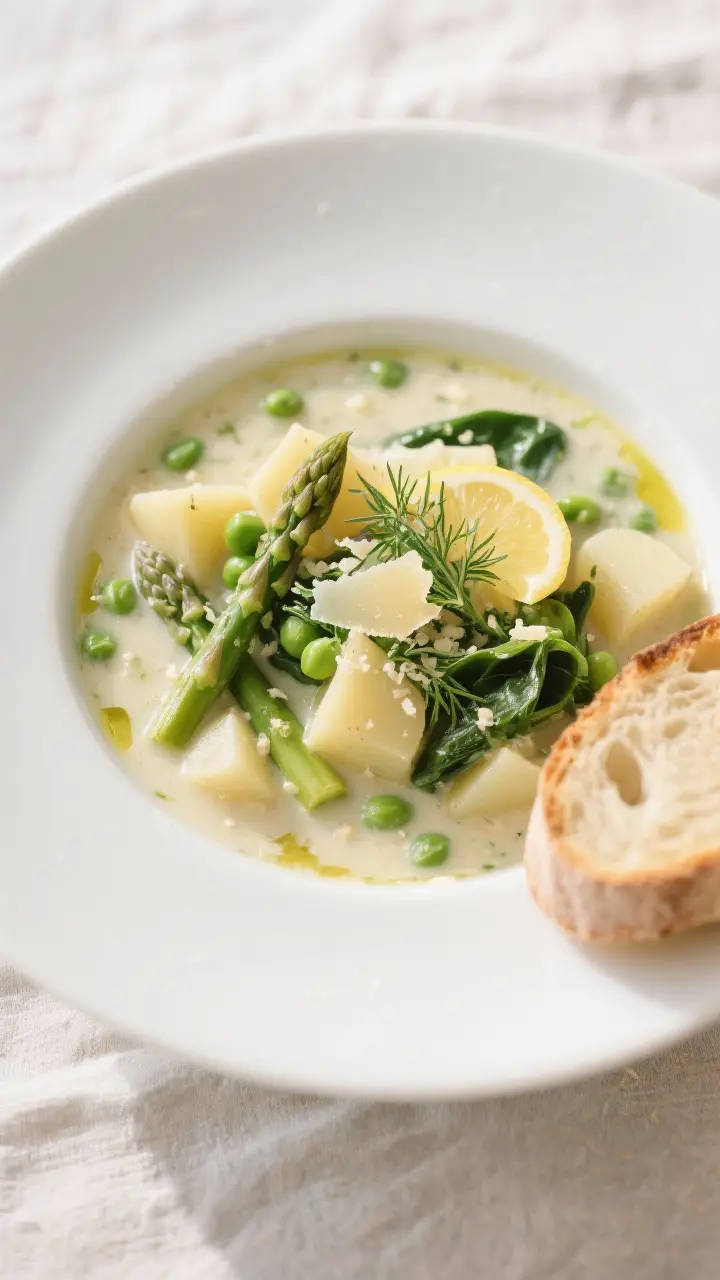
- Serve. Ladle into warm bowls. Add a squeeze of lemon and a sprinkle of herbs to brighten each serving.
How to Store
- Refrigerator: Cool completely, then store in an airtight container for up to 4 days.
- Freezer: Dairy-based soups can separate when frozen. If you plan to freeze, cook through step 5, freeze up to 2 months, then add milk and delicate veggies after reheating.
- Reheat gently: Warm over low heat, stirring often.
Avoid boiling to prevent curdling and to keep asparagus tender.
Why This Is Good for You
- Fiber and vitamins: Leeks, carrots, spinach, and peas provide fiber, vitamin A, vitamin C, folate, and potassium.
- Balanced comfort: Potatoes offer slow-digesting carbs for steady energy, while milk or broth adds protein and minerals.
- Lower in saturated fat: Using milk instead of heavy cream keeps it lighter without sacrificing creaminess.
- Herb and citrus boost: Dill and lemon brighten flavors, helping you rely less on salt.
Pitfalls to Watch Out For
- Boiling after adding milk: High heat can cause curdling. Keep it to a gentle simmer.
- Overcooking asparagus: It turns mushy and dull. Add near the end and cook briefly.
- Skipping the leek rinse: Leeks hold grit between layers.
Slice first, then swish thoroughly in water.
- Underseasoning: Broth varies. Taste before serving and adjust salt, pepper, and lemon.
- Too thin or too thick: Mash more potatoes to thicken, or add a splash of broth to loosen.
Alternatives
- Dairy-free: Use olive oil instead of butter and unsweetened oat milk or cashew cream. Add 1 teaspoon nutritional yeast for savory depth.
- Gluten-free: This recipe is naturally gluten-free.
If you choose to thicken with a roux, use a gluten-free flour blend.
- Protein add-ins: Stir in cooked shredded chicken, flaked salmon, white beans, or crispy pancetta.
- Veggie swaps: Try fennel, baby zucchini, snap peas, or corn. In late spring, tender green beans are great.
- Herb variations: Chives, tarragon, or parsley offer a different fresh finish. Tarragon pairs especially well with asparagus.
- Richer version: Replace half the milk with half-and-half, or add a knob of butter at the end for silkiness.
FAQ
Can I make this ahead?
Yes.
The flavors improve overnight. For best texture, cook through step 6, then add asparagus, peas, and spinach when reheating so they stay vibrant.
What can I use instead of leeks?
Use one large onion or two shallots. The flavor will be slightly sharper than leeks but still delicious.
How do I keep the chowder from curdling?
Use whole milk or a creamy dairy alternative, add it after the potatoes are tender, and keep the heat low.
Avoid rapid boiling once dairy is in the pot.
Can I thicken without mashing potatoes?
Yes. Whisk 1 tablespoon cornstarch with 2 tablespoons cold milk, then stir into the simmering chowder. Cook 2–3 minutes until it thickens.
Or blend a cup of the soup and return it to the pot.
Is this good with seafood?
Absolutely. Fold in cooked shrimp, crab, or flaky cod at the end and warm gently. Lemon and dill complement seafood beautifully.
What should I serve with it?
Crusty bread, a simple green salad with lemon vinaigrette, or warm biscuits are perfect.
A crisp white wine like Sauvignon Blanc pairs well, too.
Can I use frozen vegetables?
Yes. Frozen peas work perfectly. Frozen asparagus is fine in a pinch; add it straight from the freezer and cook just until tender.
Final Thoughts
Spring vegetable chowder is a reminder that comfort food can be bright and fresh.
With a few simple steps and a pot full of seasonal produce, you get a silky, satisfying soup that fits weeknights or weekends. Keep it simple, taste as you go, and finish with lemon and herbs. It’s the kind of recipe you’ll return to every spring—and customize to whatever looks best at the market.
Enjoy every spoonful.