
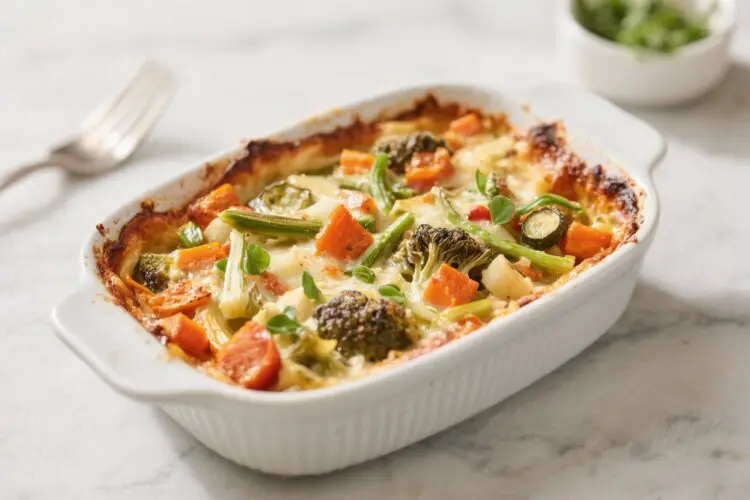
Spring brings a wave of crisp, tender vegetables that taste like sunshine after a long winter. This Spring Vegetable Casserole is all about showcasing that freshness in a cozy, satisfying way. It’s light yet comforting, full of color, and easy to make on a weeknight.
Whether you’re feeding a family or cooking for a small gathering, this casserole brings the best of the season to your table. Serve it as a main for a meatless meal or as a vibrant side dish with roasted chicken or fish.
What Makes This Special
This casserole balances bright, fresh vegetables with a creamy, herby sauce and a crisp, golden topping. It’s not a heavy, overly cheesy bake.
Instead, it’s creamy enough to feel indulgent while still letting the vegetables shine. You’ll use a quick homemade sauce that’s lighter than traditional casseroles, with lemon and fresh herbs to boost flavor. The texture is spot on: tender vegetables, a silky base, and a crunchy finish.
Plus, it’s flexible. You can swap in what you find at the market and still end up with a delicious result.
What You’ll Need
- Asparagus: 1 bunch (about 1 pound), trimmed and cut into 1-inch pieces
- Baby potatoes: 1 pound, halved or quartered if large
- Leeks: 2 medium, white and light green parts only, thinly sliced and well rinsed
- Peas: 1 cup (fresh or frozen)
- Baby spinach: 4 cups (about 4 ounces)
- Carrots: 2 medium, peeled and sliced into thin rounds
- Garlic: 3 cloves, minced
- Lemon zest and juice: Zest of 1 lemon and 1 tablespoon juice
- Fresh herbs: 2 tablespoons chopped dill, 2 tablespoons chopped parsley
- Olive oil: 3 tablespoons
- Butter: 2 tablespoons
- All-purpose flour: 2 tablespoons
- Vegetable broth: 1 3/4 cups, low sodium
- Whole milk or half-and-half: 3/4 cup
- Parmesan: 1/2 cup finely grated (plus extra for topping)
- Gruyère or white cheddar: 1/2 cup shredded (optional for extra richness)
- Panko breadcrumbs: 1 cup
- Salt and black pepper: To taste
- Crushed red pepper flakes: Pinch (optional)
Step-by-Step Instructions
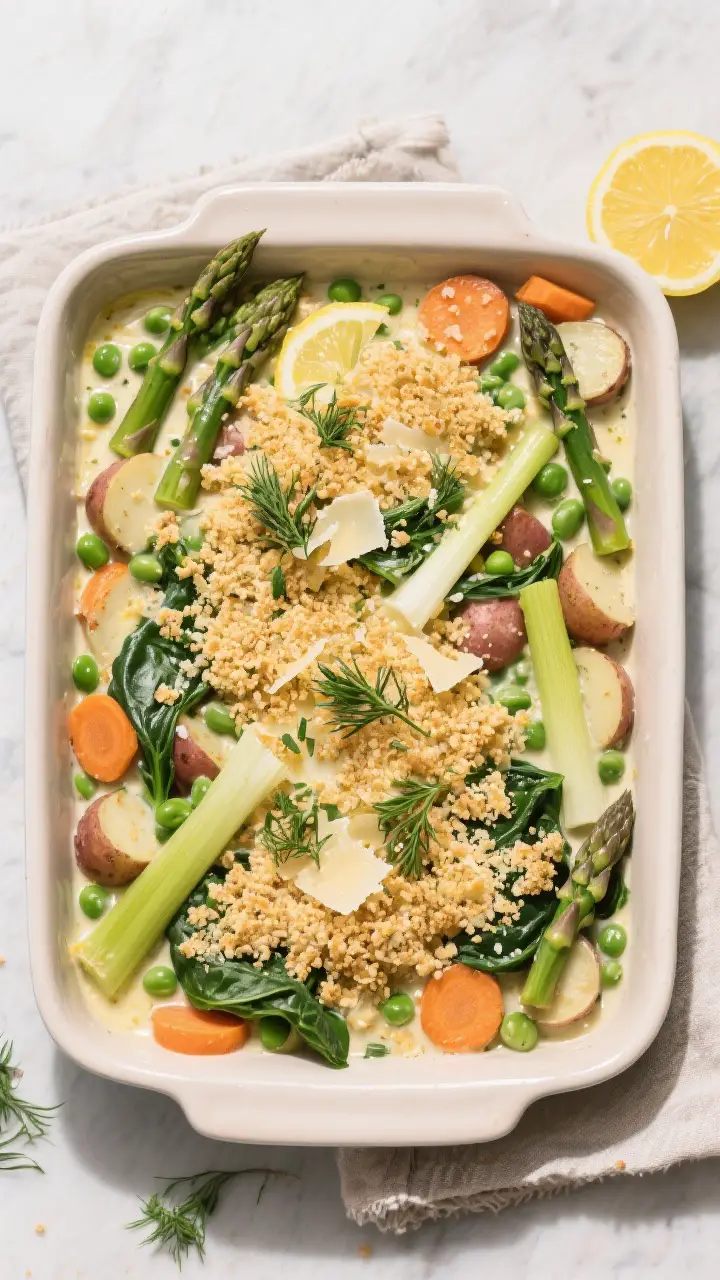
- Prep and preheat: Heat your oven to 400°F (200°C). Lightly grease a 9×13-inch baking dish or similar casserole dish.
- Par-cook the potatoes and carrots: Place the potatoes and carrots in a pot, cover with salted water, and bring to a boil.
Simmer 6–8 minutes until just tender but not soft. Drain well.
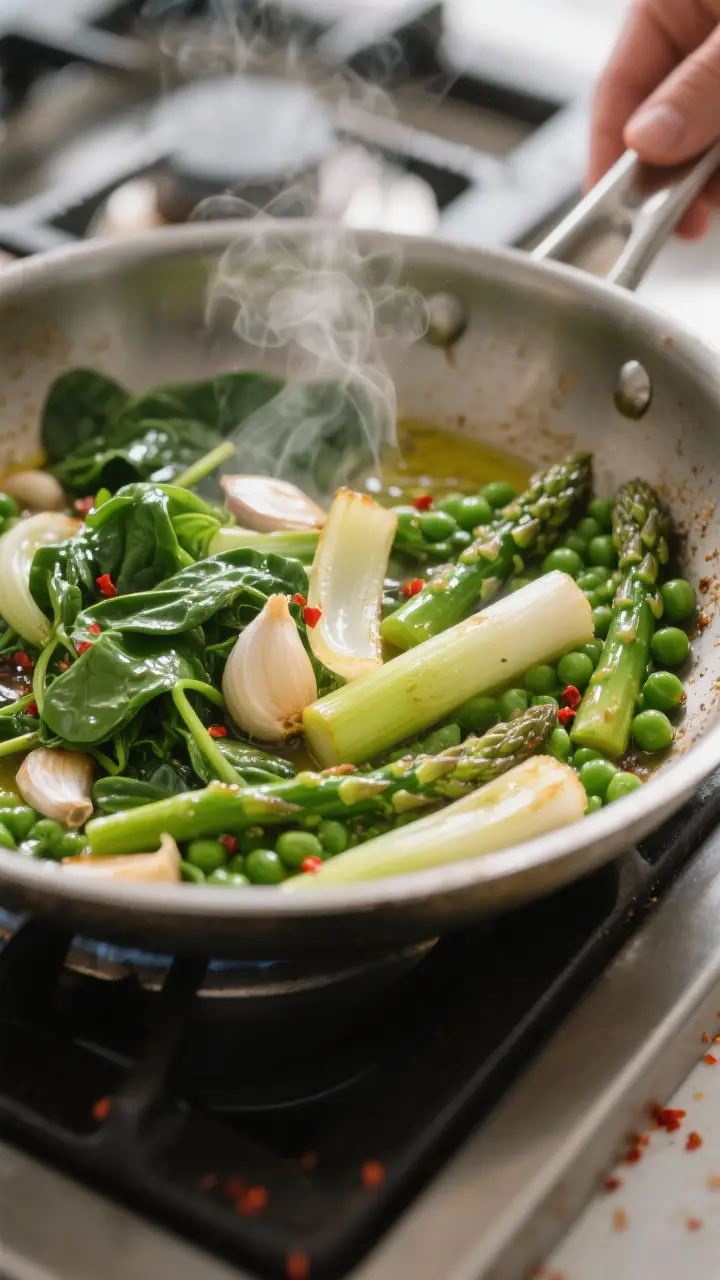
- Sauté the aromatics: In a large skillet, warm 2 tablespoons olive oil over medium heat. Add the leeks and a pinch of salt.
Cook 5–6 minutes until soft and sweet, then stir in the garlic for 30 seconds.
- Wilt the greens and add spring veg: Add spinach and cook until just wilted. Stir in asparagus and peas. Cook 2–3 minutes, only to brighten the color.
Transfer the mixture to a large bowl with the drained potatoes and carrots.
- Make the light cream sauce: In the same skillet, melt butter over medium heat. Sprinkle in flour and whisk for 1 minute to make a roux. Slowly whisk in vegetable broth, then milk.
Simmer 3–4 minutes until slightly thickened, stirring often.
- Season and enrich: Stir in lemon zest, lemon juice, dill, parsley, Parmesan, and the optional Gruyère. Add red pepper flakes if using. Season generously with salt and black pepper.
The sauce should taste lively and well-seasoned.
- Combine: Pour the sauce over the vegetables and toss gently to coat. Transfer everything into the prepared baking dish and spread evenly.
- Add the crunchy topping: In a small bowl, mix panko with 1 tablespoon olive oil and a pinch of salt. Sprinkle over the casserole.
Add a little extra Parmesan on top if you like.
- Bake: Bake 18–22 minutes, until the topping is golden and the edges are bubbling. If needed, broil for 1–2 minutes at the end to crisp the top further.
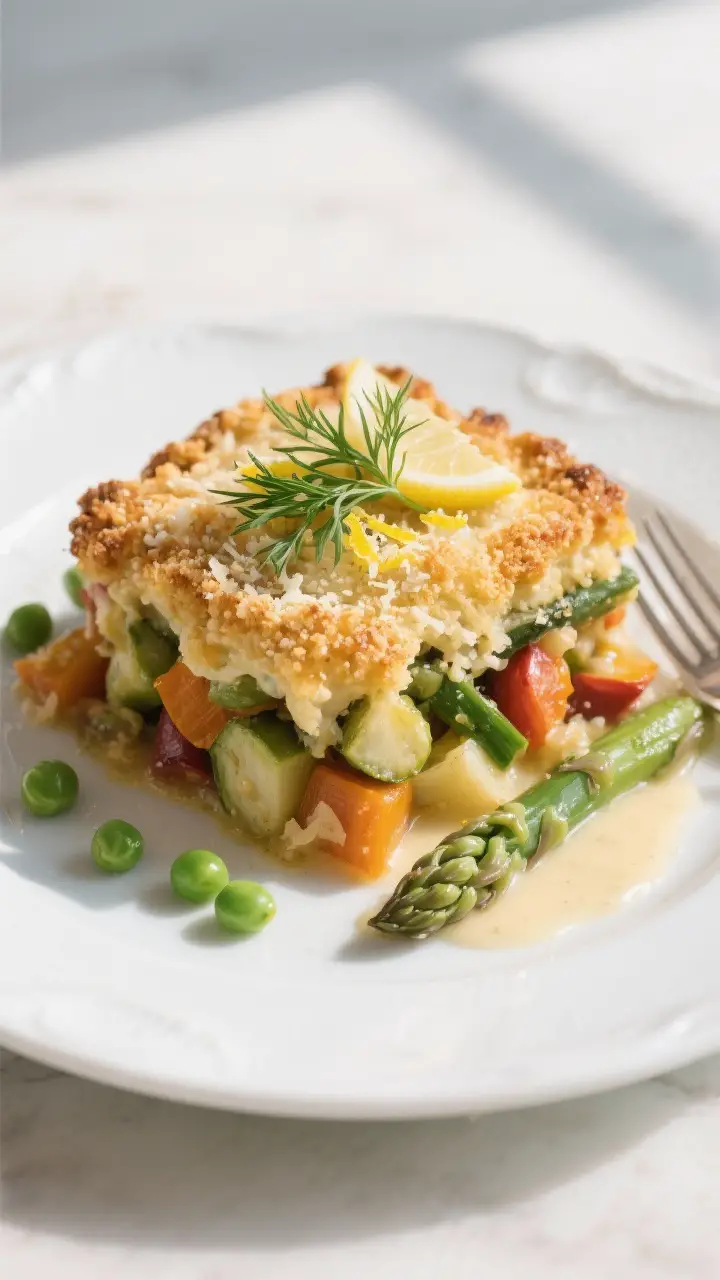
- Rest and serve: Let the casserole rest 5–10 minutes before serving so it sets slightly. Garnish with extra herbs and a squeeze of lemon if desired.
Storage Instructions
- Refrigerator: Cool completely, then cover and store for up to 3 days.
- Reheating: Warm in a 350°F (175°C) oven for 15–20 minutes, or microwave individual portions until hot.
Add a splash of broth or milk if it seems dry.
- Freezer: This casserole can be frozen, but the vegetables may soften. If freezing, skip the panko topping and add it fresh before reheating. Freeze up to 2 months.
Thaw overnight in the fridge before baking.
Health Benefits
This dish is rich in fiber from a variety of vegetables, which helps with digestion and steady energy. The asparagus, peas, and spinach bring folate, vitamin K, and iron. The carrots add beta-carotene for eye health.
Using a lighter sauce keeps calories in check while still offering satisfying creaminess. Parmesan delivers flavor in small amounts, so you don’t need loads of cheese. The olive oil and optional nuts or seeds (if you add them) provide heart-friendly fats.
Common Mistakes to Avoid
- Overcooking the vegetables: Keep them crisp-tender before baking.
They’ll finish in the oven.
- Skipping the seasoning: Taste the sauce before mixing it in. It should be well-salted and bright with lemon.
- Watery casserole: Drain vegetables well, especially if using frozen peas or rinsed leeks. Excess water thins the sauce.
- Burning the topping: If the panko browns too fast, tent with foil.
Or add the topping halfway through baking.
- Heavy-handed cheese: Too much cheese can mask the fresh flavors. Use just enough for balance.
Recipe Variations
- Vegan version: Use vegan butter, plant-based milk (unsweetened), and a vegan Parmesan-style cheese or nutritional yeast. Check that your panko is vegan.
- Gluten-free: Use a gluten-free flour blend for the roux and gluten-free panko.
- Add protein: Stir in cooked white beans, shredded rotisserie chicken, or sautéed mushrooms for more substance.
- Different herbs: Try tarragon and chives for a soft, anise-like note, or mint for extra freshness.
- More spring stars: Add sliced radishes for a gentle bite, blanched fava beans, or tender broccolini.
- Citrus twist: Swap lemon with Meyer lemon or add a little grated orange zest for a floral note.
- Crunch upgrade: Mix panko with chopped toasted almonds or pistachios for added texture.
FAQ
Can I make this ahead?
You can assemble the casserole up to the point of adding the topping, cover, and refrigerate for up to 24 hours.
Add the panko just before baking. You might need to add 5–10 minutes to the bake time if it’s going into the oven cold.
What if I can’t find leeks?
Use one medium yellow onion or a bunch of green onions (scallions). For scallions, add the white and light green parts to the sauté first and save some dark green tops for garnish.
How do I keep the sauce from getting lumpy?
Whisk the flour into the melted butter and cook it for a full minute.
Then add the broth slowly, whisking constantly. Keep the heat moderate and stir often until smooth and slightly thickened.
Can I use frozen vegetables?
Yes. Frozen peas work perfectly.
If using frozen asparagus or spinach, thaw and drain well. Press out excess moisture from spinach so the casserole doesn’t turn watery.
Is there a dairy-free option that still feels creamy?
Use olive oil instead of butter and a rich, unsweetened plant milk like cashew or oat. Thicken as directed and add a spoonful of almond butter or a splash of coconut cream for body, plus lemon and herbs for brightness.
What can I serve with it?
It pairs nicely with roasted salmon, grilled chicken, or a simple grain like quinoa.
A crisp green salad with a lemony vinaigrette rounds out the meal.
How do I know it’s done?
Look for bubbling edges and a golden, crisp topping. The vegetables should be tender when pierced with a fork but not mushy.
Can I add pasta or grains?
Yes. Stir in 2 cups of cooked short pasta, farro, or quinoa before baking.
If adding pasta, you may want a splash more broth to keep it saucy.
Final Thoughts
This Spring Vegetable Casserole celebrates everything we love about the season: fresh produce, bright flavors, and simple comfort. It’s easy to adapt, quick to assemble, and works for weeknights or gatherings. Keep the vegetables crisp-tender, taste your sauce, and finish with a crunchy top.
You’ll have a dish that feels both wholesome and special, perfect for the first warm evenings of the year.