
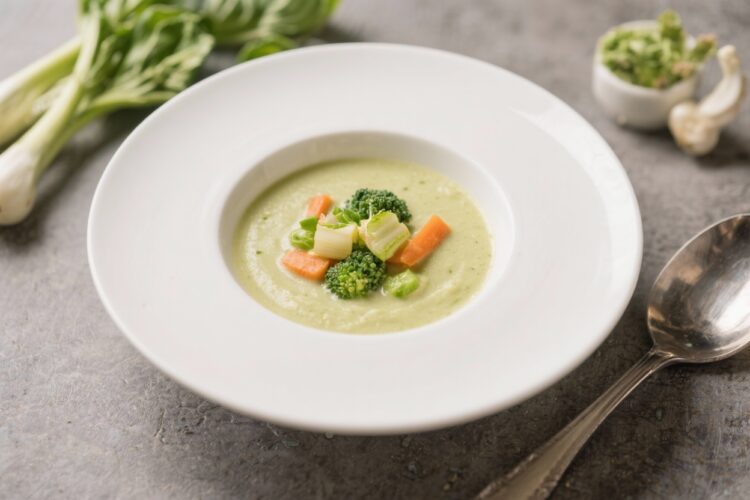
A good bisque feels cozy without being heavy, and this spring version delivers exactly that. It’s velvety, bright, and packed with tender seasonal vegetables. Think asparagus, peas, leeks, and a hint of fresh herbs brought together in a silky, creamy base.
It tastes elegant but comes together in a straightforward way. Serve it as a light dinner with crusty bread, or as a starter for a special meal.
What Makes This Recipe So Good
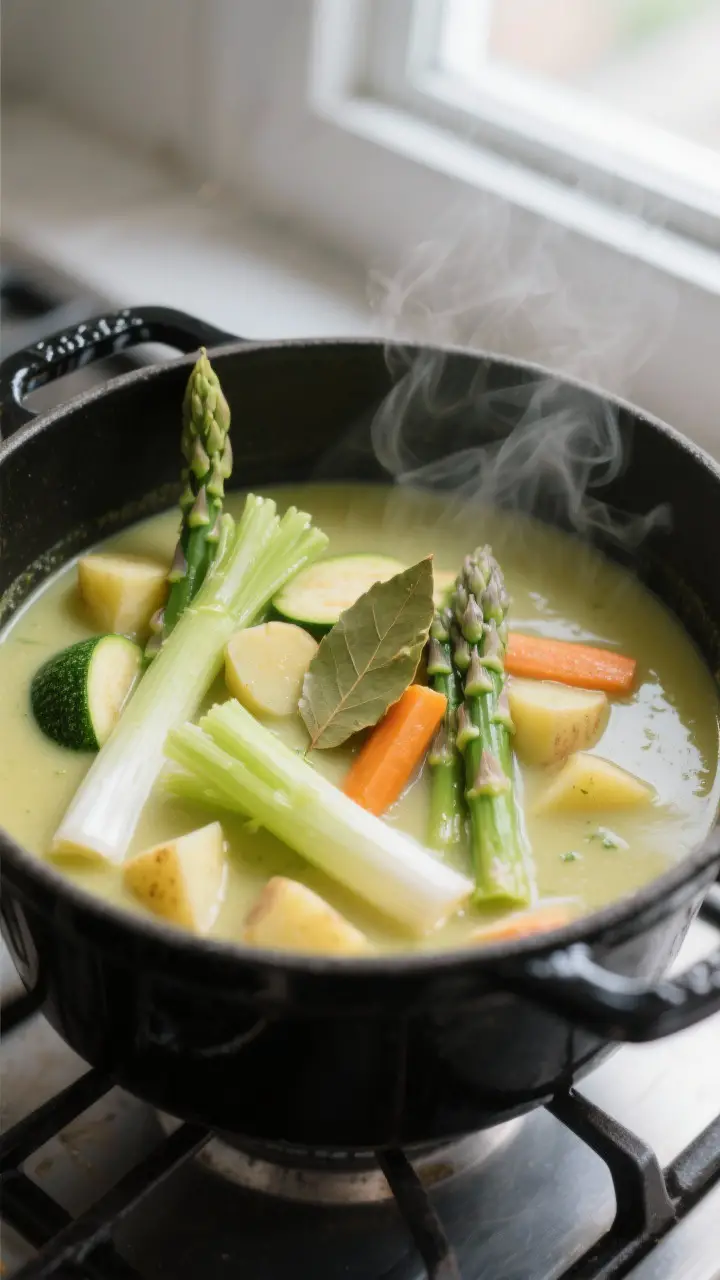
- Fresh, seasonal flavor: Spring vegetables shine here, with a naturally sweet, delicate taste that doesn’t need fuss.
- Light yet creamy: A blend of stock, potatoes, and a splash of cream gives a smooth, satisfying texture without feeling heavy.
- Flexible and forgiving: Swap in whatever spring produce you have on hand, and it still turns out balanced and bright.
- Make-ahead friendly: The flavors deepen after a day in the fridge, making it perfect for meal prep.
- Elegant presentation: A swirl of yogurt, a drizzle of olive oil, or a handful of herbs turns it restaurant-worthy in seconds.
Ingredients
- 2 tablespoons unsalted butter (or olive oil for dairy-free)
- 1 tablespoon olive oil
- 2 leeks, white and light green parts only, sliced thin
- 2 celery stalks, chopped
- 2 carrots, peeled and chopped
- 2 cloves garlic, minced
- 1 medium Yukon Gold potato, peeled and diced small
- 1 bunch asparagus (about 1 pound), woody ends trimmed, chopped
- 1 cup fresh or frozen peas
- 1 small zucchini, chopped
- 4 cups low-sodium vegetable stock (or chicken stock)
- 1 bay leaf
- 1 teaspoon kosher salt, plus more to taste
- 1/2 teaspoon freshly ground black pepper
- 1/4 teaspoon mild chili flakes (optional)
- 1/2 cup fresh herbs, chopped (mix of parsley, chives, and dill)
- 1/2 cup heavy cream or half-and-half (use coconut milk for dairy-free)
- 1 tablespoon lemon juice, plus more to taste
- Greek yogurt or crème fraîche, for serving (optional)
- Extra-virgin olive oil, for finishing
Instructions
- Soften the aromatics: In a large pot, heat the butter and olive oil over medium heat. Add leeks, celery, and carrots.
Cook, stirring often, until softened and fragrant, about 6–8 minutes. Avoid browning.
- Add garlic and potato: Stir in the garlic and cook for 30 seconds. Add the diced potato and cook for 2 minutes to coat in the aromatics.
- Build the base: Add the asparagus, zucchini, stock, bay leaf, salt, pepper, and chili flakes if using.
Bring to a gentle simmer.
- Simmer until tender: Reduce heat to low and cook uncovered for 12–15 minutes, until the potato and asparagus are tender.
- Add peas and herbs: Stir in the peas and half of the chopped herbs. Simmer 2–3 minutes more.
- Blend until silky: Remove the bay leaf. Use an immersion blender to puree until smooth and velvety.
For extra-smooth texture, transfer to a blender in batches and blend on high. Return to the pot.
- Finish with cream and lemon: Stir in the cream and lemon juice. Taste and adjust with more salt, pepper, or lemon as needed.
If too thick, loosen with a splash of stock or water.
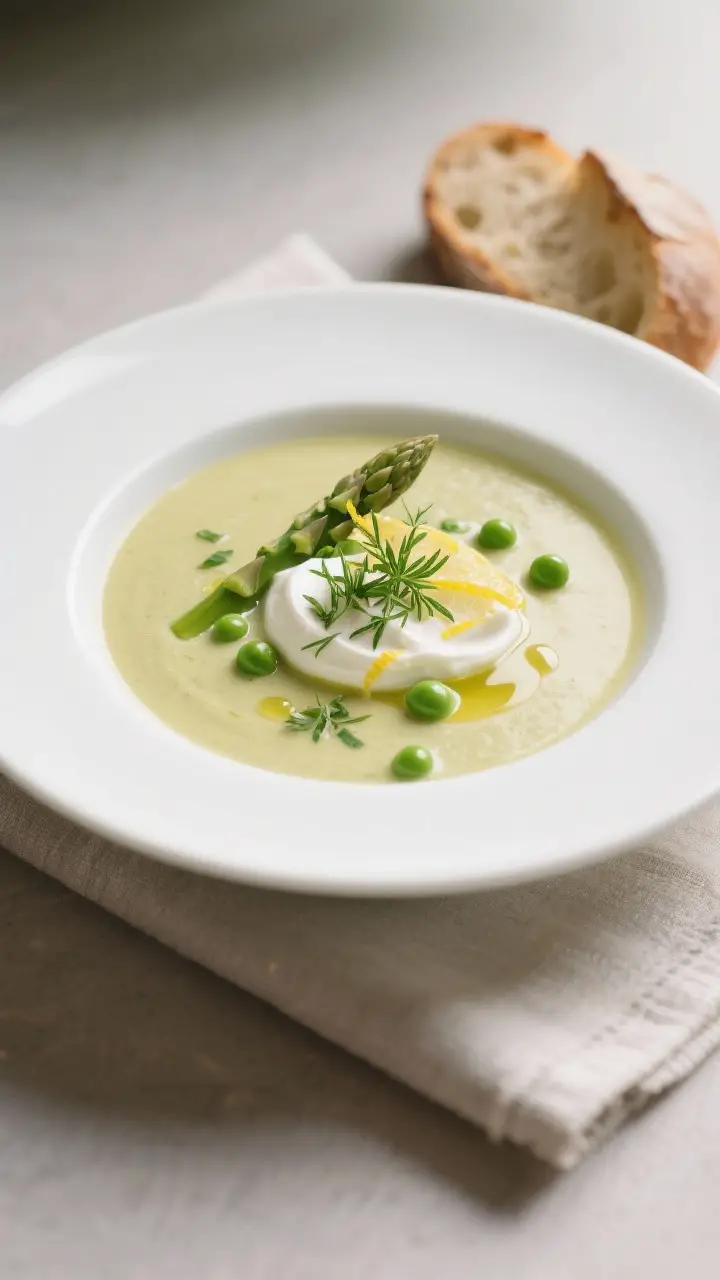
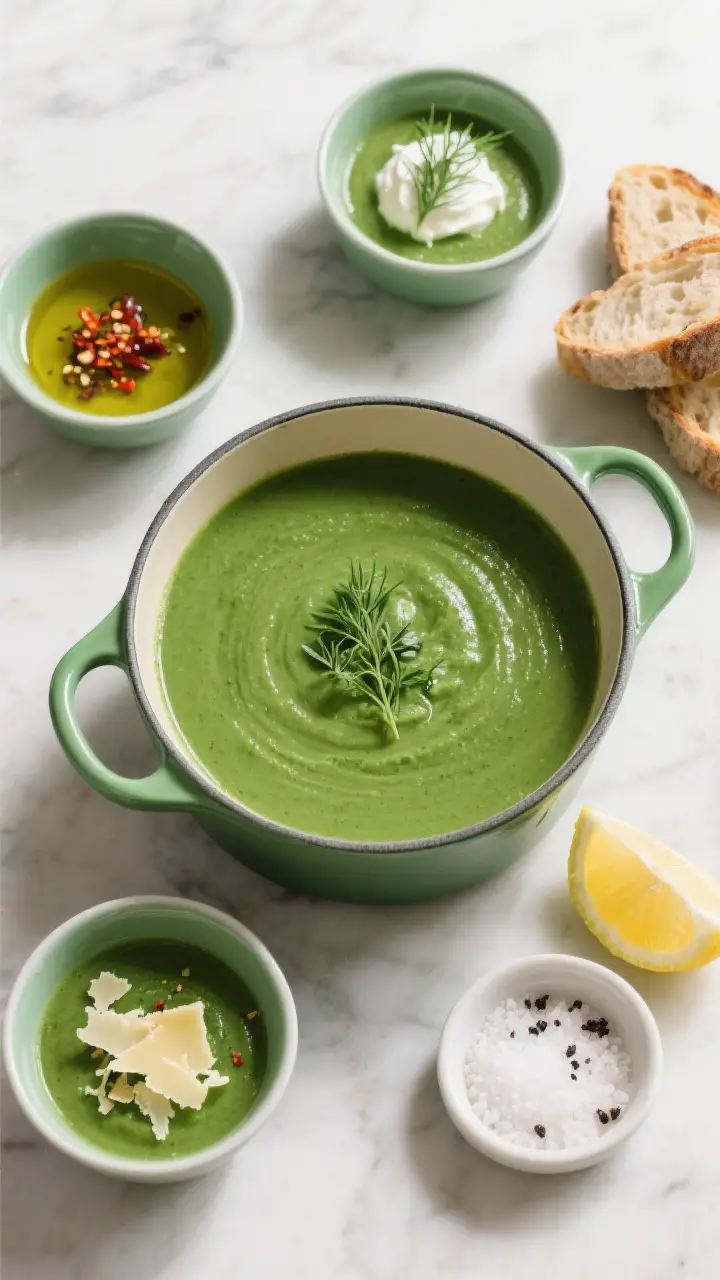
- Serve: Ladle into bowls and finish with a spoonful of yogurt or crème fraîche, a drizzle of olive oil, and the remaining herbs.
How to Store
- Refrigerator: Cool completely, then store in an airtight container for up to 4 days.
- Freezer: Freeze without the dairy for best texture. Cool, portion into containers, and freeze for up to 3 months. Stir in cream after reheating.
- Reheat: Warm gently on the stove over low heat, stirring often.
Avoid boiling once the cream is added to keep it smooth.
Health Benefits
- Fiber-rich: Leeks, peas, and asparagus provide fiber that supports digestion and steady energy.
- Vitamins and minerals: Spring vegetables deliver vitamin C, folate, vitamin K, and potassium to support immune function and heart health.
- Lighter creaminess: The potato helps thicken the soup naturally, so you can use less cream while keeping a silky texture.
- Antioxidants: Herbs and colorful vegetables offer antioxidants that help reduce inflammation.
Pitfalls to Watch Out For
- Overbrowning the aromatics: Dark caramelization can muddy the delicate flavor. Keep heat moderate and stir often.
- Boiling after adding dairy: Intense heat can cause separation. Simmer gently and reheat slowly.
- Skipping acid: Without lemon juice, the soup can taste flat.
A little acid brightens everything.
- Ignoring salt at the end: Taste and adjust after blending. Pureed soups often need a final pinch of salt.
- Too thick or too thin: Thin with stock for the right consistency or simmer a few extra minutes to reduce.
Recipe Variations
- Ultra-green version: Add a handful of baby spinach or watercress right before blending for deeper color and extra vitamins.
- Dairy-free and vegan: Use olive oil, vegetable stock, and full-fat coconut milk. Finish with lemon zest for brightness.
- Protein boost: Stir in shredded rotisserie chicken or top with crispy chickpeas for a heartier bowl.
- Herb swap: Try tarragon for a subtle anise note or mint for a cool lift that pairs well with peas.
- Grain add-ins: Serve over cooked farro, quinoa, or brown rice for extra texture and staying power.
- Cheesy finish: Grate a little Parmesan over each bowl or whisk in a small handful after blending.
FAQ
Can I use frozen vegetables?
Yes.
Frozen peas and even frozen asparagus work well. Add them toward the end of cooking so they don’t get mushy, then blend as directed.
How do I make it thicker without more cream?
Use an extra potato or simmer a few minutes longer to reduce the liquid. Blending thoroughly also creates a naturally creamy texture.
Can I make this ahead?
Absolutely.
The soup tastes even better the next day. Reheat gently and add a splash of water or stock if it thickens in the fridge.
What can I use instead of leeks?
Onions or shallots are fine. Use one medium onion or 3–4 shallots, sliced thin, and cook until soft but not browned.
Is this gluten-free?
Yes, as written.
Just confirm your stock and any toppings are certified gluten-free.
What if I don’t have an immersion blender?
Carefully transfer the soup to a countertop blender in batches. Vent the lid slightly and cover with a towel to let steam escape, then blend until very smooth.
Wrapping Up
Spring Vegetable Bisque is comforting yet light, with a fresh flavor that feels right at home on any table. It’s easy to make, flexible with your produce drawer, and special enough for guests.
Keep the season’s best vegetables front and center, finish with a bright splash of lemon, and enjoy a bowl that tastes like spring.
Printable Recipe Card
Want just the essential recipe details without scrolling through the article? Get our printable recipe card with just the ingredients and instructions.