
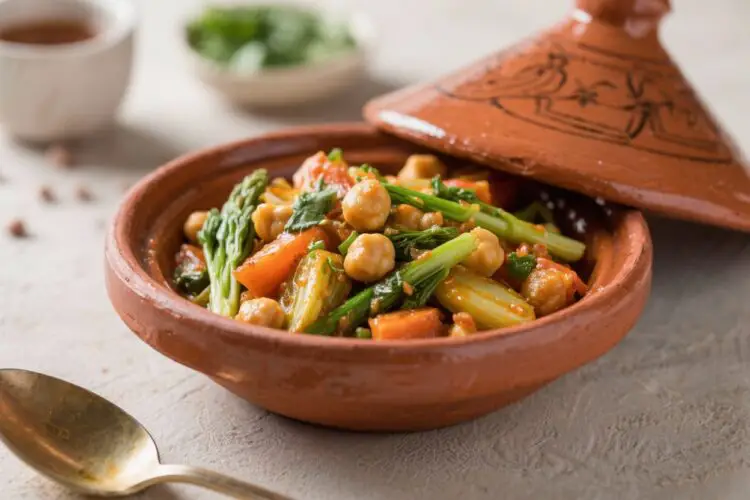
A tagine is the kind of meal that feels special without asking much of you. This spring version leans on tender vegetables, warm spices, and pantry-friendly chickpeas for a dinner that’s light yet satisfying. It’s cozy enough for a rainy evening and sunny enough for a weekend lunch with friends.
Each bite balances sweetness from carrots and peas with gentle heat from cumin and paprika. Serve it over couscous, rice, or with warm flatbread, and you’ve got a complete, colorful meal.
What Makes This Recipe So Good
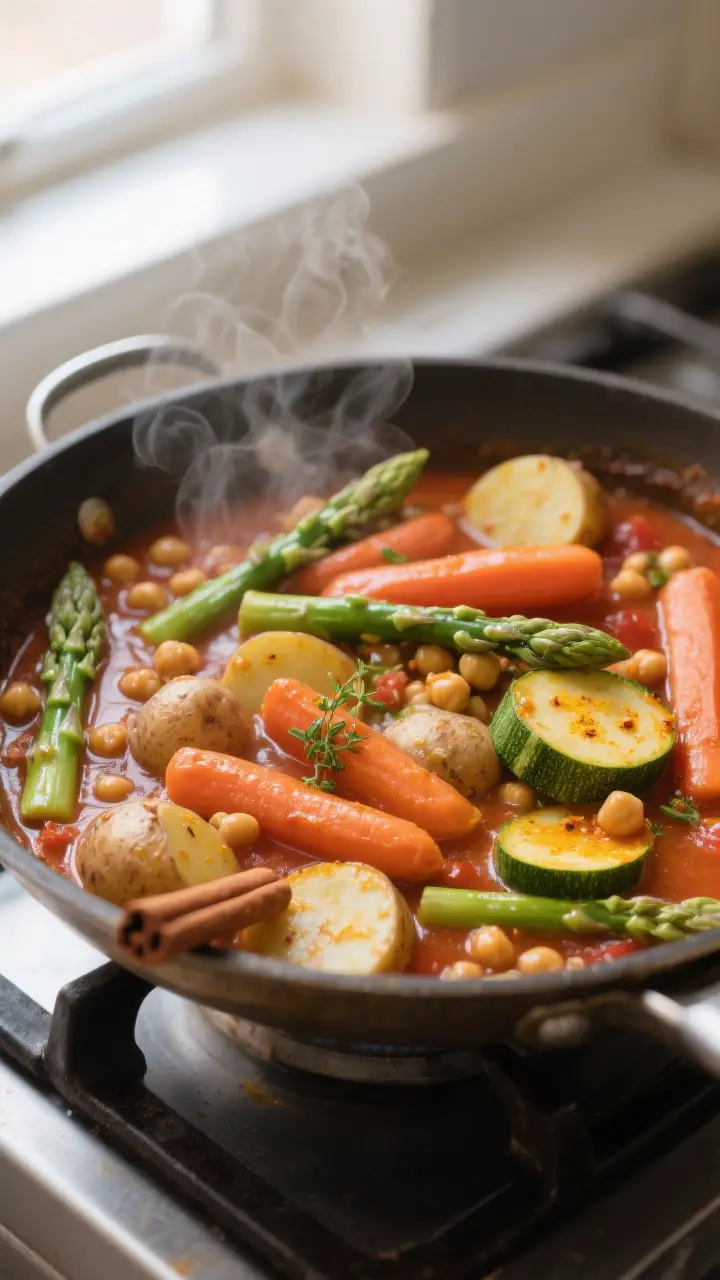
- Seasonal and flexible: It features spring vegetables at their peak, but you can swap in what you have on hand.
- Hearty yet light: Chickpeas add protein and fiber, so you’ll feel satisfied without feeling heavy.
- Deep flavor, simple process: A short list of spices blooms in olive oil for a fragrant, layered sauce.
- One-pot convenience: Everything simmers together, making cleanup easy and weeknights simpler.
- Make-ahead friendly: The flavors develop even more by the next day.
What You’ll Need
- Olive oil: For sautéing and richness.
- Yellow onion: Sweet base flavor.
- Garlic: Aromatic punch.
- Fresh ginger: Bright, peppery lift.
- Carrots: Sweetness and color.
- Baby potatoes or small waxy potatoes: Creamy texture that holds up to simmering.
- Zucchini: Tender, quick-cooking vegetable.
- Asparagus: Classic spring vegetable with mild earthiness.
- Green peas (fresh or frozen): Pops of sweetness and color.
- Chickpeas (cooked or canned, drained and rinsed): Protein and heft.
- Crushed tomatoes or tomato passata: Saucy base to tie everything together.
- Vegetable broth: For depth and to create the braising liquid.
- Ground cumin, coriander, smoked paprika, turmeric: Warm, earthy spice profile.
- Cinnamon stick or ground cinnamon: Subtle sweetness that rounds the spices.
- Harissa paste or red pepper flakes (optional): Heat, customized to taste.
- Lemon (zest and juice): Fresh finish that brightens the stew.
- Fresh herbs (cilantro, parsley, or mint): Clean, green notes at the end.
- Salt and black pepper: Essential seasoning.
- To serve: Couscous, rice, or warm flatbread; plain yogurt for topping (optional).
How to Make It
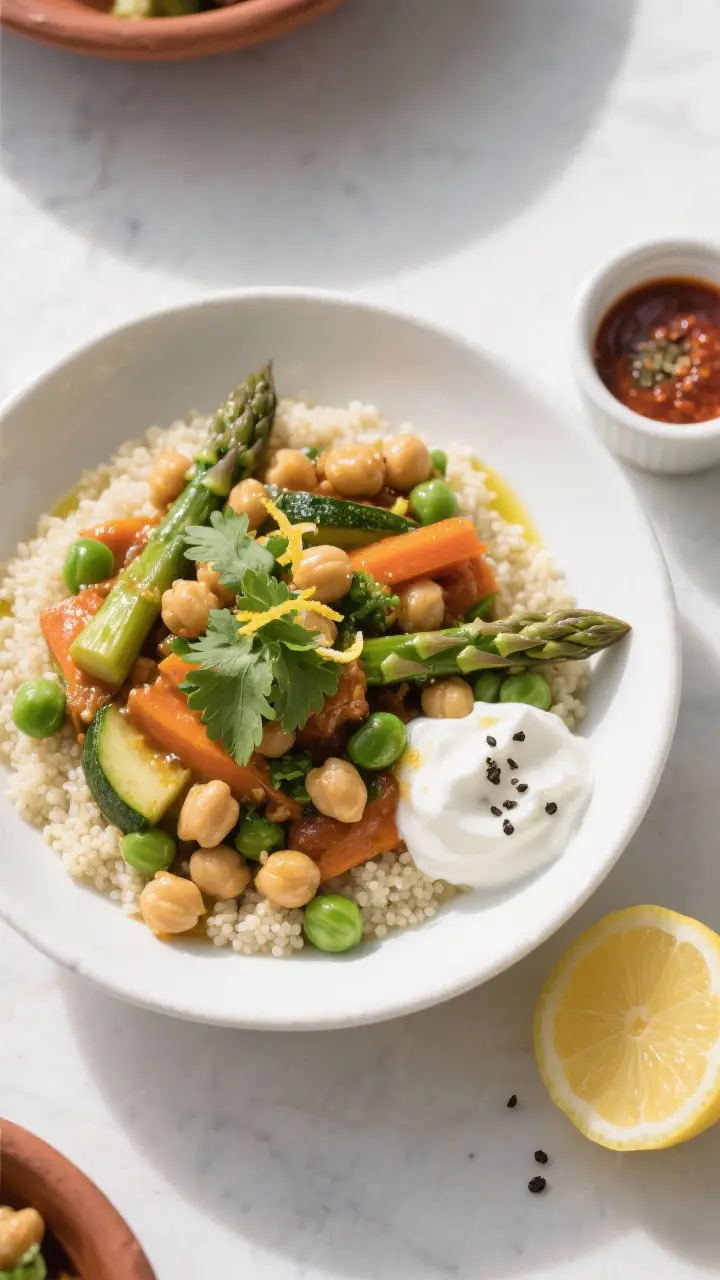
- Sauté the aromatics: Warm olive oil in a heavy pot over medium heat. Add chopped onion with a pinch of salt and cook until translucent, about 5 minutes.
Stir in minced garlic and grated ginger; cook 1 minute until fragrant.
- Bloom the spices: Add cumin, coriander, smoked paprika, turmeric, and a small pinch of cinnamon (or a cinnamon stick). Stir for 30 seconds to release their aromas. If using harissa, whisk in a teaspoon now for deeper heat.
- Add sturdy vegetables: Toss in sliced carrots and halved baby potatoes.
Stir to coat in spices. Cook 2–3 minutes to get some flavor into the vegetables.
- Create the sauce: Pour in crushed tomatoes and vegetable broth. Season with salt and pepper.
Bring to a gentle simmer.
- Simmer until tender: Cover and cook on low for about 15 minutes, or until potatoes are just starting to soften.
- Add quick-cooking vegetables: Stir in chopped zucchini and asparagus pieces. Simmer uncovered for 5–7 minutes, until tender but still bright.
- Add chickpeas and peas: Fold in chickpeas and peas. Simmer another 3–5 minutes to warm through and let the flavors mingle.
- Finish with lemon and herbs: Take off the heat.
Add lemon zest and a squeeze of lemon juice. Stir in chopped cilantro or parsley. Taste and adjust salt, pepper, and lemon to your liking.
- Serve: Spoon over fluffy couscous or rice, or ladle into bowls with warm flatbread.
Add a dollop of plain yogurt if you want extra creaminess.
How to Store
- Refrigerator: Cool completely, then store in an airtight container for up to 4 days.
- Freezer: Freeze in portions for up to 3 months. Thaw overnight in the fridge before reheating.
- Reheating: Warm gently on the stove with a splash of water or broth. Stir in fresh herbs and a bit of lemon after reheating to revive the flavors.
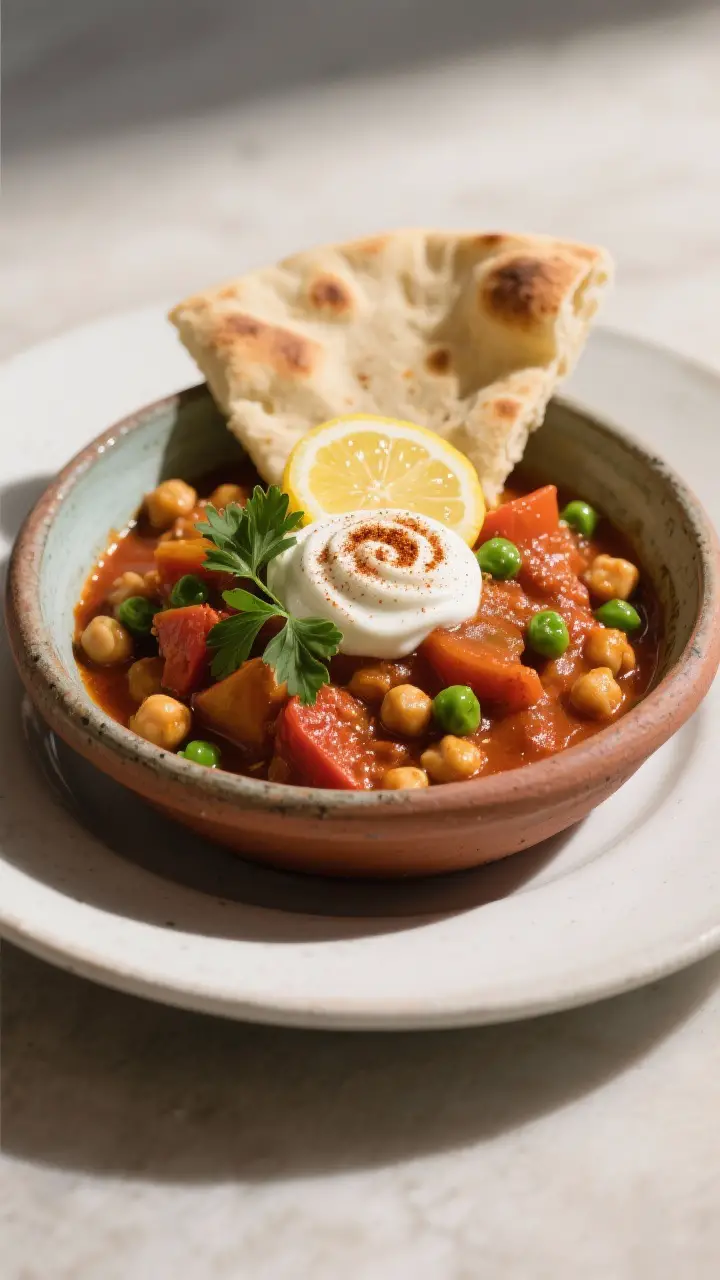
Benefits of This Recipe
- Nutritious and balanced: Fiber-rich chickpeas and vegetables support steady energy and fullness.
- Plant-forward: Naturally vegan and dairy-free (yogurt topping is optional).
- Budget-friendly: Uses pantry staples and seasonal produce, so it’s easy on the wallet.
- Weeknight-friendly: One pot, minimal prep, and forgiving timing.
- Great for meal prep: The flavor improves after a day, making it perfect for lunches.
Pitfalls to Watch Out For
- Mushy vegetables: Add zucchini, asparagus, and peas toward the end so they stay bright and crisp-tender.
- Underseasoning: Tomatoes and potatoes soak up salt.
Taste at the end and season again with salt, pepper, and lemon.
- Burning the spices: Keep heat moderate when blooming spices. If they darken too fast, add a splash of broth to cool the pan.
- Too thick or too thin: If the sauce reduces too much, add broth. If it’s watery, simmer uncovered a few extra minutes.
- Overcrowding the pot: Use a wide, heavy pot so vegetables cook evenly and don’t steam into mush.
Recipe Variations
- Green-forward: Swap asparagus for broccolini or green beans, and add baby spinach at the end.
- Spicier version: Increase harissa or add a pinch of cayenne.
A chopped fresh chili works too.
- Ras el hanout twist: Replace the spice blend with 1–2 teaspoons ras el hanout for a classic North African profile.
- With preserved lemon: Stir in finely chopped preserved lemon peel instead of fresh zest for deeper citrus complexity.
- Protein boost: Add cubed extra-firm tofu or seared halloumi (if not vegan). For omnivores, browned chicken thighs can be simmered in the sauce.
- Grain swap: Serve over herbed quinoa or bulgur instead of couscous or rice.
- Sweet note: Add a handful of golden raisins or chopped dried apricots during simmering.
FAQ
Do I need a traditional tagine to make this?
No. A heavy Dutch oven or deep sauté pan with a lid works perfectly.
A tagine is nice, but not required for great results.
Can I use canned chickpeas?
Yes. Drain and rinse them well. If using cooked-from-dry chickpeas, season them generously so they hold their own in the stew.
What if I don’t like asparagus?
Use green beans, broccolini, or extra zucchini.
Keep the cook time short so the vegetables stay vibrant.
How do I make it gluten-free?
The tagine itself is gluten-free. Serve with rice, quinoa, or gluten-free flatbread instead of couscous.
Can I make this ahead?
Absolutely. It tastes even better the next day.
Reheat gently and add fresh herbs and lemon right before serving.
What can I use instead of harissa?
Try red pepper flakes, a spoonful of chili crisp, or a little hot paprika. Adjust to your heat preference.
How do I thicken the sauce?
Simmer uncovered for a few minutes to reduce. You can also mash a few chickpeas against the side of the pot to add body.
In Conclusion
This Spring Vegetable and Chickpea Tagine delivers warmth, color, and comfort in one pot.
It’s flexible enough for busy weeknights and special enough for guests, with bright herbs and citrus bringing everything to life. Keep the method simple, season well, and finish with lemon and fresh herbs. You’ll have a wholesome, flavorful dish that fits right into the rhythm of spring.