
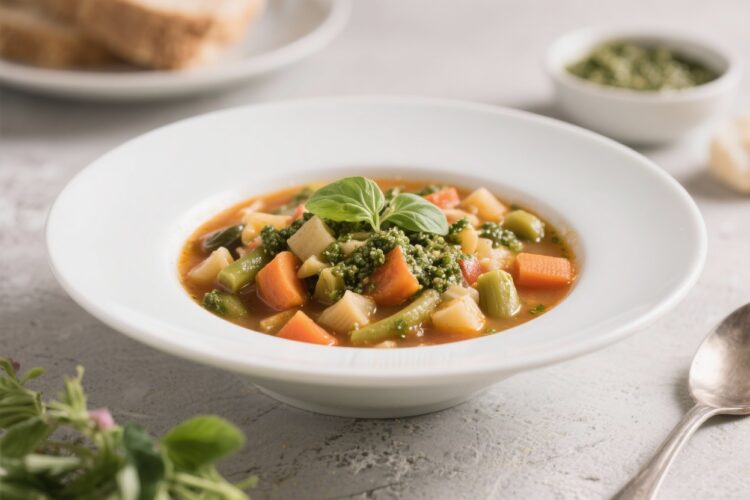
Spring brings a craving for something fresh, colorful, and satisfying without feeling heavy. This minestrone hits that sweet spot. It’s comforting like a classic soup, but packed with tender spring vegetables, soft beans, and a swirl of basil pesto that brightens every spoonful.
It’s simple enough for a weeknight and special enough to serve to friends. If you love a recipe that tastes sunny and clean, this one belongs in your rotation.
What Makes This Special
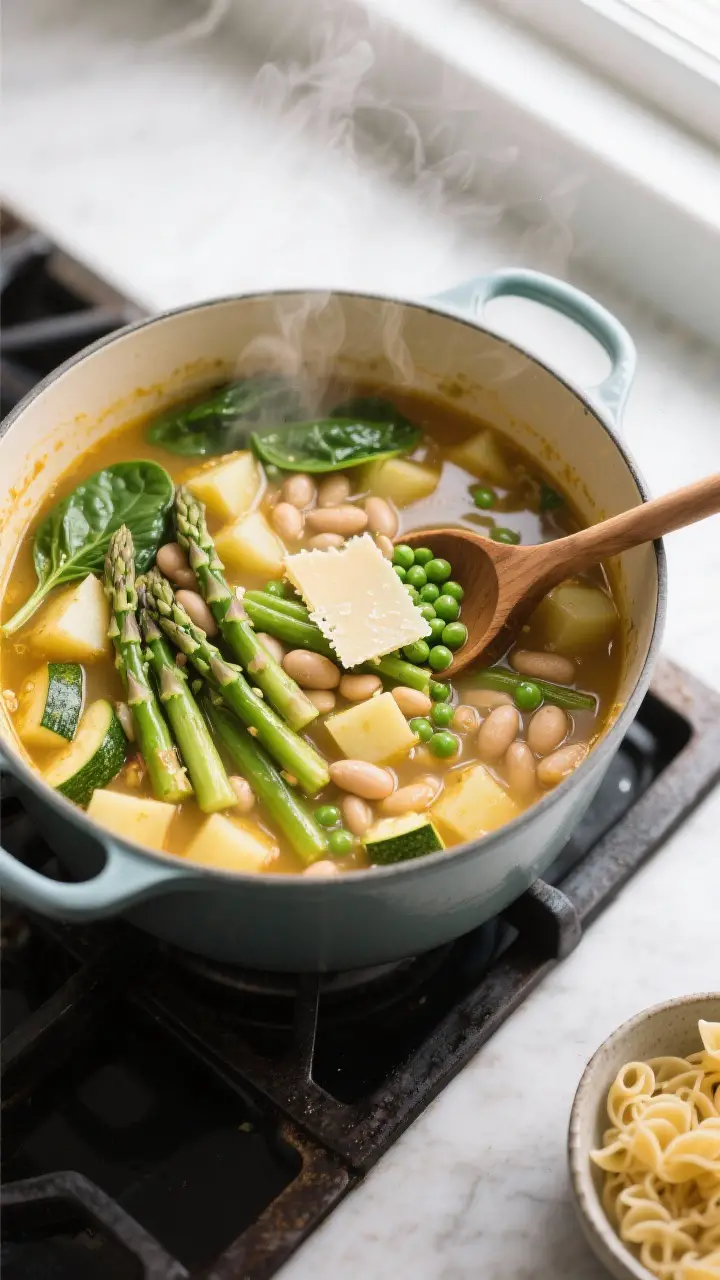
This is not your winter minestrone. It’s lighter, quicker, and full of crisp, green flavors.
The pesto at the end is the secret: it brings a burst of basil, garlic, and lemon that transforms a humble pot of vegetables and broth into something lively.
Another perk is flexibility. You can swap ingredients easily depending on what’s fresh—think asparagus, green beans, peas, or baby spinach. The soup also reheats well, and you can adjust the texture from brothy to hearty by choosing small pasta, farro, or leaving grains out entirely.
It’s a soup that adapts to your plans and your pantry.
What You’ll Need
- Olive oil: Extra-virgin for sautéing and finishing.
- Yellow onion: 1 medium, diced.
- Leeks (optional): 1 small, white and light green parts only, thinly sliced and well rinsed.
- Carrots: 2 medium, diced.
- Celery: 2 ribs, diced.
- Garlic: 3–4 cloves, minced.
- Baby potatoes or Yukon Gold: 2 cups diced (about 2 medium).
- Asparagus: 1 bunch, trimmed and cut into 1-inch pieces.
- Green beans: 1 cup, trimmed and cut into 1-inch pieces.
- Zucchini: 1 medium, diced.
- Fresh or frozen peas: 1 cup.
- Baby spinach or kale: 3 cups loosely packed (kale chopped small).
- Cannellini or Great Northern beans: 1 can (15 oz), drained and rinsed.
- Small pasta: 1 cup (ditalini, small shells, or orzo). Optional if you prefer a grain-free soup.
- Vegetable or chicken broth: 6 cups, low-sodium.
- Parmesan rind (optional): Adds depth and umami.
- Lemon: Zest and juice of 1 lemon.
- Fresh basil pesto: 1/2 to 3/4 cup, store-bought or homemade.
- Fresh herbs: A handful of chopped parsley or basil for serving.
- Salt and pepper: To taste.
- Red pepper flakes (optional): For gentle heat.
- Grated Parmesan: For serving.
Instructions
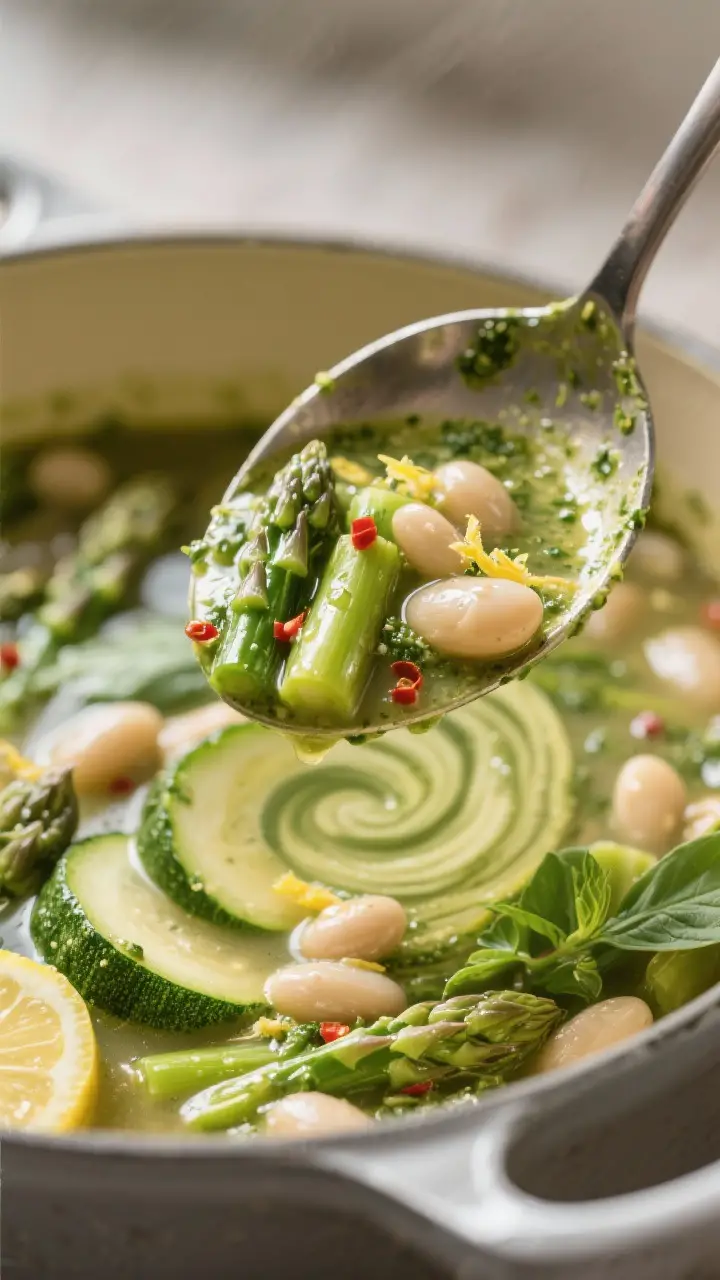
- Warm your pot: In a large pot or Dutch oven, heat 2 tablespoons olive oil over medium heat. Add the onion, leeks (if using), carrots, and celery. Season with a pinch of salt and cook 5–7 minutes, stirring, until softened and fragrant.
- Add aromatics: Stir in the garlic and red pepper flakes.
Cook 30 seconds, just until the garlic is fragrant.
- Build the base: Add diced potatoes, broth, and the Parmesan rind if you have it. Bring to a gentle boil, then reduce to a lively simmer. Cook 8–10 minutes, until the potatoes are just tender.
- Time the greens: Add asparagus, green beans, and zucchini.
Simmer 5–6 minutes, until bright and crisp-tender.
- Cook the pasta (if using): You have two choices. Add it straight to the soup and simmer until al dente, or cook it separately in salted water. Cooking separately prevents soggy leftovers.
- Finish with beans and peas: Stir in the cannellini beans and peas. Simmer 2–3 minutes to warm through.
- Greens and brightness: Add spinach or kale and stir until wilted.
Remove the Parmesan rind. Stir in lemon zest and juice. Taste and season with salt and pepper.
- Swirl in pesto: Remove the pot from heat.
Stir in 1/2 cup pesto. Adjust to taste with more pesto for a stronger basil note.
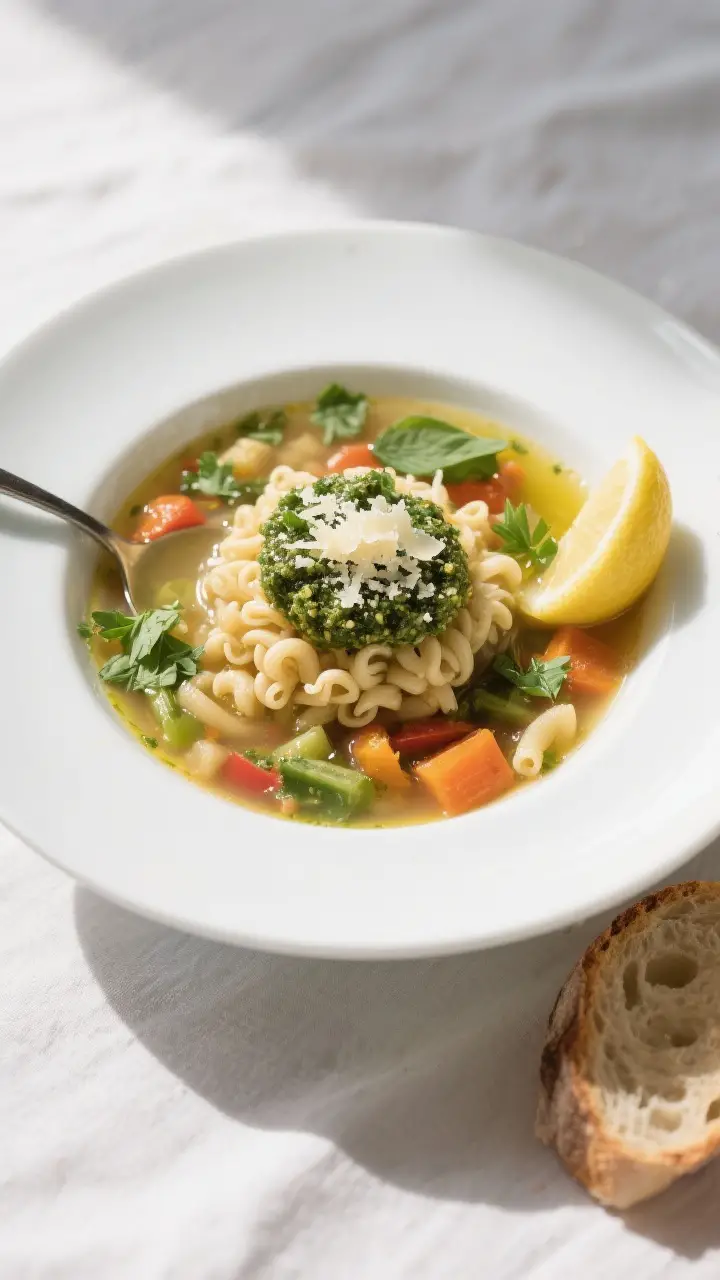
- Serve: Ladle into bowls. Add a spoonful of cooked pasta to each bowl (if cooked separately), top with extra pesto, a drizzle of olive oil, and grated Parmesan. Scatter with chopped parsley or basil.
Storage Instructions
Let the soup cool until just warm, then transfer to airtight containers.
Keep in the refrigerator for up to 4 days. If you added pasta to the pot, the noodles will continue to soften. For best texture, store pasta separately and add it to bowls when reheating.
To freeze, skip the pasta and leafy greens, then freeze the base for up to 3 months.
Thaw overnight, bring to a simmer, and add fresh greens and cooked pasta before serving. Pesto can be stirred in after reheating to keep the flavor bright.
Benefits of This Recipe
- Seasonal and flexible: Works with whatever spring produce you find—no two pots have to be the same.
- Light but filling: Beans and vegetables give it enough staying power without feeling heavy.
- Quick to make: Most of the cooking happens in under 40 minutes.
- Make-ahead friendly: Great for meal prep, especially if you store pasta on the side.
- Balanced flavors: The pesto and lemon add freshness that keeps the soup lively, not flat.
Pitfalls to Watch Out For
- Overcooking green vegetables: Add asparagus, beans, and zucchini late so they stay crisp and vibrant.
- Mushy pasta: Pasta soaks up broth. Keep it separate if you care about texture in leftovers.
- Skipping salt: Taste as you go.
The soup needs steady seasoning, especially if using low-sodium broth.
- Boiling after adding pesto: Heat dulls fresh basil flavor. Stir pesto in off heat.
- Watery flavor: Use a Parmesan rind and lemon zest for depth. A final drizzle of good olive oil helps.
Alternatives
- Grain swap: Use farro, barley, or quinoa instead of pasta.
Cook grains separately and add when serving.
- Protein boost: Add cooked shredded chicken, turkey meatballs, or sautéed shrimp at the end.
- Dairy-free: Use a dairy-free pesto and skip Parmesan. A squeeze of extra lemon and a pinch of nutritional yeast add savoriness.
- Bean options: Try chickpeas or butter beans for a different texture.
- Herb twist: Swap basil pesto for arugula or mint pesto for a peppery or cool edge.
- Tomato note: Stir in a handful of halved cherry tomatoes near the end for a sweet-acid pop.
FAQ
Can I make this gluten-free?
Yes. Use gluten-free pasta or swap in a gluten-free grain like quinoa or rice.
Check your broth and pesto labels to ensure they are gluten-free.
What if I don’t have pesto?
Blend a quick version: basil or arugula, garlic, lemon, olive oil, nuts (or seeds), and salt. In a pinch, stir in chopped herbs, lemon zest, and extra olive oil for a lighter finish.
How can I make it heartier?
Add more beans, use farro or barley, or include diced cooked chicken. A thicker texture also comes from mashing a few beans into the broth.
Do I need the Parmesan rind?
No, but it adds a savory backbone.
If you skip it, increase seasoning and finish with a bit more pesto and lemon to round out the flavors.
Can I use frozen vegetables?
Absolutely. Frozen peas and green beans work well. Add them straight from the freezer near the end of cooking to avoid overcooking.
What’s the best broth to use?
A good-quality low-sodium vegetable or chicken broth keeps flavors clean.
If your broth tastes flat, add an extra pinch of salt, a splash of lemon, and a drizzle of olive oil at the end.
How long does it take start to finish?
About 35–40 minutes, including chopping and simmering. If your vegetables are prepped ahead, it can be on the table in 25 minutes.
Can I make it in an Instant Pot?
Yes, but it’s easy to overcook greens. Sauté aromatics on Sauté mode, add potatoes and broth, pressure cook 2 minutes, quick-release, then add green vegetables, beans, and greens on Sauté until tender.
Stir in pesto off heat.
What pasta shape works best?
Small shapes like ditalini, tubettini, or small shells mix well without overpowering the vegetables. Orzo is great if you want a lighter feel.
How do I keep the color bright?
Don’t overcook the greens, and add pesto off the heat. A final squeeze of lemon and fresh herbs at the table keeps everything vibrant.
Final Thoughts
Spring minestrone with pesto is proof that simple ingredients can deliver big flavor.
It’s easy, adaptable, and fresh enough to enjoy on repeat. Keep a jar of pesto on hand and a few vegetables in the crisper, and you’ll always be close to a bright, nourishing bowl. Serve it with crusty bread and call it dinner—no fuss, just good food that tastes like the season.
Printable Recipe Card
Want just the essential recipe details without scrolling through the article? Get our printable recipe card with just the ingredients and instructions.