
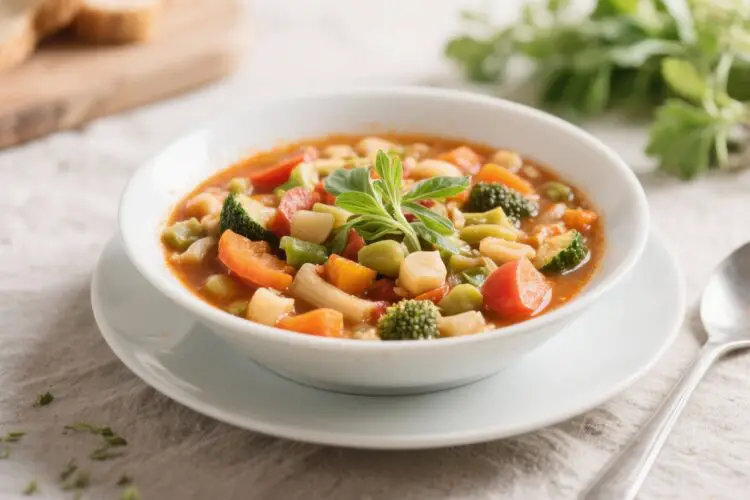
Spring is the season when everything tastes fresher, and this minestrone is a perfect way to celebrate it. It’s light yet satisfying, packed with crisp vegetables, tender beans, and a clean, herby broth. You get the comfort of a cozy soup without the heavy feel.
This is the kind of meal you make on a Sunday and enjoy for days. It’s simple, adaptable, and tastes even better the next day.
What Makes This Special
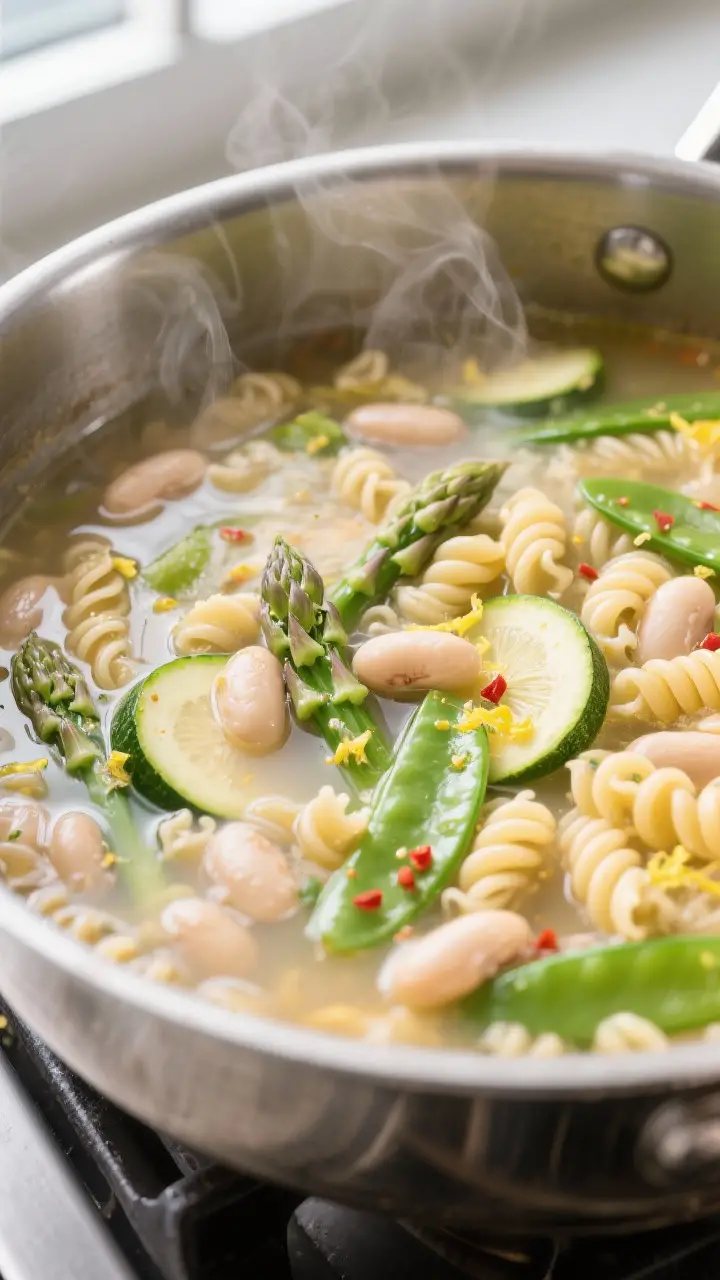
Spring minestrone is all about timing and texture. The vegetables are added in layers so each one keeps its bite and color.
The broth stays clear and bright, with lemon and herbs lifting everything up.
Another standout feature is flexibility. You can use whatever spring produce looks best—peas, asparagus, tender greens, or baby zucchini. It’s also a great canvas for pantry staples like pasta and beans.
Finally, it’s weeknight-friendly.
Most prep is straightforward, and the soup comes together in about 40 minutes. It feels like a treat without a lot of fuss.
Ingredients
- 2 tablespoons extra-virgin olive oil, plus more for serving
- 1 small yellow onion, finely chopped
- 2 celery stalks, diced
- 1 medium carrot, diced
- 2 garlic cloves, minced
- 1 small fennel bulb, cored and diced (optional but great for sweetness)
- 1 teaspoon kosher salt, plus more to taste
- Freshly ground black pepper
- 6 cups low-sodium vegetable broth (or chicken broth if not vegetarian)
- 1 cup small pasta (ditalini, small shells, or orzo)
- 1 can (15 ounces) cannellini beans or navy beans, drained and rinsed
- 1 cup asparagus, cut into 1-inch pieces
- 1 cup sugar snap peas or green peas (fresh or frozen)
- 1 small zucchini, halved lengthwise and sliced
- 2 cups baby spinach or chopped Swiss chard
- 1 tablespoon lemon zest
- 2 tablespoons fresh lemon juice, plus more to taste
- 1/4 cup chopped fresh herbs (parsley, basil, and/or dill)
- Red pepper flakes, to taste (optional)
- Grated Parmesan or Pecorino, for serving (optional)
Instructions
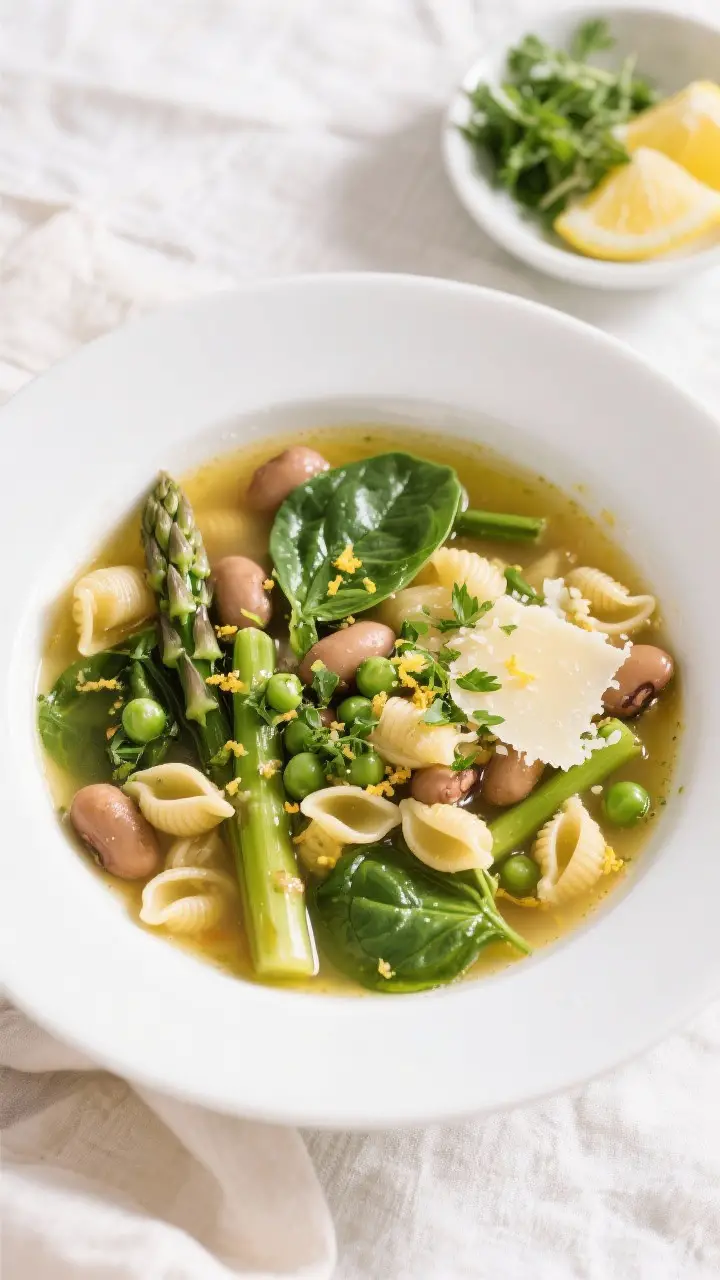
- Warm the base: Heat the olive oil in a large pot over medium heat. Add onion, celery, carrot, and fennel with the salt.
Cook, stirring often, until the vegetables soften and turn glossy, about 6–8 minutes.
- Build flavor: Add the garlic and a pinch of red pepper flakes if using. Cook 30 seconds, just until fragrant. Season with black pepper.
- Add the broth: Pour in the vegetable broth and bring to a gentle boil.
Reduce to a lively simmer and cook 5 minutes to let the flavors meld.
- Cook the pasta: Stir in the pasta and cook according to package instructions, minus 1 minute for al dente. Keep the heat at a steady simmer so the broth stays clear.
- Add beans and quick-cook vegetables: Stir in the beans, asparagus, zucchini, and peas. Simmer 3–5 minutes, just until bright and tender.
Avoid overcooking.
- Finish with greens and lemon: Stir in the spinach (or chard), lemon zest, and lemon juice. Taste and adjust salt, pepper, and lemon. The soup should taste fresh and lively.
- Serve: Ladle into bowls.
Top with a drizzle of olive oil, a shower of herbs, and Parmesan if you like. Serve right away.
How to Store
Let the soup cool to room temperature, then store it in airtight containers. It keeps in the fridge for up to 4 days.
The pasta will continue to soak up broth over time.
Pro tip: If you plan to store leftovers, cook the pasta separately and add it to each bowl as you serve. This keeps the texture firm and the broth clear.
For longer storage, freeze without the pasta for up to 3 months. Thaw overnight in the fridge and reheat gently on the stove.
Add freshly cooked pasta and a squeeze of lemon to bring it back to life.
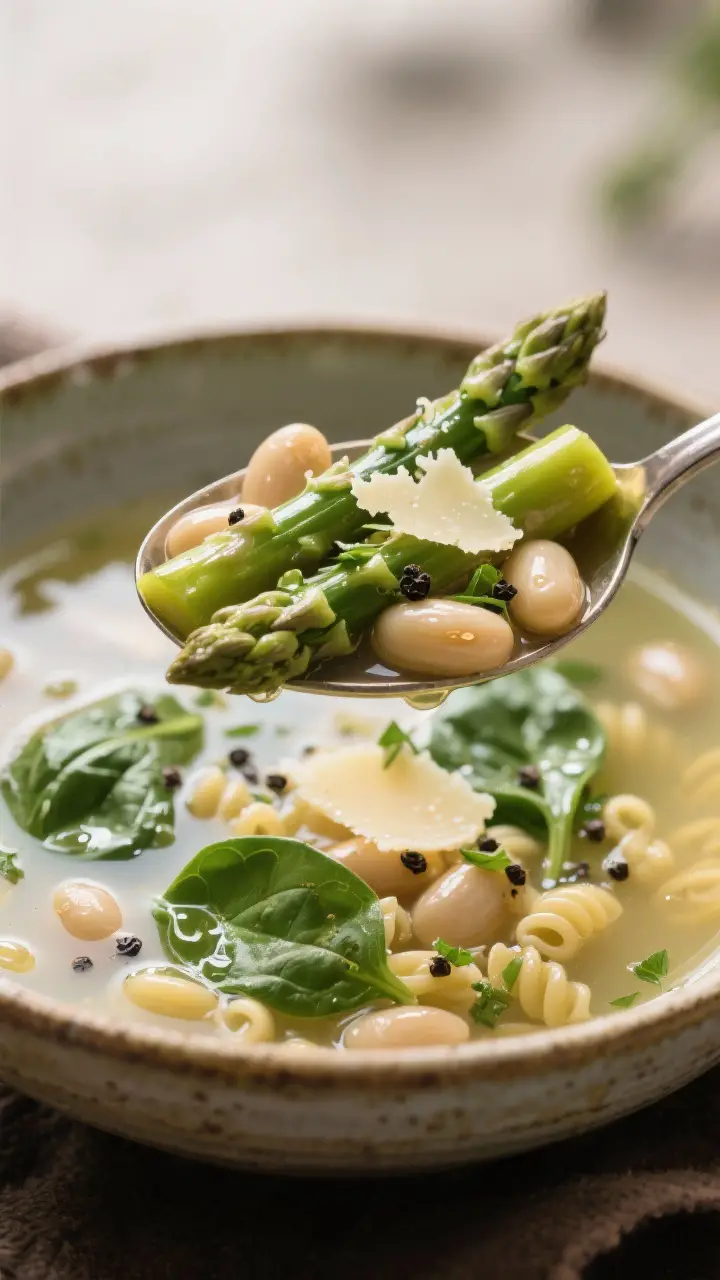
Why This is Good for You
- Vegetable variety: A mix of carrots, leafy greens, peas, and zucchini brings fiber, vitamins A and C, and antioxidants.
- Protein and fiber from beans: Cannellini beans add steady energy and help you feel full without heaviness.
- Lighter broth: Using broth instead of cream keeps the soup light while still satisfying.
- Healthy fats: A modest amount of olive oil boosts flavor and supports nutrient absorption.
- Balanced meal: You get carbs (pasta), protein (beans), and vegetables in one bowl.
Common Mistakes to Avoid
- Overcooking the vegetables: Add spring vegetables at the end so they stay crisp and bright. Mushy asparagus and peas can flatten the dish.
- Boiling too hard: A rolling boil can cloud the broth and break down delicate veggies. Keep it at a steady simmer.
- Adding lemon too early: Lemon juice loses brightness when cooked too long.
Add it at the end for a fresh finish.
- Letting pasta sit in the pot: Pasta keeps soaking up broth. For leftovers, cook pasta separately or add extra broth when reheating.
- Under-seasoning: Spring soups need salt and acid to shine. Taste often and adjust with salt, pepper, and lemon.
Recipe Variations
- Green-on-green: Skip carrots and add more green veggies like broccolini, kale, or green beans.
Use dill and lemon for a bright twist.
- Pesto swirl: Stir a spoonful of basil pesto into each bowl for herbal depth and a touch of richness.
- Grain swap: Replace pasta with farro, barley, or quinoa. Cook grains separately and add to bowls to control texture.
- Non-vegetarian: Add shredded rotisserie chicken or crisp pancetta. Brown the pancetta first, then build the soup in the rendered fat plus olive oil.
- Spicy kick: Add more red pepper flakes or a spoonful of Calabrian chili paste.
- No beans: Use small meatballs or extra vegetables if beans aren’t your thing.
FAQ
Can I make this gluten-free?
Yes.
Use gluten-free pasta or swap in cooked rice or quinoa. Add grains to each bowl before ladling in the soup so they keep their texture.
What if I can’t find asparagus or peas?
Use what’s fresh and available. Green beans, baby broccoli, or chopped spinach work well.
Frozen peas are a reliable stand-in and taste great.
How can I make the broth more flavorful?
Use a good-quality broth and don’t skip the sauté step. A Parmesan rind simmered in the soup adds depth. Finish with fresh lemon, herbs, and a drizzle of olive oil.
Can I make it ahead?
Absolutely.
The flavors improve by the next day. Store the pasta separately or cook it fresh when reheating to keep the soup from getting too thick.
What herbs work best?
Parsley and basil are classic and bright. Dill adds a soft, springy note.
Mint is lovely in small amounts, especially with peas and zucchini.
How do I keep the vegetables vibrant?
Add them late and cook just until tender. If you accidentally overcook them, a squeeze of lemon and fresh herbs helps refresh the flavor.
Final Thoughts
Spring Minestrone with Fresh Vegetables is simple, flexible, and full of life. It’s the kind of soup that adapts to your kitchen and the season.
Keep the vegetables crisp, the seasoning bright, and the pasta al dente. With those basics in place, you’ll have a bowl that feels both comforting and fresh every time you make it.
Printable Recipe Card
Want just the essential recipe details without scrolling through the article? Get our printable recipe card with just the ingredients and instructions.